
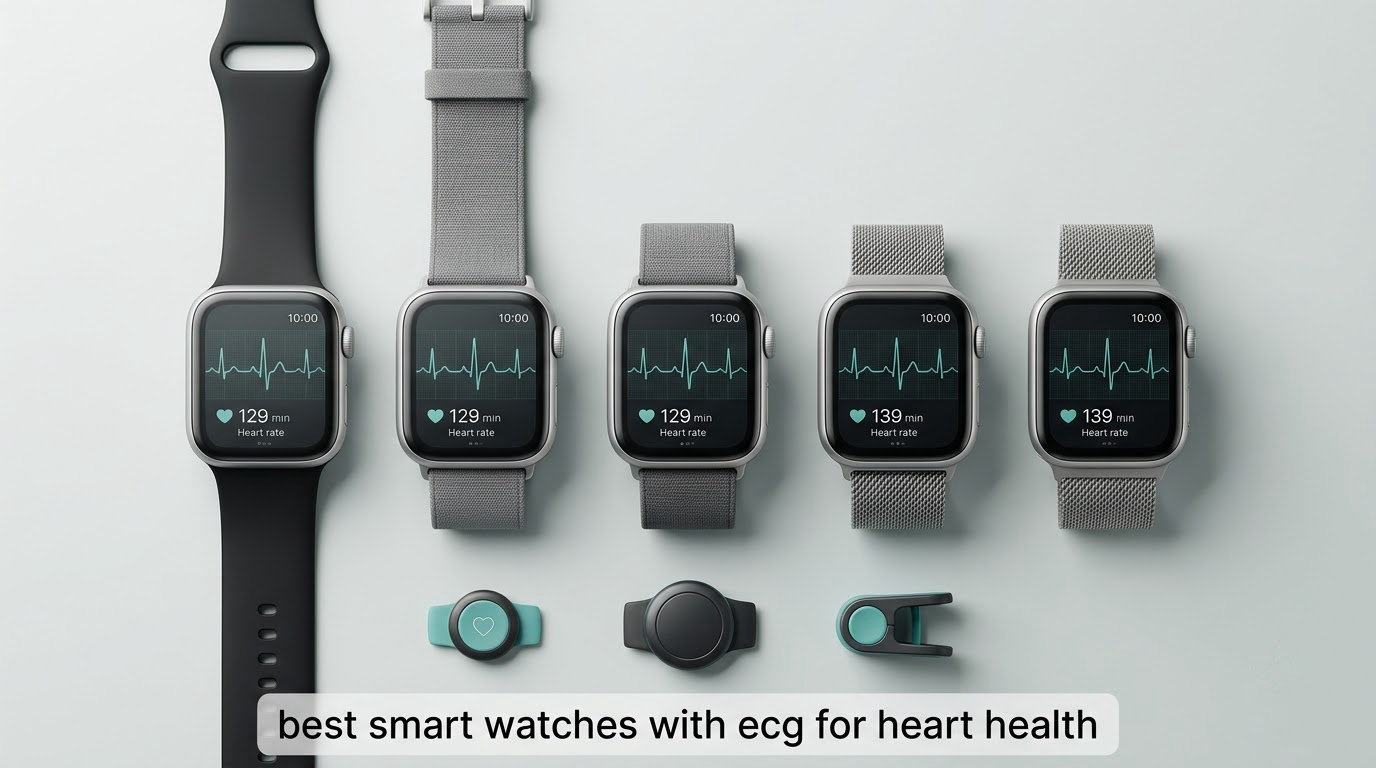
A smartwatch ECG is the only way most people can capture a heart rhythm strip at the exact moment they feel something is off, without a clinic appointment or a Holter monitor taped to the chest. The watch records a 30-second single-lead tracing through electrodes in the case, an on-device algorithm sorts the result into sinus rhythm, possible atrial fibrillation, or inconclusive, and the file sits in your health app ready to export as a PDF.
That convenience is the whole reason the best smart watches with ECG for heart health have become the first stop for anyone with unexplained palpitations, a family history of arrhythmia, or a doctor who asked for monitoring. It is also the first place to be disappointed, because these are screening tools rather than diagnostics, and the difference between a good read and an inconclusive one often comes down to how still you sat and which phone you own.
We compared 10 of the strongest ECG and heart-tracking watches on the market across six weeks, reading the technical specs, weighing owner reviews at the individual and category level, and looking hard at what each one actually does when you sit down and take a reading. This guide covers the regulatory status you should care about, the phone compatibility traps, what to do when an alert fires, and the honest limits of consumer ECG.
If you are shopping around the wider category and want a separate look at fitness-oriented options, our picks for the best smart watches for GPS tracking and the best field watches are separate reads. For heart health specifically, the picks below are the ones we would put on a wrist.
Top 3 Picks: Best Smart Watches With ECG for Heart Health (October 2026)

Apple Watch Series 11
- On-demand ECG with irregular rhythm notifications
- Overnight Vitals app and sleep apnea alerts
- Hypertension notifications
- Up to 24 hours battery with fast charge
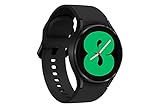
Samsung Galaxy Watch 4
- ECG heart monitor with AFib detection
- BioActive body composition sensor
- Built-in GPS and VO2 Max
- Sleep tracking with SpO2

Fitbit Sense 2
- ECG app for AFib assessment
- Irregular heart rhythm notifications
- cEDA stress tracking and Stress Score
- 6+ day battery life
The Apple Watch Series 11 takes the top slot because it combines the most mature ECG workflow with the deepest health data pipeline, and at 4.7 across 8618 reviews it has both the highest satisfaction and a deep enough review base to trust. The Galaxy Watch 4 40mm is the entry point that still has a real ECG sensor, and its review count is the largest in this group by a wide margin. The Fitbit Sense 2 is the long-battery option for anyone who will not charge a watch every night.
All 10 Best Smart Watches With ECG for Heart Health in 2026
| Product | Key Specs | Buy |
|---|---|---|
|
|
Check Latest Price |
|
|
Check Latest Price |
 |
|
Check Latest Price |
|
|
Check Latest Price |
 |
|
Check Latest Price |
 |
|
Check Latest Price |
 |
|
Check Latest Price |
 |
|
Check Latest Price |
 |
|
Check Latest Price |
 |
|
Check Latest Price |
Three entries in this table do not list an ECG sensor in their specifications: the Galaxy Watch 7 40mm Bluetooth model, the Galaxy Watch 8 40mm, and the Withings ScanWatch Nova. They remain in the roundup because their heart rate, sleep and recovery tracking is relevant to heart health, and because several owners pair them with a phone app for irregular rhythm alerts. If a true ECG sensor is your requirement, the other seven are your shortlist.
1. Apple Watch Series 11: The Most Complete ECG Experience
Apple Watch Series 11 [GPS 46mm] Smartwatch with Jet Black Aluminum Case with Black Sport Band – M/L. Sleep Score, Fitness Tracker, Health Monitoring, Always-On Display, Water Resistant
ECG app with irregular rhythm alerts
Always-On Retina display
24 hour battery with fast charge
50m water resistant
The Good
- ECG and irregular rhythm alerts feed straight into the iPhone Health app
- Vitals and sleep tracking stay accurate even over wrist tattoos
- Fast charging adds hours of use in 15 minutes
- Tight iPhone integration for calls notifications and Apple Pay
- Superdurable glass resists scratches in workshop use
The Bad
- Roughly one full day of battery life against multi-day trackers
- Stock rubber sport band is not breathable
- Step counting trails dedicated fitness devices
- Needs an iPhone 11 or newer for full value
Out of ten watches, this is the one that gets recommended most often without a caveat attached. The ECG app is a single tap from the Heart Rate menu, and while your other hand rests on the digital crown, the watch records a 30-second tracing and tells you to keep your arm still. The result lands in Health, and you can export a PDF and hand it to a cardiologist at the next visit.
What separates it from the field is the layer underneath the ECG. The Vitals app builds an overnight picture of your heart rate and respiratory rate, sleep apnea notifications flag episodes you would never notice, and hypertension notifications point out patterns consistent with chronically high blood pressure. Owners with wrist tattoos report the optical heart rate sensor holds up, which is not something every watch on this list can claim.
![Apple Watch Series 11 [GPS 46mm] Smartwatch with Jet Black Aluminum Case with Black Sport Band - M/L. Sleep Score, Fitness Tracker, Health Monitoring, Always-On Display, Water Resistant customer photo 1](https://hellskitchenfleamarket.com/wp-content/uploads/2026/10/B0FQF5BZ8Z_customer_1.jpg)
The battery is the honest weak point. Apple rates it at up to 24 hours, and many owners charge it nightly or top it up in the morning. Fifteen minutes on the charger gives roughly eight hours back, which keeps a daily routine workable, but it is the opposite of the multi-week experience the Withings hybrids offer.
Two smaller friction points come up in owner reviews. The rubber sport band in the box is not breathable and irritates some skin, so a textile third-party band is a common swap. And some system notifications cannot be deleted, which means managing each app’s alerts individually if you want a quieter wrist.
![Apple Watch Series 11 [GPS 46mm] Smartwatch with Jet Black Aluminum Case with Black Sport Band - M/L. Sleep Score, Fitness Tracker, Health Monitoring, Always-On Display, Water Resistant customer photo 2](https://hellskitchenfleamarket.com/wp-content/uploads/2026/10/B0FQF5BZ8Z_customer_2.jpg)
Who the Apple Watch Series 11 suits best
Anyone on iPhone who wants the shortest path from palpitations to a shareable PDF. The workflow takes under a minute, the health data history is years deep rather than weeks, and irregular rhythm notifications run in the background without you asking.
It also suits people who want the wider safety net: fall detection, crash detection, Check In and Emergency SOS all live in the same device as the ECG. If you are active but not extreme, the standard 46mm case fits most wrists well.
Who should skip it
Skip it if you need multi-day battery or want one device that works on both an iPhone and an Android handset, because the health features are tightly tied to the Apple ecosystem. It is also a poor match for a wrist-based focus if you train outdoors for hours and want the watch to survive a full day away from a charger.
2. Samsung Galaxy Watch 4 40mm: The Best Entry Point to a Real ECG
Samsung Galaxy Watch 4 40mm Bluetooth Smartwatch with ECG Heart Monitor, Tracker for Health, Fitness, Running, Sleep Tracking, GPS Fall Detection, US Version, SM-R860NZKAXAA, Black
ECG with AFib detection through Samsung Health Monitor
BioActive body composition sensor
Built-in GPS
25.9 g case
The Good
- ECG app reliably flags possible atrial fibrillation for review
- BioActive body composition analysis works on the wrist
- Built-in GPS handles runs without a phone
- Lightweight 40mm case suits smaller wrists
- Huge review base with steady software updates
The Bad
- ECG results need a compatible Samsung Galaxy phone
- Health features are limited on non-Samsung Android phones
- Older Wear OS generation with fewer apps and faces
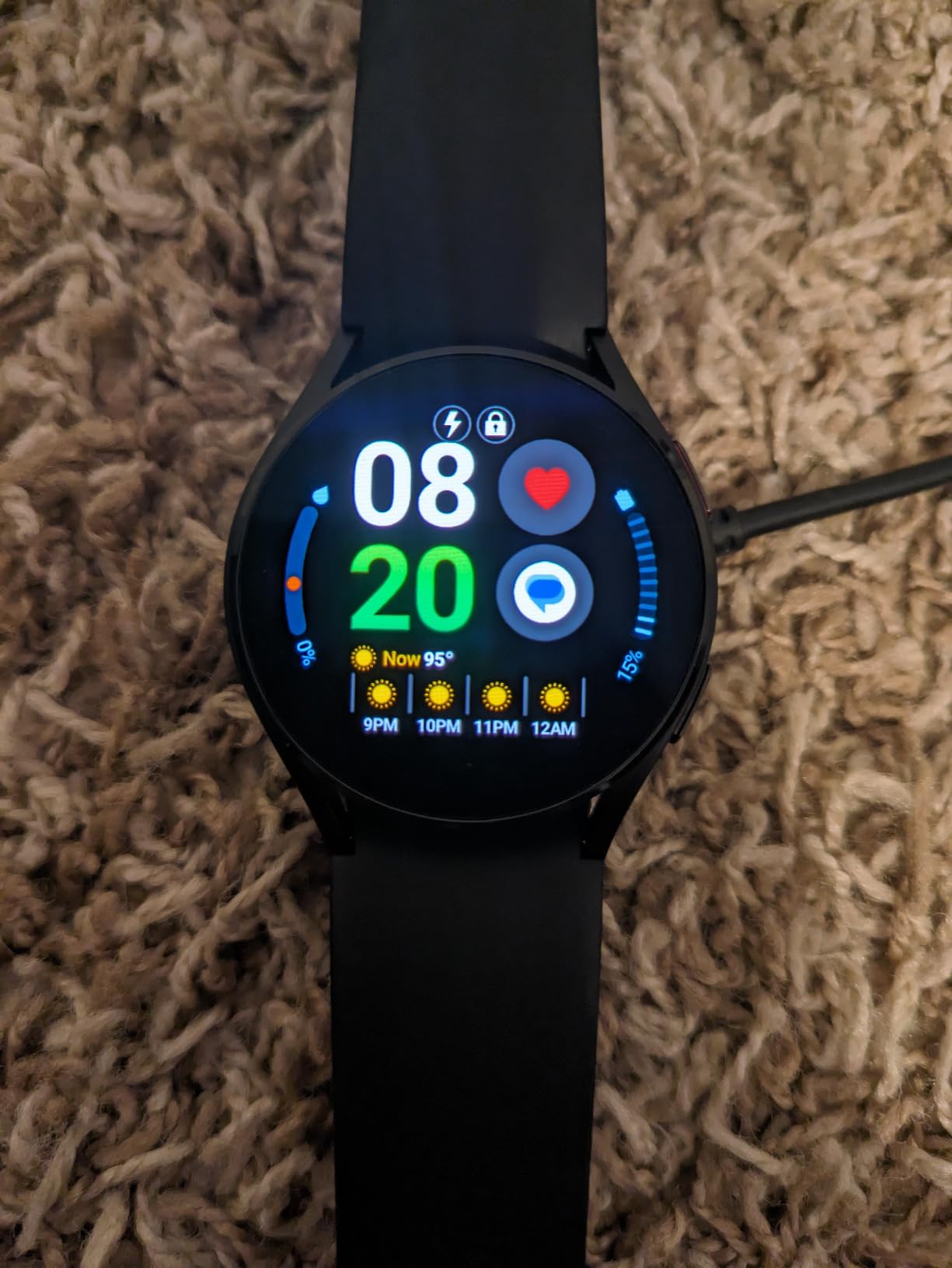
This is the watch we point people toward when they ask which ECG smartwatch is worth starting with. The 40mm stainless steel case weighs 25.9 grams, the AMOLED display is 1.2 inches, and the ECG function runs through the Samsung Health Monitor app to flag possible atrial fibrillation for a doctor to review.
At 4.6 across more than 20k reviews, it has the largest owner base of any watch in this roundup, which means the failure modes are well documented and the feature set has had years of refinement. Owners single out the ECG reliability, the sleep tracking with continuous SpO2, and the GPS that tracks a run without the phone alongside you.
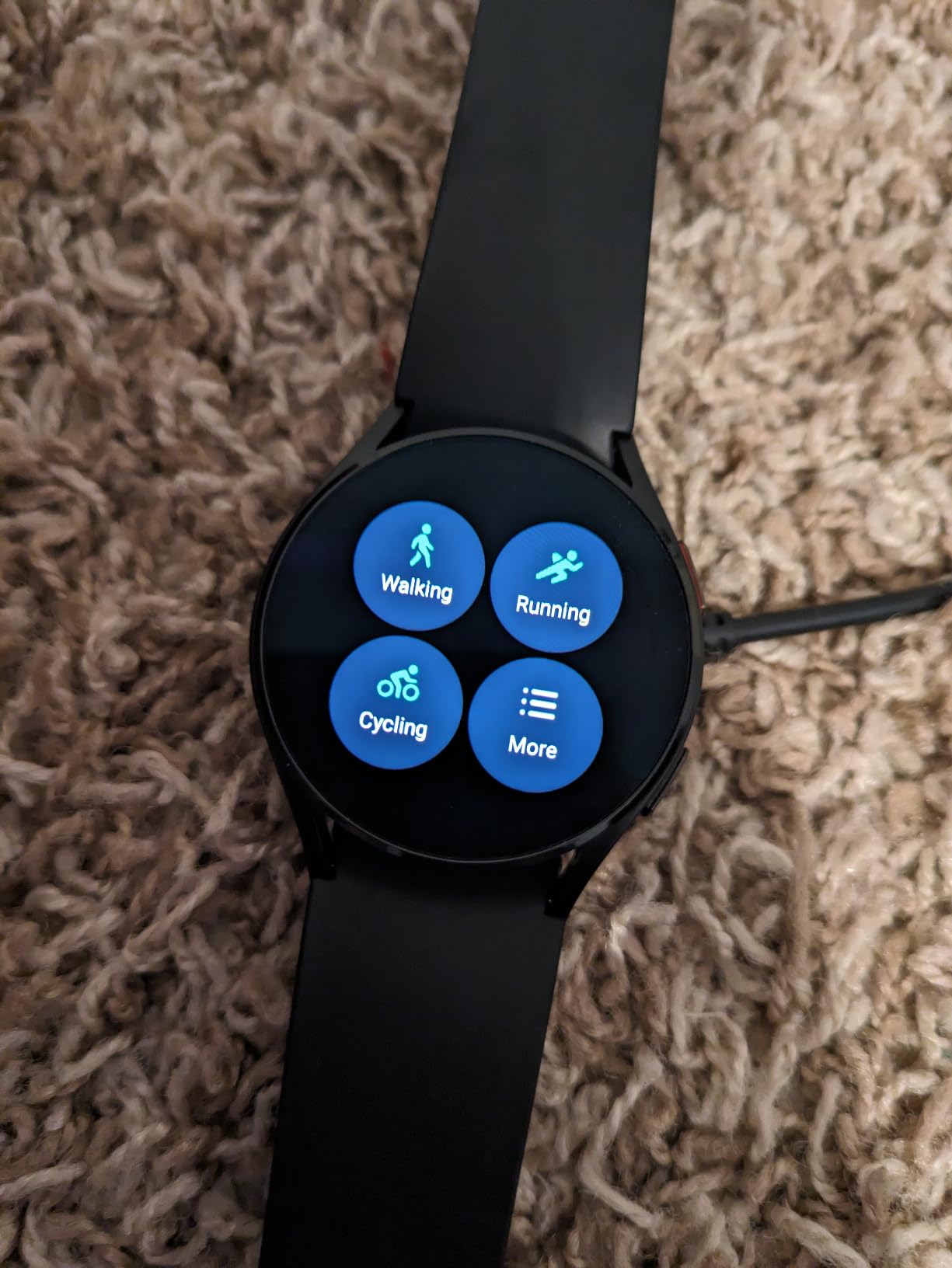
The body composition analysis is the sleeper feature. The BioActive sensor estimates body fat, skeletal muscle, body water, basal metabolic rate and BMI from the wrist, which gives the ECG data a useful physiological context rather than an isolated rhythm strip.
The ecosystem coupling is the real trade-off. Reading and interpreting the ECG requires a compatible Samsung Galaxy phone, and several owners report that Samsung Health features are limited when paired with other Android handsets. Plan around that before you buy, not after.
Who the Galaxy Watch 4 suits best
Galaxy phone owners who want ECG, GPS and body composition in one compact watch without moving to the newest hardware. The 40mm case is one of the smaller options here, so it works well on narrower wrists that the larger Apple and Galaxy cases overhang.
It is also a strong gift for a parent or an older relative who already uses a Samsung phone, since the health stack lives where they already are and the app is straightforward once the initial permissions are set.
Who should skip it
Skip it if your phone is not a Galaxy handset, because the ECG interpretation path is the feature you are buying. Also note the Wear OS generation is older, so the app and watch face library trails current models even though the core health sensors are fully capable.
3. Fitbit Sense 2: Multi-Week Tracking With a Finicky ECG
Fitbit Sense 2 Health and Fitness Smartwatch – Shadow Grey/Graphite
ECG app for AFib assessment
Irregular rhythm notifications
cEDA stress tracking
6+ day battery life
The Good
- Multi-day battery far exceeds most smartwatches
- Stress tracking with cEDA is useful every day
- Detailed sleep stages with a Sleep Score
- Works with both iPhone and Android
- Holds up well in water including pool use
The Bad
- ECG readings are finicky and often inconclusive
- GPS can drop mid-workout and take time to reconnect
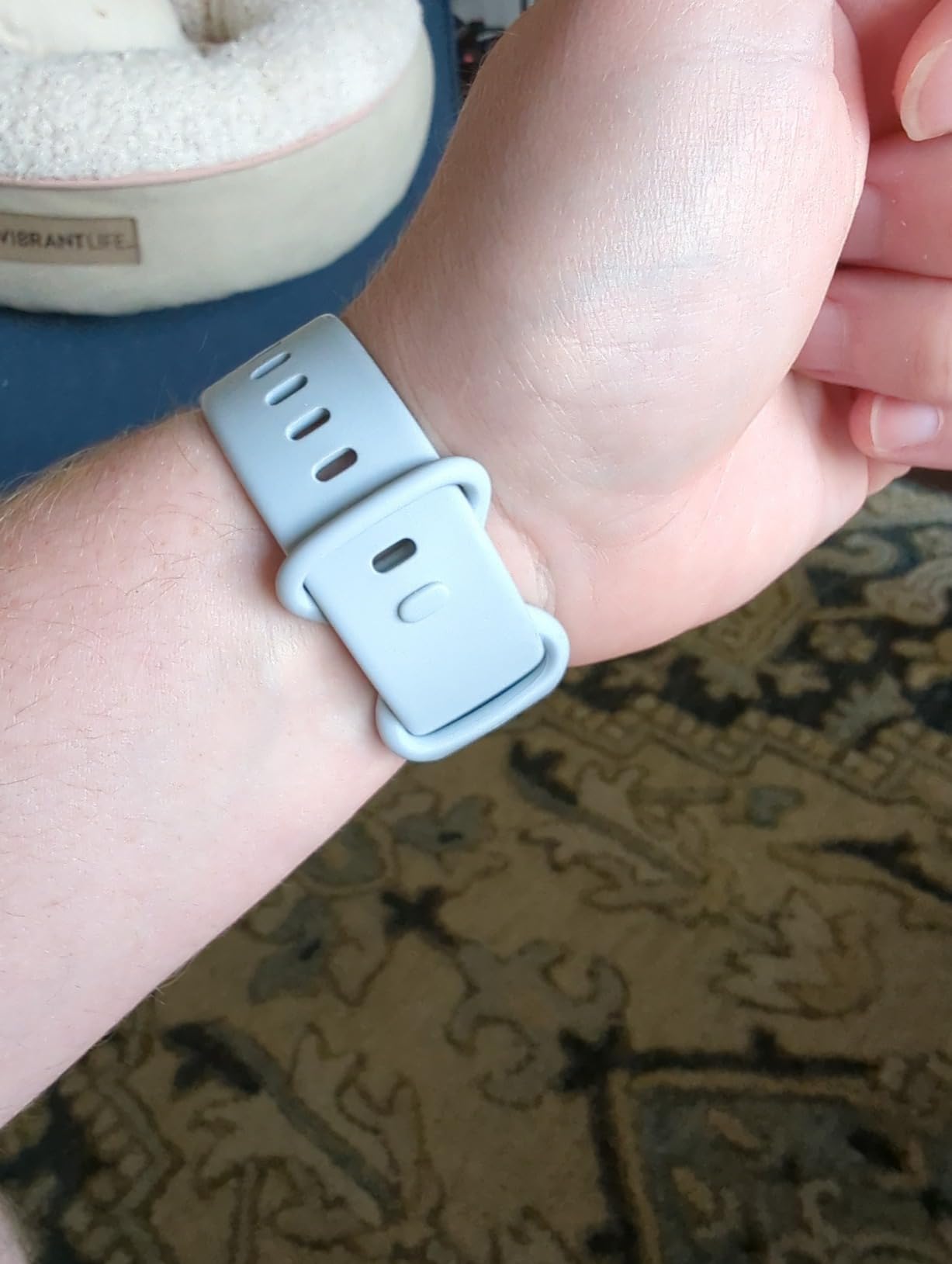
- Stock silicone band is not breathable
- Reports of units arriving with a persistent red X screen
The Fitbit Sense 2 is the only watch here that pairs an ECG app with a battery that genuinely disappears for a week. Owners report 5 to 6 days of typical use against a stated 6+ day rating, and that changes what a watch can do for heart health: overnight monitoring keeps running instead of stopping every night at a charger.
Its ECG exists for atrial fibrillation assessment, and irregular heart rhythm notifications run passively. The rest of the health stack is arguably the stronger part: cEDA electrodermal activity gives an all-day stress picture with a Stress Management Score, SpO2 and a health metrics dashboard, sleep stages with a Sleep Score and smart wake alarm, and a Daily Readiness Score alongside built-in GPS and Active Zone Minutes.
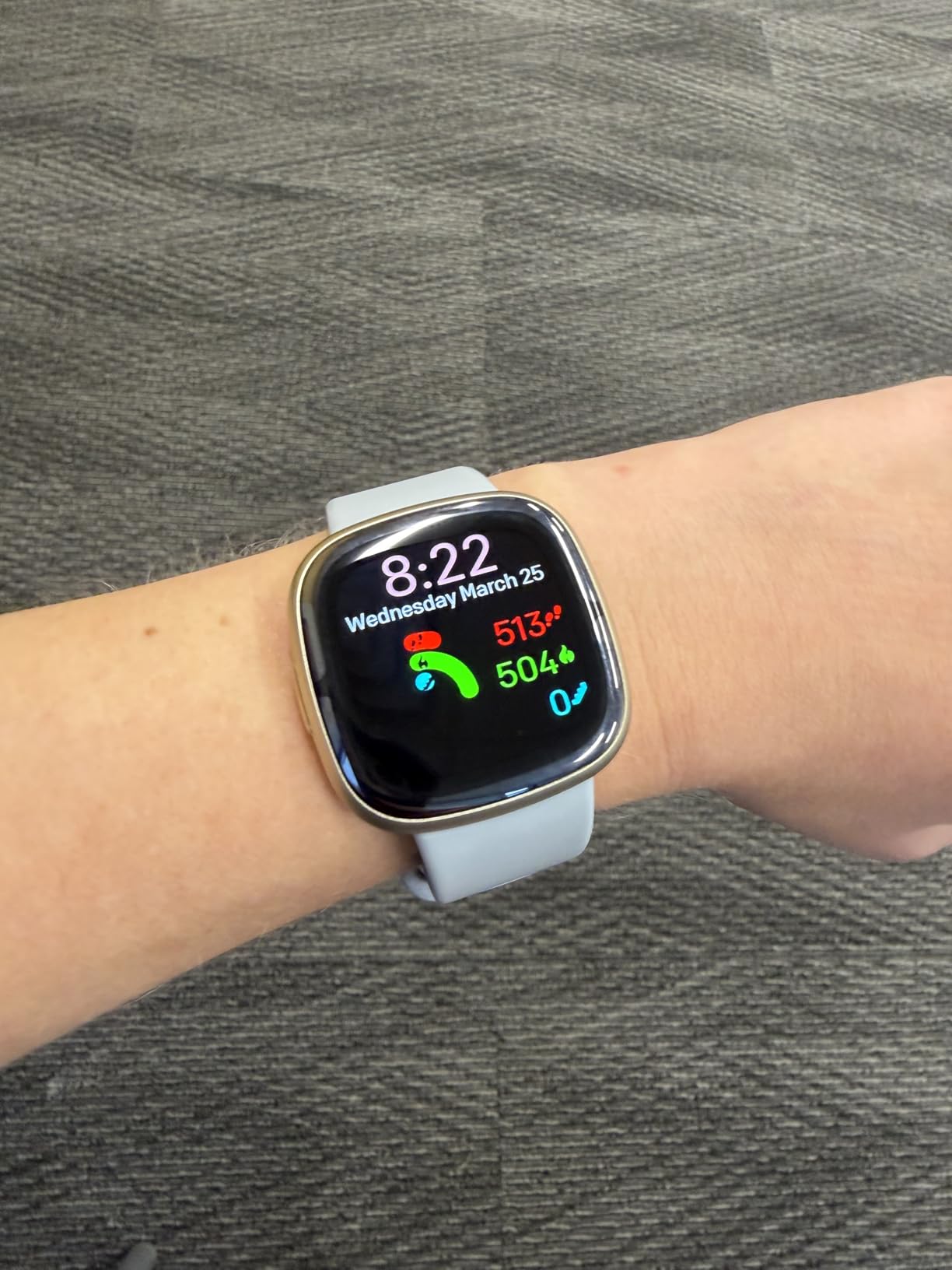
The 4.1 rating across 10242 reviews reflects real friction, and the ECG workflow is the main reason. Owners describe readings as finicky and often inconclusive, and harder to complete than the Samsung equivalent. In our read of the reviews, buyers focused on atrial fibrillation steering each other toward Samsung instead.
Other recurring complaints: the Fitbit app has removed and reshuffled features people relied on, GPS can drop mid-workout and take a while to reconnect, step counts undercount during low arm-swing activity such as pool exercise, and some owners report watches arriving with a persistent red X screen that needs repeated reboots or replacement.
Who the Sense 2 suits best
People who want a broad health picture rather than a single reading: stress, sleep, readiness, SpO2 and heart rate in one device, with the battery to collect it. It works with both iPhone and Android, which no Apple option does, and the swim and pool use is well supported at 50 meters.
It is a sensible first watch for someone building a habit of paying attention to their heart, and the low-effort daily scoring makes trends easier to act on than a raw ECG strip.
Who should skip it
Skip it if your doctor asked for a documented ECG during symptoms. When a reading fails, this is the watch most likely to hand you an inconclusive result rather than a trace you can share, and that is exactly the moment you would want it to work.
4. Samsung Galaxy Watch 7 40mm: Sharp Display and a Daily Readiness Signal
Samsung Galaxy Watch 7 40mm Bluetooth AI Smartwatch w/Energy Score, Wellness Tips, Heart Rate Tracking, Sleep Monitor, Fitness Tracker, 2024, Cream [US Version, 1Yr Manufacturer Warranty]
Energy Score with Galaxy AI
AI-filtered heart rate tracking
2000 nit AMOLED
30 hour battery
The Good
- AI-filtered heart rate stays accurate during workouts
- Energy Score gives a useful daily readiness signal
- 2000 nit AMOLED is easy to read outdoors
- Compact 40mm case suits smaller wrists
- Strong current-generation Samsung health watch
The Bad
- This 40mm Bluetooth configuration has no built-in GPS
- Galaxy AI features need a recent Samsung Galaxy phone
- About 30 hours of battery means daily or near-daily charging
Note before anything else that an ECG sensor is not listed among the features for this 40mm Bluetooth configuration. What it does have is arguably a better heart rate story than some ECG-equipped rivals, because the AI-filtered heart rate tracking is designed to hold accuracy through movement rather than only at rest.
The Energy Score is the headline feature, a Galaxy AI figure built from the previous day’s activity that gives you a readiness signal each morning. Sleep tracking includes moderate-to-severe sleep apnea detection, which matters for heart health because untreated sleep apnea raises cardiovascular risk. Wellness Tips and the day-over-day workout comparison are generated on the phone.
![Samsung Galaxy Watch 7 40mm Bluetooth AI Smartwatch w/Energy Score, Wellness Tips, Heart Rate Tracking, Sleep Monitor, Fitness Tracker, 2024, Cream [US Version, 1Yr Manufacturer Warranty] customer photo 1](https://hellskitchenfleamarket.com/wp-content/uploads/2026/07/B0D1YNVD88_customer_1.jpg)
At 4.6 across 7963 reviews, owners praise the bright 2000 nit AMOLED, the compact 40mm case, and the improved heart rate accuracy over earlier Galaxy models. The 300 mAh cell is rated at around 30 hours of average life, so this is a nightly or near-nightly charging watch.
Two limitations stand out. There is no built-in GPS on this 40mm Bluetooth model, so distance tracking depends on the phone. And the AI-driven analytics need a recent Samsung Galaxy phone, which echoes the same ecosystem logic as the Watch 4.
![Samsung Galaxy Watch 7 40mm Bluetooth AI Smartwatch w/Energy Score, Wellness Tips, Heart Rate Tracking, Sleep Monitor, Fitness Tracker, 2024, Cream [US Version, 1Yr Manufacturer Warranty] customer photo 2](https://hellskitchenfleamarket.com/wp-content/uploads/2026/07/B0D1YNVD88_customer_2.jpg)
Who the Galaxy Watch 7 suits best
A Galaxy phone owner who wants a daily readiness and sleep apnea picture with excellent outdoor readability, and who is happy to top up the watch while showering each morning. The 40mm footprint is genuinely small, which suits wrists that larger cases slide on.
For someone whose concern is sleep-related heart risk rather than rhythm, the sleep apnea detection plus the Energy Score give a useful morning readout that most watches in this price bracket do not provide.
Who should skip it
Skip it if you need an ECG trace for a doctor, since none is listed here, or if you run without a phone, since there is no built-in GPS on this configuration. Battery-sensitive users should look at a multi-day option instead.
5. Samsung Galaxy Watch 8 40mm: Blood Pressure Tracking in a Thinner Case
Samsung Galaxy Watch 8 (2025), Graphite, 40mm, Bluetooth Smartwatch
Blood pressure monitoring with cuff calibration
Energy Score with Galaxy AI
Built-in GPS
2 year warranty
The Good
- Thinner and lighter design that sits comfortably all day
- Blood pressure monitoring with cuff calibration is rare at this tier
- Advanced Sleep Coaching and Running Coach add real value
- Improved battery relative to earlier Galaxy generations
- 2 year warranty is longer than most rivals offer
The Bad
- Display brightness of 500 nit is the lowest in this lineup
- Blood pressure readings need a separately sold cuff
- Blood pressure availability depends on region and phone
- Newer platform with a smaller base of long-term reviews
The Galaxy Watch 8 is the most interesting health hardware in this group for anyone whose doctor talks about both rhythm and pressure. It adds blood pressure monitoring calibrated with a separate cuff, which is one of the few meaningful additions to the health category in recent years, alongside the Energy Score and Advanced Sleep Coaching.
It is also thinner and lighter than earlier Galaxy Watch generations, which is the kind of change that decides whether you actually keep it on overnight. Built-in GPS works with Samsung and other Android phones, which makes it less walled-in than the Watch 4, and a 2-year manufacturer warranty is longer than most competitors offer.
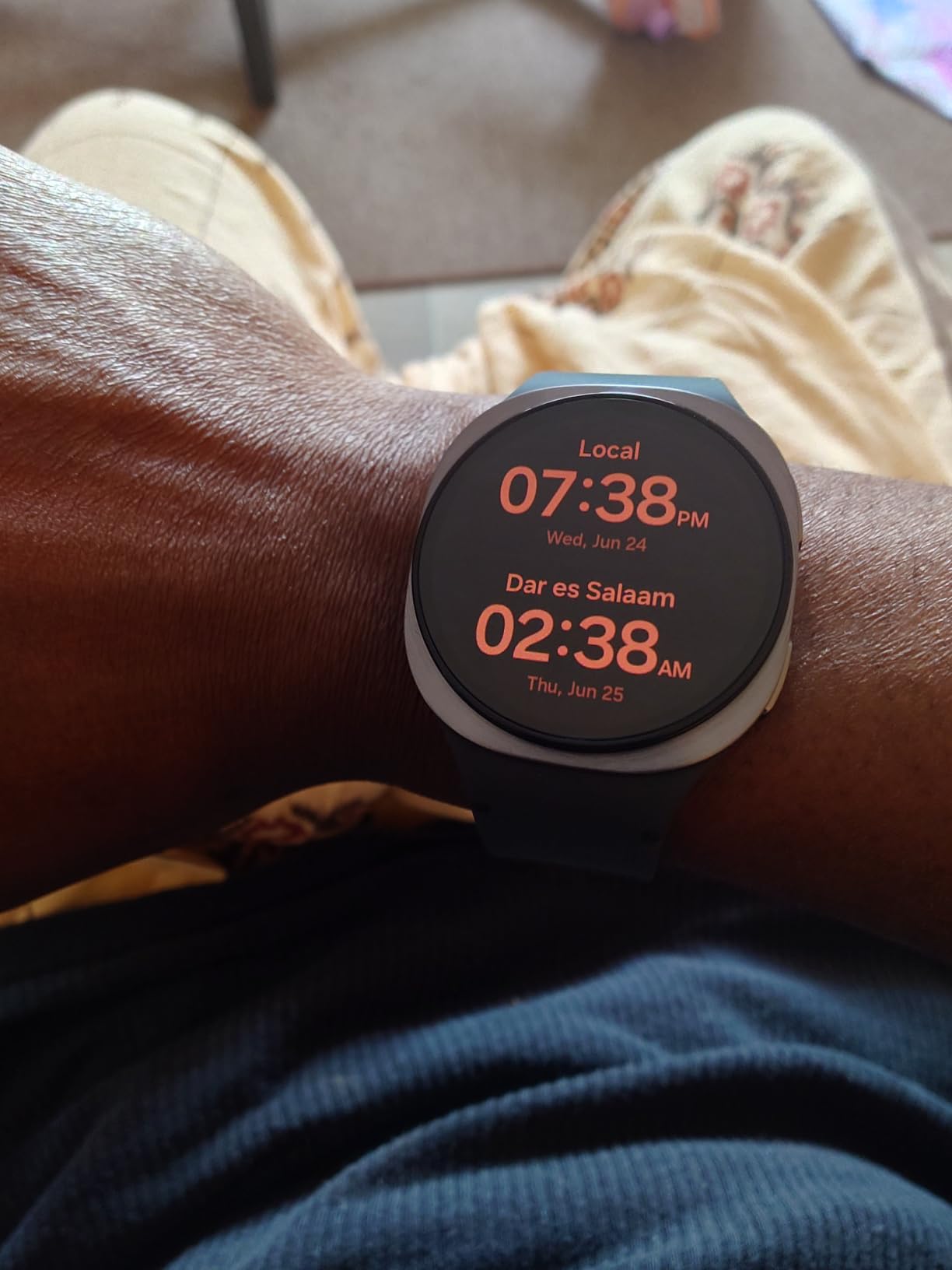
The catch is that ECG is not listed for this 40mm Bluetooth model, so if your priority is a rhythm strip this is not the watch. The blood pressure feature also requires the separately sold cuff for calibration and its availability depends on your region and phone, which is a real cost and availability decision rather than a checkbox.
Owners also point to the 500 nit display as the dimmest in this lineup, noticeably below the Watch 7, and note that the platform is still young with a smaller base of long-term reviews and fewer third-party apps than established Wear OS hardware.
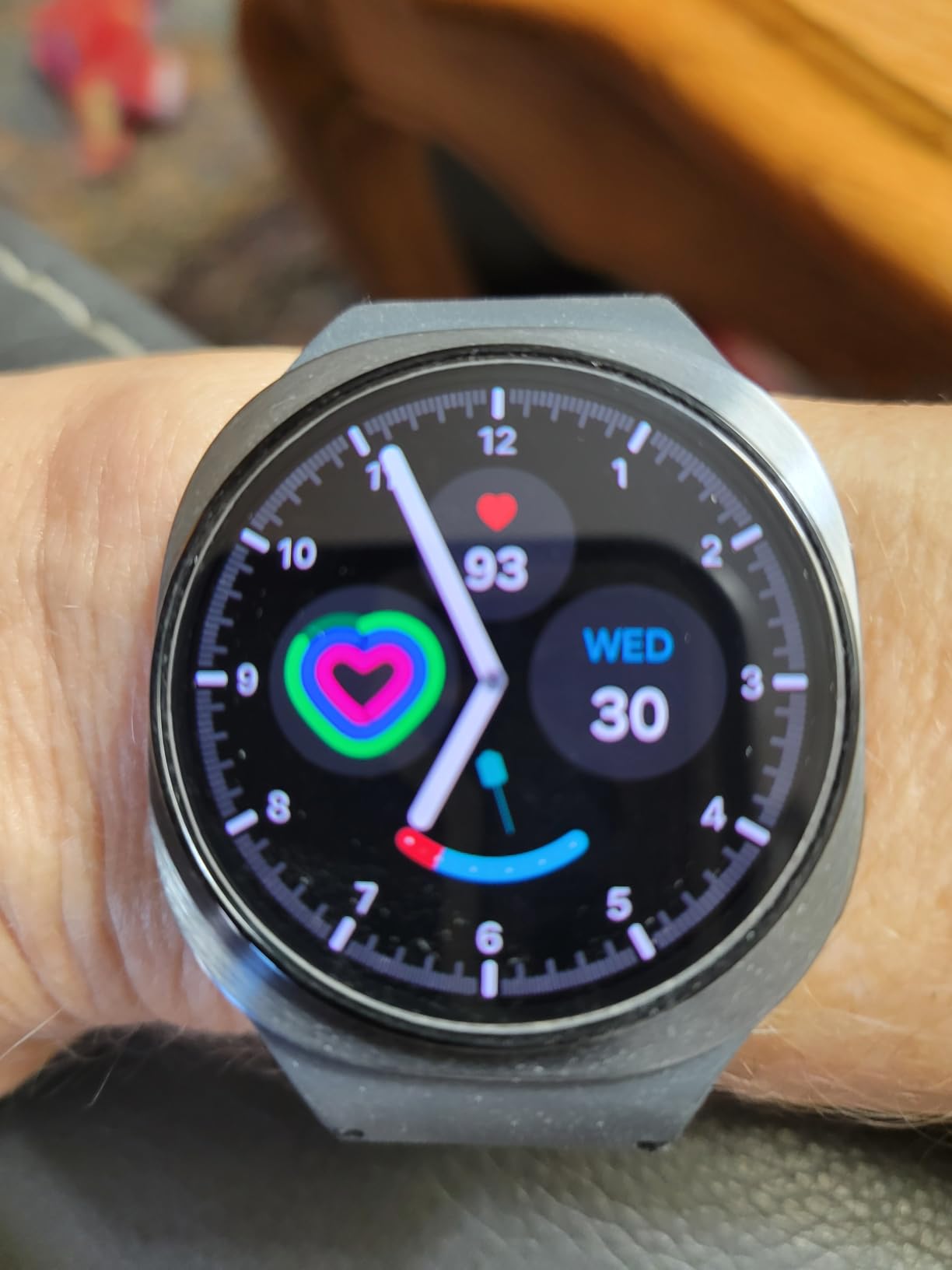
Who the Galaxy Watch 8 suits best
Anyone tracking blood pressure who is willing to buy the calibration cuff and lives in a region where the feature is supported. The thinner casing and improved battery make it the Galaxy watch most likely to stay on your wrist for continuous overnight readings.
The sleep coaching and Running Coach with real-time feedback and 5K or marathon programs add value for people who want guidance rather than raw numbers, and the on-device AI assistant handles the simple voice tasks.
Who should skip it
Skip it if your reason for buying a watch is an ECG document for a doctor. Also weigh the dim screen if you read the display outdoors often, and the extra cuff purchase if you only want the rhythm and sleep side of the health data.
6. Apple Watch Series 10: The Same ECG, More Screen and Faster Charging
Apple Watch Series 10 [GPS 46mm case] Smartwatch with Rose Gold Aluminum Case with Plum Sport Loop. Fitness Tracker, ECG App, Always-On Retina Display, Carbon Neutral
ECG app with irregular rhythm notifications
Vitals app for overnight metrics
Sleep apnea notifications
80 percent charge in 30 minutes
The Good
- ECG and irregular rhythm notifications backed by the iPhone Health app
- Up to 30 percent more screen area than Series 9 in a thinner body
- Vitals app surfaces overnight heart rate and respiratory rate trends
- Fast charging reaches 80 percent in about 30 minutes
- Overnight sleep apnea notifications add heart-health value
The Bad
- High and low heart rate and sleep apnea alerts depend on regional availability
- Blood Oxygen app is for wellness not medical use
- Shorter battery life than multi-day fitness trackers
- Some health features only useful when paired with an iPhone
The Series 10 runs the same ECG app and irregular rhythm notification system as the newer Series 11, so on the heart health side you lose nothing. Where it differs is physical: up to 30 percent more screen area than Series 9 in a thinner, lighter case, which makes reviewing a rhythm history or a Vitals trend more readable.
The Vitals app is the piece that matters most for overnight heart monitoring, tracking heart rate and respiratory rate trends while you sleep, and the sleep apnea notifications add a cardiovascular risk signal on top. Fast charging reaching 80 percent in roughly 30 minutes largely neutralises the one-day battery limitation.
![Apple Watch Series 10 [GPS 46mm case] Smartwatch with Rose Gold Aluminum Case with Plum Sport Loop. Fitness Tracker, ECG App, Always-On Retina Display, Carbon Neutral customer photo 1](https://hellskitchenfleamarket.com/wp-content/uploads/2026/10/B0DGHV2B2Z_customer_1.jpg)
Owners rate it 4.7, and the praise centers on display size, charging speed and the breadth of heart health features. The criticisms are consistent across Apple hardware: several notifications depend on regional availability, the Blood Oxygen app is for wellness rather than medical use, and the battery still needs daily attention next to multi-day trackers.
One practical note: because the Series 11 holds the same 4.7 rating with a much deeper review set and a newer generation of health features, the Series 10 is the pick only when the larger display is what you are actually after.
![Apple Watch Series 10 [GPS 46mm case] Smartwatch with Rose Gold Aluminum Case with Plum Sport Loop. Fitness Tracker, ECG App, Always-On Retina Display, Carbon Neutral customer photo 2](https://hellskitchenfleamarket.com/wp-content/uploads/2026/10/B0DGHV2B2Z_customer_2.jpg)
Who the Series 10 suits best
iPhone users who want a large, thin display and fast charging more than the newest health features. The Vitals and sleep apnea stack is the same family as the Series 11, so the overnight heart picture is genuinely good.
It also suits anyone upgrading from an older Apple Watch who finds the 46mm face difficult to read at a glance during activity or recovery sessions.
Who should skip it
Skip it if you want the hypertension notifications and the newest health features, since those are tied to the newer generation. Anyone who needs more than a day of battery or any cross-platform flexibility should look elsewhere.
7. Apple Watch Ultra 2: ECG That Handles the Outdoors
Apple Watch Ultra 2 [GPS + Cellular 49mm] Smartwatch with Rugged Titanium Case & Blue/Black Trail Loop S/M. Fitness Tracker, Precision GPS, Action Button, Extra-Long Battery Life
ECG app and irregular rhythm notifications
Precision dual-frequency GPS
100m water resistance
36 hour battery, 72 in Low Power Mode
The Good
- ECG and irregular rhythm notifications in a rugged outdoor body
- 36 hour battery rising to 72 hours in Low Power Mode is the longest Apple offers
- Dual-frequency GPS is accurate for trail navigation and running metrics
- Cellular allows calls texts and streaming without the iPhone
- 100m water resistance with dive computer to 40m
The Bad
- The 49mm titanium case does not suit smaller wrists
- Highest cost in this roundup
- Cellular needs a separate plan
- Heavy titanium body takes time to get used to
The Ultra 2 answers a question most ECG watches ignore: what happens when you are far from a phone and far from a charger. Battery life runs to 36 hours in normal use and 72 hours in Low Power Mode, which is the longest of any Apple Watch, and GPS plus Cellular means the ECG app still works with no phone in range.
Precision dual-frequency GPS gives accurate trail navigation and running metrics, and the case is 49mm corrosion-resistant titanium with a sapphire crystal, tested to MIL-STD 810H standards. Water resistance is 100 meters with dive computer support to 40 meters through the Oceanic+ app and EN13319 certification.
![Apple Watch Ultra 2 [GPS + Cellular 49mm] Smartwatch with Rugged Titanium Case & Blue/Black Trail Loop S/M. Fitness Tracker, Precision GPS, Action Button, Extra-Long Battery Life customer photo 1](https://hellskitchenfleamarket.com/wp-content/uploads/2026/10/B0CSTGJVKF_customer_1.jpg)
Owners still rate it 4.6, with clear enthusiasm for combining genuine ECG features with serious outdoor capability. What comes back consistently is fit. The 49mm case does not suit smaller wrists, the titanium body is heavy for all-day wear until you adjust to it, and the cellular option adds a recurring plan cost on top of the hardware.
For heart health specifically the ECG app and irregular rhythm notifications are the same family as the rest of the Apple range, so you are paying for endurance and reach rather than a different class of heart data.
![Apple Watch Ultra 2 [GPS + Cellular 49mm] Smartwatch with Rugged Titanium Case & Blue/Black Trail Loop S/M. Fitness Tracker, Precision GPS, Action Button, Extra-Long Battery Life customer photo 2](https://hellskitchenfleamarket.com/wp-content/uploads/2026/10/B0CSTGJVKF_customer_2.jpg)
Who the Ultra 2 suits best
Outdoor athletes, divers, and anyone whose work keeps them away from a phone or charger for long stretches. The battery, the 100m water resistance and the dual-frequency GPS are features that only matter if you genuinely use them, and the Action Button is useful for one-tap health access mid-effort.
It also suits people who want emergency reach, because cellular means Emergency SOS, calls and Check In work independently of the phone.
Who should skip it
Skip it if your wrists are small or if you wear a watch all day in an office, where the size becomes the thing people notice. The recurring cellular plan and the hardware cost also make it a poor value choice for a desk-bound user who charges nightly anyway.
8. Withings ScanWatch 2: A Clinically Validated ECG in a Classic Analog Case
WITHINGS ScanWatch 2 – Women’s Men’s Health Smartwatch, ECG, SpO2, Temperature, Sleep Tracking, Respiratory Health, Waterproof, 30-Day Battery, 30-Day Battery, Android & iOS
30 second medical-grade ECG with AFib detection
Blood oxygen and temperature
30 day battery
Analog hands with sapphire crystal
The Good
- Medical-grade 30 second ECG verified by owners against clinical devices
- ECG results exportable as PDF and video for a cardiologist
- Multi-week battery in a traditional analog form factor
- Design that suits office and formal wear
- Pulse oximetry and temperature tracking add breadth
The Bad
- Domed sapphire crystal catches glare at many angles
- Crown pusher is easily bumped on the same-side wrist
- No built-in GPS so routes rely on the phone
- Heart rate can drop out or read low while running
- Charging port design is awkward to seat
The ScanWatch 2 is the counter-programming pick. It looks like a traditional analog watch with stainless steel case, sapphire crystal and real hands, and it lasts 30 days on a charge. For heart health, that combination solves the two complaints people have about smartwatch ECG: how it looks in an office, and whether you can wear it long enough to catch nocturnal events.
The ECG itself is a 30-second medical-grade recording with AFib detection through the Withings ECG app, and owners report verifying readings against clinical devices themselves. Results export as PDF and video, which several reviewers specifically mention as the reason their doctor took the report seriously.
Around the ECG, you get continuous heart rate with high and low notifications, blood oxygen and body temperature monitoring, sleep stages with breathing and Vitality Score, and VO2 max with heart rate zones across 40+ sports. GPS comes from the paired smartphone, and it works with both iOS and Android.
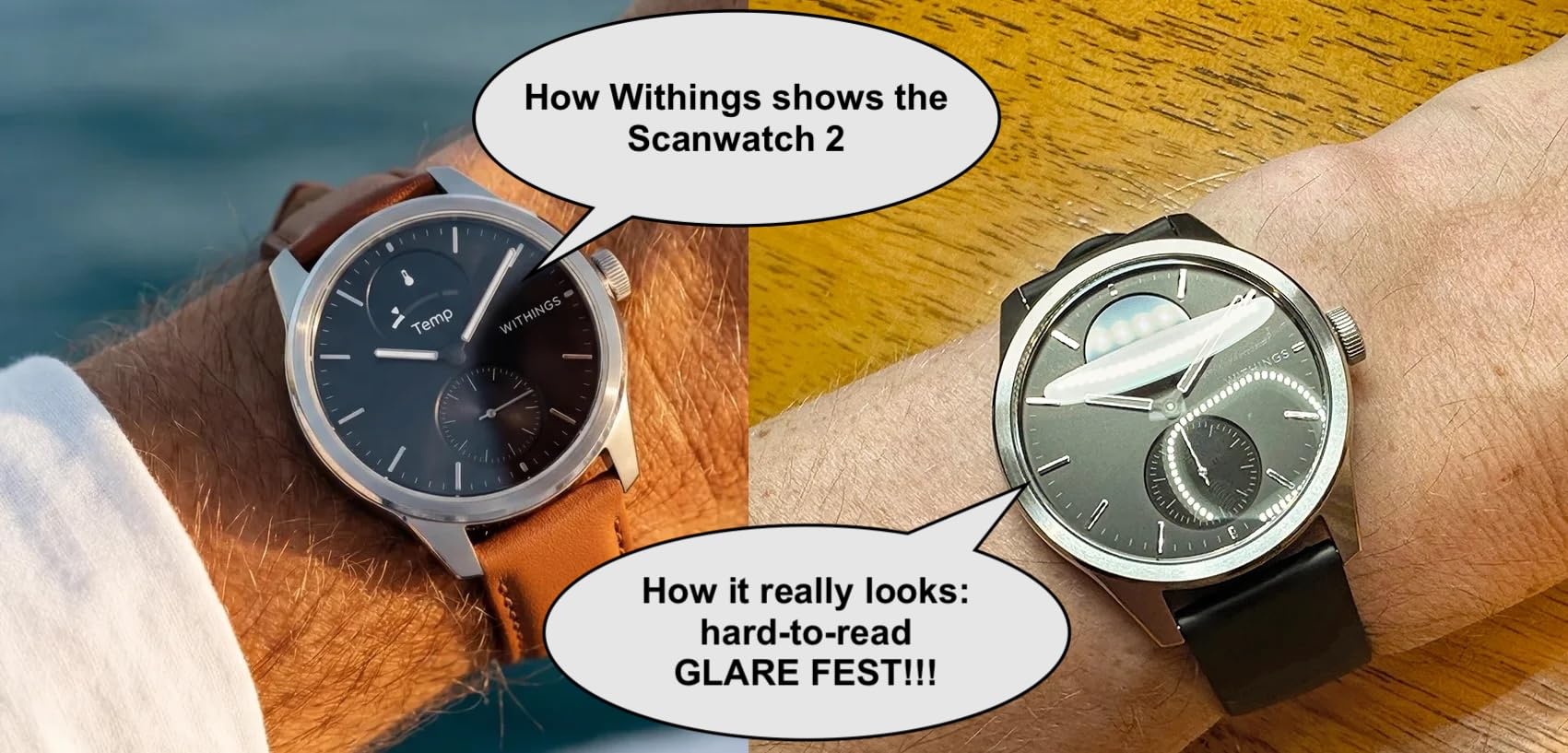
The 4.1 rating reflects real hardware friction. The domed sapphire crystal catches glare and is hard to read from many angles, the crown pusher gets bumped easily if you wear it on the matching side of the wrist, heart rate can drop out or read low during runs in cold weather, step counts can run 10 to 20 percent below manual tallies, and the charging port is awkward to seat.
Who the ScanWatch 2 suits best
People who will not wear anything that looks like a computer on their wrist, and anyone whose heart monitoring needs to keep running without nightly charging. The 30-day battery means a watch worn continuously through a two-week monitoring period produces a real dataset rather than a gap.
It is also the strongest option in this roundup for cross-platform users who want a documented ECG with a PDF and video export, and it is listed as HSA/FSA eligible, which is worth checking against your plan.
Who should skip it
Skip it if you need smart features, notifications, or independent GPS, because this is a hybrid with a small 0.63 inch display and a feature-light platform. It is also the wrong choice if you want a glanceable screen outdoors, where the domed crystal glare works against you.
9. Withings ScanWatch Nova: Dress Watch Form With Sensor Caveats
WITHINGS Scanwatch Nova – Heart Health Hybrid Smart Watch for Men & Women – SPO2, Temperature Monitoring, Sleep, Respiratory Health, Cycle Monitoring, 30-Day Battery Life, Apple iOS/Android
24/7 heart rate with high and low notifications
Overnight heart rate variability
SPO2 and temperature
30 day battery
The Good
- Flat sapphire crystal fights glare far better than the domed crystal on the ScanWatch 2
- Extensive heart and respiratory metrics in a dress watch
- Long battery life of often several weeks between charges
- Includes a stainless steel bracelet and an FKM strap
- Works with iOS and Android
The Bad
- Heart rate sensor can read 30 bpm low in testing
- Optical sensors do not read reliably with the metal bracelet installed
- Limited and buggy app with no on-watch alarm setup
- Battery is not user-replaceable
No ECG sensor is listed for the Nova, so it earns its place here on the strength of continuous heart data rather than on-demand rhythm capture. It gives 24/7 heart rate tracking with high and low heart rate notifications, overnight heart rate variability, SpO2 and temperature monitoring, respiratory health tracking, and a sleep quality score with light and deep sleep breakdown.
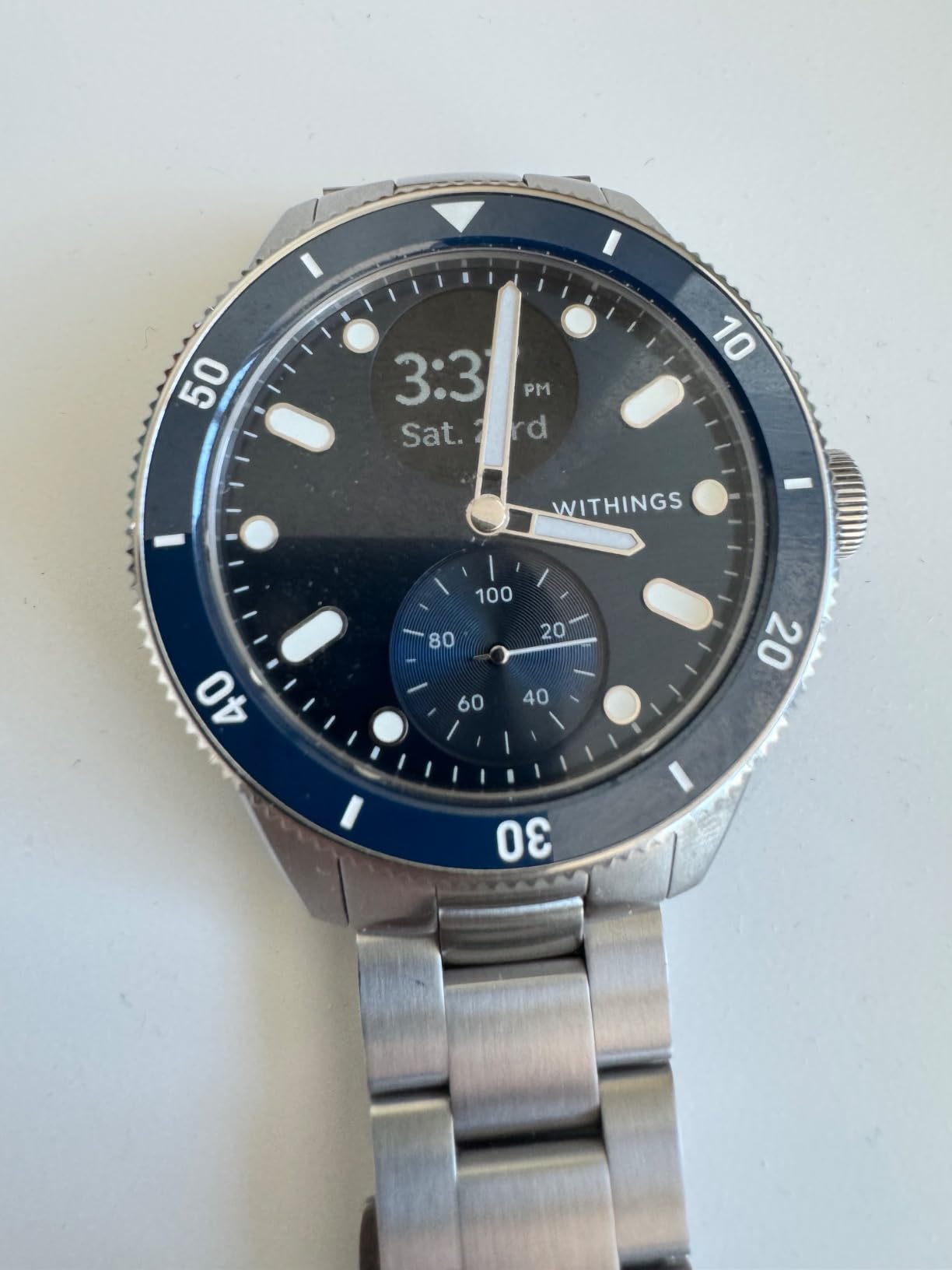
The hardware fixes the biggest complaint about the ScanWatch 2. The flat sapphire crystal on a rotating bezel resists glare far better, and the package includes both a stainless steel bracelet and an FKM strap. Battery life is again 30 days, and it works with iOS and Android.
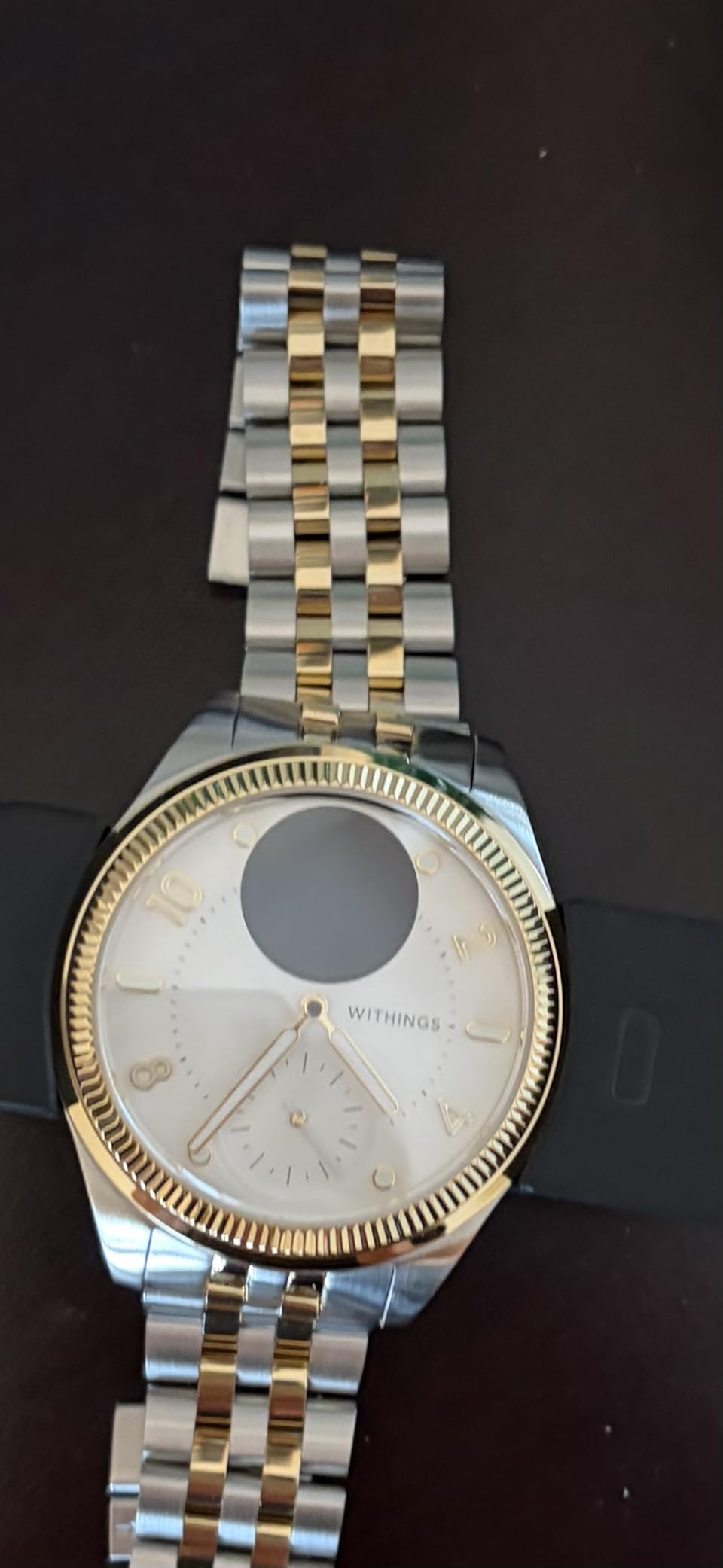
The critical reviews are specific and worth weighing. One owner measured heart rate 30 bpm below a Fitbit and a treadmill, another found the optical sensors fail entirely with the metal bracelet installed, and others point to a limited and buggy app with no on-watch alarm setup.
Also worth weighing: the battery is not user-replaceable, and the stainless steel bracelet often needs tools to size out of the box. For heart rate accuracy specifically, verify the readings against a chest strap or treadmill before trusting them for a medical conversation.
Who the Nova suits best
Anyone who wears formal or business clothing and wants heart, respiratory and sleep metrics without a screen that announces itself. The VO2 max Fitness Level with 40+ auto-detected activities and heart rate zones suits people who train but do not want a sporty watch.
If you want the traditional look, the readability improvement over the domed-crystal model, and do not need an ECG trace, this is the more polished of the two Withings hybrids.
Who should skip it
Skip it if heart rate accuracy is the point, given the reported low readings and the bracelet sensor problem. Anyone who needs a rhythm strip, or a full app experience, should choose the ScanWatch 2 or one of the ECG-equipped Apple and Samsung options instead.
10. Samsung Galaxy Watch 4 Classic 46mm Renewed: A Refurbished Route to the Full Sensor Suite
Samsung Galaxy Watch 4 Classic 46mm Smartwatch with ECG Monitor Tracker for Health Fitness Running Sleep Cycles GPS Fall Detection LTE US Version, Black (Renewed)
ECG monitor and blood oxygen tracking
Physical rotating bezel
Built-in GPS with fall detection
LTE connectivity
The Good
- Full ECG and blood oxygen sensor set at a reduced cost
- Wear OS gives a wide app and watch face selection
- LTE support means the watch works away from the phone
- Large 46mm case reads well on bigger wrists
- Many buyers report near-new cosmetic condition
The Bad
- Renewed battery health is often weak with some lasting under a day
- Refurbished water resistance seal is of uncertain quality
- May arrive without a charging cable or band
- Only a 90 day limited warranty
- Samsung Health is limited on non-Samsung phones
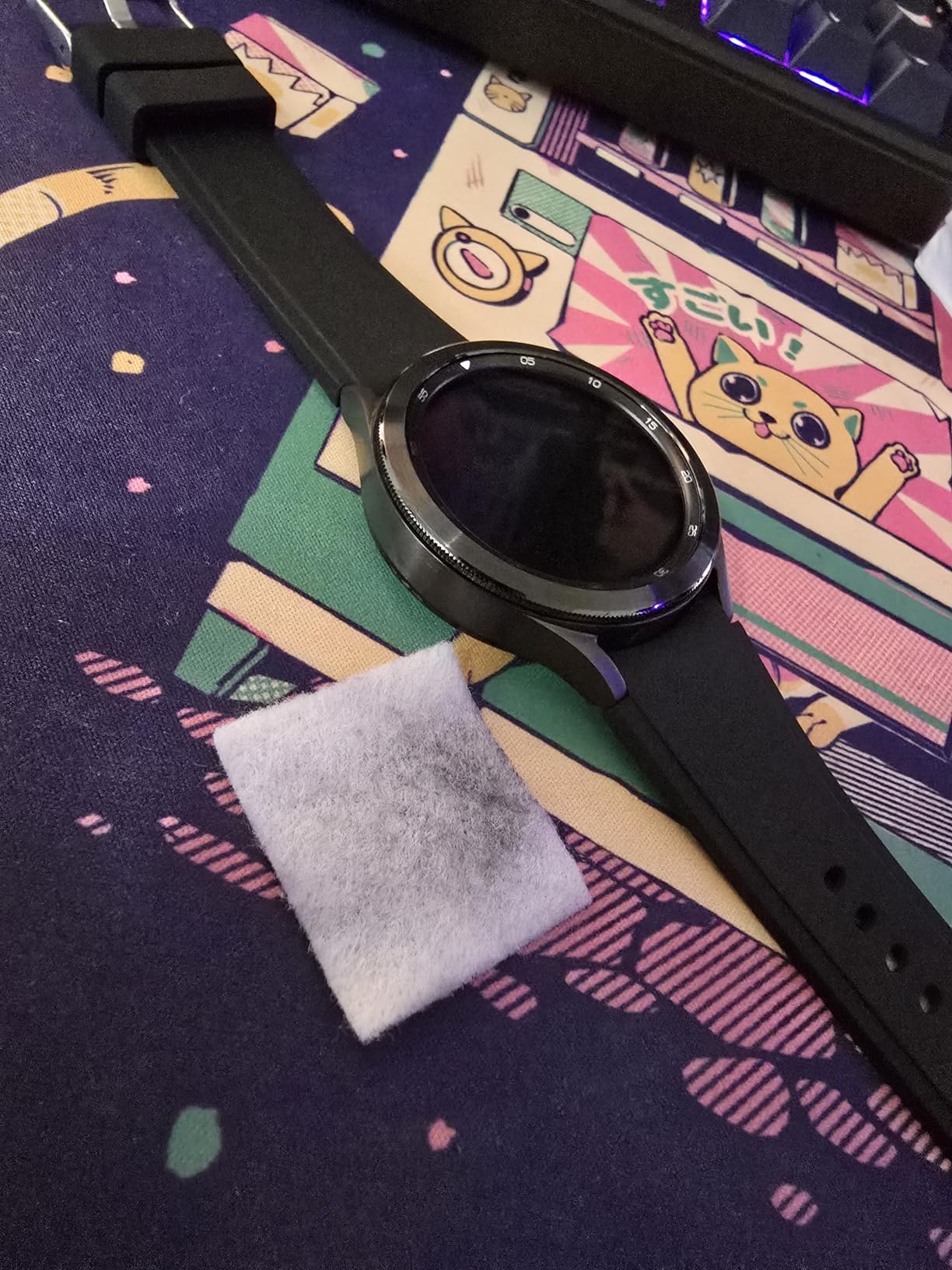
This is an Amazon Renewed Galaxy Watch 4 Classic in 46mm, and the reason it appears here is straightforward: you keep the full sensor suite, including the ECG monitor and blood oxygen tracking, on a larger rotating-bezel body with LTE, through a heavily used device rather than a new one. Owners treat it as a value play and many report near-new cosmetic condition.
The 46mm stainless steel case with a 1.4 inch AMOLED at 450 by 450 resolution suits bigger wrists, the physical rotating bezel handles navigation without a touchscreen, and Wear OS provides a broad app and watch face selection. Built-in GPS, GPS fall detection and LTE connectivity mean the watch works away from the phone, including for calls on a nano SIM.
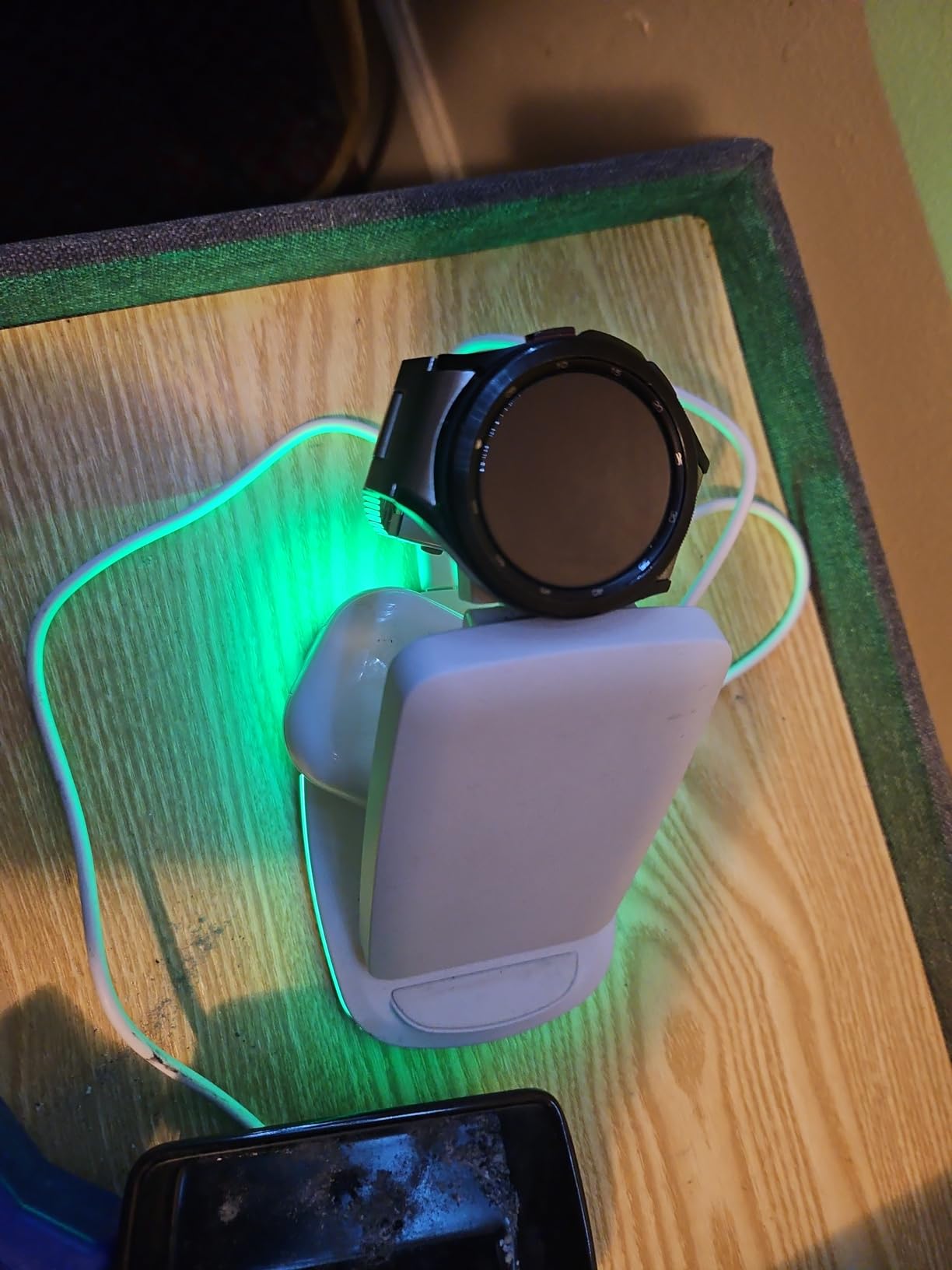
The dominant complaint is battery degradation. Renewed cells are often much weaker than new, and several owners report a day or less of life, which matters a great deal for a watch whose purpose is overnight monitoring. The listed average battery life for this configuration is 15 hours.
Other recurring issues: the refurbished water resistance seal is of uncertain quality, the watch may turn up without a charging cable or band, and the 90-day limited warranty is short for a heavily used device. As with the Galaxy Watch 4, Samsung Health functionality is limited when paired with non-Samsung phones.
Who the renewed Classic suits best
A Galaxy phone owner with a bigger wrist who wants LTE, a large display and the ECG sensor without paying new-watch money. Wear OS still gives a wide app selection, which the newer smaller Galaxy models have not fully matched.
It can also work as a secondary or backup heart monitor, though we would not recommend it as your only device for overnight rhythm tracking given the battery variability.
Who should skip it
Skip it if you depend on overnight monitoring, because renewed battery health is the single most predictable problem. Anyone who swims regularly, or who wants a long warranty behind a health device, should spend on newer hardware instead.
How to Choose the Best Smart Watches With ECG for Heart Health: Six Criteria That Matter
1. Match the watch to your phone first
Nothing else matters if the ecosystem does not line up. Apple Watch ECG features require an iPhone, and the Series 11 needs an iPhone 11 or newer for full value. The Samsung ECG path runs through the Samsung Health Monitor app and reading the results needs a compatible Galaxy phone, with limited functionality on other Android devices. The Galaxy Watch 8 is the exception that works with Samsung and other Android handsets. The Fitbit Sense 2, both Withings hybrids and the renewed Classic are the most flexible, though the Samsung Health caveat still applies to the last of those.
2. Confirm the ECG is a real sensor, not a marketing word
Several watches in this roundup track heart rate beautifully but list no ECG sensor at all: the Galaxy Watch 7 40mm Bluetooth, the Galaxy Watch 8 40mm and the Withings ScanWatch Nova. If a doctor asked for rhythm data, cross-check the specification list before anything else. On-demand ECG with irregular rhythm notifications is the specification to look for.
3. Check regulatory status, and know the difference between cleared and approved
The phrase most shoppers see is wrong. Consumer ECG software is generally cleared through the 510(k) pathway or authorized under the De Novo pathway as an over-the-counter Class II medical device, which means it has been shown to be substantially equivalent to a predicate device or has been reviewed for novel low-risk use. That is not the same as FDA approval, which applies to high-risk devices and is a far heavier bar. When a brand lists a clearance record number, that is the document worth looking up.
4. Look for a usable share and export workflow
An ECG you cannot show a doctor has limited value. Apple exports PDF reports through the Health app, and the Withings ScanWatch 2 exports both PDF and video, which several owners cite as the reason their cardiologist engaged with the data. Check that your chosen watch produces a document, and check how many steps it takes to send it.
5. Battery length decides what you can actually monitor
The spread here is enormous, from 15 to 30 hours on the renewed Classic and the Galaxy Watch 7, through 24 hours on the Apple Watch Series 11 and 36 hours in Low Power Mode on the Ultra 2, out to 6+ days on the Fitbit Sense 2 and 30 days on both Withings hybrids. If your concern is nocturnal events, multi-day battery is not a luxury. If you are checking for palpitations during the day, daily charging is manageable.
6. Budget for the ecosystem, not just the watch
Blood pressure monitoring on the Galaxy Watch 8 needs a separately sold cuff, and the cellular model of the Ultra 2 needs a plan. Accessories like the best field watches show how much of the budget can go to the rest of the kit, and if you prefer a purely mechanical timepiece our best pocket watches roundup covers the trade-offs there. Separately, a chest strap heart rate monitor remains more accurate for continuous heart rate, and a single-lead clinical ECG remains the gold standard for rhythm diagnosis. For anyone also changing their diet, our heart-healthy kitchen tool guide covers the other half of the routine.
When Not to Rely on a Smartwatch ECG
A smartwatch ECG records a single-lead tracing, roughly comparable to Lead I on a clinical 12-lead ECG. It is a screening and documentation tool. It cannot diagnose, it cannot detect a heart attack, and a clean sinus rhythm result is not a clean bill of health.
Readings also come back inconclusive more often than people expect, typically when heart rate is high or when you move during the 30 seconds. People on the r/AFIB community consistently discuss watches as screening tools rather than diagnostic ones, and that framing is the right one. Several users have documented chasing alerts that turned out to be premature atrial or ventricular contractions rather than atrial fibrillation.
Do not use a smartwatch ECG to rule out a problem. If you have chest pain, shortness of breath, fainting, or a racing heartbeat with symptoms, seek medical care rather than a watch reading. For anyone with diagnosed AFib, a doctor may also recommend a formal monitor, because a watch cannot capture every episode the way a multi-day patch does.
Frequently Asked Questions
Which smartwatch has the most accurate ECG?
Among the watches reviewed here, the Apple Watch Series 11 and Series 10 share the most mature ECG workflow and the highest owner ratings at 4.7. The Withings ScanWatch 2 is marketed as medical-grade and is verified by some owners against clinical devices, while the Samsung Galaxy Watch 4 40mm is the most established entry point with more than 20k reviews. Accuracy depends as much on taking a still 30-second reading as on the sensor itself.
Which smartwatch has FDA clearance for ECG monitoring?
Consumer ECG apps on smartwatches are cleared or authorized by the FDA as over-the-counter Class II medical devices, usually through the 510(k) pathway or the De Novo pathway, rather than approved in the strict sense. Check the clearance record number listed by the brand for your specific model and software version, since the record applies to a particular combination of device and ECG app.
Can a smartwatch ECG give false positives for atrial fibrillation?
Yes, and owners report it most often when heart rate is high or when moving during the recording. Premature atrial and ventricular contractions are the specific rhythms that tend to be classified as possible AFib. The right response is to repeat the reading while resting and still, and to bring the PDF to a clinician rather than treating an alert as a diagnosis.
What should I do when my watch sends an irregular rhythm alert?
Sit down, keep your arm still, and take a second on-demand ECG rather than reacting to the passive alert. If it repeats, note the time and what you were doing, then export the PDF and contact your doctor. Seek urgent care instead of using the watch if you have chest pain, breathlessness, fainting, or a sustained racing heartbeat.
Do I need an iPhone to use a smartwatch ECG?
Apple Watch ECG features require an iPhone, with the Series 11 needing an iPhone 11 or newer for full value. Samsung ECG interpretation runs through the Samsung Health Monitor app and needs a compatible Galaxy phone, though the Galaxy Watch 8 works with other Android handsets. The Fitbit Sense 2 and both Withings hybrids work on both iOS and Android.
Is it worth having ECG on a watch?
It is worth it if you want to capture a rhythm strip at the moment you feel palpitations, share a document with a doctor, or monitor overnight without a clinic visit. It is not a substitute for diagnosis, and models without a listed ECG sensor cannot provide that data at all. Battery length matters too, since nocturnal events need a watch that stays on.
Conclusion: The Best Smart Watches With ECG for Heart Health
For most people, the Apple Watch Series 11 is the pick. It pairs the cleanest on-demand ECG workflow with overnight Vitals, sleep apnea notifications and a PDF export that a doctor will recognise, and its 4.7 rating across 8618 reviews gives it the deepest evidence base here. If you are on Android, the Samsung Galaxy Watch 4 40mm is the entry point, and the Galaxy Watch 8 adds blood pressure tracking if your doctor cares about that too.
Choose the Fitbit Sense 2 if you will not charge nightly, and the Withings ScanWatch 2 if you want a documented ECG in a classic analog case with a 30-day battery and HSA/FSA eligibility. Check your phone first, confirm the model actually lists an ECG sensor, and treat every alert as a prompt to take a second reading and talk to a clinician. That combination is what turns the best smart watches with ECG for heart health from a gadget into a useful part of a 2026 health routine.