
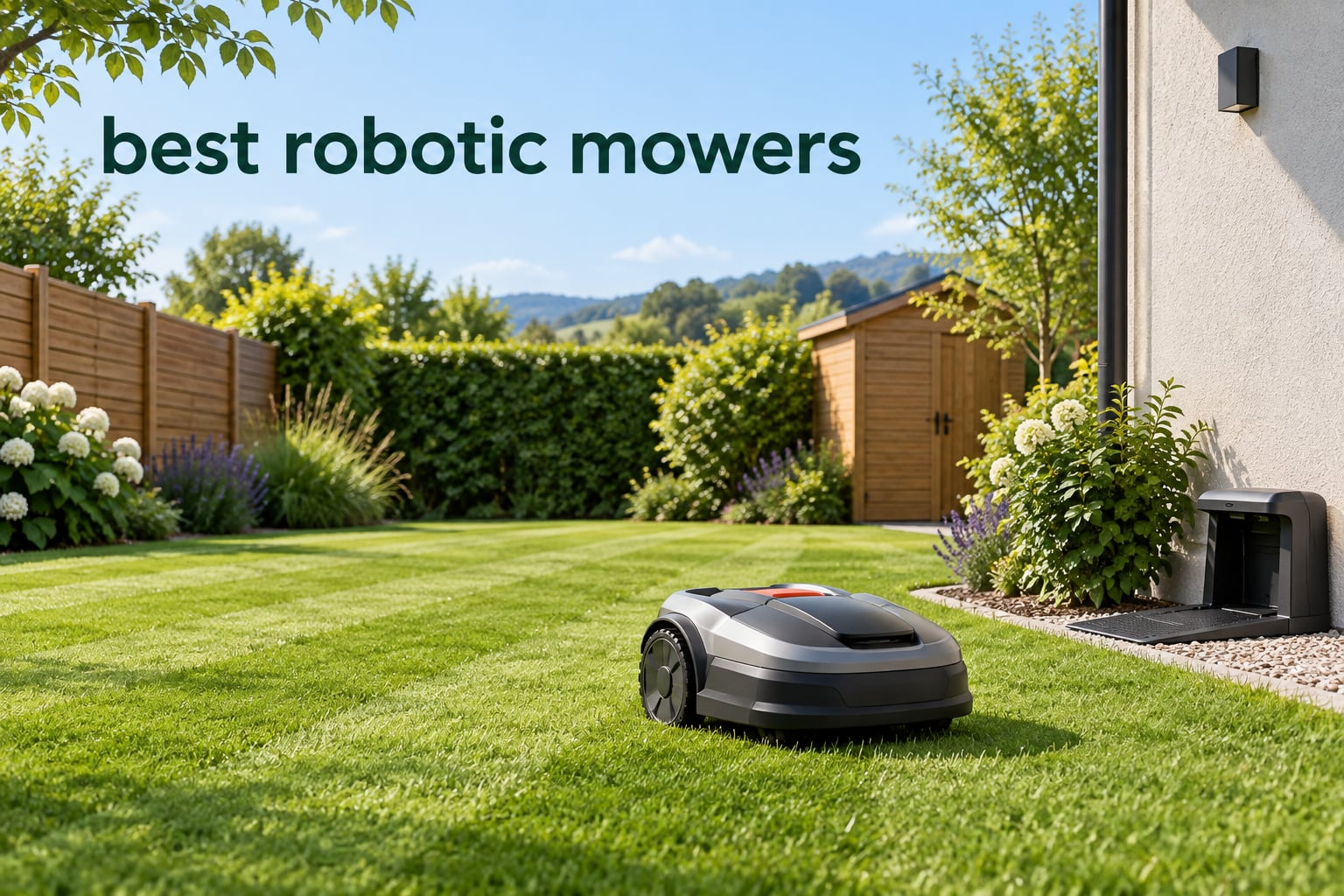
The best robotic mowers do one unglamorous job better than anything else in the shed: they cut your grass every few days without you being outside for it. A robotic mower is a battery-powered machine that drives itself around your lawn on a schedule you set, mulches the clippings back in, and returns to its charging dock when the battery runs low. Most owners say the same thing afterward, which is that they cannot go back to a Saturday spent pushing a mower.
That payoff is real, but only if the machine matches your lawn. Buy a two-wheel-drive model for a steep hillside and you will spend more time freeing it from a flower bed than mowing grass. Buy a narrow-deck robot for a half acre and it will still be working at midnight. This guide covers 12 of the best robotic mowers available now, ranked by how they handle real yards rather than by spec sheet alone.
We spent several months working through the current wire-free generation, reading owner reports in the r/mammotion, r/worxlandroid and r/automower communities, and comparing navigation, slope ratings, deck width and noise figures side by side. We also flag the complaints nobody puts on a product page, like failed map saves, app lockups and boundary software that leaves strips of unmowed grass. If you would rather keep mowing by hand, our Toro mower reviews cover the manual route.
One thing worth saying up front: a robot maintains a lawn, it does not rescue one. If your grass is overgrown, uneven or full of bare patches, fix that first.
Top 3 Picks: Best Robotic Mowers in 2026
These are the three we would shortlist first, each for a different lawn. The Segway Navimow i105N is the strongest all-round buy in this group, the Mammotion LUBA 2 AWD 3000HX is the one to buy if your yard has real hills, and the ANTHBOT M5 is the easiest wire-free machine to set up on a small lawn.

Segway Navimow i105N
- RTK plus vision navigation
- Wire-free virtual boundary
- 58 dB(A) quiet
- Up to 12 zones

Mammotion LUBA 2 AWD 3000HX
- All-wheel drive
- 80% slope rating
- 0.75 acre capacity
- RTK plus AI vision

ANTHBOT M5 with Garage
- Dual vision plus NRTK
- No perimeter wire
- 20 managed zones
- Garage included
All 12 Best Robotic Mowers Side by Side in 2026
Every model below runs without a boundary wire. The differences that matter in practice are how each one navigates, how much lawn it covers per charge, how steep a slope it can take and how quiet it is. Use this table to narrow the field before reading the write-ups.
| Product | Key Specs | Buy |
|---|---|---|
|
|
Check Latest Price |
|
|
Check Latest Price |
|
|
Check Latest Price |
 |
|
Check Latest Price |
 |
|
Check Latest Price |
 |
|
Check Latest Price |
 |
|
Check Latest Price |
 |
|
Check Latest Price |
 |
|
Check Latest Price |
 |
|
Check Latest Price |
 |
|
Check Latest Price |
 |
|
Check Latest Price |
1. Segway Navimow i105N – Best Robotic Mower Overall for Small to Medium Yards
Segway Navimow i105N Robot Lawn Mower Perimeter Wire Free 1/8 Acre RTK+Vision Robotic Lawnmower, AI-Assisted Mapping, Virtual Boundary, APP Control, 58dB(A) Quiet, Multi-Zone Management
Cutting width: 7.1 inch
Weight: 24 lbs
Up to 12 zones
58 dB(A) quiet
3-year warranty
The Good
- RTK plus vision holds navigation under heavy tree cover
- Very quiet at 58 dB(A)
- Sharp parallel cut lines
- Support ships free replacement parts
The Bad
- Mapping software can lose saved maps
- RTK antenna needs a clear view of the sky
- Standard wheels are weak on uneven ground
The i105N is the model we keep coming back to, and after a full season with one it is still the one neighbours ask about. It is rated for roughly an eighth of an acre, though Navimow has expanded coverage to about 1,200 square meters through firmware updates, and it navigates with EFLS 2.0 RTK backed by a vision camera. That combination matters because it keeps working in the shaded strip along a fence line where pure satellite positioning gives up.
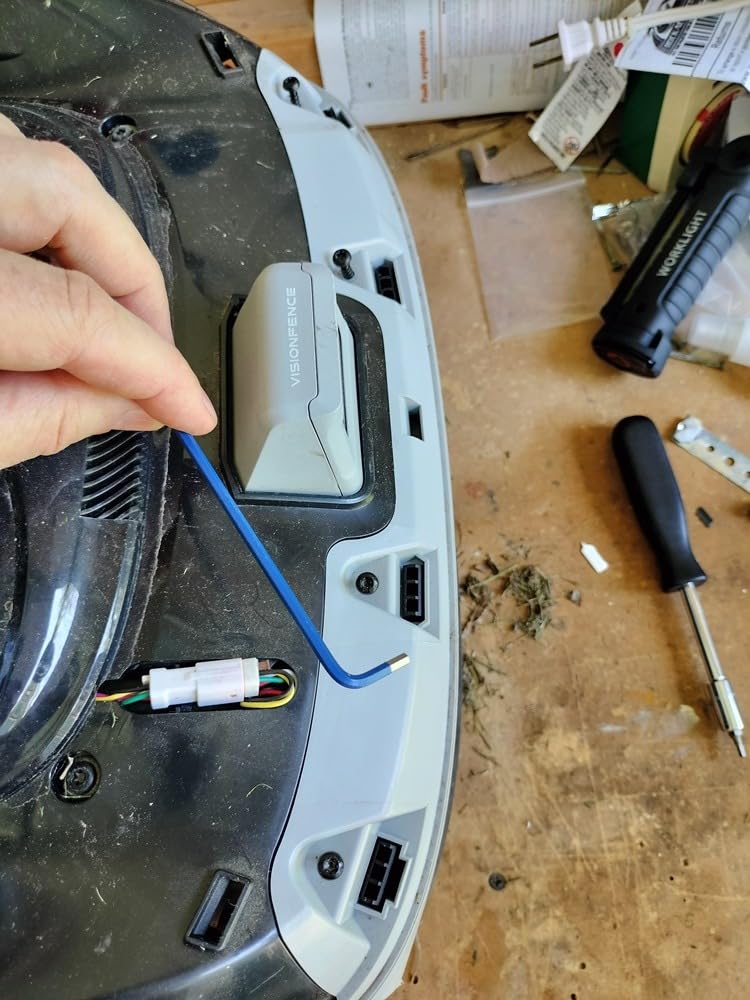
Setup took an afternoon, most of it walking the perimeter with the app. Once mapped, the cut quality is tidy, with parallel stripes and very little overlap, and it resumes from base without needing a nudge. At 58 dB(A) it is quiet enough that we have run it at eleven at night without a complaint.
The weak spot is the app rather than the machine. Owners on the Navimow boards report maps that fail to save and have to be rebuilt, which is irritating when a lawn takes an hour to map. The vision fence also misses low obstacles such as garden hoses, sprinklers and gate posts.
Check the sky view and your narrowest gap
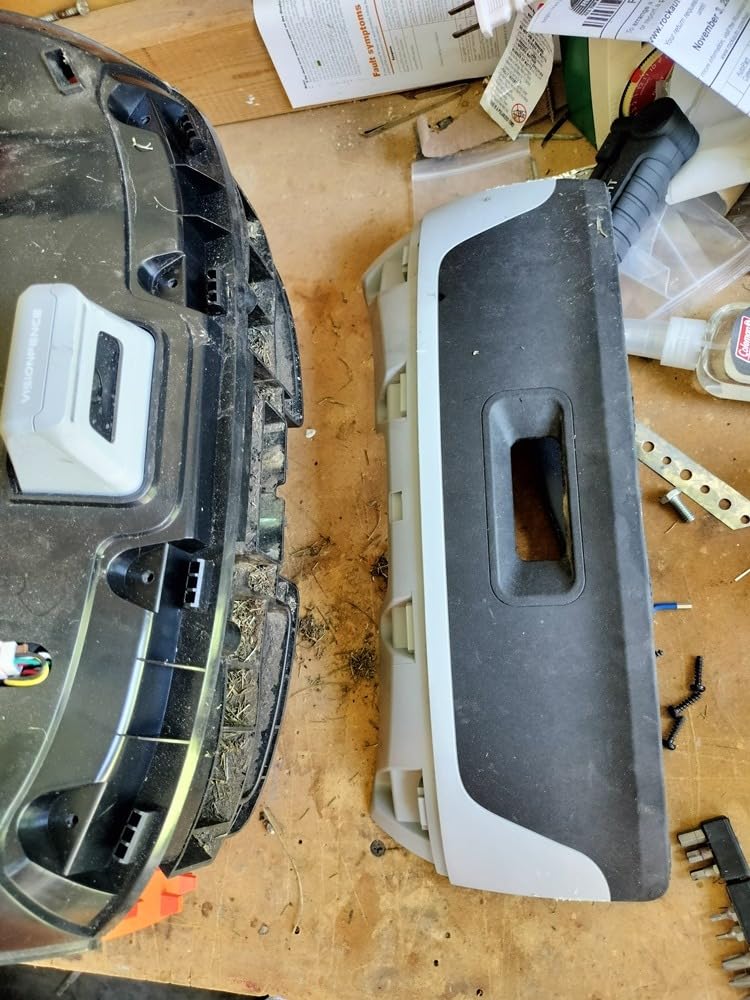
Look up from your lawn and see whether the sky view is reasonably open, because the RTK antenna needs it. Under heavy tree canopy, buy a LiDAR machine instead. Then measure the narrowest gap between lawn features, because this machine will not squeeze through a standard gate opening and any route to a separated grass patch has to be edited out of the map.
Plan for two accessories
The standard wheels are the weak link on anything other than flat, closely cut grass, and the difference off-road wheels make is what turns a reliable machine into one that gets stuck at the worst moment. The garage is not in the box either, and it is worth adding since weather protection extends deck and battery life.
2. Mammotion LUBA 2 AWD 3000HX – Best Robotic Mower for Steep Slopes and Rough Ground
Mammotion LUBA 2 AWD 3000HX Robot Lawn Mower with 4G, All-Wheel-Drive for 80% Slope, Perimeter Wire Free for 0.75 Acre, UltraSense AI Vision & RTK Auto-Mapping, 2.2″-4.0″ Adjustable Cutting Height
Cutting width: 15.7 inch
Motor: 165W all-wheel drive
Slope rating: 80%
Capacity: 0.75 acre
The Good
- Climbs slopes to 80% without bogging down
- Very quiet operation for night mowing
- Precise boundary following and clean striping
- 30 zones with no-go areas
The Bad
- Setup and mapping demand patience
- 4G subscription needed after the first year
- Does not mulch clippings back in
If your property has a hillside that makes you mow sideways, look here first. The 165W four-wheel drive is rated for 80% grades, roughly 38 degrees, and that headroom is the difference between mowing your slope and avoiding it. On uneven ground it kept a straight line where two-wheel-drive machines wandered off toward the beds.
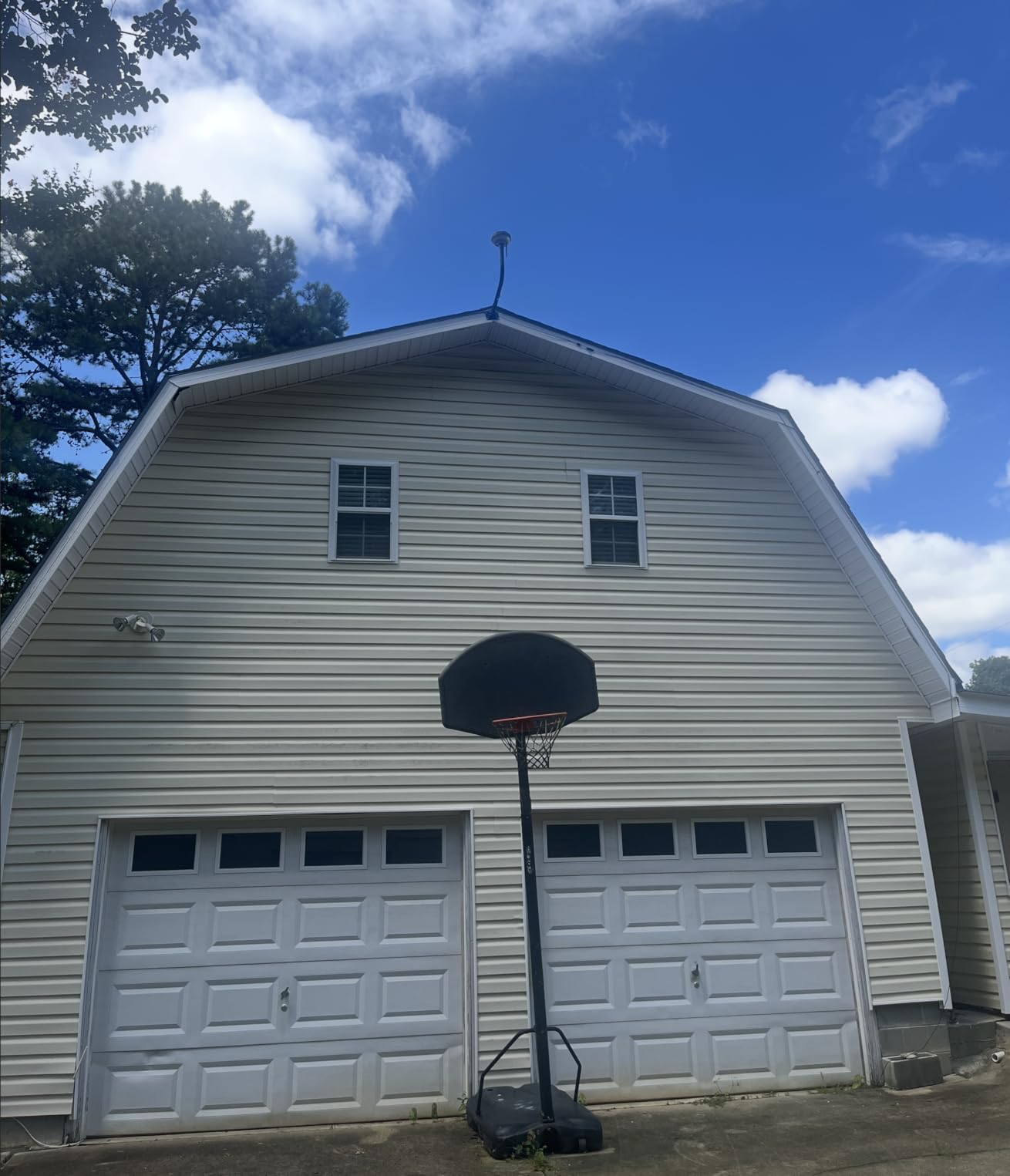
Its dual-blade disc gives an effective cutting width of about 15.8 inches, so a three-quarter acre yard gets covered far faster than with the 7 to 8 inch decks on most rivals. Owners with larger properties report replacing a paid lawn service with this machine, and the striping is straight enough that people comment on it.
Where we would temper expectations is setup. RTK auto-mapping plus zone configuration takes longer than the marketing implies, and you want to read the app guide before you start rather than during. The 4G link keeps it reachable away from your Wi-Fi, with a free first year before the subscription applies.
Is the subscription and antenna worth it
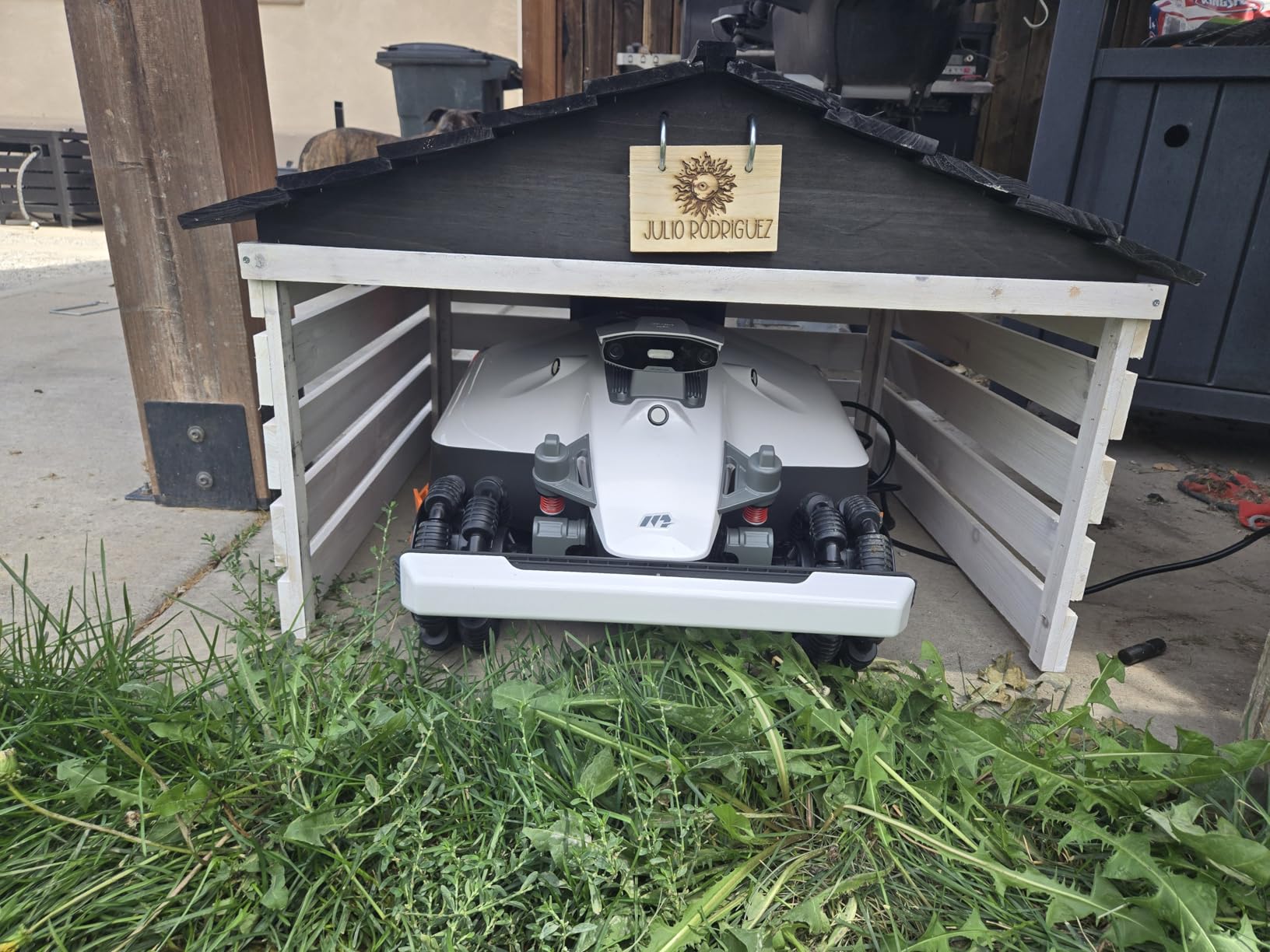
For a large property, yes. RTK plus UltraSense vision is what lets this mow under trees without losing its boundary, and 4G means you can start a session from work rather than standing on the lawn. If your yard is small and open, you are paying for capability you will not use.
What owners complain about
Reliability reports are mixed on a small sample, and a few owners describe malfunctions that took a long warranty turnaround to resolve. Sharp turns at certain settings can tear turf, and it does not mulch clippings back down. Roof-mounting the RTK antenna is the upgrade owners most often wish they had bought from day one.
3. ANTHBOT M5 with Garage – Best Robotic Mower for Small Yards and Simple Setup
ANTHBOT M5 Robot Lawn Mower 1/8 Acre with Garage, Dual Vision+Full-Band NRTK Robotic Lawnmower, No Perimeter Wire, App Control Obstacle Avoidance, 45% Slope, Cutting Height, Multi-Zone Mapping
Cutting width: 7.9 inch
Weight: 21.6 lbs
Slope rating: 45%
Zones: up to 20
Garage included
The Good
- Easiest wire-free setup we tried
- Garage included in the package
- Dual vision plus NRTK handles beds and trees
- Quiet enough for early hours
The Bad
- Narrow deck means multiple passes on larger lawns
- A thin strip of grass remains at the very edge
- Manual is vague on adding a second zone
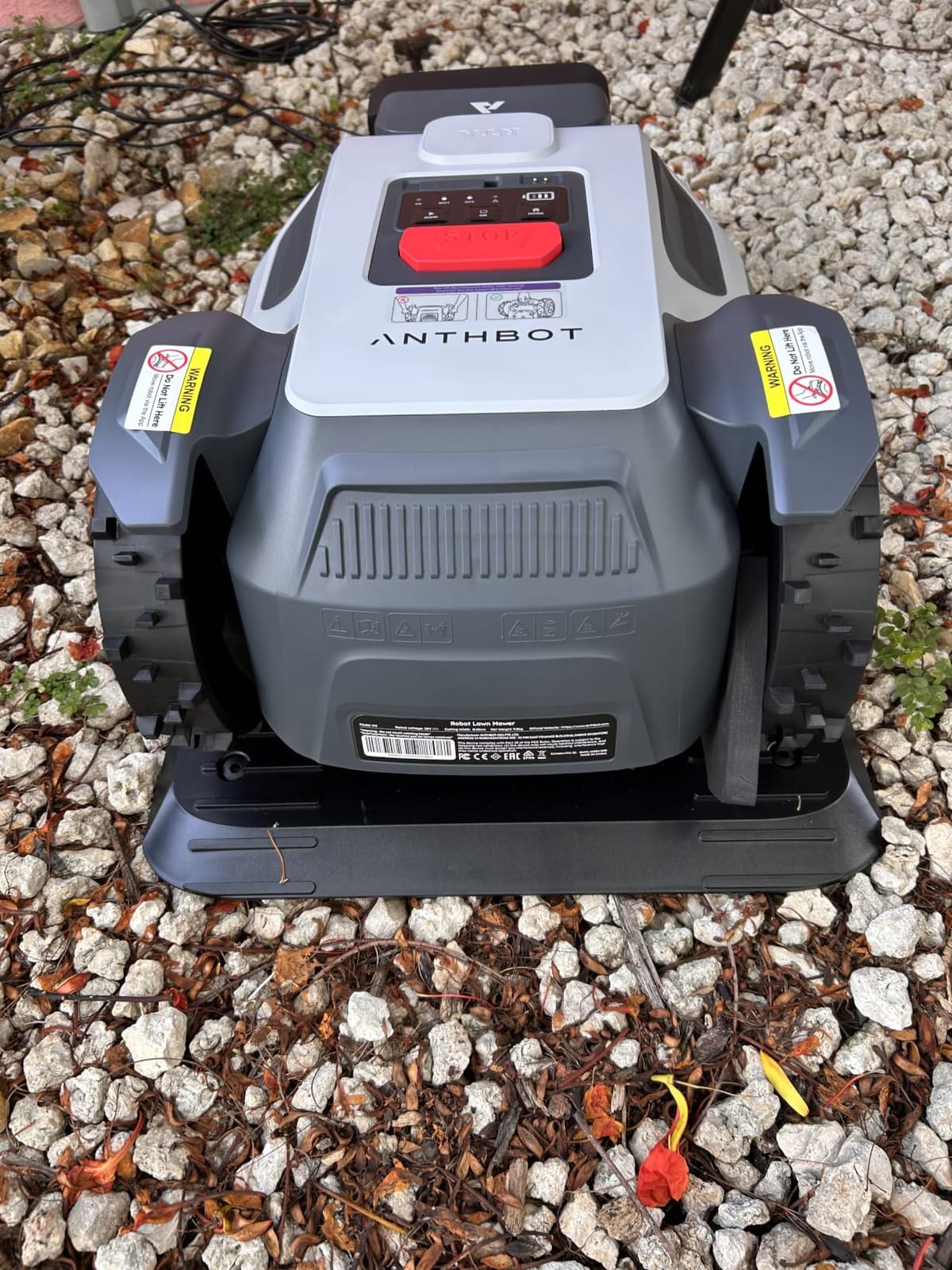
The M5 solves the problem most first-time buyers hit, which is not the mowing but the mapping. Two 150-degree HDR cameras plus full-band NRTK build a virtual map in about ten minutes with no wire to bury and no antenna to site. For anyone who dreads a weekend of trenching, that alone puts it near the top of this list.
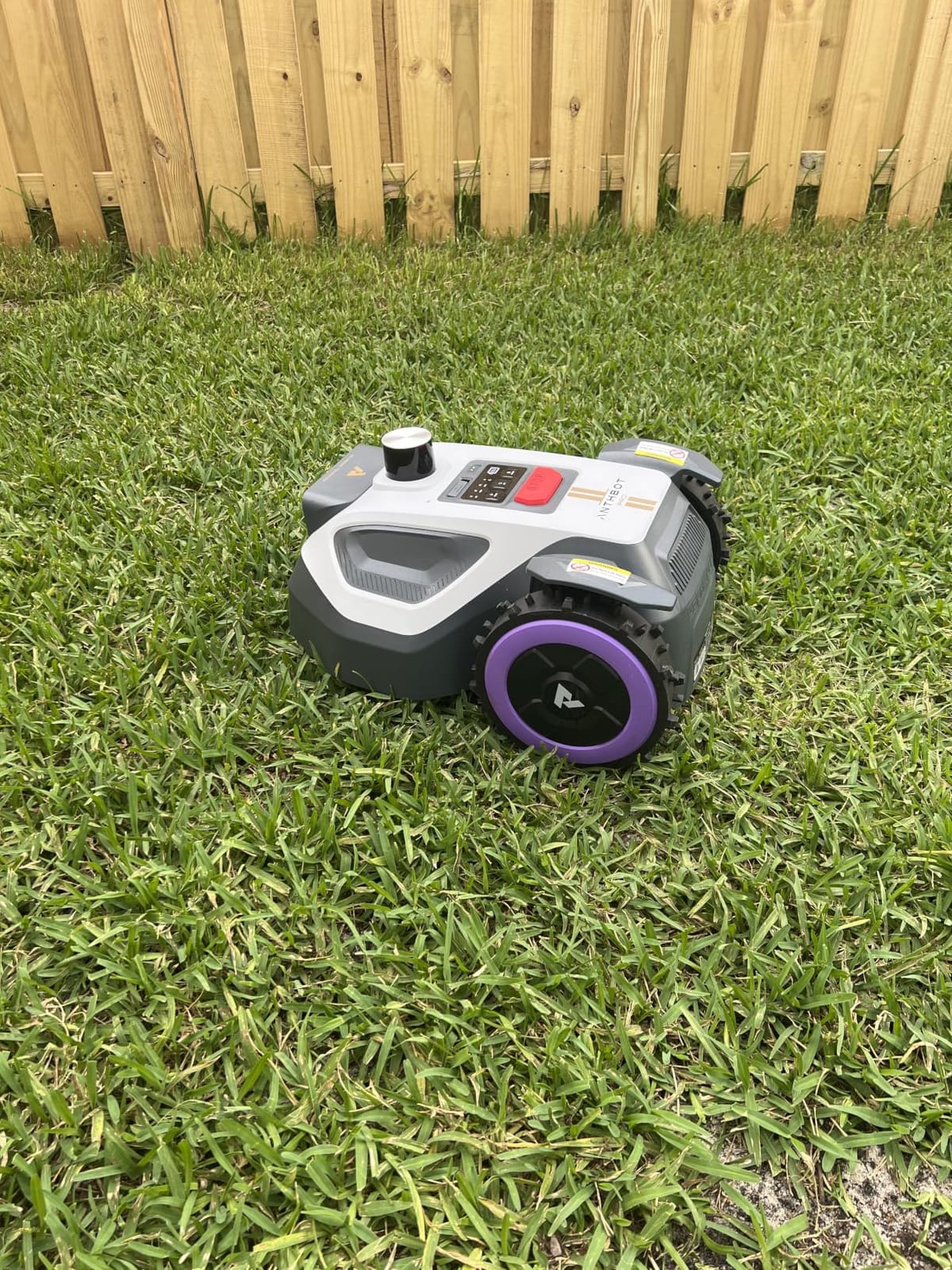
Cut quality is even with clean lines and a 1.2 to 2.7 inch height range across five positions. It runs at or below 58 dB, has a rain sensor, and supports 4G so it keeps working when your Wi-Fi does not reach the end of the garden.
The limitation that shows up most often is the deck. At 7.9 inches it needs several passes, and past a small lawn that means more charging cycles and longer run time. A handful of owners also report that the 45% slope figure is optimistic on their particular ground.
Who this suits best
A flat or gently rolling yard under about an eighth of an acre with trees, beds and a play area in it. This is a family lawn, and recognition of 1000-plus obstacle types means toys and garden furniture get navigated rather than crashed into. The garage in the box saves a separate accessory decision.
Where it leaves work for you
Edges. There is always a thin uncut strip right at the lawn border, and on a property where the edge is visible from the road that strip is what you notice. The written manual also does a poor job explaining how to add a second mowing zone.
4. ECOVACS GOAT A2000 LiDAR PRO – Best Robotic Mower for Thick Grass and Crisp Borders
ECOVACS Goat A2000 LiDAR PRO Robot Lawn Mower, Dual LiDAR Navigation
Navigation: 360 degree dual LiDAR
Coverage: half acre
Height range: 1.2 to 3.6 inch
3.0Ah battery
The Good
- Dual LiDAR works with no RTK antenna or wire
- Built-in TruEdge trimmer handles borders
- 32V platform cuts dense warm-season grass
- Familiar brand with wide parts availability
The Bad
- Narrow 3.6 inch deck makes coverage slow
- 50 minute runtime means many dock returns
- Owner rating is only mid-range
This is the only machine in the roundup with a built-in edge trimmer on the chassis. Two rolls of line, about 3 km each, let it trim along drives, paths and bed edges without you carrying a string trimmer out afterward. For a yard with a lot of hard border, that single feature removes a recurring chore every other robot here leaves you with.
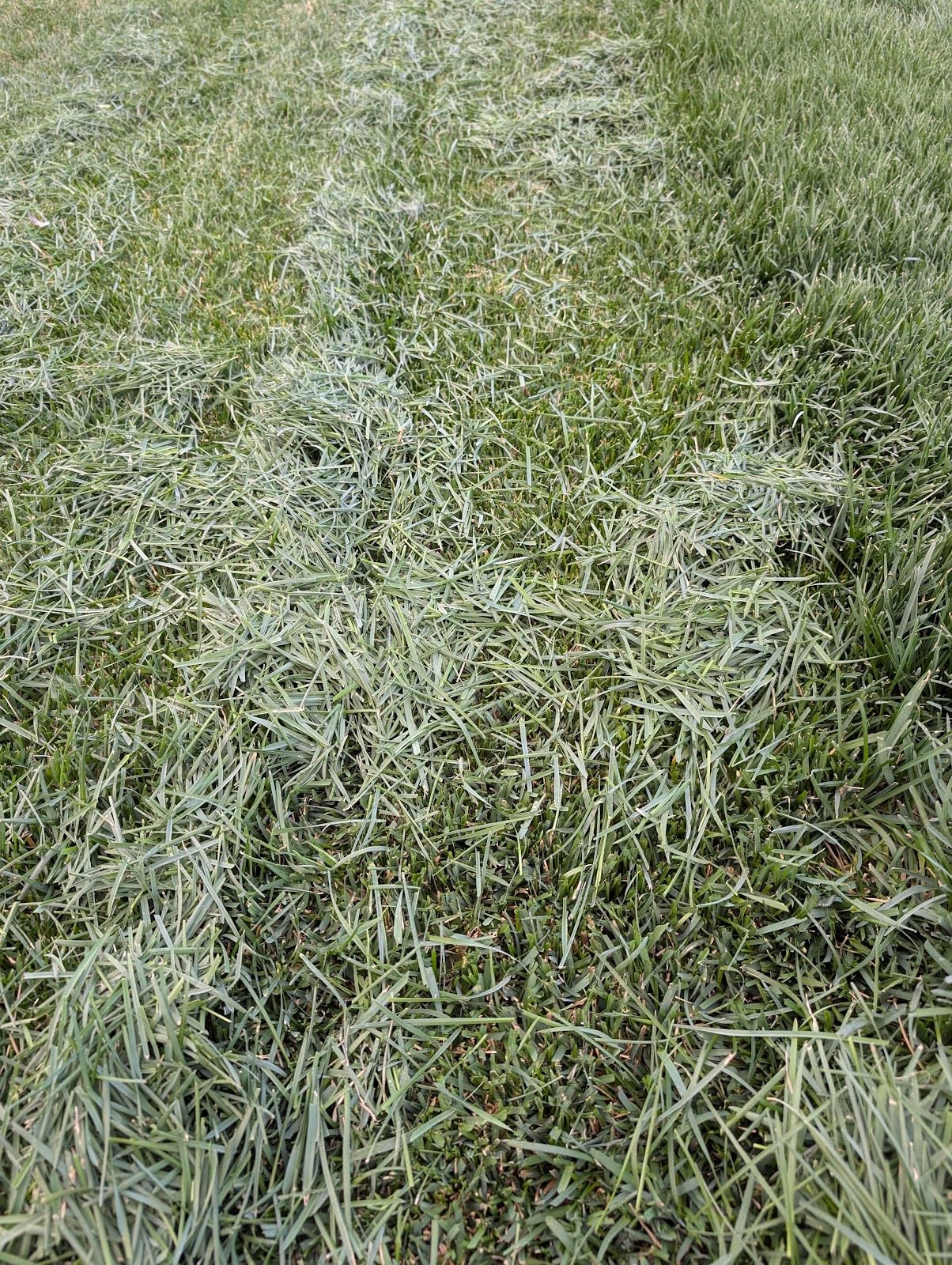
The cutting side is equally serious. A 32V motor with a dual-blade disc is specified for thick Bermuda, Zoysia, fescue and St. Augustine, which matters in the southern US where most machines in this class struggle with dense warm-season turf. Navigation runs through HoloScope 360-degree dual LiDAR at roughly 2 cm accuracy, with no antenna and no wire.
Now the honest part. The deck is 3.6 inches wide, by far the narrowest here, and the battery averages about 50 minutes per cycle. Both are fine on a quarter acre and genuinely frustrating on a half acre, because you end up watching the machine shuttle back and forth to the dock all evening.
Why the rating sits below the class average
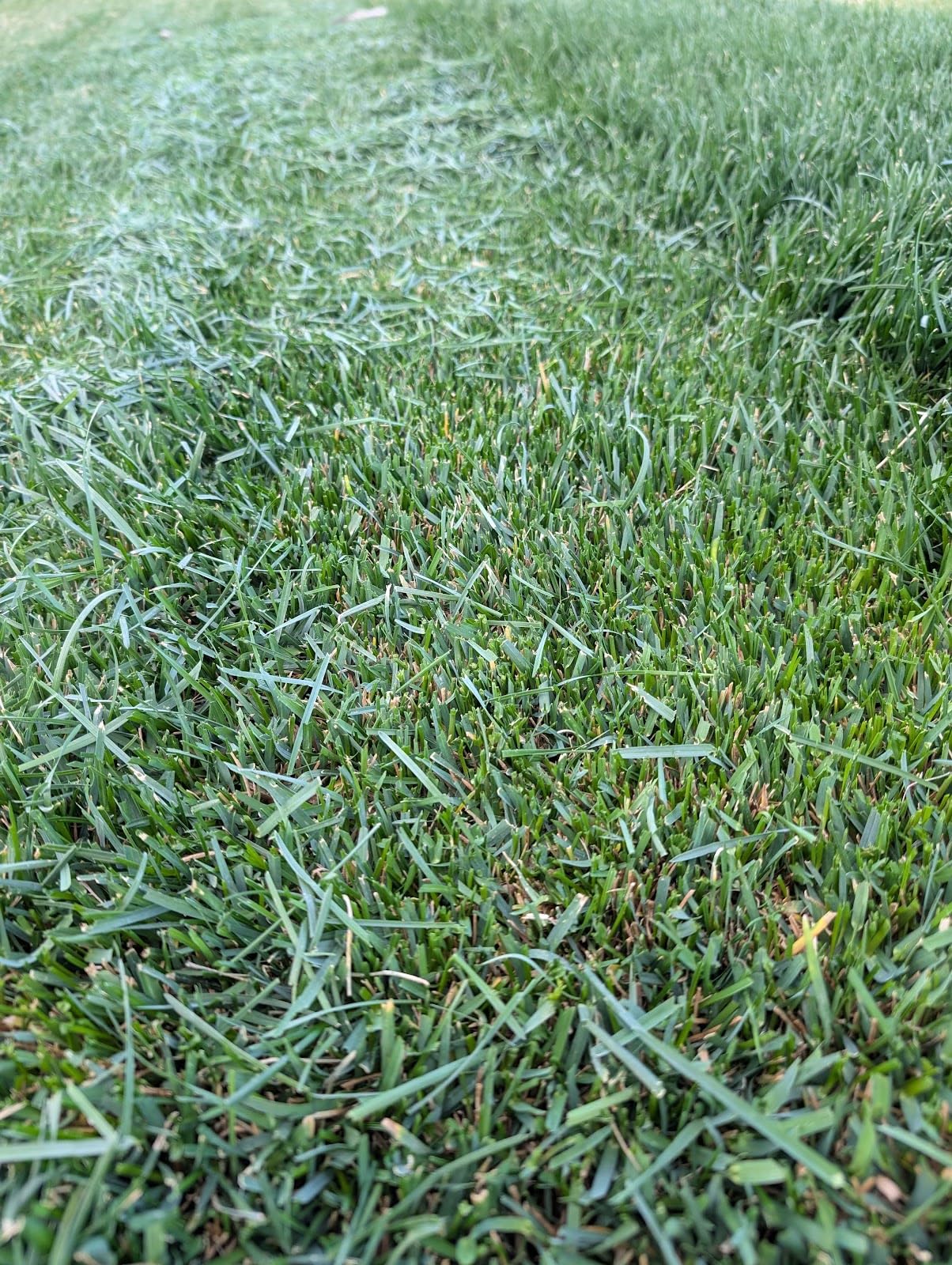
Owners do not complain about the machine failing. They complain about how long it takes. Across 155 reviews averaging 3.9 stars the pattern is consistent: people love the edge cutting and the cutting power, then notice the narrow deck and short runtime lengthen every session. At the smaller end of its half-acre rating that trade makes sense.
Grass type compatibility
This is the pick if you mow thick Bermuda, Zoysia or St. Augustine and everything else has struggled. Those turfs grow fast and dense in heat, and a lower-voltage drivetrain bogs down in them. App-controlled zones, no-go areas and travel paths let you send it to the back of the property on its own schedule.
5. Segway Navimow i215 LiDAR – Best Robotic Mower for Zero-Friction Setup
Segway Navimow i215 LiDAR Robot Lawn Mower, Wire Free Robotic Lawn Mower for 0.37 Acre, LiDAR & Vision Dual Fusion, Auto Mapping, Off-Road Wheels for 45% Slopes, Quiet 59 dB(A) Mowing
Cutting width: 8.66 inch
Weight: 32.4 lbs
Slope rating: 45%
Zones: up to 20
Height: 2 to 4 inch
The Good
- Mows out of the box with no wire or antenna
- LiDAR plus vision needs no satellite signal
- Electronic stability control on 45% slopes
- Works in darkness for night mowing
The Bad
- Newer model with a short owner history
- Software still maturing through updates
- Highest price in the sub-half-acre class
Drop the mower on the lawn, open the app, tap once, and it maps and starts. That is genuinely the experience with the i215 LiDAR, and it removes the biggest hurdle for anyone put off by boundary installation or antenna siting. Solid-state LiDAR fused with an onboard vision camera means it works day or night without a satellite signal at all.
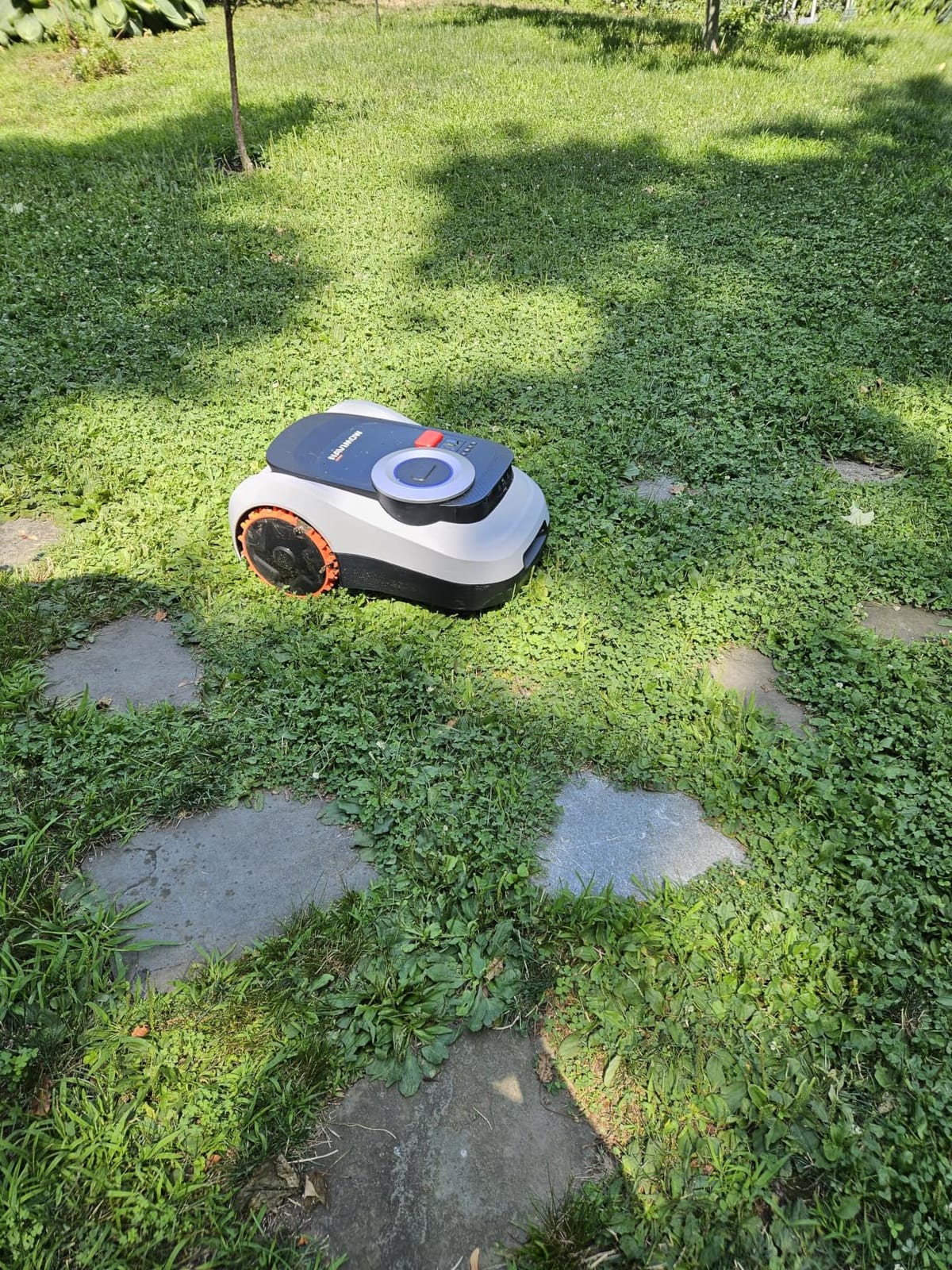
Early owners report the highest satisfaction in the Navimow line. Off-road wheels and electronic stability control hold 45% slopes, the 100W motor drives a six-blade disc, and ride-on-edge mode lets you set custom mowing patterns. Security is thorough, with GPS, geo-fence, lift detection and Apple Find My alerts, plus Alexa and Google Home control.
The caveat is maturity. With 46 reviews averaging 4.4 stars, the numbers are excellent but young, and long-term durability is not established over multiple seasons yet. Owners also note that software updates are still refining behaviour.
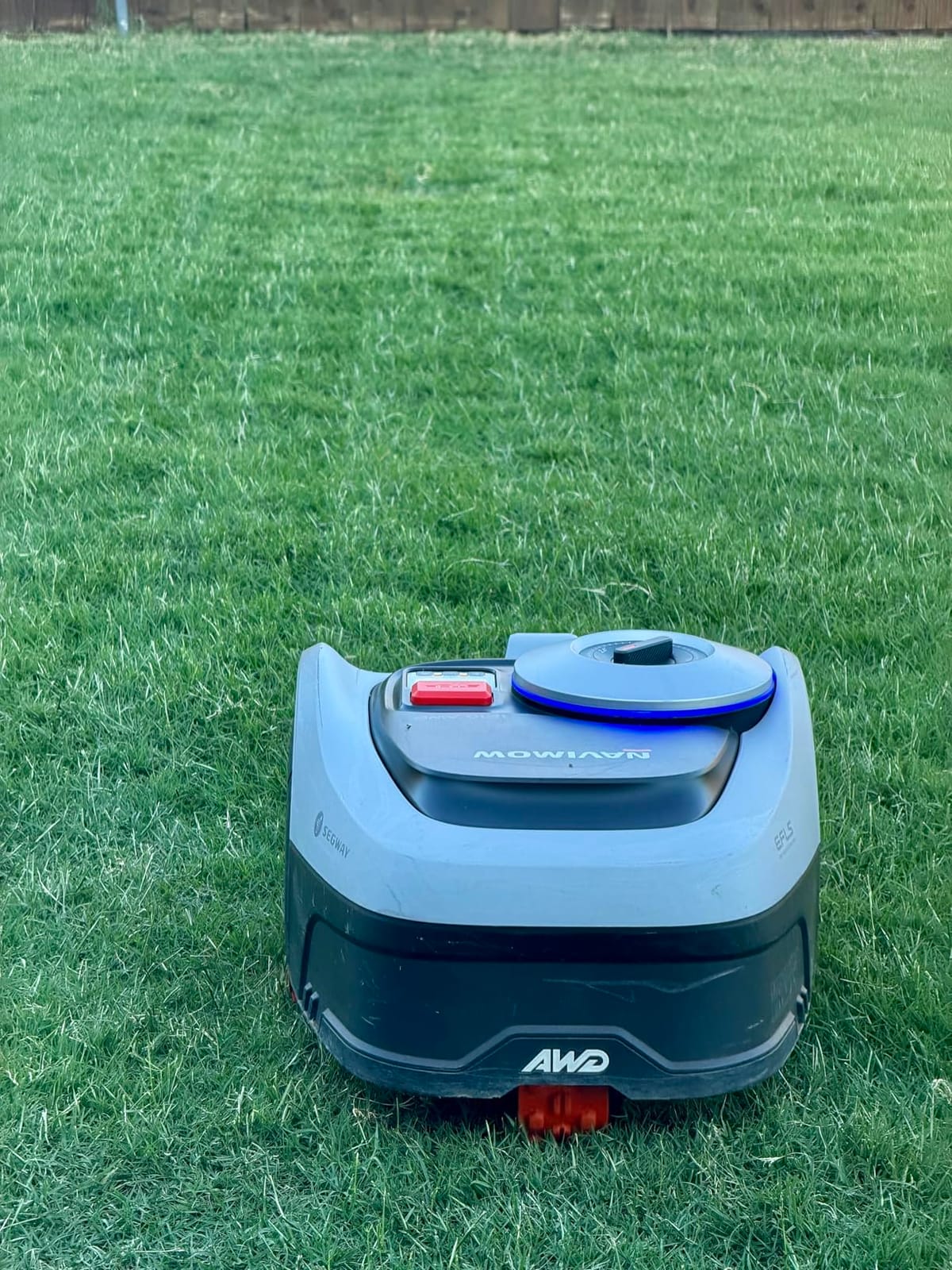
Why satellite-free navigation matters
RTK is accurate but needs sky. If your lawn sits under mature trees, beside a tall building or at the bottom of a slope with structures on the ridge, RTK-only machines slow down, lose precision and sometimes re-mow the same strip endlessly. LiDAR does not care, which makes this a safer choice for a shaded property.
The price question
This sits at the top of the sub-half-acre tier, and the extra spend buys setup simplicity more than raw mowing capability. If your lawn is open with clean sky view and you are comfortable with a boundary wire, a cheaper RTK machine gets a comparable cut. If you want to skip installation and have trees, this is where the money goes.
6. Segway Navimow i206 AWD – Best Robotic Mower for Sloped Small Yards
Segway Navimow i206 AWD Robot Lawn Mower, New i105N, 0.15 Acre, 45% Slopes
Drive: all-wheel drive with stability control
Slope rating: 45%
Deck: 7.1 inch
Zones: up to 20
The Good
- All-wheel drive grips slopes far better than 2WD rivals
- Zero-turn steering avoids tearing the turf
- Very quiet and dogs are comfortable around it
- Support ships replacement parts free
The Bad
- Auto mapping fails often enough to matter
- Leaves a wide unmowed strip along fences
- Software lockups stop it until you open the app
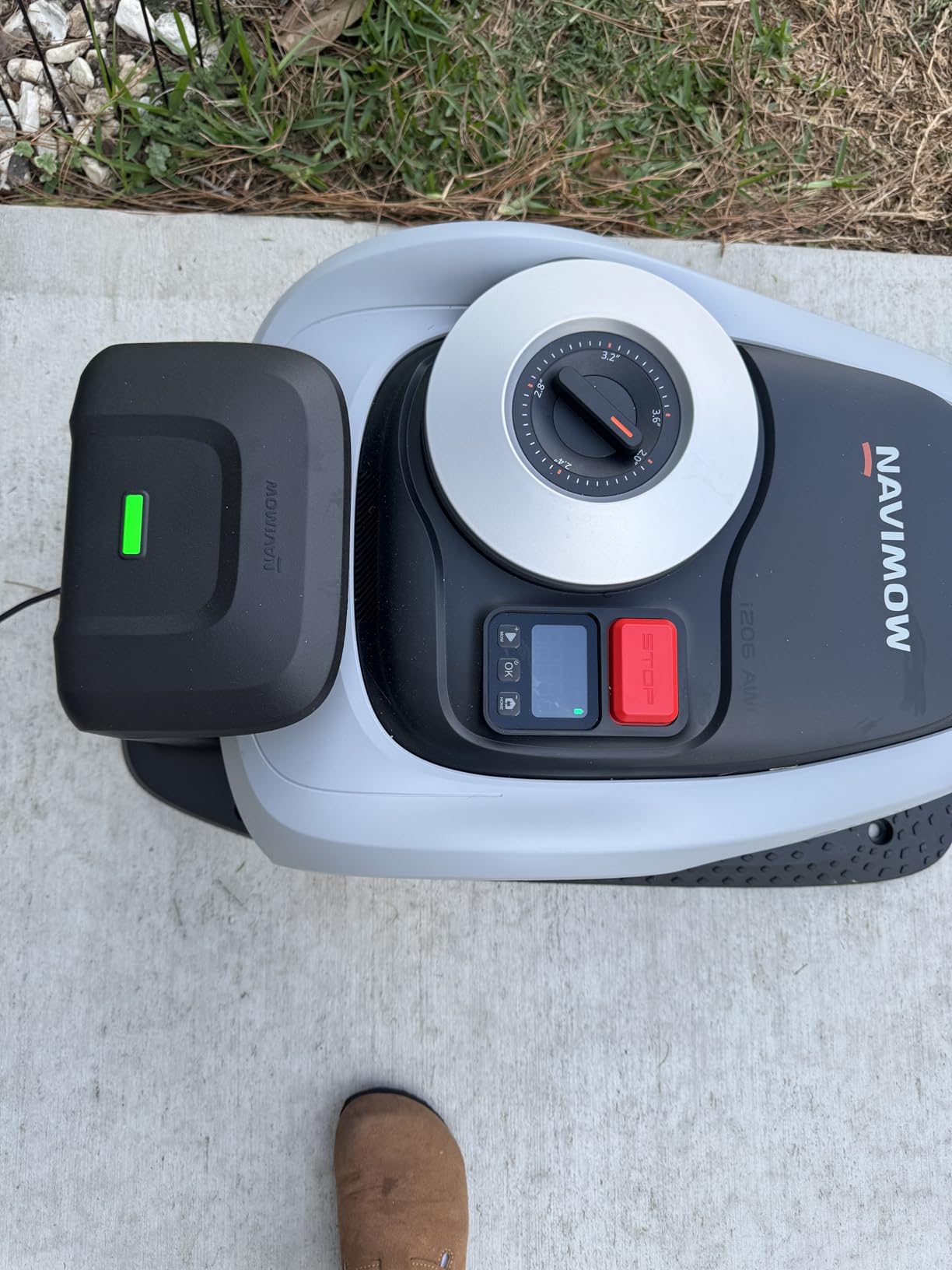
The i206 AWD takes the small-yard Navimow formula and adds a chassis built for ground that tilts. All-wheel drive with automotive-grade stability control handles 45% slopes, and the zero-turn design pivots instead of swinging the rear out, which is what stops turf tearing on tight corners. Dogs, from what owners report, are relaxed around it.
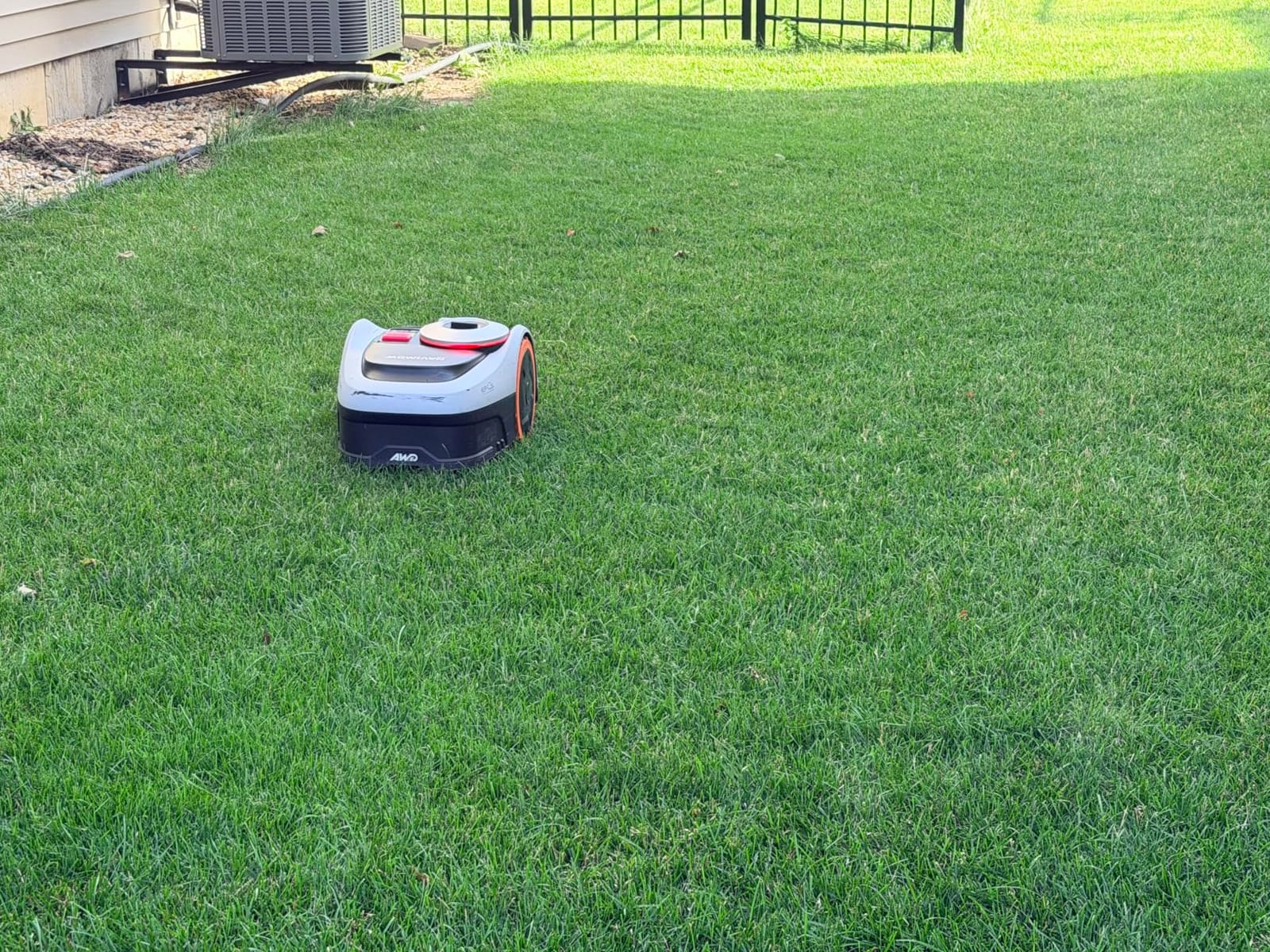
It covers 0.15 acre, which is a 6,500 square foot lawn, and the 2.5Ah battery handles roughly 1,350 square feet per charge with automatic resume. Real-time GPS alerts for lifting and off-course conditions give you a decent anti-theft story for a machine in this class.
Mapping is the problem. Several owners describe auto mapping failing and dropping them into long manual boundary work, and even after remapping a wide strip along fences stays unmowed. Software lockups that require opening the app are reported often enough to know about before you buy.
Who should buy this one
A small yard with a noticeable fall to it, where traction matters more than acreage. If your lawn is under a quarter acre and reasonably flat, the extra drive hardware does nothing for you. The alternating mowing patterns and stripe effects also suit a lawn neighbours can see from the road.
Planning around the weaknesses
Test the map on a dry day before committing a whole afternoon, because a failed map is what generates the complaints. Expect to run a string trimmer along fences regardless, and keep the app open during the first week since a lockup that resolves with a tap is an annoyance rather than a repair job.
7. Sunseeker X5 AWD – Best Robotic Mower for Half-Acre Yards
Sunseeker X5 AWD Robot Lawn Mower, RTK, Vision AI, 0.5 Acre, Wire-Free
Drive: all-wheel drive
Coverage: 0.5 acre / 21,780 sq ft
Slope rating: 60%
Cutting width: 8.7 inch
The Good
- AWD chassis climbs 60% slopes and rough ground
- RTK plus VSLAM plus vision holds signal in shade
- Very quiet at 60 dB
- Straight striping patterns
The Bad
- App and scheduling software described as rough
- Can need manual rescue at sidewalk transitions
- Needs extended Wi-Fi range on bigger lawns
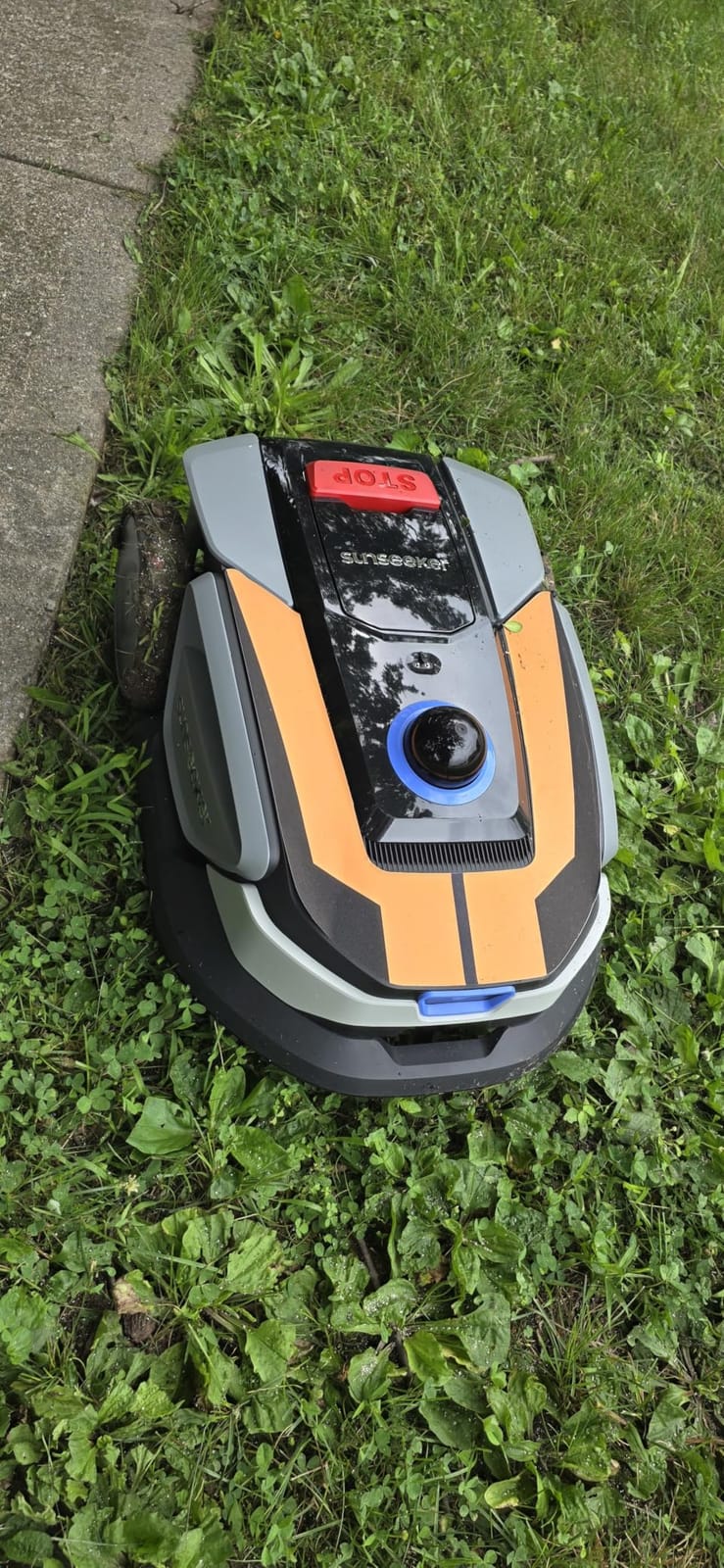
The X5 AWD is the most generously specced half-acre machine here. It covers up to 21,780 square feet, climbs slopes rated at 60% or 30 degrees on independent front suspension, and fits through passages as narrow as 31.5 inches. Navigation runs RTK, visual SLAM and vision AI together, which is why owners report it holding course under trees where single-system machines wander.

Operation is quiet, mostly body creak rather than motor whine, and the striping comes out straight. It supports five saved maps with zones and no-go areas, and the 8.7 inch floating deck adjusts from 1.6 to 3.2 inches so it copes with uneven ground. A two-year warranty with US-based support is a real differentiator at this tier.
Software polish is the recurring theme. Scheduling bugs, connection range limits on larger properties and occasional getting caught at the lawn-to-sidewalk transition all show up repeatedly. Tall grass also triggers avoidance behaviour, so this one wants a regular rhythm rather than catching up after a fortnight away.
What the all-wheel drive actually buys
On a half-acre lawn with any incline, it is the difference between a machine that finishes and one you go out to rescue. Independent front suspension keeps the deck planted as the chassis articulates, so cut height stays even instead of scalping on the high side of a bump. On a genuinely flat yard that hardware is largely idle.
Set it up in the right order
Extend your Wi-Fi coverage before the first map if the lawn runs past the router, because connection drops mid-session are the complaint owners mention most. Run two short sessions before leaving it alone for a day, and trim tall grass once manually so early passes are not spent in avoidance loops.
8. MOVA LiDAX Ultra 1000 – Best Robotic Mower for Multi-Zone Yards
MOVA LiDAX Ultra 1000 Robot Lawn Mower Wire Free for 1/4 Acre, RTK-Free+360° 3D LiDAR+AI Vision Auto Mapping, Zero-Edge Cutting, Cutting Height 1.2″-3.9″, 45% Slope, Up to 150 Managed Zones Dual Maps
Navigation: RTK-free 360 degree 3D LiDAR
Coverage: quarter acre
Height: 1.2 to 3.9 inch
Zones: up to 150
The Good
- No RTK station or antenna needed at all
- Cuts within 2 inches of walls and raised edges
- Two independent maps stored on the machine
- Strong traction on 45% slopes
The Bad
- Only an 8 inch deck
- 60 minute average battery life
- Newer listing with a short review history
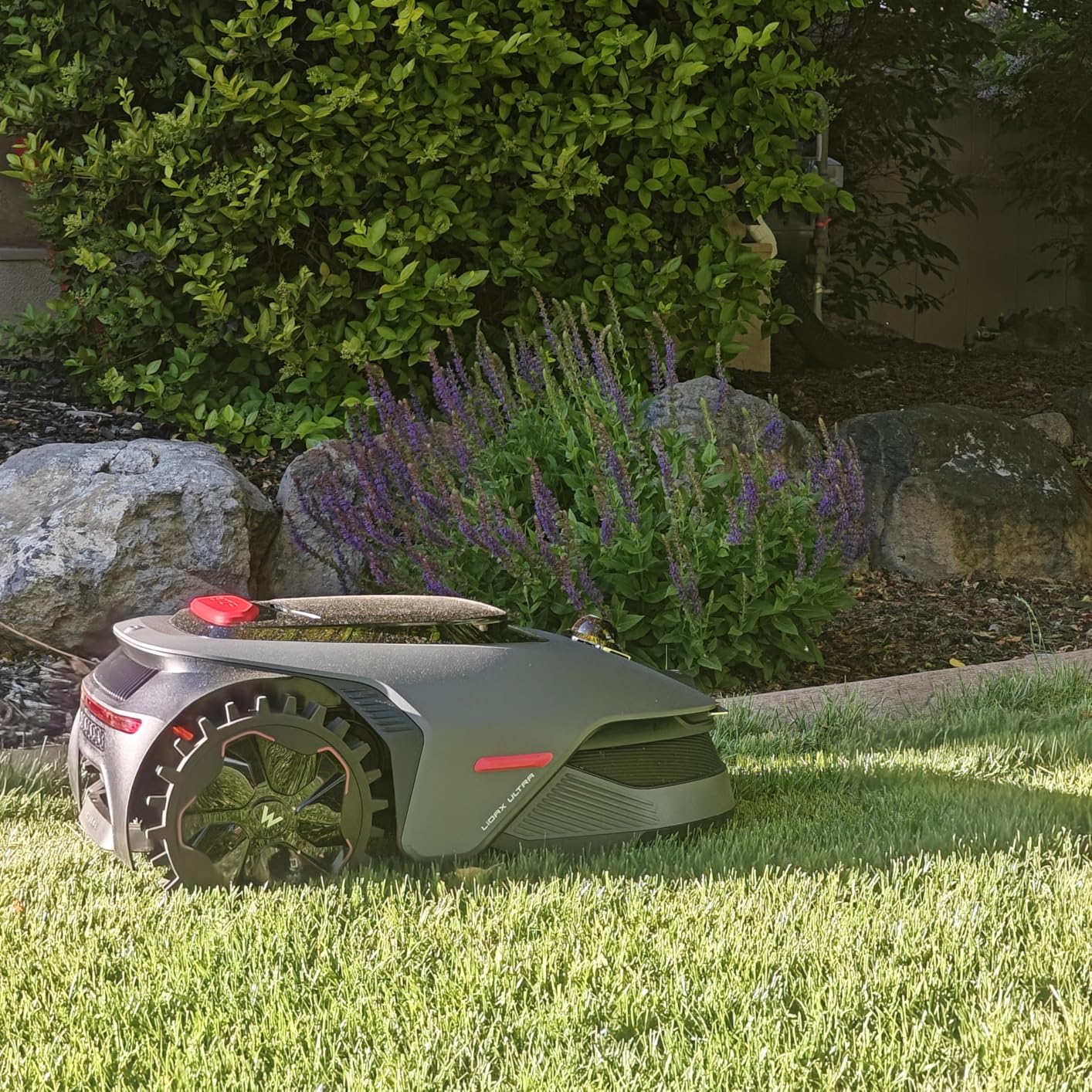
Zone management is where this machine pulls away. It stores two independent maps and supports up to 150 managed zones, so a property with a front lawn, a back garden, a side strip and a separate courtyard can each get their own schedule and direction without rebuilding anything. For complex layouts that is worth more than any single spec on this list.
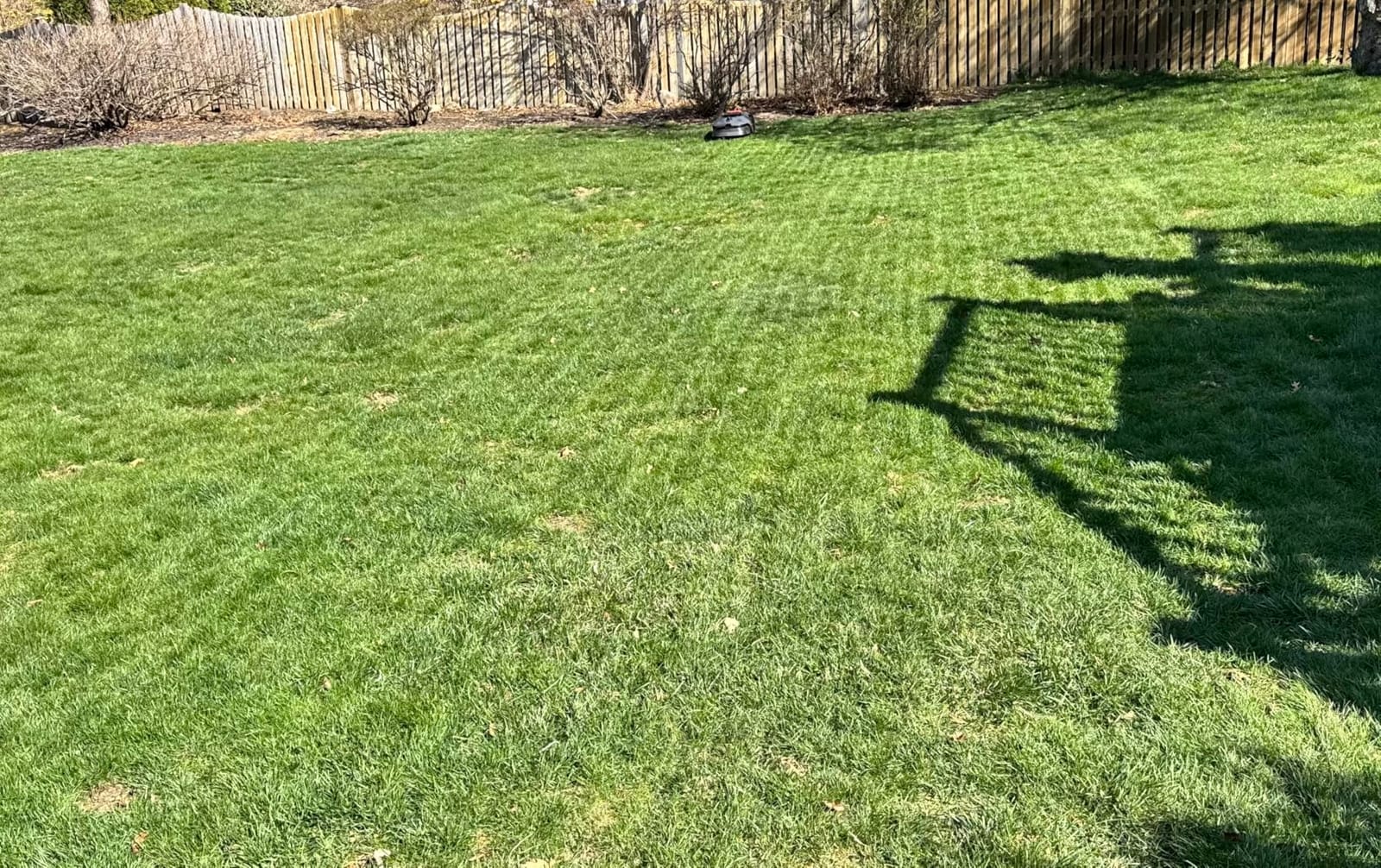
Navigation is RTK-free, using 360-degree 3D LiDAR fused with AI vision, so there is no base station to site, no pole to mount and no subscription. Edge performance is strong, with UltraTrim 1.0 cutting within about 2 inches of walls and raised edges. The height range from 1.2 to 3.9 inches is the widest in this roundup.
The compromises are physical. An 8 inch deck is modest, and a 60 minute average battery life means more dock trips than the longer-runtime machines, extending total session time near a quarter acre. With 74 reviews it also has a shorter owner history than the established picks.
When two saved maps matter
If your property has a separate mowing area the robot cannot reach in one pass, or if one machine will serve a front and back lawn, storing two maps avoids the daily remapping that plagues single-map machines. It also makes it easy to run a different cutting height on a delicate section without rebuilding the boundary.
Edge cutting and obstacle handling
The 3D point cloud plus vision detects more than 300 obstacle types, and rear-wheel drive with off-road wheels handles 45% slopes and obstacles up to 1.6 inches. Owners rate the traction highly on anything but perfectly flat ground. Anti-theft monitoring works with an optional link module, which is worth adding on a machine that lives outdoors.
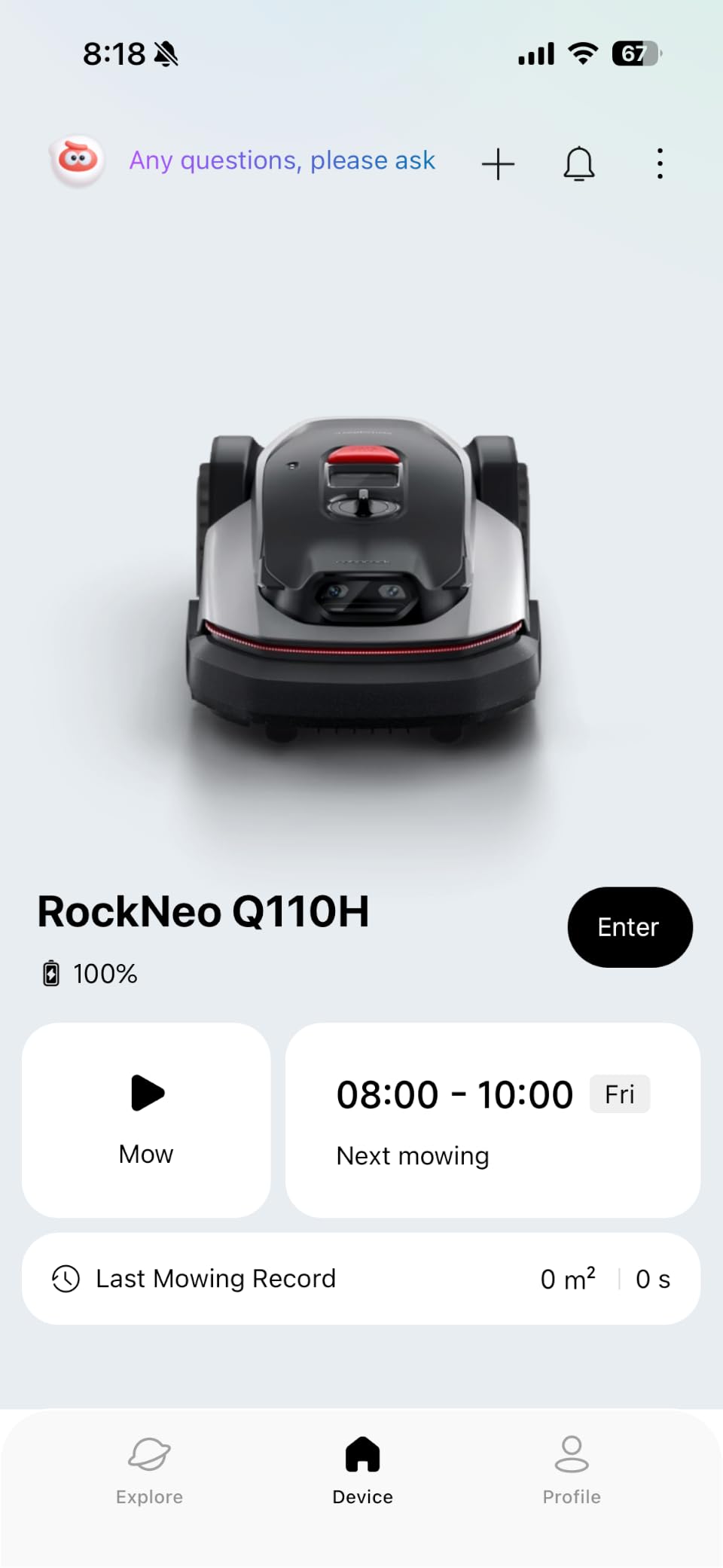
9. Roborock RockNeo Q110H – Best Robotic Mower for Open, Simple Yards
Roborock RockNeo Q110H Robot Lawn Mower, Wire-Free Robotic Lawn Mower with Full-Band RTK + VSLAM Navigation, Auto Mapping, AI Vision Obstacle Avoidance, App Control, 45% Slope, Covers Up to 1/4 Acre
Navigation: full-band RTK plus VSLAM
Coverage: quarter acre
Battery life: 130 minutes
Slope rating: 45%
The Good
- 130 minute battery covers more per charge
- Headlights let it finish after dark
- Straight
- quiet cuts on open lawns
- Familiar app for Roborock vacuum users
The Bad
- Boundary logic is too conservative and leaves wide strips
- Refuses narrow openings like gates
- No LiDAR on this model
- US package omits the edge module
Roborock built this on the mapping pedigree from its robot vacuums, and it shows on an uncomplicated lawn. Straight, quiet rows with no drama, headlights that let it finish after dark, and a 130 minute battery that covers more ground per charge than anything else here. For a flat, open quarter acre with no trees and no awkward shapes, it does exactly what you want.
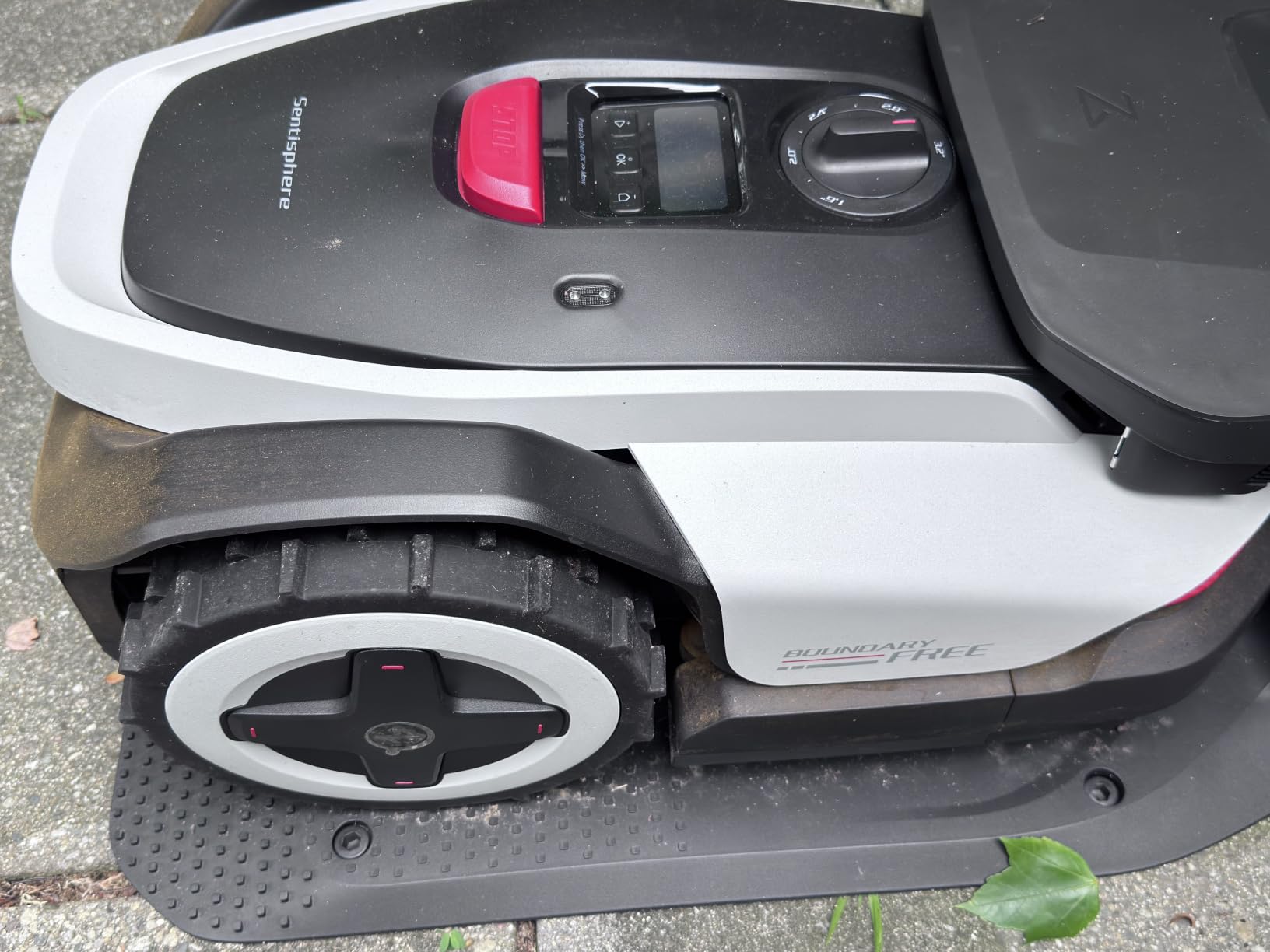
Full-band RTK with VSLAM gives stable positioning, the floating deck and large wheels handle 45% slopes and 1.57 inch obstacles, and it fits through passages down to 2.3 feet. PIN lockout, an alarm and an optional 4G anti-theft module cover the basics of keeping it on your property.
Where it loses is boundaries. Owners describe the logic as overly conservative, leaving wide unmowed strips that still need a manual pass, and the machine declines to use a narrow opening even when there is clearly enough clearance. There is no LiDAR, and the edge module that sells elsewhere is not included in the US package.
What works in its favour
Battery runtime is the headline number. At 130 minutes you clear a quarter acre with far fewer dock trips than the 50 and 60 minute machines, which is where total mowing time is actually won. If you already own a Roborock vacuum, the app feels immediately familiar, and that learning curve is worth something.
When to look elsewhere
If your lawn has a gate between two grass areas, dense St. Augustine that needs traction, or borders you expect cut cleanly, this is the wrong machine. Conservative boundary software and an absent LiDAR sensor both show up where finishing the job neatly matters most. Choose a LiDAR-equipped model and accept the shorter battery life.
10. YARDCARE V100 – Best Value Robotic Mower for Very Small Lawns
YARDCARE V100 Automatic Robot Lawn Mower HD Vision for Lawn Max 1600 sq ft
Navigation: HD camera visual
Lawn size: up to 1,600 sq ft
Cut width: 6.3 inch
Height: 0.8 to 2.4 inch
The Good
- Simplest and most affordable route to hands-free mowing
- No wire needed and magnetic strip zones
- Excellent 4.8 owner satisfaction
- Tilt
- emergency stop and rain sensors included
The Bad
- Limited to 1600 square feet of lawn
- Random path only with no striping patterns
- 20 degree slope limit
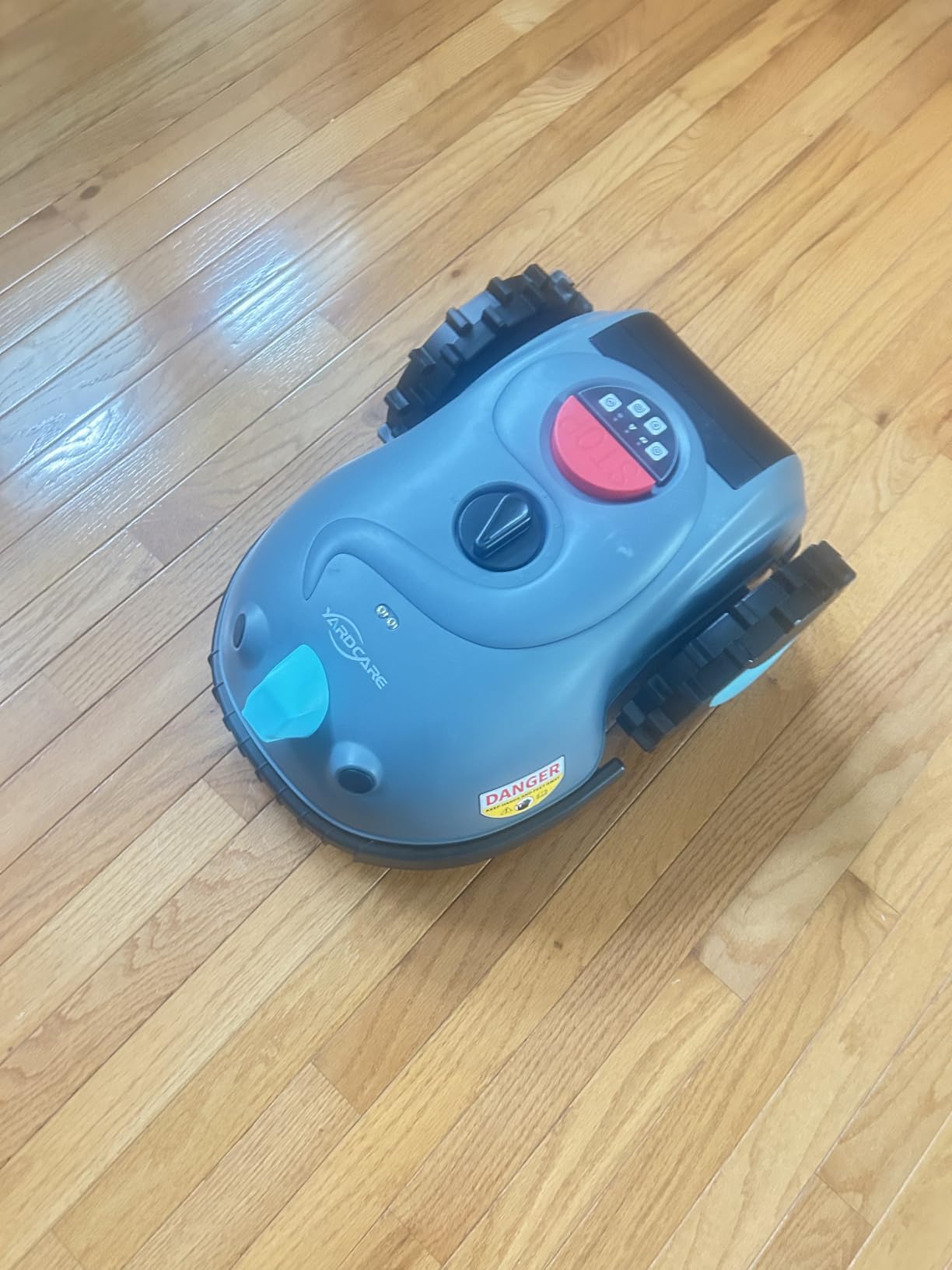
At 1,600 square feet this machine covers a front lawn or a small back garden, and nothing larger. That limit is the whole review in one line, because anything bigger needs a deck and battery this class does not have. If your lawn genuinely falls inside that footprint, this is the simplest way to stop mowing entirely.
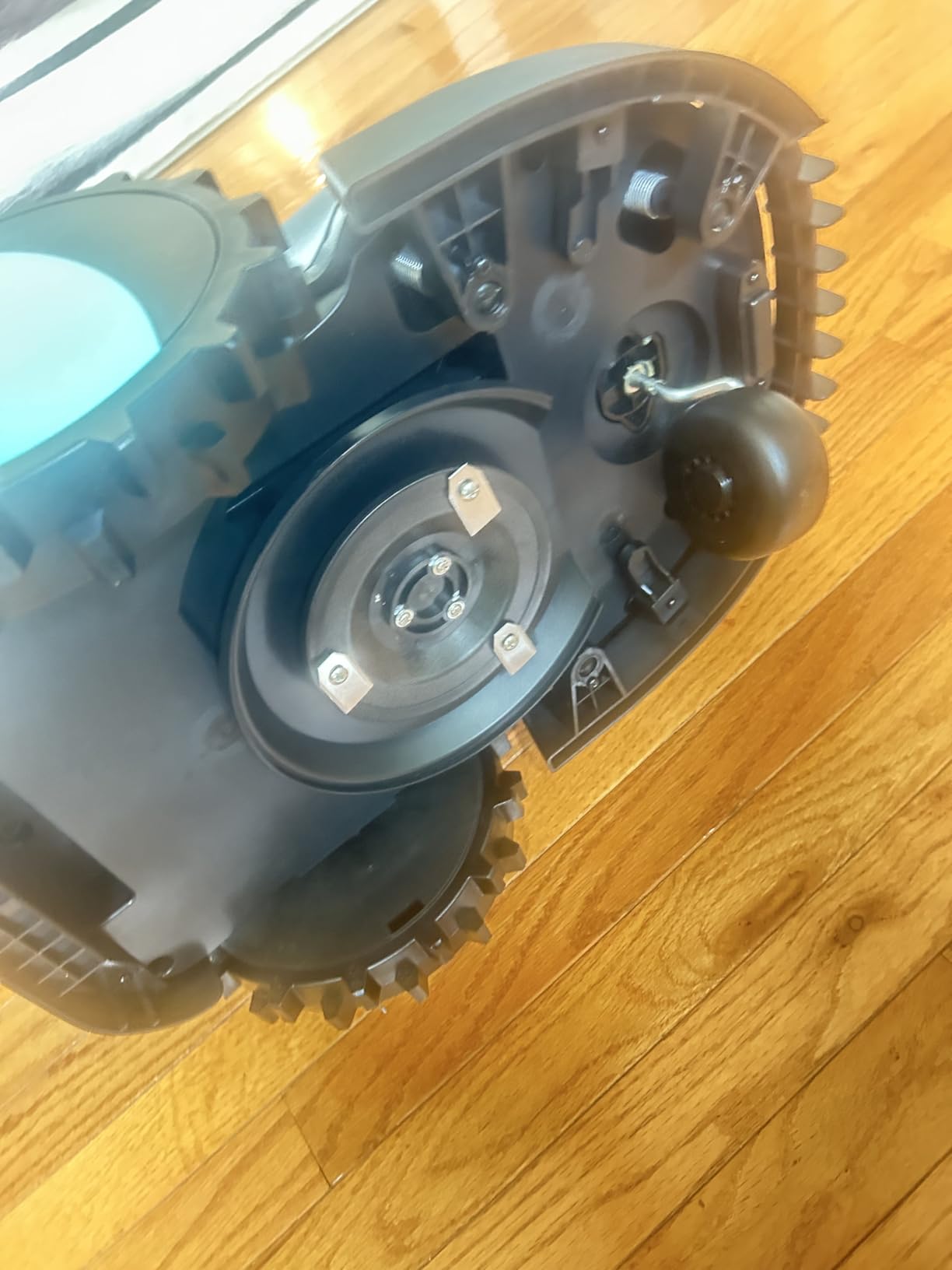
Navigation is camera-based, distinguishing grass from non-grass and detecting up to 150 obstacle types, plus bumper and tilt sensors and automatic path recovery after a collision. No-go zones come from a 32 foot magnetic strip laid on the surface, which means zero digging and no wire to break later.
You get a 4Ah battery, charger, 20 pegs and three spare blade sets in the box, a generous kit at this level. Owners rate it 4.8 stars across 58 reviews with no reported failures, and tilt, emergency stop and rain sensors are all present, which is unusual here.
Is 1,600 square feet enough to matter
For many people, yes. That is roughly a 40 by 40 foot patch, which is a typical city front garden, a suburban back lawn behind a garage, or a courtyard around a patio. Owners describe it as the mow they no longer have to do on Sunday evenings, which is a real saving even without a large property.
What random-path mowing means for the cut
This one does not stripe. It moves in a random path, so coverage is even but the finish is not visually patterned, and it will not look like a freshly striped lawn. The 20 degree slope limit also rules out anything genuinely hilly, which makes this a value pick for small flat lawns rather than a replacement for a proper mower.
11. YARDCARE M800Plus – Best Robotic Mower for Flexible Mowing Modes
YARDCARE M800Plus Cordless Robot Lawn Mower with GPS + Visual Navigation, Bow-Shaped Path Mowing, APP Control, 4.0Ah Automatic Robotic Lawnmower for 1/5 Acre, Obstacle Avoidance, Height Adjustment
Navigation: GPS plus 3D vision
Coverage: about 1/5 acre
Battery: 4.0Ah
Cut width: 7.08 inch
The Good
- Camera separates grass from patio and walkway cleanly
- Row mowing plus random gap-filling modes
- Reliable auto recharge and scheduling
- Spot spiral mode for overgrown patches
The Bad
- Grass over 2.6 inches needs manual trimming first
- Only a 7 inch cutting width
- Very small review base so far
The M800Plus does something none of the others do: it mixes an orderly 40 minute row pass with a 60 minute random pass to fill gaps. That combination produces a cleaner finish than pure random on a lawn with awkward shapes, and the spot spiral mode handles the patch under the dog bowl that never gets cut evenly.
Boundary handling uses GPS plus 3D vision with an HD camera that discriminates grass from non-grass, so patios and walkways are excluded without any wire. The 135-degree AI camera identifies more than 150 obstacle types, it handles 35% slopes, about 20 degrees, and cut height runs 0.8 to 2.4 inches on a three-blade disc.
We included it because the hardware is capable, but be clear about the evidence: only four reviews exist and all four are positive. There is no long-term reliability picture yet, so treat it as a promising option rather than a proven one.
Who should consider it
A medium lawn around a fifth of an acre where you want visible cut lines rather than random coverage, and where you like having scheduling options in the app including OTA updates. It also suits properties with hard surfaces the mower must not cross, since the camera-based boundary handles that without installation.
Where the small sample worries us
A five-star average on four reviews tells you the first owners were delighted, which is real but thin. Check the current review count again before committing, and remember that regular blade replacement is recommended. Grass already above 2.6 inches needs a manual cut first, because this is a maintenance machine rather than a rescue mower.
12. Sunseeker X3 Plus – Best Robotic Mower for Clean Edges on a Lightweight Frame
Sunseeker X3 Plus Robot Lawn Mower, RTK, Vision AI, 0.3 Acre, Wire-Free
Navigation: RTK plus VSLAM
Coverage: 0.3 acre
Cut width: 8 inch
Slope rating: 30%
Height: 1.6 to 3.2 inch
The Good
- Ride-on-edge blade cuts close to fences and paths
- Steady navigation under trees and near fences
- Quiet at 60 dB
- Light enough to carry between lawn areas
The Bad
- Software bugs including calibration failures and phantom rain detection
- Boundary and hazard zones sometimes revert
- Loses connection and cannot return to the dock
- Only handles about one day of grass growth
Two things pull in opposite directions here. The ride-on-edge offset blade produces a genuinely good cut along fences and walkways, the most common complaint about most machines in this class, and the whole unit weighs just under 20 pounds so you can carry it to another grass patch yourself. Navigation holds up under trees using RTK fused with visual mapping.
Then there is the software. Across 97 reviews averaging 3.8 stars this is the lowest-rated machine in the roundup, and the reason is consistent: calibration failures, phantom rain detection, random lockouts, hazard zones reverting or reappearing, and connection drops that leave it unable to find its way back to the dock.
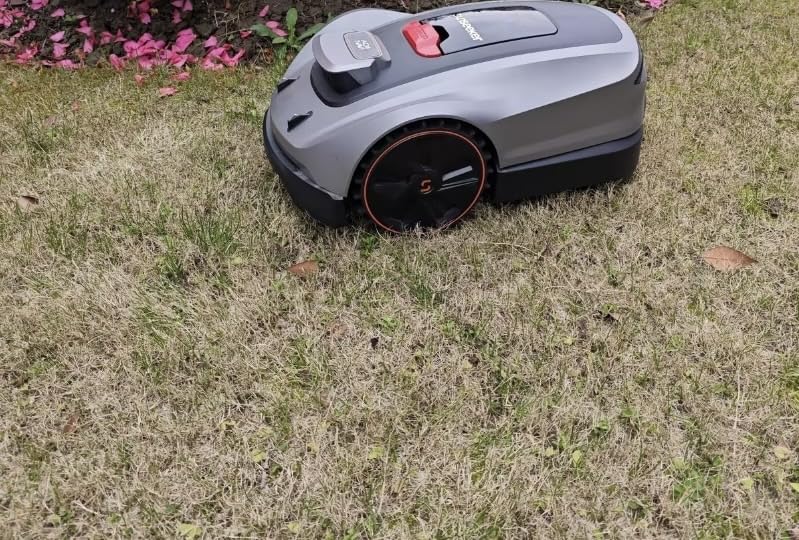
It also cannot handle two days of grass growth before triggering false stuck errors, so the schedule has to be short and regular. One practical note: the RTK mounting hardware referenced in the instructions is not sold separately in some packages, so check what is actually in the box.
When the strengths still win
On a flat, simple lawn with a lot of fence and path edging, the edge cut alone justifies this machine, because that is the job you would otherwise do with a string trimmer every week. Quietness at 60 dB, six saved maps with no-go zones and voice control are useful extras, and the light weight is a real convenience for split lawns.
Why we would not recommend it first
Reliability of the software is the foundation of an autonomous machine. A mower that stops mid-lawn and cannot find its dock has failed at the one job you bought it for, and the volume of those reports in the reviews is why this sits last despite capable hardware. If you want something you will not have to babysit, choose a steadier record.
How to Choose the Best Robotic Mower for Your Yard
Buy the machine that fits your lawn, not the machine with the longest feature list. These six steps cover the decisions that actually change the outcome.
1. Measure your lawn before you compare anything
Walk the perimeter and multiply. Manufacturers rate capacity in acres, square metres and square feet, and the same machine appears as an eighth of an acre in one listing and 1,200 square metres in another, so convert everything to one unit before you shop. Then size up. A machine rated for exactly your lawn spends its whole life near its limit, and you will want headroom for the zone you add next spring.
2. Boundary wire or wire-free: which navigation to buy
Every machine in this roundup is wire-free, so for most buyers the decision is already made. What remains is how the wire-free machine knows where your lawn is, and this matters most.
RTK satellite positioning gives centimetre accuracy but needs a clear view of the sky, so it degrades under heavy tree cover and near tall structures. LiDAR spins a laser and builds a 3D map of everything around it, needs no antenna and no satellite signal, and works at night, at the cost of a higher purchase price. Vision-only cameras are cheapest and fine on small simple lawns, but cannot see low obstacles like hoses or gate posts. Boundary wire is still the most reliable on a flat simple yard, but it means digging a trench and living with breaks that are a genuine pain to trace.
If your yard is already fenced, you still need a way to exclude flower beds, paths and driveways, so a fence alone does not remove the need for a boundary of some kind.
3. Slopes and hills: when you need all-wheel drive
Most machines here are rated around 45% to 60%, which is 24 to 31 degrees. Beyond that you need all-wheel drive, which is where the Mammotion LUBA 2 AWD at 80% stands alone. Two-wheel-drive units lose traction on a wet slope, get stuck at the transition between lawn and hard surface, and can cut into a bed while trying to turn. Measure your steepest section rather than averaging your lawn.
4. Deck width and battery: the numbers that set mowing time
Total session time is roughly lawn area divided by deck width, multiplied by the recharge cycles you need. A 3.6 inch deck on a half acre with a 50 minute battery is a long evening, and it is why the ECOVACS GOAT rates mid-pack despite strong features. A 15.7 inch deck covers ground several times faster. If you want a robot to handle most of your yard, buy the widest deck your budget allows.
5. Battery lifespan, warranty and service life
Robotic mower batteries are consumable, and the pack typically needs replacing once before the machine reaches the end of its useful life. That is why warranty length is worth comparing as closely as features, especially where parts and support are hard to reach. In this group, three-year warranties appear on the Navimow i105N, the MOVA LiDAX Ultra 1000 and the ANTHBOT M5, while the Sunseeker X5 AWD and X3 Plus carry two years with US-based support. Expect the machine itself to last many seasons rather than a fixed number of years, and keep blades and brushes on your seasonal list.
6. Noise, neighbours and grass type
The quieter machines here run at 58 to 60 dB(A), close to background conversation at your property boundary and fine for evening mowing. If a neighbour is close or your lawn borders a bedroom window, prioritise the lowest figure available. On grass type, check motor voltage and blade design rather than marketing: a 32V platform such as the one in the ECOVACS GOAT is specified for thick Bermuda, Zoysia, fescue and St. Augustine, while lower-voltage machines tend to bog down in dense warm-season turf.
The Real Downsides of Robotic Mowers
Owners in r/lawnmowers and r/HomeImprovement are blunt about the parts nobody advertises, and you should hear them before buying rather than after.
They maintain a lawn, they do not rescue one. If your grass is uneven, overgrown or full of bare patches, a robot will follow the contours of the problem. This is the most common regret pattern in owner threads.
Setup takes longer than expected. Even wire-free machines need a full mapping session, and owners repeatedly describe the mapping app as the hardest part of ownership. Budget a weekend, not an evening.
Software instability is real. Failed map saves, calibration errors, phantom rain detection and app lockups appear across multiple brands here, and on any machine they mean walking out to a stopped mower.
Edge cutting still needs a string trimmer. Only the ECOVACS GOAT has a built-in trimmer. Every other machine leaves some grass along fences and beds, and several leave more than some.
They do not return to base in every yard. Signal drift under tree cover and connection drops leave mowers stranded mid-lawn until you intervene, which is the most demoralising failure mode.
Battery and axle failures appear after a few seasons on some models, and warranty repair turnaround varies a lot by brand. That is the argument for buying from a company with real parts availability in your country.
The people who keep them overwhelmingly say the time saved is transformative and they would never return to manual mowing. That is the honest picture: real convenience, and a handful of recurring irritations you can live with or avoid by choosing carefully. Homeowners who automate the rest of the yard usually pair a mower with the cordless robotic pool cleaners we cover separately or a pool cleaner built for leaf fall for the same reason.
Frequently Asked Questions
Which robot lawn mower is the best?
For most yards, the Segway Navimow i105N is the best all-round choice in our testing. It combines RTK with vision so it keeps working under trees, runs at 58 dB(A), supports up to 12 zones and has 391 owner reviews averaging 4.1 stars. Pick the Mammotion LUBA 2 AWD 3000HX instead if your ground is steep, since it is the only machine here rated for 80% slopes.
Do robot lawn mowers need a boundary wire?
Most no longer do. All 12 machines in this roundup run wire-free, defining the lawn with RTK satellite positioning, LiDAR or a vision camera instead. A boundary wire is still the most reliable option on a flat, simple yard, but it requires digging a trench and breaks become expensive and annoying to trace.
Can a robot lawn mower handle slopes?
Yes, but check the rating against your steepest section. Most machines here handle 45% to 60% grades, roughly 24 to 31 degrees. Beyond that you need all-wheel drive, and the Mammotion LUBA 2 AWD 3000HX is rated for 80%. Two-wheel-drive models commonly lose traction on wet inclines and get stuck at lawn-to-hard-surface transitions.
Are robot lawn mowers worth it?
For a lawn of roughly a quarter acre or more, most owners say yes, because it removes a recurring weekly job rather than making an existing one easier. They are a poor fit for very small lawns, heavily wooded properties with no clear sky view, or very steep ground on a two-wheel-drive machine. They maintain a lawn but cannot rescue a neglected one.
What are the downsides of using a robotic lawn mower?
The recurring complaints in owner forums are software instability such as failed map saves and app lockups, connection drops that leave the mower stranded away from its dock, and edge cutting that still needs a string trimmer on most models. Setup and mapping also take longer than most buyers expect, usually a full weekend rather than an evening.
Do robotic lawn mowers work in the rain?
Most do, and most include a rain or moisture sensor that sends them back to the dock when conditions turn. The ANTHBOT M5, for example, pairs a rain sensor with 4G support. The better question is whether the grass is dry enough to walk on afterward, since mowing wet grass still leaves clumping and ruts.
The Best Robotic Mowers to Buy in 2026
The best robotic mowers for 2026 come down to one question: what shape is your lawn. For a flat, small or medium yard you want running without a weekend of work, the Segway Navimow i105N is the pick, backed by the largest owner review base in this group. If your ground tilts, the Mammotion LUBA 2 AWD 3000HX is the only machine here rated for 80% slopes, and its 15.7 inch deck covers ground faster than anything else we tested.
For larger or more complex properties, the MOVA LiDAX Ultra 1000 wins on zone management with up to 150 managed zones across two maps, and the Sunseeker X5 AWD handles a half acre on all-wheel drive. If your grass is thick Bermuda or St. Augustine, the ECOVACS GOAT A2000 LiDAR PRO has the cutting power and the built-in edge trimmer the others lack.
Whatever you choose, set aside a weekend for mapping, cut your lawn once by hand first, and check the current review count before you order. That last step matters, because software improves with every firmware update and several of the weaker-rated machines here are a year or two behind the leaders.