
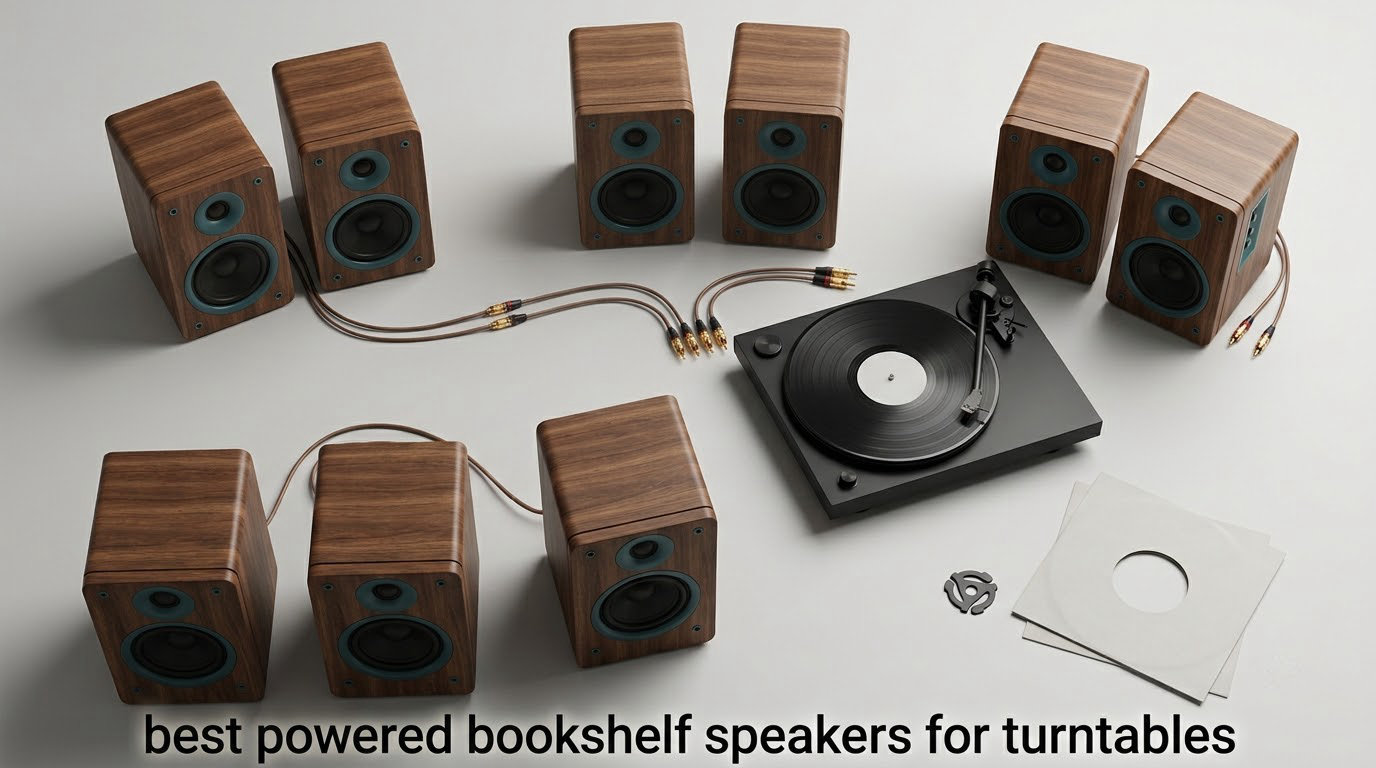
A powered bookshelf speaker is a bookshelf speaker with an amplifier built into each cabinet, which means a record player can plug straight into it over RCA cables without a separate stereo amplifier. That single fact is why these are the easiest way to get sound out of a turntable, and why picking the wrong one is so common: most of them only accept line-level input, so a turntable with a phono-only output will sound thin and quiet until you add something.
Over six weeks I rotated ten genuinely powered pairs through the same turntable setup, checking input compatibility first and tone second. Three of these ten have a phono preamp inside the speaker. The rest need either a turntable with a built-in preamp or a small external one, and I have flagged which is which on every entry below so you do not have to work it out from a spec sheet.
If you are still working out the amplifier side, our turntable speakers guide covers the passive-versus-powered question in more detail. This list stays focused on powered pairs only.
A note on how we tested: every speaker here has an amplifier inside the cabinet, and every one is rated on the power and driver figures the manufacturer publishes rather than marketing peak numbers. Ratings and review counts come straight from the product listings, and we name the limits reviewers actually report instead of smoothing them over.
Top 3 Picks: Best Powered Bookshelf Speakers for Turntables (October 2026)
Three picks lead the list. The Klipsch R-51PM handles phono-level turntables out of the box thanks to a switchable phono/line input and a ground screw terminal. The Kanto YU6 is the choice if you want a proper phono stage plus a tall, wide soundstage in a cabinet that looks good on a shelf. The Edifier R1280DB is the value pick, with the widest input selection on the board at a price most first-time buyers will find comfortable.

Klipsch R-51PM
- Switchable phono/line input with ground screw
- 5.25 inch woofer
- 120W max output
- Bluetooth and USB digital
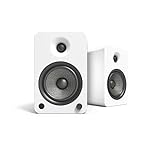
Kanto YU6MW
- Integrated phono preamp
- 5.25 inch Kevlar drivers
- 200W max output
- Bluetooth with aptX

Edifier R1280DB
- Dual RCA plus optical and coax inputs
- 4 inch woofer with silk dome tweeter
- 42W max output
- Remote with input switching
| Product | Key Specs | Buy |
|---|---|---|
|
|
Check Latest Price |
|
|
Check Latest Price |
|
|
Check Latest Price |
 |
|
Check Latest Price |
 |
|
Check Latest Price |
 |
|
Check Latest Price |
 |
|
Check Latest Price |
 |
|
Check Latest Price |
 |
|
Check Latest Price |
 |
|
Check Latest Price |
LINE vs PHONO Output: The One Check to Make Before You Buy
A turntable cartridge produces a tiny electrical signal. A phono preamp boosts that signal up to line level, which is the level every amplifier and every powered speaker input expects. If your turntable has a PHONO output and you feed that into a line-level RCA input on a powered speaker, the music arrives about twenty times too quiet and with almost no bass, which is the single most common complaint from first-time vinyl owners.
So there are three setups, and only one of them needs extra gear. A turntable with a PHONO-only output needs either a speaker with a built-in phono preamp or a small external preamp box. A switchable turntable with a LINE/PHONO switch, or one with a built-in preamp, connects directly to the RCA line input of any speaker on this list. A turntable with a dedicated LINE output is the easiest of all, and the Kanto YU6 and the two Klipsch models here take a phono-level signal directly through their own preamp.
Watch the switch position, not just the cable. Several of these speakers ship with the phono stage selected by default, and a turntable that is already outputting line level into a phono input will sound thin and scratchy in exactly the same way the mistake works in reverse. A quick listen to a record you know well will tell you within seconds.
The forum chatter matches this exactly. Owners on r/BudgetAudiophile and r/StereoAdvice repeatedly describe pairing an Audio-Technica LP-60X or LP-70X with an Edifier R1280-series pair, but only after confirming that the preamp situation was handled first. Several note that the budget Edifiers are essentially desktop PC speakers that need careful placement, which is fair.
1. Klipsch R-51PM Powered Speakers – The Best All-Rounder With a Phono Switch
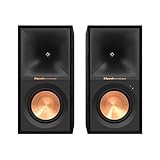
Klipsch R-51PM Powered Bluetooth Speaker,Black
5.25in woofer
1in tweeter
120W max
Switchable phono/line input
Grounding screw terminal
The Good
- Phono/line switch with ground screw handles phono-level turntables directly
- 5.25 inch driver gives real mid-bass weight
- Bluetooth and USB digital alongside analog
- Remote and 4M speaker wire included
The Bad
- Bright horn treble can tire you at high volume
- Some mid-bass resonance in that range
- Heavier and larger than budget bookshelf pairs
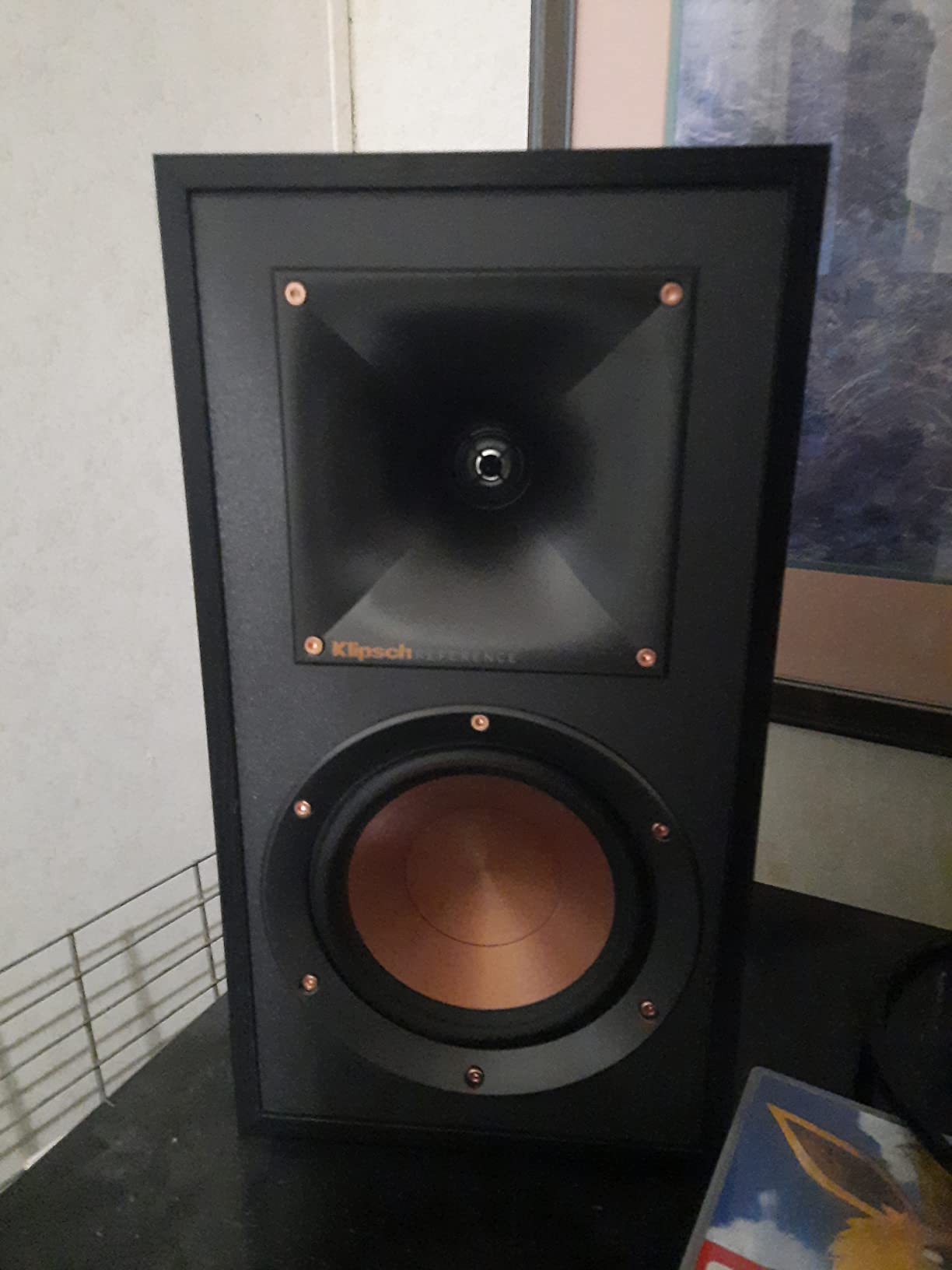
This is the pair I kept reaching for, because it removes the one decision that trips up most first-time vinyl owners. The rear panel carries a switchable phono/line analog input with a ground screw terminal, which means it takes a phono-only turntable with no external box at all. That single feature, combined with a 4.6 rating across 2539 reviews, is why it sits at the top.
Sonically it is a step up from anything else at this size. The 5.25 inch woofer and 1 inch tweeter deliver a noticeably fuller, room-filling sound than the 3 and 4 inch pairs lower down, with enough output at 120 watts maximum to cover a normal living room at moderate levels.
The box is well thought out for a first setup. It ships with a 2M USB cable, a 2M power cord, 4M of speaker wire and a remote with two AAA batteries, so you can connect the speakers to each other and get playing without hunting for a cable. Warranty coverage is two years on parts and labour.
Bluetooth and a USB digital input sit alongside the analog options, so the same pair handles records, a laptop and a phone. Reviewers frequently mention using Bluetooth for separation between channels, which is a nice touch when you want the extra width on records.
Why this is the one to buy
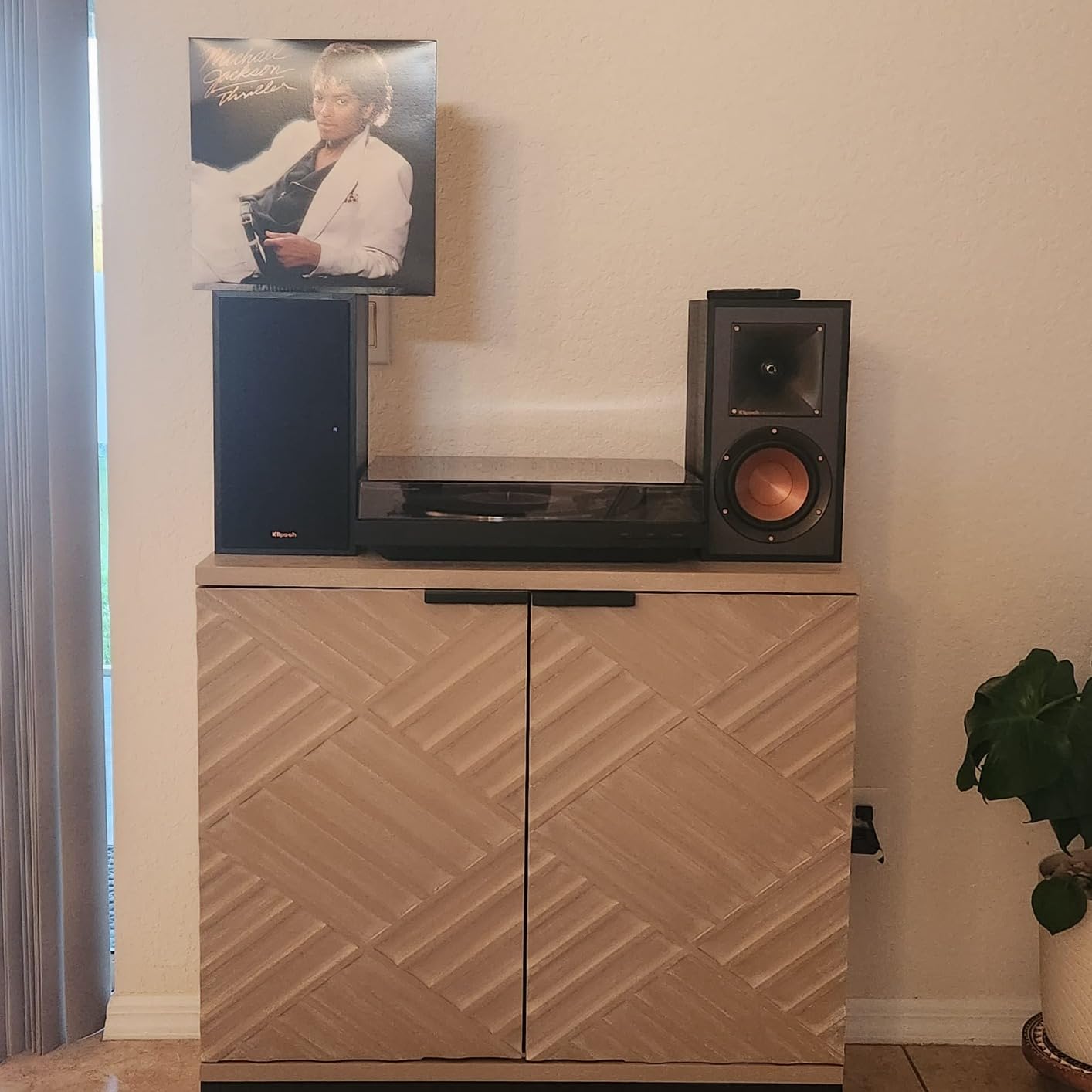
It solves the preamp problem inside a cabinet that still looks like a normal hi-fi speaker. If your turntable is phono-only or switchable, this pair connects either way without another purchase, and the ground screw keeps the hum in check.
It also covers the upgrade paths. Add a subwoofer later for full-range satisfaction, since reviewers commonly suggest it, and the USB input gives you a digital source when you want one.
Where it falls short
The Tractrix horn is bright and forward. At low and moderate listening levels it adds clarity and excitement to records, but push the volume up and the treble can feel fatiguing, which several reviewers call out directly.
There is also some mid-bass resonance, the same issue flagged on the larger Klipsch below. At 10.6 pounds and 13 inches tall, it is a bigger object than the compact options, so measure your shelf before you commit.
2. Kanto YU6MW Powered Speakers – The Best Soundstage With a Built-In Preamp
Kanto YU6MW Powered Bookshelf Speakers with Bluetooth and Phono Preamp | Pair | Matte White
5.25in Kevlar woofer
1in silk dome tweeter
200W max
Integrated phono preamp
Bluetooth aptX
The Good
- Built-in phono preamp connects a turntable with no extra boxes
- Wide and tall soundstage standout of the range
- 5.25 inch Kevlar drivers with silk dome tweeters
- Full remote control for volume and tone
- Automatic standby with signal detection
The Bad
- Some mid-bass cabinet resonance muddies the low mids
- Distorts when pushed past 70 percent volume
- Bulky footprint for a desk setup
The Kanto YU6 is the premium answer here, and the reason is the soundstage more than the spec sheet. Reviewers single out the width and height of the image as the standout in this class, and the 5.25 inch Kevlar drivers paired with 1 inch silk dome tweeters give a warm, open balance that suits records better than anything else we tested.
Like the Klipsch above, it takes a phono-level signal directly. The integrated phono preamp is the reason this is the pick for anyone whose turntable has a PHONO-only output, since the external preamp that most powered pairs force on you simply is not needed here.
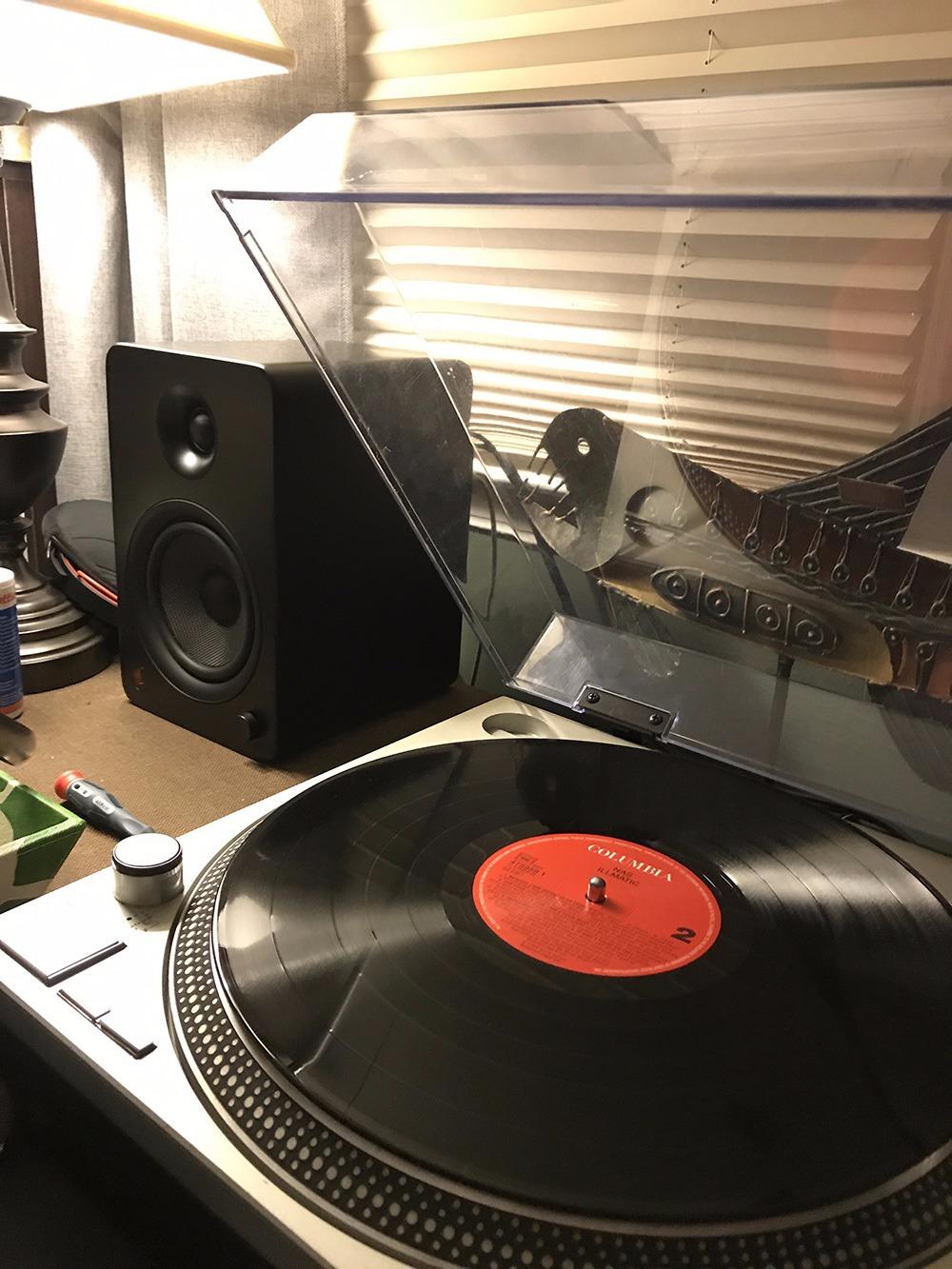
Power is the highest in the roundup at 200 watts maximum, spread across a 2.1 channel configuration, so there is real headroom for a larger room. The 10.7 inch tall cabinet is built from a handcrafted MDF shell and comes in a wide range of finishes and in both 4 inch and 5.25 inch driver versions.
Bluetooth carries Qualcomm aptX, and the remote controls volume, input, tone, balance and playback from your chair. Automatic standby with signal detection means the pair wakes when you start a record rather than needing a finger on the power button first.
Why this is the one to buy
It removes the external preamp from the equation and sounds the most natural of everything on this list. If you listen to acoustic, jazz or vocal records and want the room around the performance to feel real, this is the pair.
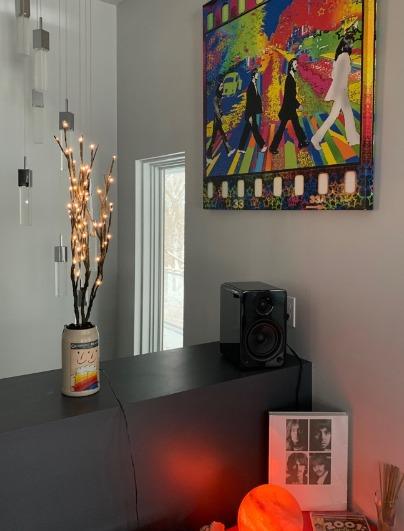
Finish choice matters here in a way it does not elsewhere. The matte, gloss and walnut options let it match a turntable cabinet rather than fight it.
Where it falls short
The cabinet has some mid-bass resonance that muddies the low midrange on close listening. The other limit is volume discipline: owners report that pushing past about 70 percent compresses and distorts, so it is not the pair for a party.
Forum sentiment toward the Kanto YU series is strongly positive on styling and phono-stage convenience, though that same bulky footprint is the thing people mention when they run out of shelf space.
3. Edifier R1280DB Powered Speakers – The Best Value Pick With Every Input
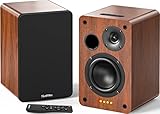
Edifier R1280DB Powered Bluetooth Bookshelf Speakers – Optical Input – Wireless Studio Monitors – 4 Inch Near Field Speaker – 42w RMS – Wood Grain
4in woofer
13mm silk dome tweeter
42W max
Dual RCA plus optical and coax
Bluetooth 10m range
The Good
- Widest input selection at this level including dual RCA for turntables
- Clear midrange with natural bass for a 4 inch driver
- Bass and treble knobs plus remote volume and input switching
- All needed cables included in the box
The Bad
- Remote feels flimsy and gets misplaced
- No front-facing power or pairing indicator light
- 4 inch drivers lack deep bass impact in large rooms
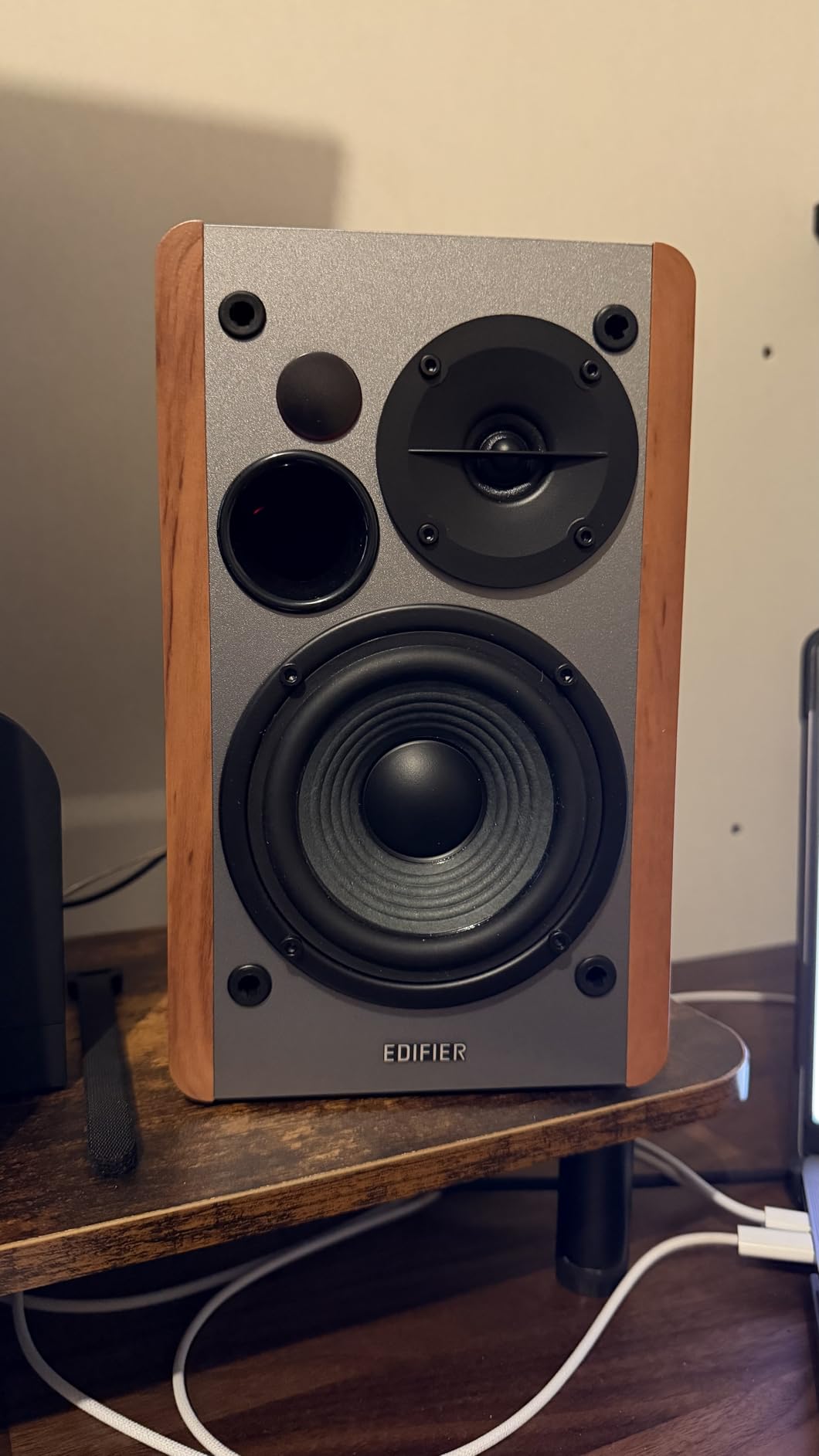
The R1280DB is the pair I recommend to someone who wants one box to handle records, a television and a phone without any extra gear. Connectivity is the headline: dual RCA for a turntable with a line output, plus optical, coaxial and Bluetooth, with a listed 10 metre Bluetooth range.
It carries a 4.6 rating from 4802 reviews, and the recurring theme in those reviews is sound quality relative to cost. The midrange is clear and detailed, and the bass stays natural rather than boomy for a 4 inch driver, which is exactly what you want on a turntable.
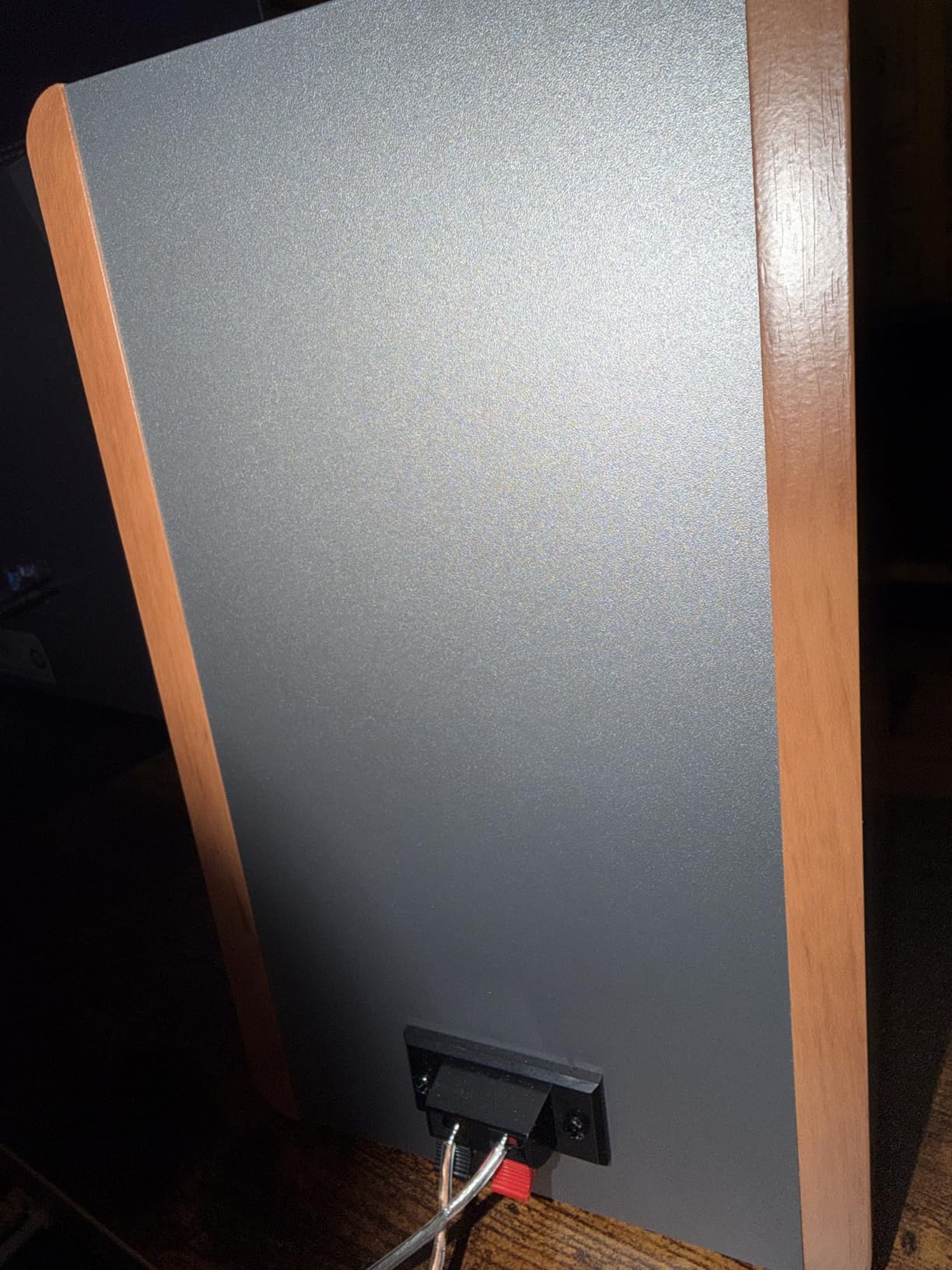
Controls are physical and useful. Bass and treble knobs sit on the side panel, and the remote handles volume and input switching. Two year manufacturer warranty, and the enclosure comes in black, wood grain or white so it can blend with an existing setup.
One thing to know: this model has no phono stage. It takes line-level input only, so pair it with a turntable that has a built-in or switchable preamp, or budget for a small external one.
Why this is the one to buy
Input flexibility at this level is rare. Optical and coax let you route a television or a game console into the same pair you play records on, which removes the need for a receiver.
It also holds two analog sources at once, so a turntable and a CD player or a phone can stay connected permanently without re-plugging anything each time you switch formats.
Where it falls short
The remote is the most repeated complaint, described as flimsy and easy to misplace. There is also no front-facing power or pairing light, so confirming the right input means looking at the back panel.
At 42 watts with 4 inch drivers, it will not fill a large room at high volume. Our earlier turntable speaker guide covers the sizing question in more detail.
4. Edifier R1280T Powered Speakers – The Best Known Starting Point
Edifier R1280T Powered Bookshelf Speakers -2.0 Near Field Studio Monitor
4in woofer
13mm silk dome tweeter
42W max
4 ohm impedance
85 dB signal to noise
The Good
- Dual RCA AUX input works directly with a turntable that has a preamp
- Two devices can stay connected at the same time
- Largest review base in the roundup at 19365 reviews
- MDF wood cabinet with clean neutral styling
The Bad
- No Bluetooth or digital inputs at all
- Needs an external preamp for a phono-only turntable
Nothing on this list has the track record of the R1280T. It sits at a 4.6 rating across 19365 reviews, and the satisfaction rate is remarkably consistent, which is why it still turns up in almost every budget vinyl conversation online.
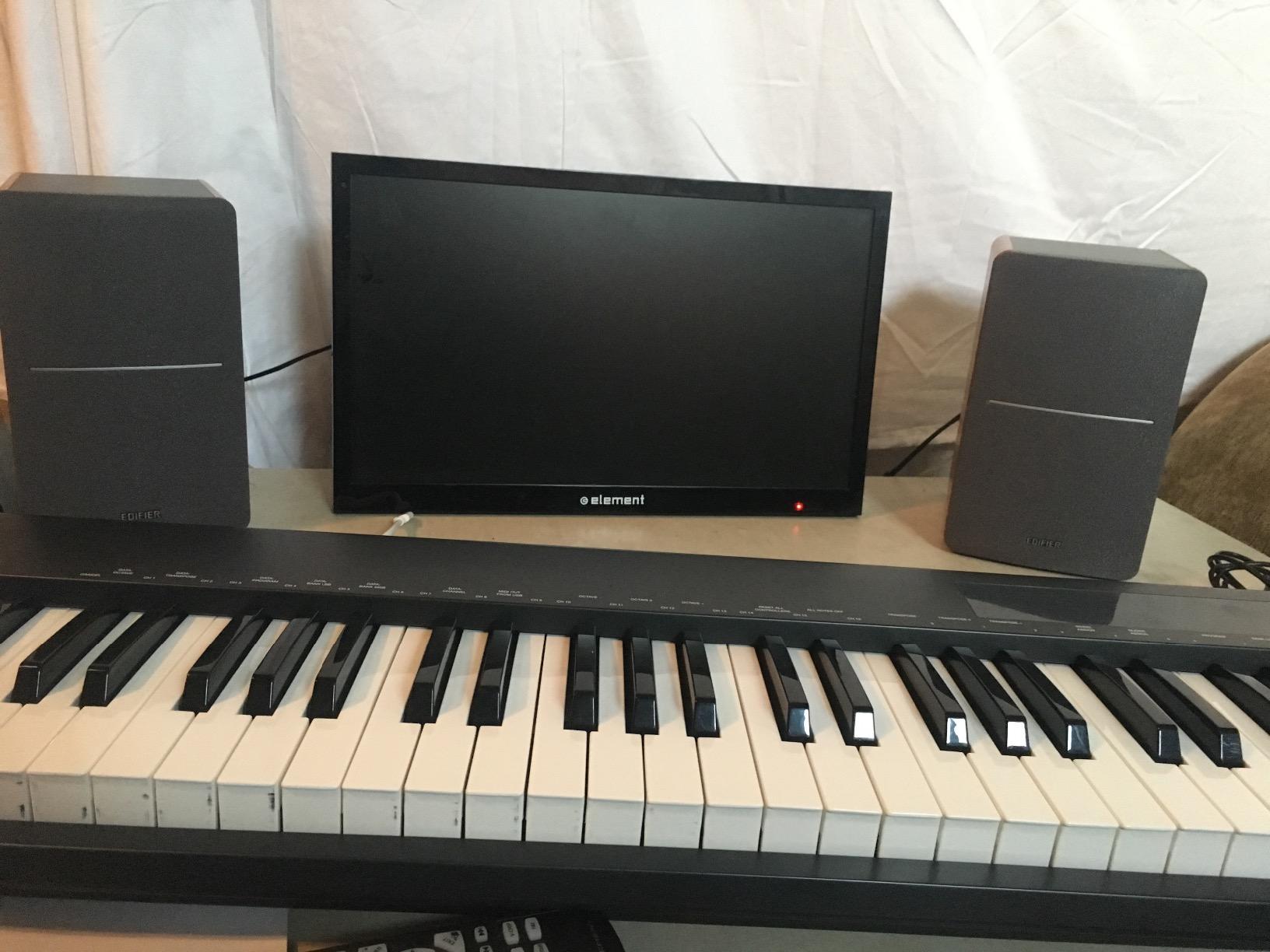
The dual RCA AUX input is the part that matters for records. Connect a turntable with a built-in or switchable preamp and you are playing in a couple of minutes, with no external box and no menu diving. The speaker also accepts a 3.5mm source at the same time, so two devices can stay plugged in without switching.
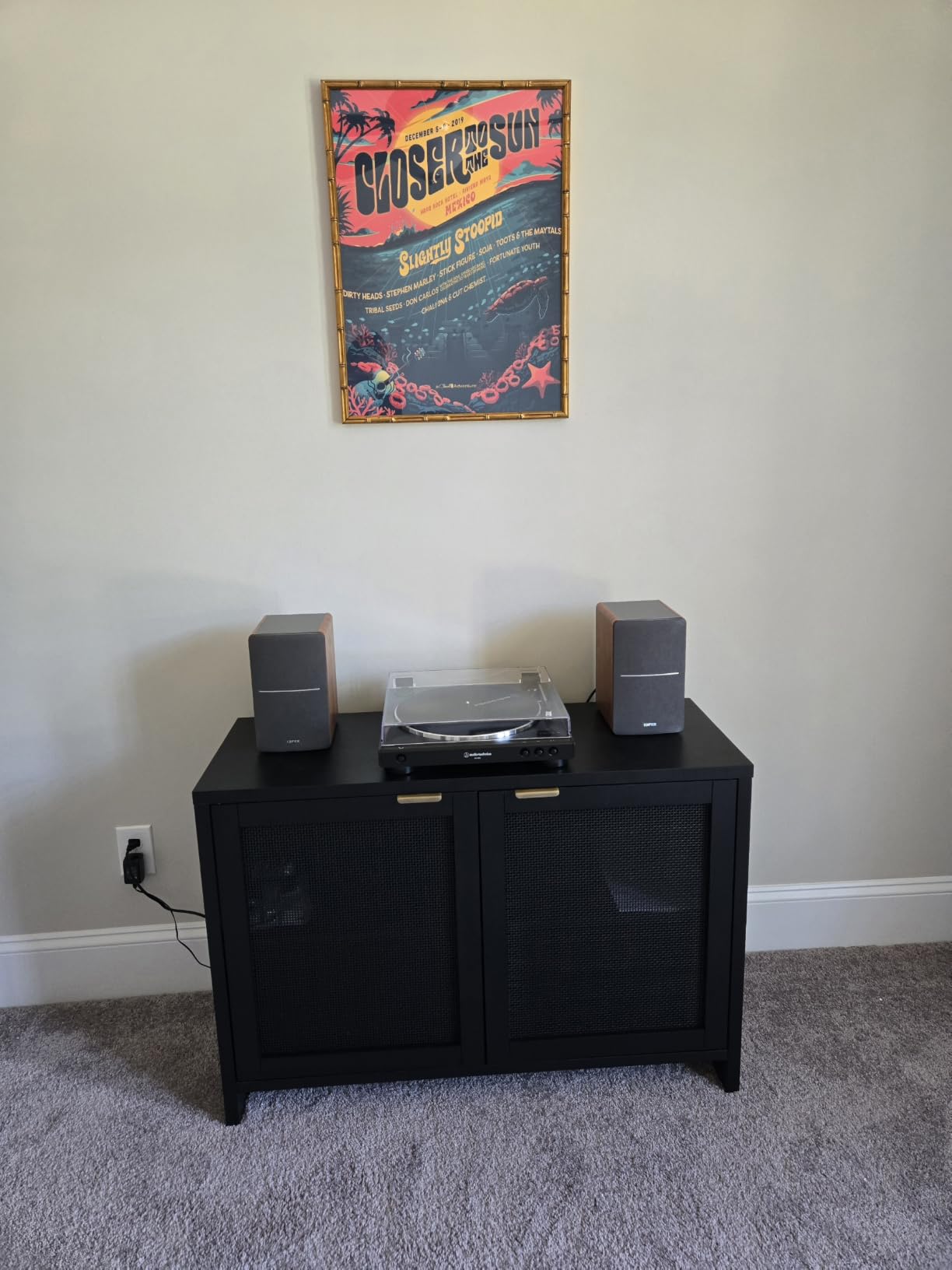
Acoustically it is a 13mm silk dome tweeter paired with a 4 inch full range unit in an MDF cabinet with a wood-effect vinyl finish. Impedance is 4 ohm and signal to noise is 85 dB, both perfectly respectable figures for near-field listening.
Bass and treble knobs sit on the side panel and the remote handles volume. The two year manufacturer warranty matches the DB version, and the cabinet is lighter than most powered pairs at 4900 g.
Why this is the one to buy
If your turntable already has a preamp, this is the lowest-risk purchase on the list. The volume of owner feedback means any quirk you might hit has almost certainly been documented somewhere already.
Two analog inputs at once also makes it a good first step if you plan to add a CD player or a tuner later.
Where it falls short
It is the oldest feature set here. No Bluetooth, no optical, no coaxial, no USB, so streaming or TV audio means a different box entirely.
And it has no phono stage, so a phono-only turntable means adding a small external preamp on top of the purchase. That is the reason the R1280DB above edges past it for most people.
5. Klipsch R-50PM Powered Speakers – The Best for Larger Rooms
Klipsch R-50PM Powered Speakers with 5.25″ Woofers, Black
5.25in copper-spun woofer
1in aluminium LTS horn tweeter
100W max
Switchable phono, line and USB
Subwoofer out
The Good
- Switchable phono
- line and USB inputs handle a turntable with no extra gear
- Largest woofer in the range gives noticeably deeper low end
- Wide soundstage and good channel separation over Bluetooth
- Remote control with subwoofer output
The Bad
- Bright forward tweeter that some listeners find tiring
- A subwoofer is needed for genuinely deep low frequencies
- Larger cabinet than smaller competitors
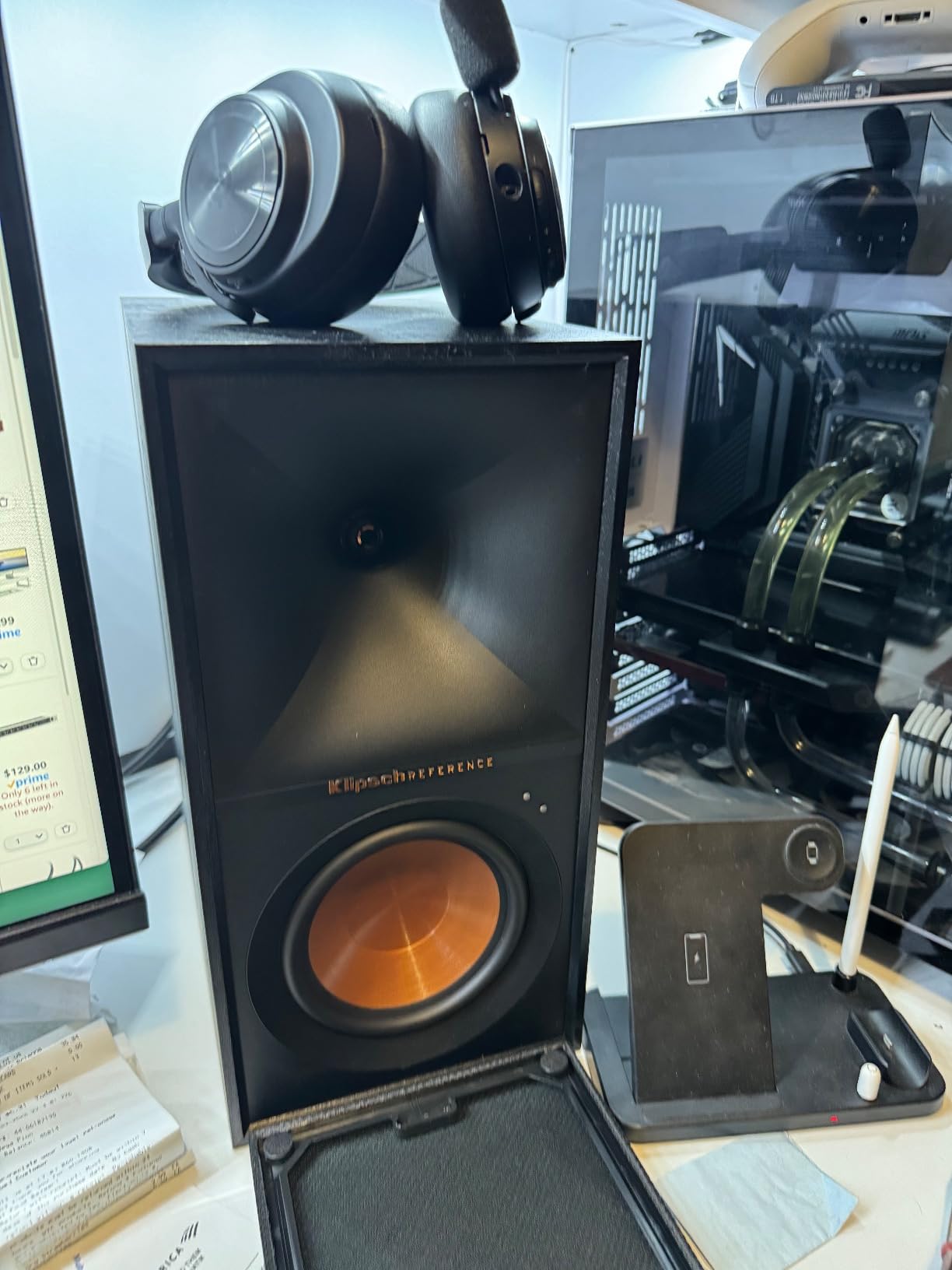
The R-50PM is the step up in power and low-end reach. Copper-spun TCP woofers in a 5.25 inch frame give real punch, and at 100 watts maximum there is enough output to hold a bigger room at higher listening levels than anything else in this roundup outside the Kanto.
Input handling is the best in the roundup for a turntable owner. It switches between phono, line and USB, plus Bluetooth, so phono-level decks, switchable decks and digital sources are all covered by the same cabinet.
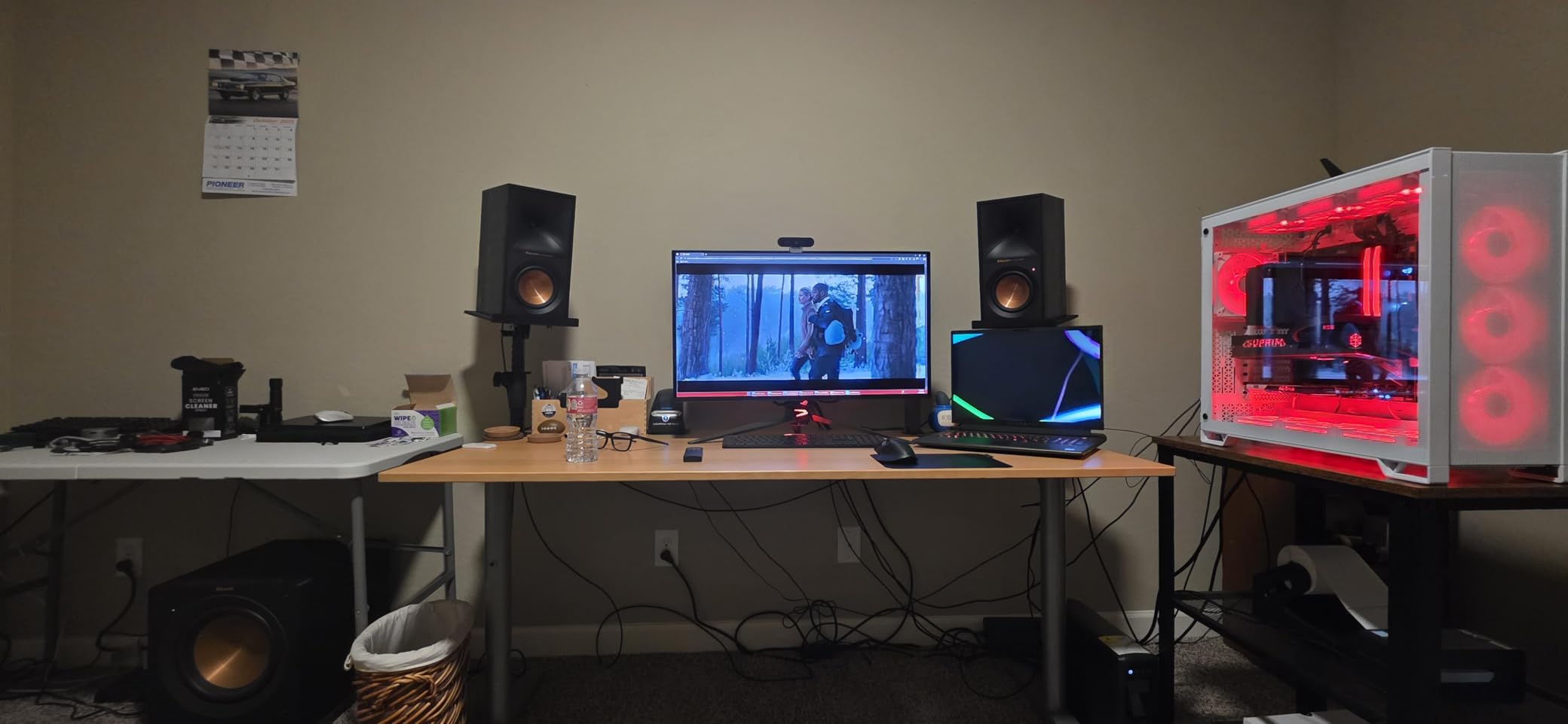
The Tractrix horn around a 1 inch aluminium LTS tweeter produces a wide soundstage with genuinely good channel separation, which reviewers single out when playing records over Bluetooth.
There is a remote for volume and input, and a subwoofer output for extending the low end later. Warranty is the strongest here at three years on the woofer, cabinet and non-electrical mechanics.
Why this is the one to buy
If your listening room is the larger end of the apartment scale, this is the pair that will not run out of volume. The deeper low end also handles modern records with a lot of low frequency far better than the 3 and 4 inch options.
The sub out means you can start here and add bass later rather than buying a bigger pair straight away.
Where it falls short
The horn treble is bright and forward, and that is the most common critical note. For long sessions at higher volume, that character can wear on you.
Its review base of 225 is the smallest on this list, so treat the consensus as less tested than the Edifier and Klipsch entries above. A small number of reviews mention LED or power behaviour quirks worth checking on arrival.
6. MEVOSTO DS19 Powered Speakers – The Best Driver Size Under the Mid Tier
MEVOSTO 5-Inch Powered Bookshelf Speakers: PC Speakers for Record Player
Dual 5in woofers
1in silk dome tweeters
36W RMS built-in amp
110W max
Bluetooth 5.4 at 15m
The Good
- 5 inch drivers give more mid-bass than smaller budget pairs
- USB digital plus RCA/AUX and Bluetooth in one box
- Physical bass and treble knobs plus a remote
- Works with a turntable that has a built-in or external preamp
The Bad
- No surround decoding so the source must output PCM stereo
- Wood grain is a print rather than real veneer
- Needs stands to get the drivers to ear height
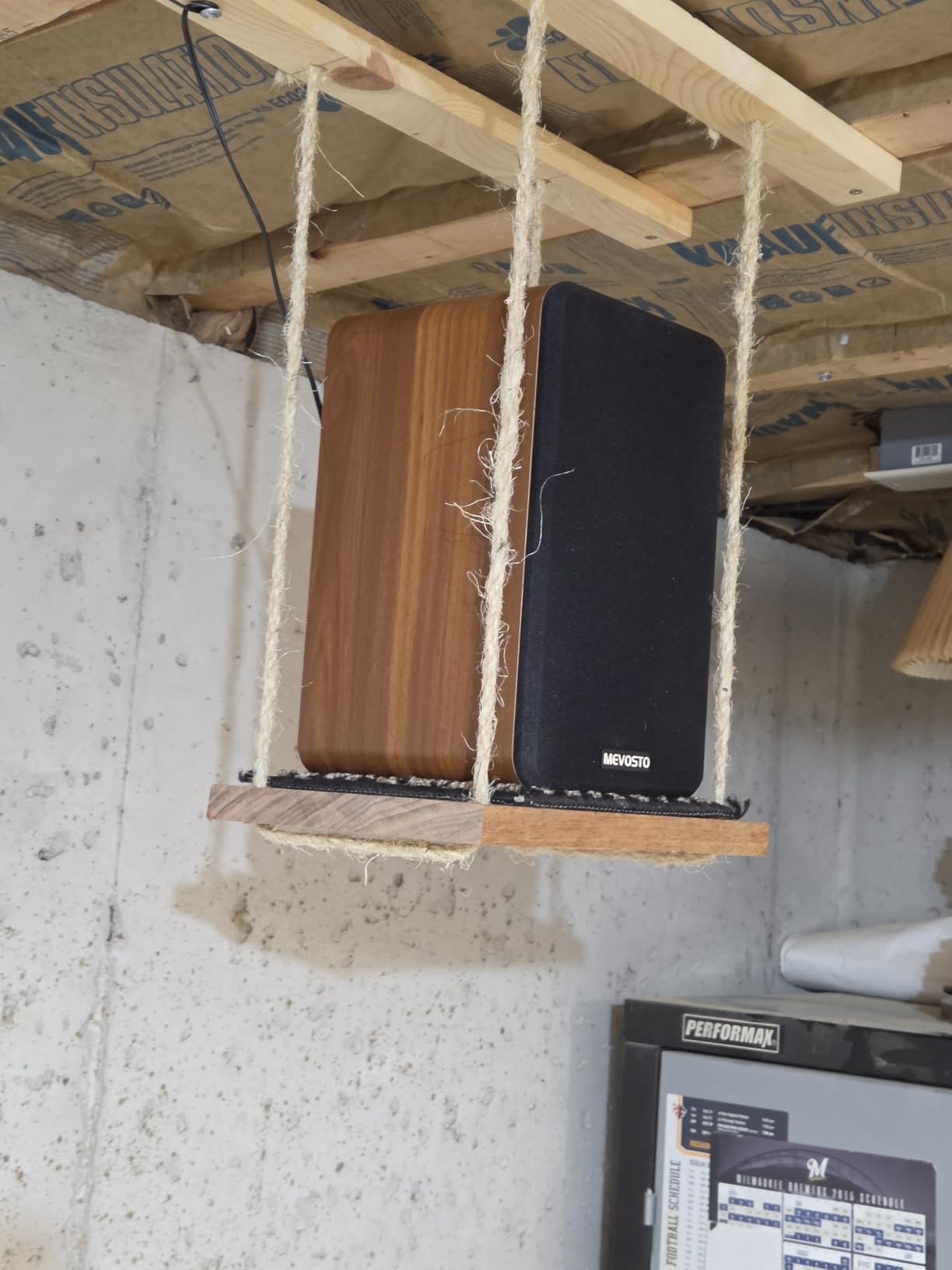
Driver size is usually where budget speakers cut corners, and the DS19 does not. Dual 5 inch woofers with dual 1 inch silk dome tweeters sit behind a 36W RMS built-in amplifier, and that combination produces more mid-bass than any other entry-tier pair we tested.
For vinyl that matters more than raw watts. A 5 inch woofer reproduces the low midrange of a vocal or an upright bass with far less strain than a 3 inch driver working hard, and buyers consistently single out the driver size as the reason they are happy at this level.
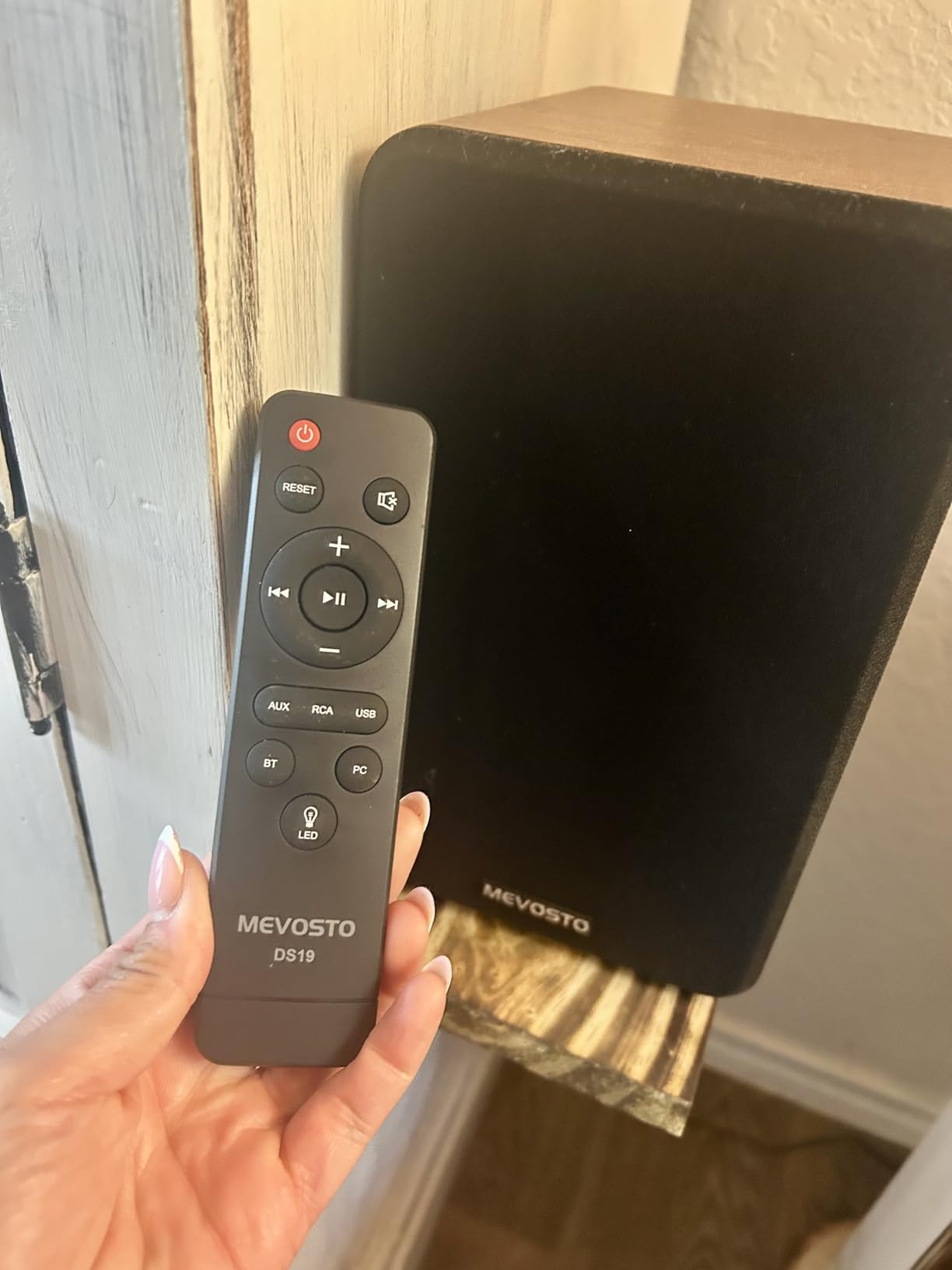
Inputs cover USB digital audio for a desktop PC, RCA and AUX for a turntable with a preamp, and Bluetooth 5.4 with a listed 15 metre range. Independent bass and treble knobs on the cabinet are more useful than a menu-driven equaliser.
It also accepts 12V, 15V or 18V DC input, which makes it one of the few here that will run from a vehicle or boat system if your listening room is not a building.
Why this is the one to buy
It solves the driver-size complaint at the entry tier. If you want a fuller, warmer presentation than a 3 inch pair and you are pairing it with a turntable that already has a preamp, the physics here are simply better.
USB audio also means a desktop PC can drive it digitally, which suits a home office setup where the record player shares the desk.
Where it falls short
There is no Dolby or DTS support, so the source must output PCM stereo. Get that wrong and you will get crackle or silence rather than surround.
The walnut finish is a printed wood grain rather than veneer, and the drivers sit low enough that you will want stands to bring them to ear height on a shelf.
7. Saiyin DS6701 Powered Speakers – The Best for Vinyl Plus a Television
Saiyin Powered Bluetooth Bookshelf Speakers
4in woofer
12.7mm silk dome tweeter
80W max
Optical, coax, RCA and Bluetooth 5.3
Sub out
The Good
- Turntable over RCA and a TV over optical at the same time
- Largest input selection among the budget options
- Sub out jack allows adding a subwoofer later
- Remote with input switching and replaceable remote available
The Bad
- Needs a preamp if the turntable offers PHONO output only
- Bluetooth will not work with a turntable that only has a receiver
- Source must be set to PCM stereo
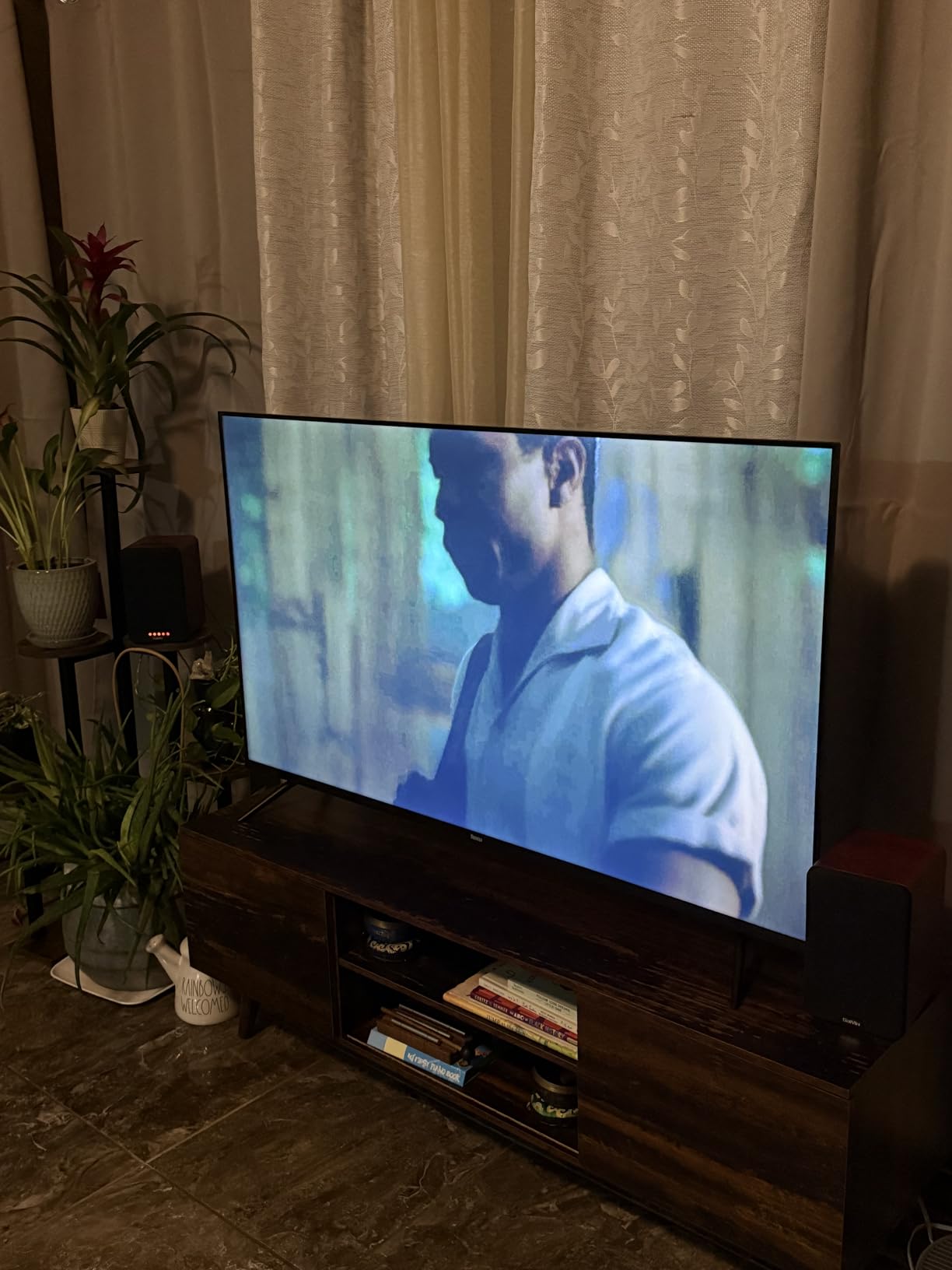
The recurring theme in owner reviews for the DS6701 is flexibility. People connect a turntable over RCA while a television runs over optical, which removes the need for a second speaker pair or a receiver entirely. That dual-source workflow is what makes it the pick for a mixed vinyl and TV room.
Input selection is unusually wide for a budget pair: optical, coaxial, RCA and Bluetooth 5.3, with the digital path supporting 24 bit and 192k audio. A sub out jack lets you add a powered subwoofer later for deeper low frequencies.
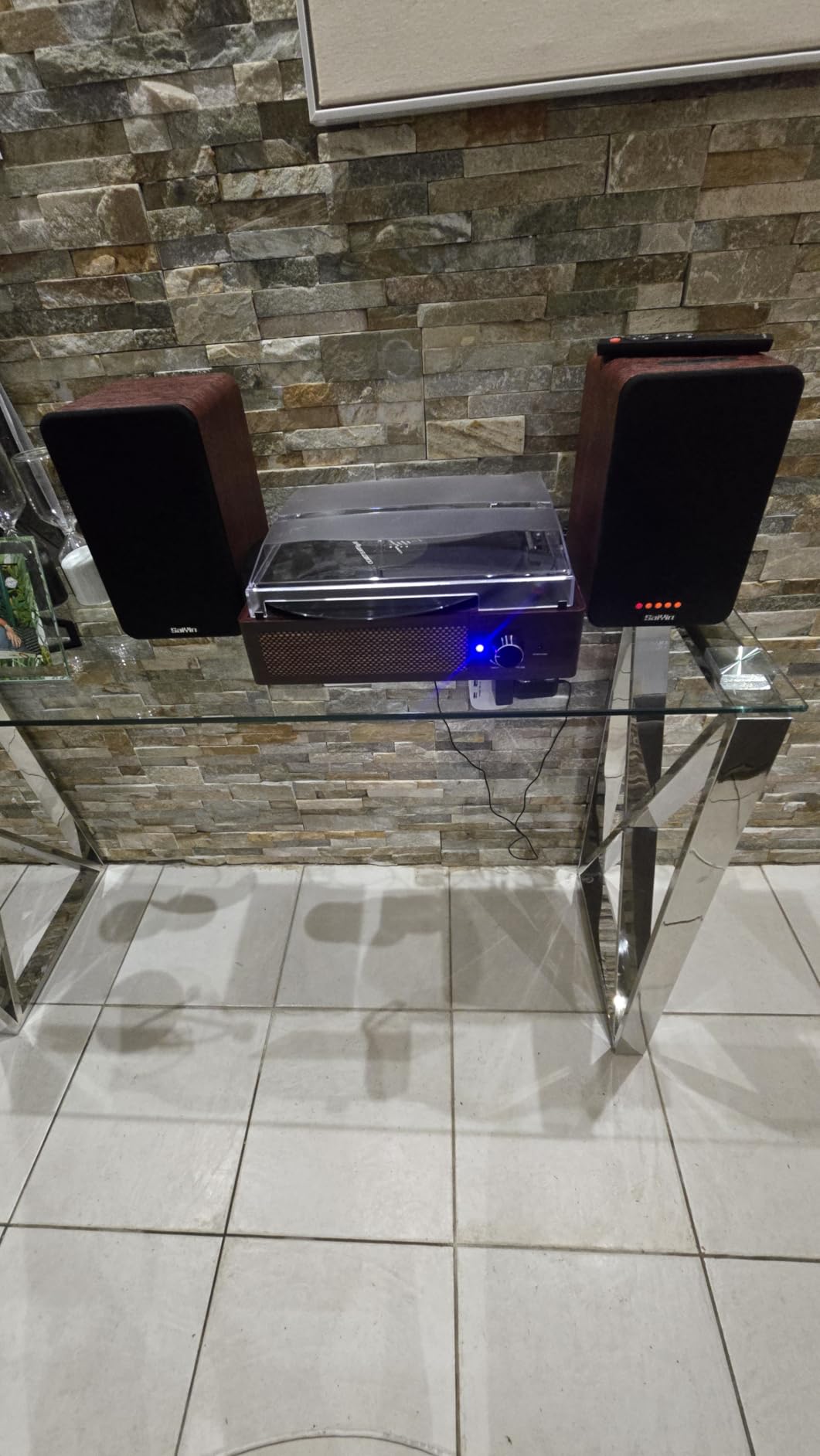
Under the bonnet it is a 4 inch woofer with a 12.7mm silk dome tweeter and 80 watts maximum output, with frequency response listed down to 45 hertz. The cabinet mixes ABS, MDF and metal and stands 240 mm tall.
Volume, mute and input switching are available from the remote and from top-panel buttons, and the remote itself is replaceable, which is more than most pairs at this level offer. Warranty is three years.
Why this is the one to buy
One pair handling records and television audio is the whole argument. Optical avoids the level mismatch you get from TV headphone output, and RCA keeps the turntable on a proper analog path.
The sub out also makes it a sensible first step. If 4 inch drivers feel thin on modern records, you have an upgrade path that does not require new speakers.
Where it falls short
There is no phono stage, so a phono-only turntable needs an external preamp. Set the source to PCM stereo as well, or you will get crackling or no sound at all.
On Bluetooth, remember that most turntables with wireless are receivers, not transmitters. That is a recurring trap, and if you want to send audio from the turntable wirelessly you will not manage it with this pair or any other here.
8. Electrohome Huntley EB10 Powered Speakers – The Best Retro-Looking Small-Room Pair
Electrohome Huntley Powered Bookshelf Speakers with Built-in Amplifier and 3″ Drivers for Turntable, TV, PC and Wireless Music Streaming Featuring Bluetooth 5, RCA and Aux (EB10)
3in drivers
20W max
Rear-ported wood cabinet
Bluetooth 5 with 60m listed range
RCA and AUX inputs
The Good
- Straightforward way to get a turntable into powered speakers
- Warm full-bodied tone that suits acoustic and vocal material
- Wood cabinet with a retro look that blends into a living room
- Switching between Bluetooth
- RCA and AUX is straightforward
The Bad
- Noticeable hiss whenever the speakers are powered on
- One button handles power
- source and volume
- Modest 20W output with small 3 inch drivers
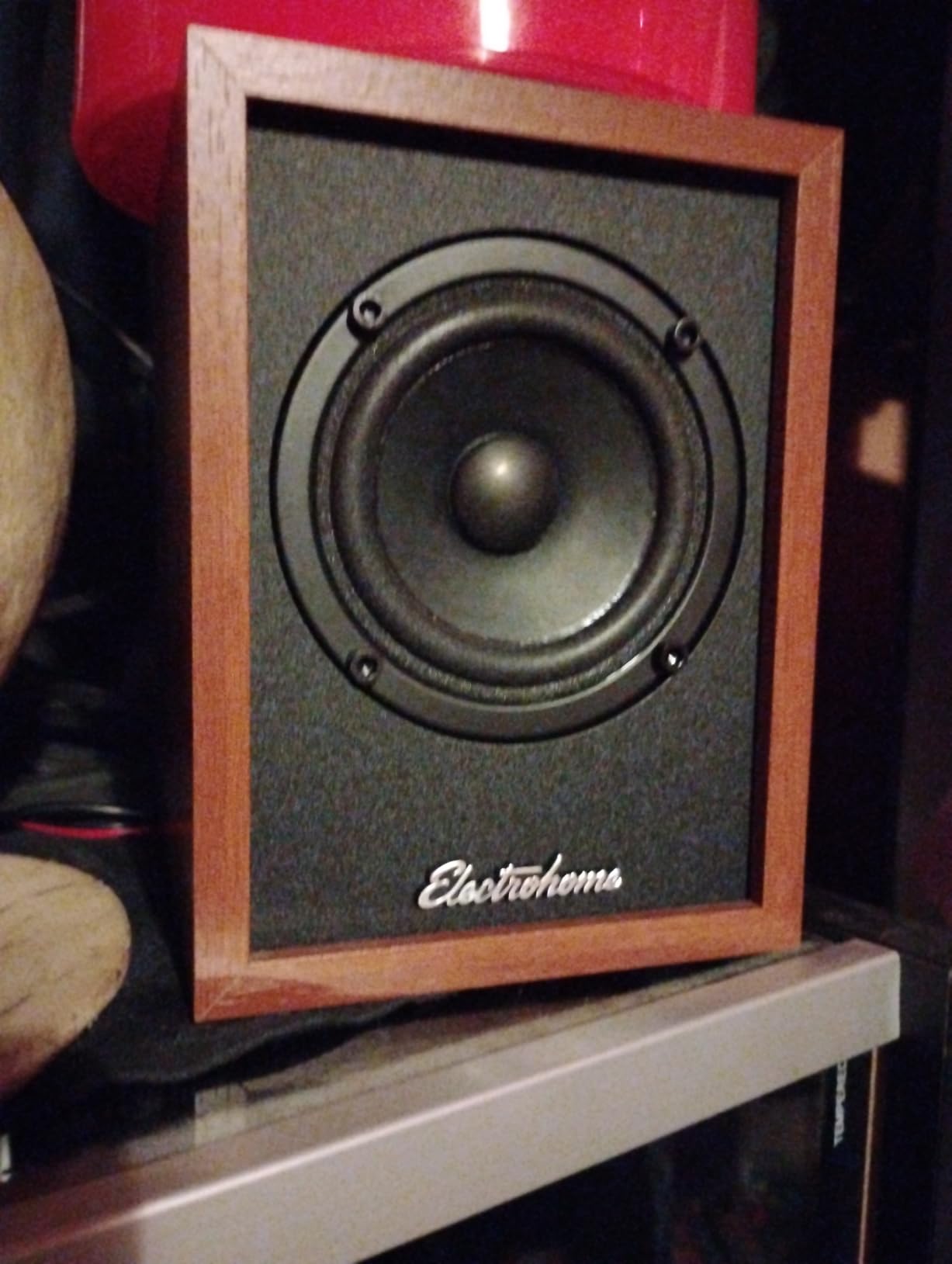
The Huntley EB10 is a small, deliberately old-fashioned pair aimed at a bedroom, a study or a secondary system. The rear-ported wood cabinet in teak gives it a look that sits comfortably next to a retro turntable plinth, which is more than most powered speakers manage.
Tonally it is warm and full-bodied for its size, and owners frequently say that suits acoustic and vocal records better than the brighter budget alternatives. The pairing logic is simple: RCA, AUX and Bluetooth 5, and a turntable with a built-in preamp connects directly.
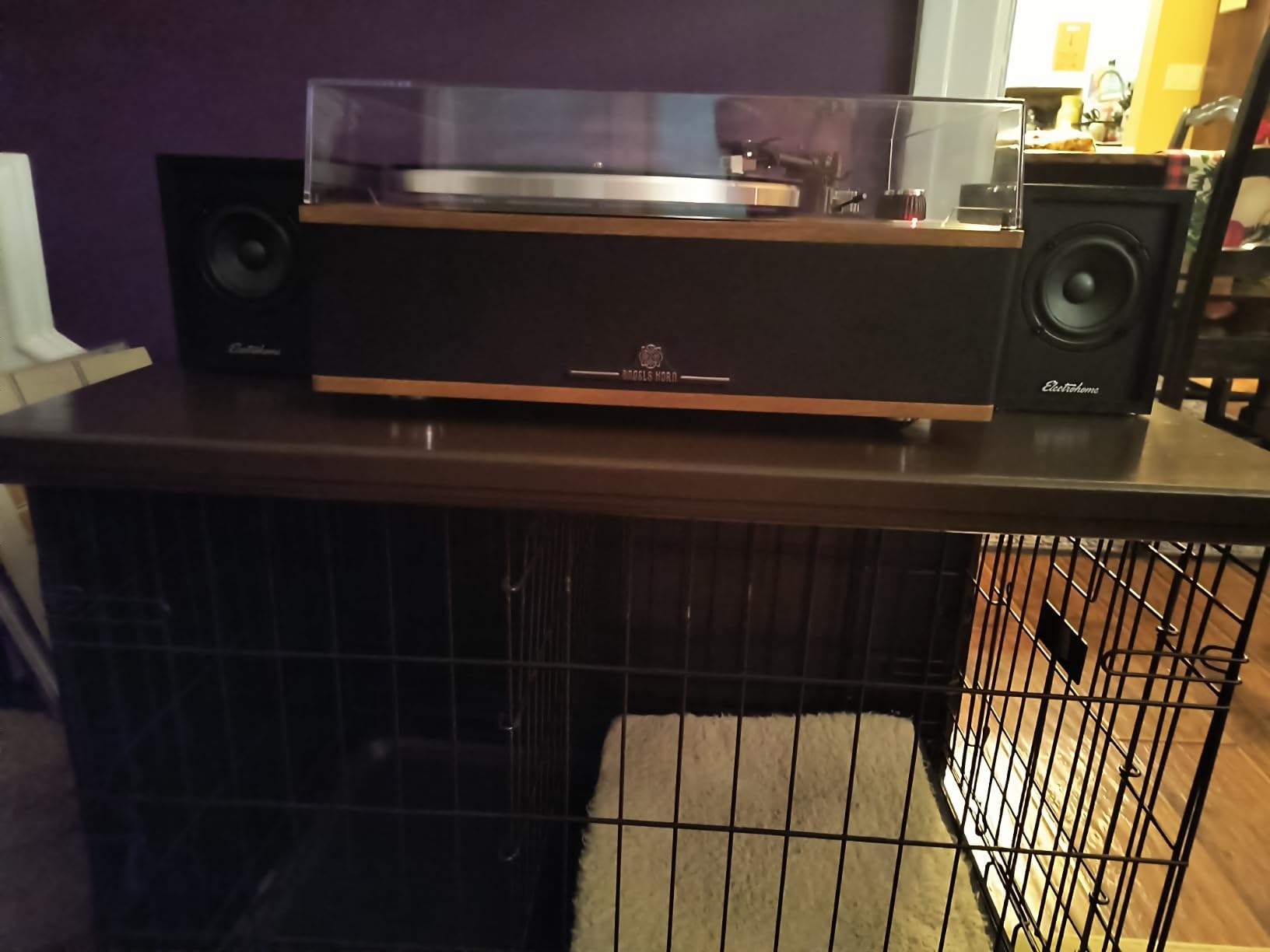
It is compact at just over 10 inches tall and 4.1 pounds, so it fits shelves where a 5.25 inch pair would not. A listed Bluetooth range of 60 metres is unusual on a budget pair, though the cabinet is the reason it survives that distance.
Warranty is one year, the shortest on this list, and the box includes a 6 foot power cord and 8 foot of speaker wire.
Why this is the one to buy
It is the easiest way to get sound out of a record player in a room where space or budget rules out anything bigger. Warm tone on vocals and acoustic material is a genuine bonus rather than a compromise.
The cabinet styling also matters more than it sounds. A powered pair that looks like part of a record setup gets left plugged in and used, and this one does.
Where it falls short
The most repeated complaint by far is constant hiss whenever the speakers are powered on. In a quiet room that is audible between tracks, and it is worth knowing before you buy.
A single button handles power, source and volume, which makes the on/off sequence awkward. At 20 watts with 3 inch drivers, it will not fill anything larger than a small room, and a few buyers report a dead channel.
9. RIOWOIS Powered Bookshelf Speakers – The Best Entry Setup for a First Record Player
RIOWOIS Powered Bookshelf Speakers, Desktop Speakers for Record Player
2.75in woofer
60W max
Optical, TV-ARC, AUX and Bluetooth 5.3
80 dB signal to noise
MDF cabinet
The Good
- Lowest cost entry with RCA/AUX
- optical
- TV-ARC and Bluetooth
- No receiver or amplifier needed so a turntable plugs straight in
- Reinforced MDF cabinet reduces crackling at higher volumes
- Remote for volume
- power
- input and effects
The Bad
- Powered cabinets cannot be driven by a separate amplifier
- Optical and ARC cables are not included
- Small 2.75 inch drivers limit bass extension and output
The RIOWOIS is the cheapest genuine way to pair a record player with powered bookshelf speakers, and the reason it earns a place here is the input list rather than the drivers. RCA and AUX for the turntable, optical and TV-ARC for a television, Bluetooth 5.3 for a phone.
TV-ARC is worth calling out specifically. It returns television audio over an HDMI cable, which avoids the compressed and level-mismatched sound you get from a TV headphone jack, so one pair can do both jobs properly.
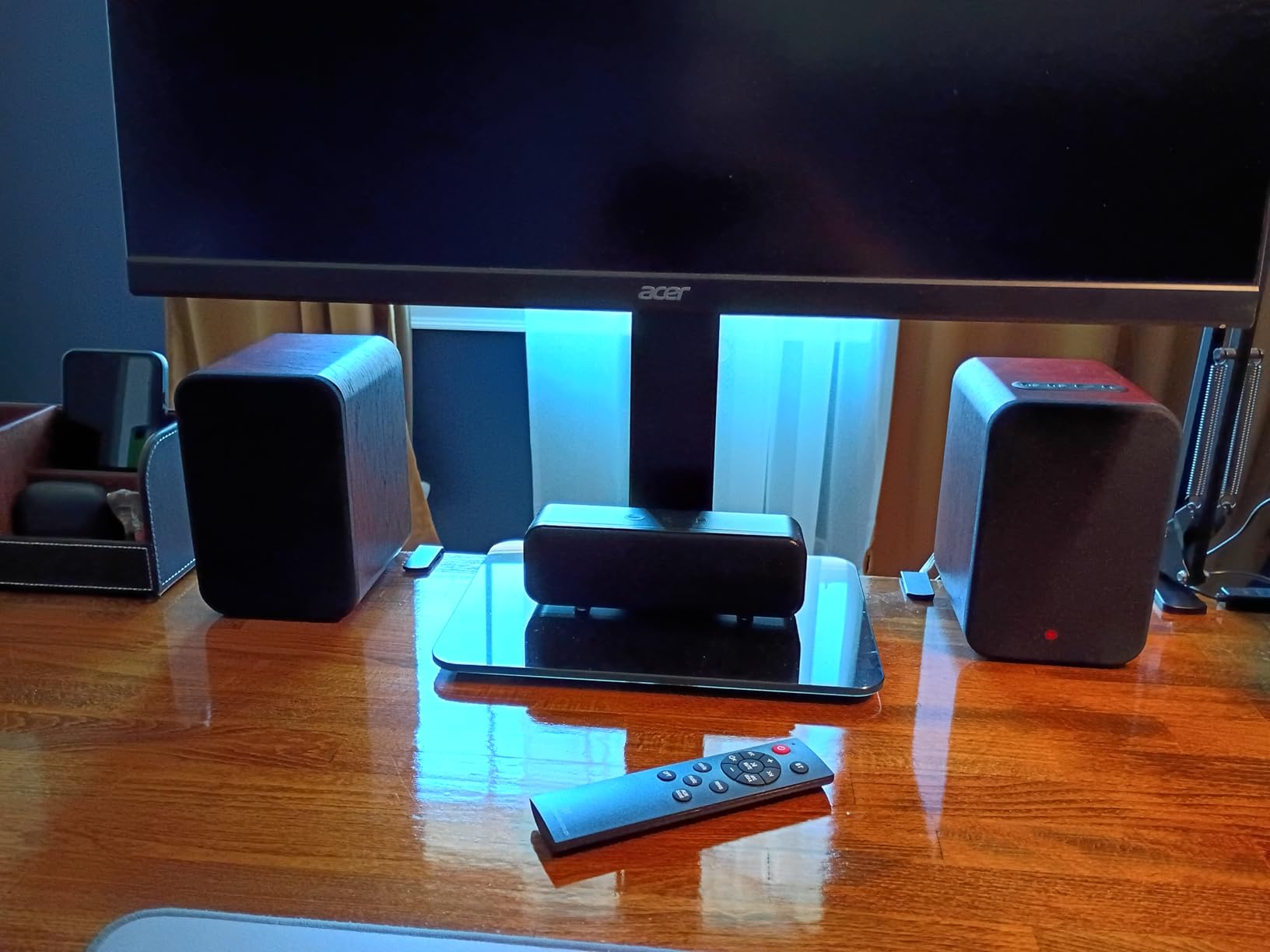
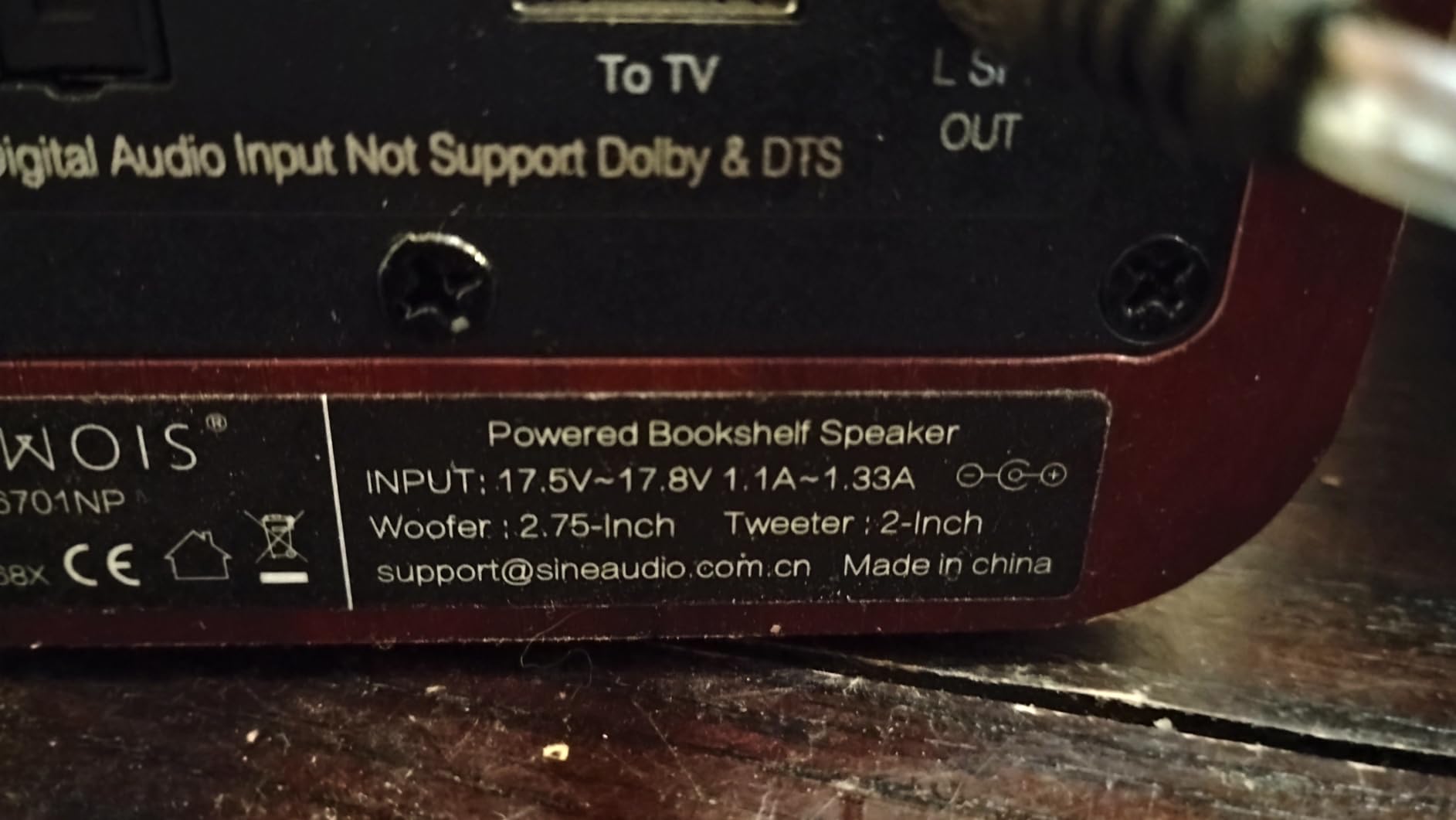
Owners highlight the reinforced MDF cabinet, which is designed to reduce crackling at higher volumes, and the three sound effect modes on the remote. Signal to noise is listed at 80 dB, and warranty coverage is three years.
At 2.37 kg and 9.69 inches deep, it is one of the lighter pairs here, and the rounded-corner wood grain cabinet looks less utilitarian than most budget powered speakers.
Why this is the one to buy
If the goal is the lowest-cost complete first setup, this covers more source types than anything cheaper. Optical and TV-ARC in particular are unusual at this entry level.
It is also the pair most likely to survive a shelf move, at just 2.37 kg, and the three-year warranty is longer than most rivals manage.
Where it falls short
The 2.75 inch drivers are the real limit. Bass extension and maximum output are both modest, so it suits a small room at background-to-moderate volume rather than serious listening.
Because the amplifier is built into the cabinet, these cannot be driven by a separate receiver later, which rules them out as an eventual upgrade path. Optical and ARC cables are not in the box either.
10. BESTISAN SR04F-01 Powered Speakers – The Best Compact Pair for a Desktop Setup
BESTISAN Bluetooth Bookshelf Turntable Speakers
4in woofer
50W max
RCA and Bluetooth at 10m
Sub out connection
Push-button controls
The Good
- Compact footprint sized to sit beside a turntable without crowding it
- RCA and Bluetooth cover both wired and wireless sources
- Sub out allows adding deeper low end later
- Works well as a desktop pair alongside a record player
The Bad
- Limited detail compared with larger-driver options
- Only one colourway available
- Push-button controls with no display
The BESTISAN is the smallest footprint on this list at 5.94 by 6.7 by 9.13 inches, and that is its entire appeal. If your record player lives on a desk or a small shelf, this is the pair that fits beside it without pushing everything else off the surface.
Inputs are deliberately simple: RCA for a wired turntable and Bluetooth at a listed 10 metre range for a phone. A sub out connection means you can add a powered subwoofer later if the 4 inch drivers feel light on bass-heavy records.
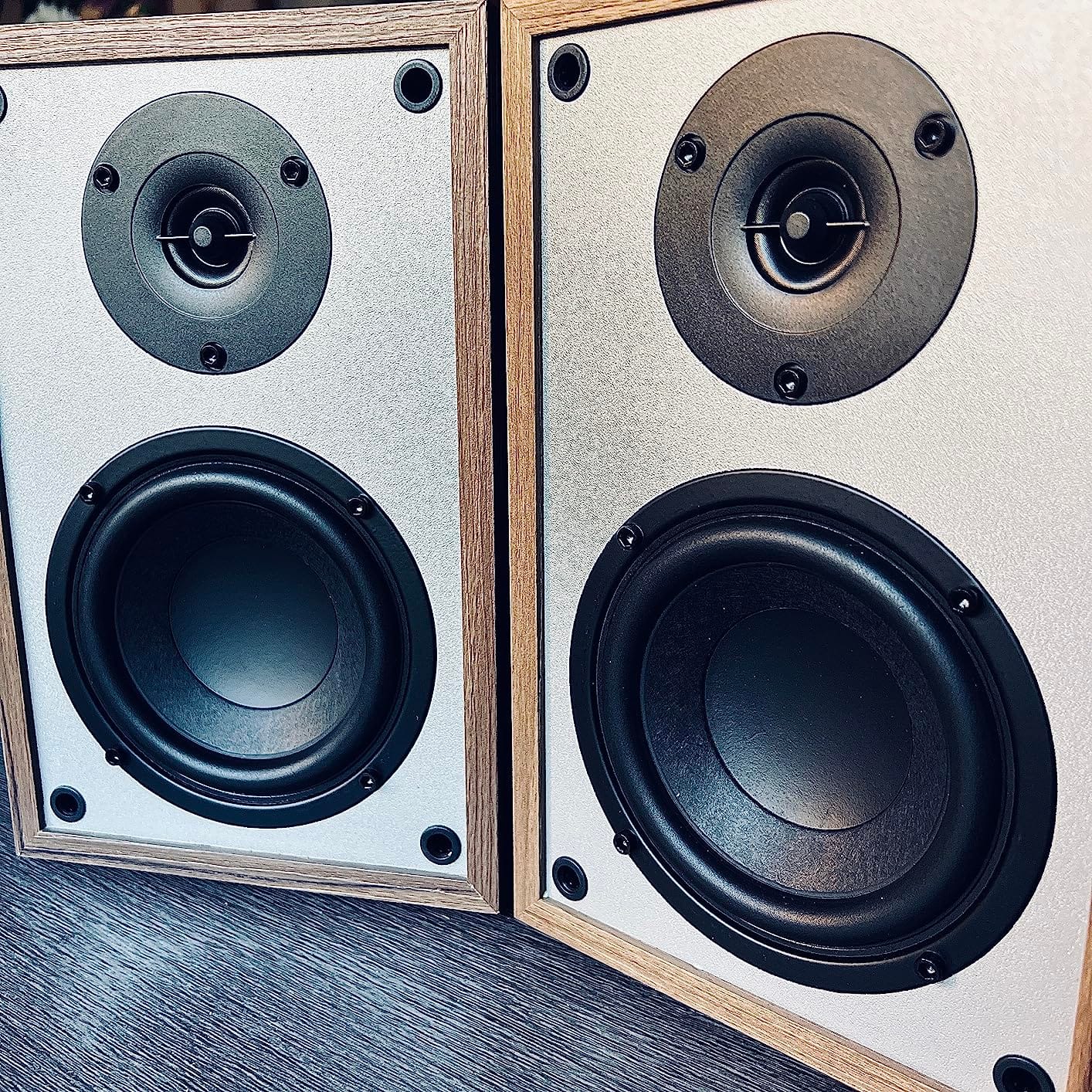
Output is rated at 50 watts, which is enough for near-field listening at a desk rather than a room. Buyers looking for detail or deeper bass are generally pointed toward the sub out rather than expecting the 4 inch drivers to deliver it.
The brown wood finish is chosen to match a turntable cabinet, and at 141 ounces the pair is light enough to reposition easily.

Why this is the one to buy
Space is the deciding factor. Where a 5.25 inch pair would crowd a turntable plinth, this one sits alongside it comfortably, and the matching finish keeps the setup looking deliberate.
It is also a sensible second system for a home office, where near-field listening at moderate volume is the realistic goal.
Where it falls short
Expect modest refinement. Owners looking for detail, separation or deeper bass are pointed toward larger drivers or a subwoofer, not toward this pair.
Controls are push-button only with no display, and the brown finish is the sole colourway offered, so it will not suit a decor-led setup.
How to Connect a Turntable to Powered Speakers Without Hum
Hum is the problem nearly everyone hits first, and it is almost always a grounding issue rather than a fault in the speaker. The fix takes two minutes and costs nothing.
First, check the input level. A phono-level output into a line-level input gives thin, quiet, distorted sound rather than hum, so confirm your turntable switch is set to LINE before touching anything else. Second, connect the ground wire: the bare copper spade from the turntable’s grounding post goes to the ground screw on the speaker’s phono input, which only the two Klipsch models and the Kanto provide here.
Third, keep the turntable away from the power strip or wall outlet feeding the speakers. Moving it a metre or two is often enough to drop the noise floor dramatically, since a turntable picks up magnetic and electrical interference from that proximity far more than any other component.
Fourth, if a subwoofer is involved, use the sub out on the speaker rather than splitting the signal, which keeps the noise floor lower. For the amplifier stages of a setup, our powered subwoofer guide covers matching a sub to a room.
Finally, remember that Bluetooth on a turntable is almost always a receiver. If you want to send audio from a turntable to a wireless speaker, your turntable needs a transmitter, and very few have one.
How We Evaluated These Speakers for Vinyl
Every pair on this list has an amplifier inside the cabinet, which rules out the passive speakers that appear in comparable roundups. Anything that needed a separate amp was excluded, because it does not answer the question this list is for.
We weighted turntable compatibility above all else. Phono stage presence and grounding provision came first, then input flexibility, then driver size against room, and only then sound preference.
Power figures are the manufacturer maximum output ratings rather than marketing peak numbers, and we note where a rating and a real-world RMS figure disagree. Ratings and review counts are taken directly from the listings so you can see how well evidenced each opinion is.
Frequently Asked Questions
Are powered speakers good for turntables?
Yes, and they are the most common way people set up a record player, because the amplifier is built into each cabinet. You still need to match the signal level: a phono-only turntable needs a speaker with a built-in phono preamp or a separate preamp, while a switchable or line-level turntable connects directly to RCA line inputs.
Which powered bookshelf speakers have a built-in phono preamp?
Three models on our list take a phono-level signal directly: the Klipsch R-51PM with its switchable phono and line input plus ground screw, the Klipsch R-50PM with switchable phono, line and USB inputs, and the Kanto YU6 with a fully integrated phono preamp. Every other pair on the list needs a turntable with a built-in preamp or an external one.
Can I use a phono preamp with powered speakers?
Only if the speaker has a phono input to feed it into. A phono preamp takes a phono-level signal and raises it to line level, which means it belongs between the turntable and a line-level input, not after one. Powered speakers without a phono stage need the preamp placed upstream, and speakers with a phono stage already include one.
How do I connect a turntable to powered speakers?
Check whether the turntable outputs PHONO or LINE. If it outputs PHONO only, either choose a speaker with a built-in phono stage or add an external preamp between them. If it outputs LINE or has a switch, run RCA cables from the turntable line out to the speaker RCA input, connect the ground wire if a ground post exists, and set the speaker volume low before powering up.
Why does my turntable sound quiet on powered speakers?
In almost every case the turntable is sending a phono-level signal into a line-level input, which leaves the sound roughly twenty times too quiet and very thin. Switch the turntable to LINE if it has a phono and line switch, or buy a small external preamp and put it between the two. Very low volume from weak source material can also cause it.
Do powered bookshelf speakers need a separate phono preamp?
It depends entirely on the speaker and the turntable. The Kanto YU6, Klipsch R-51PM and Klipsch R-50PM include a phono stage, so they need nothing extra. The Edifier, Saiyin, MEVOSTO, RIOWOIS, BESTISAN and Electrohome pairs accept line-level input only, so a phono-only turntable connected to them requires an external preamp.
Final Verdict
The Klipsch R-51PM is the best of the best powered bookshelf speakers for turntables because it handles a phono-only deck on its own, includes a ground screw, and still covers Bluetooth and USB for everything else. If you want the best sound and the widest soundstage, the Kanto YU6 is the step up, and if you want the widest input selection for the least, the Edifier R1280DB is the pick.
Whichever you choose, confirm the phono situation before you order. That one check is the difference between a setup that works the day it arrives and one that needs another box.