
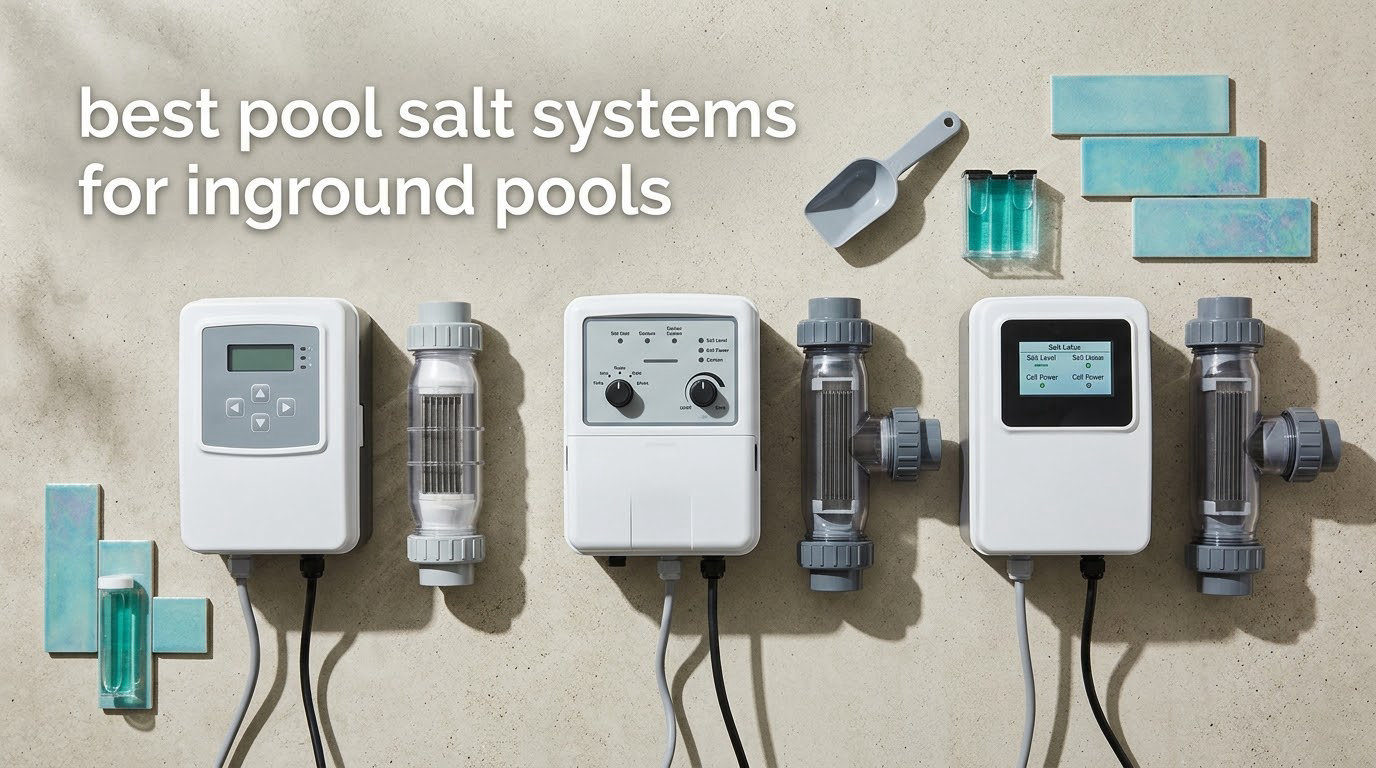
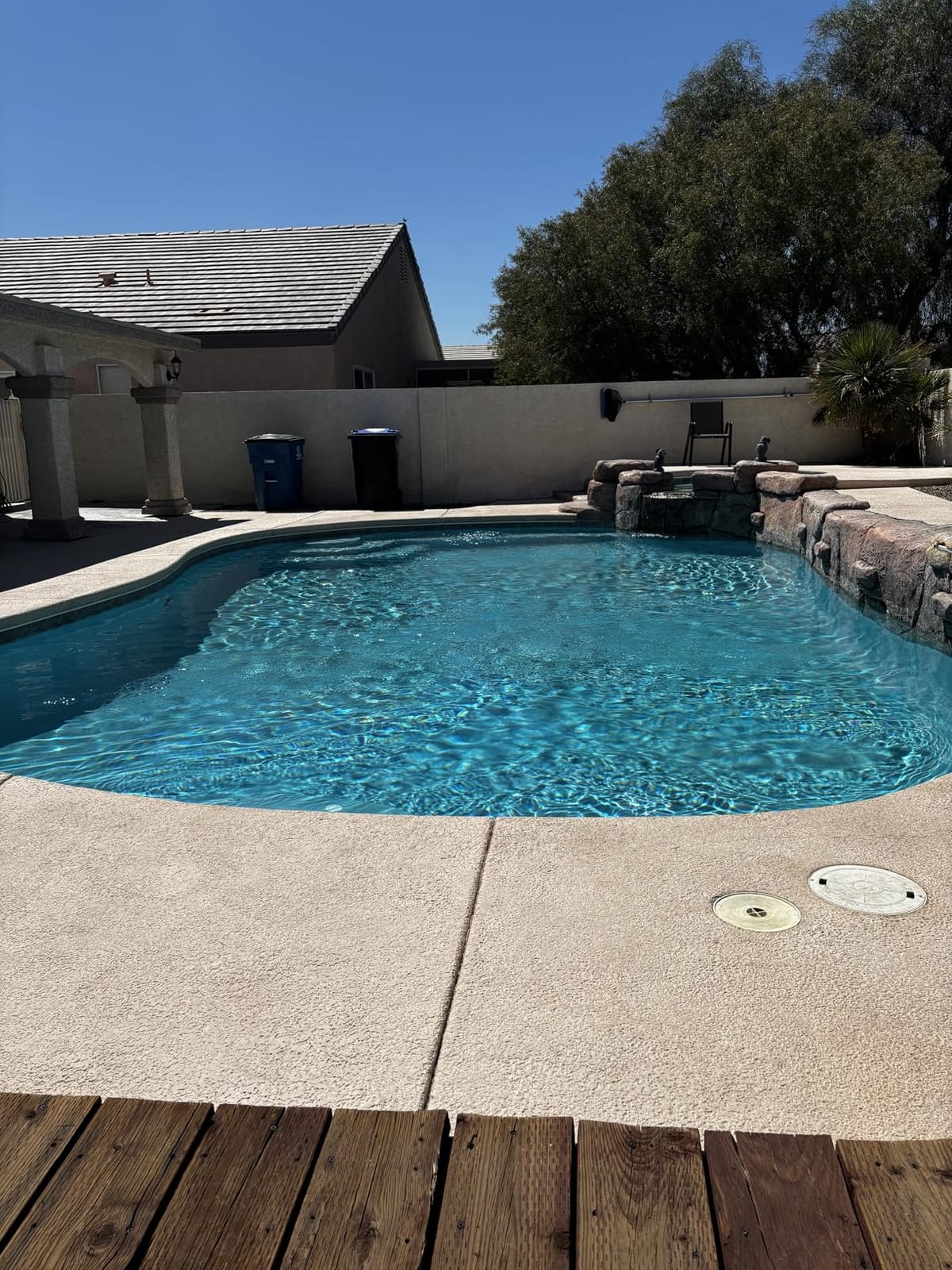
A pool salt system for an inground pool is a salt chlorine generator, or SWG. It is a control box and a titanium cell plumbed into your return line that splits dissolved pool salt into chlorine automatically, so you stop dosing sanitizer by hand. It is the single biggest upgrade an existing inground pool owner can make for day-to-day convenience.
Salt water is not a chlorine-free pool, and that myth is the main thing blocking people from converting. The generator makes hypochlorous acid, the same active sanitizer found in chlorine tablets, from salt you add yourself. What changes is where the chlorine comes from and how steady the residual stays.
We spent weeks going through the specs, the warranty language, the plumbing requirements, and the real-world complaints on eight systems rated for inground pools, then cross-checked them against what owners report on Reddit r/pools and Trouble Free Pool. What follows is the buying guidance we would give a friend with a 20,000-gallon pool and a tired of buying chlorine every week.
Before the list, it helps to be clear on scope. Everything here is rated for below-grade, built-in-pool installations. Above-ground units like the Hayward AquaTrol and the Intex Krystal Clear are excluded on purpose, since above-ground owners using salt systems report far heavier metal rust problems. If you want the broader chlorinator market, we cover it in our salt water chlorinator roundup and our pool salt system overview.
What Is a Pool Salt System for Inground Pools?
A pool salt system is an electrolytic chlorinator. Salt is dissolved into the pool water to roughly 2,700-4,500 ppm, water passes through a sealed titanium cell, and low voltage splits the sodium chloride into hypochlorous acid, which sanitizes the pool. The chlorine returns to salt as it does its job, so the cycle repeats.
The cell sits in the plumbing, not in the pool. A flow switch confirms water is moving before the cell is energized, so a dry cell cannot burn itself out. The control box reads the salt level and lets you set the output percentage that matches your pool’s daily chlorine demand.
The payoff is consistency rather than excitement. You stop measuring and pouring. The residual stays in a narrow band instead of spiking after a weekend and bottoming out on a Tuesday.
Top 3 Picks for the Best Pool Salt Systems for Inground Pools (October 2026)
The Hayward AquaRite takes our top slot because of the thing buyers actually care about most: replacement cell availability. Long-term owners on r/pools repeatedly recommend Hayward and AquaRite-class systems specifically because a dead cell can be replaced at any ordinary pool store, and they mention owners running previous units for 10-17 years.
The CircuPool RJ45+ is the stronger raw performer, with the highest chlorine output in this group and a 7-year limited warranty. The CORE35 earns the value badge for a compact all-in-one body that installs with minimal wiring and monitors cell scaling and lifespan on board.
All 8 Pool Salt Systems Compared in 2026
| Product | Key Specs | Buy |
|---|---|---|
 |
|
Check Latest Price |
 |
|
Check Latest Price |
 |
|
Check Latest Price |
 |
|
Check Latest Price |
 |
|
Check Latest Price |
 |
|
Check Latest Price |
 |
|
Check Latest Price |
 |
|
Check Latest Price |
Two things jump out of that comparison. The output numbers cluster in a narrow band between 1.1 and 1.9 pounds of chlorine per day, and every unit in this roundup self-cleans through polarity reversal. The real differences sit in warranty length, monitoring depth, and how much trouble the plumbing will give you.
1. Hayward AquaRite 40,000 Gallon – The Name Your Neighbors Recognize
Hayward Aquarite Salt Chlorine Generator for Swimming Pools 40,000 Gallons
Pools to 40,000 gallons
24.3 pounds
Model W3AQR15
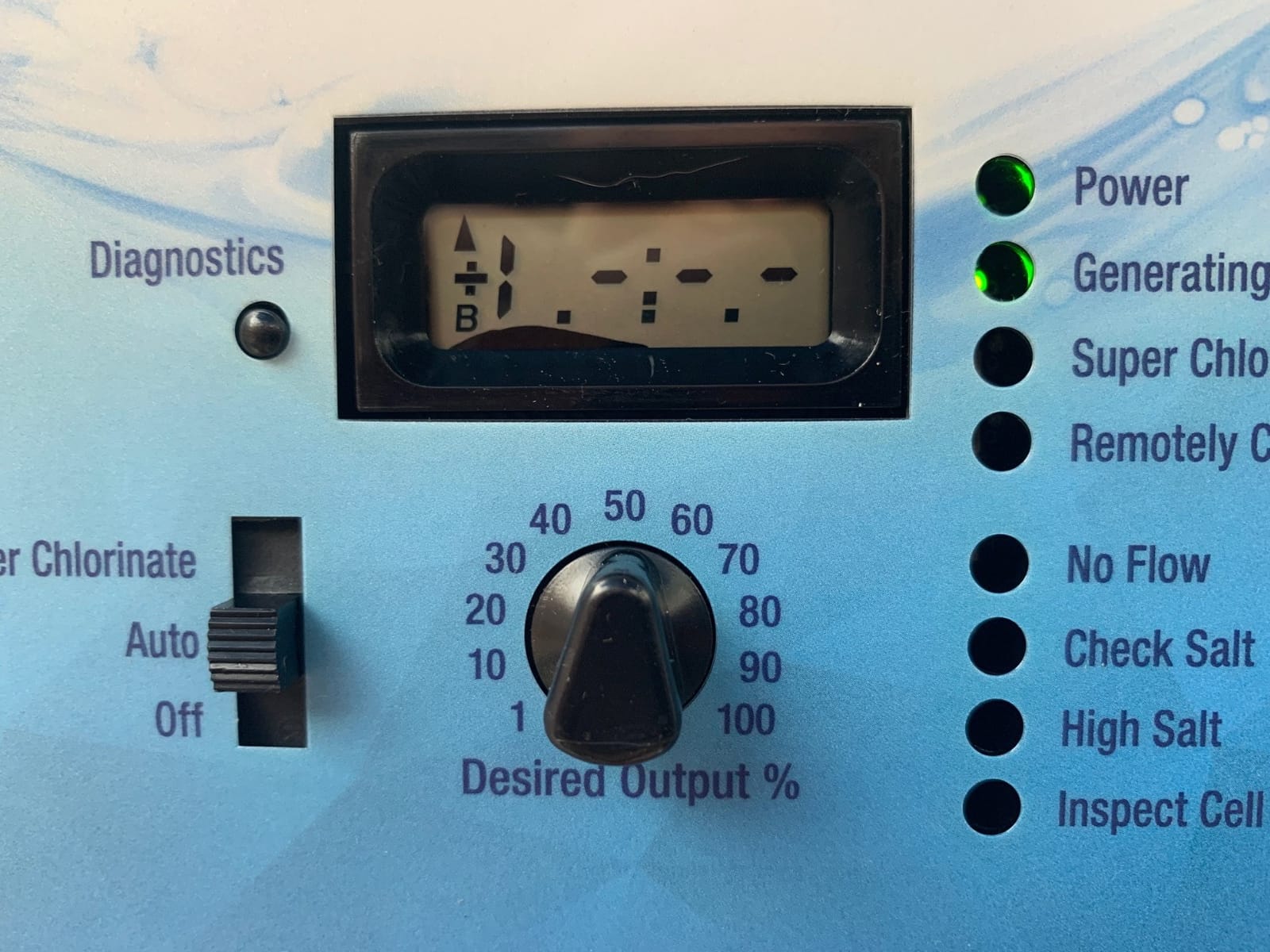
LED service alerts
The Good
- Steady automatic chlorine keeps water clear
- Eliminates routine liquid and tablet chlorine
- Gentler water that reduces skin dryness
- Drop-in fit in existing plumbing
- Owners report previous units lasting 10-17 years
The Bad
- Owners manual is dense for beginners
- Some PCB failures inside the warranty window
- Power cord and mounting screws not included
- Costly electronics once warranty lapses
This is the unit most pool stores stock, and that fact does more for you than any spec sheet. When your cell eventually dies, you can walk into a Leslie’s or a local shop and buy a replacement the same afternoon. Owners on r/pools treat that availability as the deciding factor more often than warranty length or output.
Fit is the other advantage. The housing drops into the same plumbing footprint as the units it replaces, so a failed AquaRite swap does not mean re-plumbing the pad. Reviewers describe the transition to automatic generation as the moment they stopped buying chlorine, and several report previous Hayward units running 10-17 years in the same location.
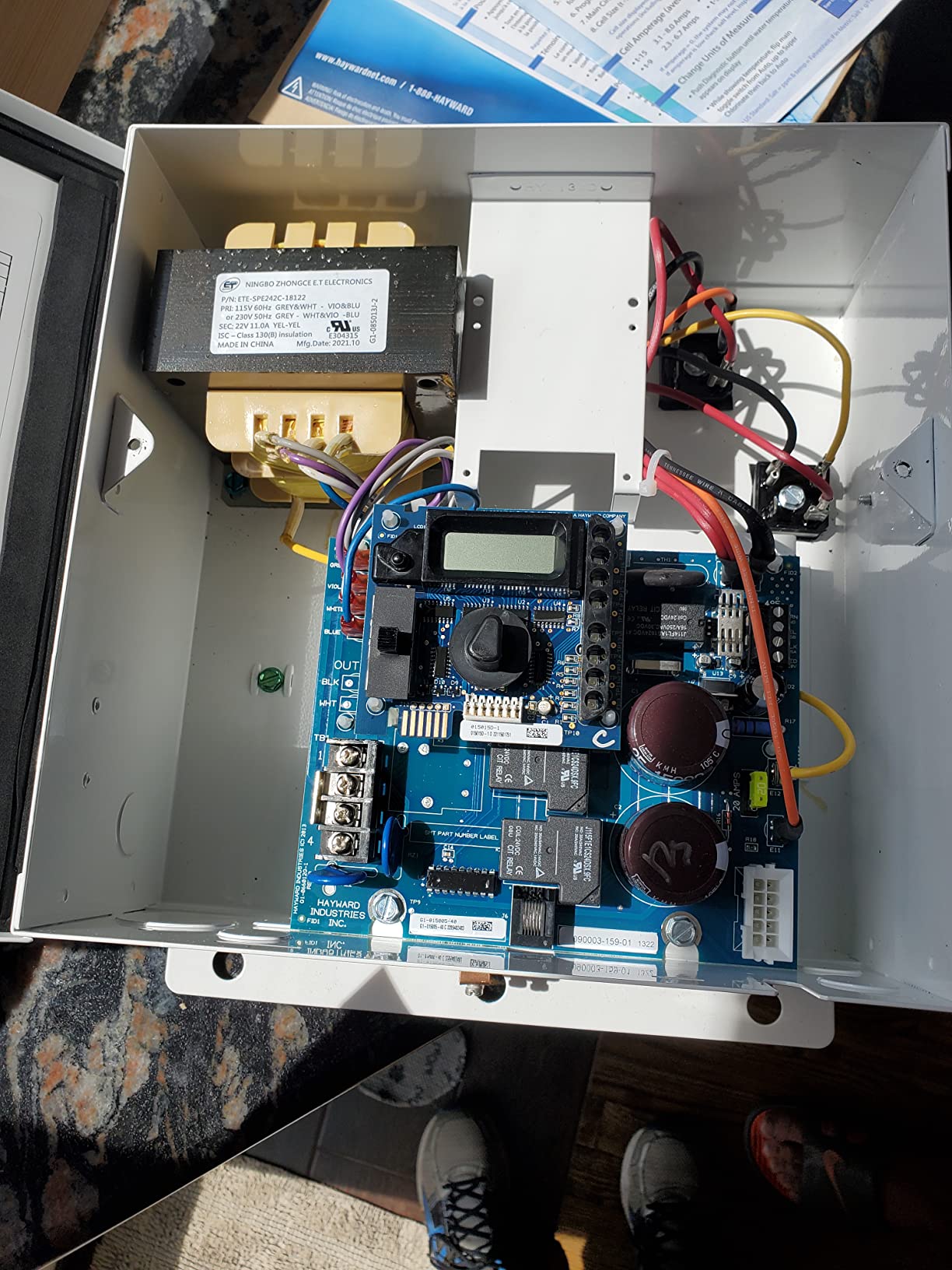
Water quality is the quiet win. Generated chlorine comes from salt rather than added tablets, and owners consistently point to less eye stinging and less swimsuit fading as the difference they notice first. The LED monitor gives service alerts so you find out about a salt problem before the water turns.
The negatives are documentation and hardware. The owner’s manual is dense enough that plenty of first-time salt owners give up on it, and some units report controller board failures before the three-year warranty runs out. The power cord and mounting screws are not included, so plan on a hardware store stop before the pad work starts.
What 40,000 Gallon Owners Ask Before Buying
Ask whether the plumbing footprint on your pad matches. If you are replacing a prior Hayward cell, the answer is almost certainly yes. If you are building new or converting from tab chlorination, measure the length of straight return pipe you have available, since the housing needs vertical clearance and unions on both ends.
Then ask the honest question about longevity. The 10-17 year reports come from owners in the system already, not from the rating on this listing. Your first cell is unlikely to last that long if you run it near 100 percent every day of summer, which is another argument for stepping up a size tier if your pool is at the top of the range.
Where This One Falls Short
Warranty handling is the weak point. If the unit was not bought and installed through an authorized pool shop, owners report more friction getting a failed board resolved, and Hayward has been reported refunding at least one failed unit on request rather than by policy. Assume you are on your own with a direct purchase.
Also plan for the second cost. Replacement cells and the electronics board are pricey once the warranty lapses, and neither item is cheap to spec around. Over a ten-year horizon, the AquaRite’s cell and electronics spend is the part of the math most buyers underestimate.
2. CircuPool RJ45+ – Highest Output in the Group
CircuPool RJ45+ Salt Chlorine Generator System | 45,000 Gallon Pool Max
1.9 lb chlorine per day
45,000 gallons max
7-year limited warranty
22 pounds
The Good
- Clear cell housing for visual inspection
- 1.9 lb chlorine per day output
- 7-year limited warranty
- Die-cast aluminum housing
- 120V or 240V with 1.5 and 2 inch fittings
- DIY install without warranty penalty
The Bad
- Cover latch does not hold reliably
- Cell rest mode poorly documented
- Cleaning cap sold separately
- No built-in timer or app
The RJ45+ produces up to 1.9 pounds of chlorine per day, the highest rated output here, and the clear cell housing lets you literally watch the bubbles. That visibility is why it keeps showing up in owner recommendations, because a cloudy cell explains a lot of problems that a control panel cannot.
It is also one of the few mainstream names where installing it yourself does not cost you warranty coverage. CircuPool supports DIY owners explicitly, which matters a great deal if you are comfortable with plumbing and want to skip the install fee. The unit accepts 120V or 240V and ships with both 1.5 inch and 2 inch PVC fittings, so most return lines connect without a trip to the plumbing supplier.
The 4.5 rating is earned on water quality and on support being responsive when something goes wrong. Output adjusts in 5 percent increments, which gives finer control than coarse three-position switches, and the OLED touch panel shows system status at a glance instead of blinking a single light.
What 45,000 Gallon Owners Should Know
A 60,000 gallon version of this same model exists for larger pools. The 45,000 gallon ceiling here is the pool volume it is rated for, not a hard output limit, and the 1.9 pound per day figure is the number that matters when you are deciding whether you have enough headroom for a heavy bather load in July.
Check cord length against your pad. The cell and flow switch cords run roughly 14-15 feet, which is fine for most inground installations but tight on a large pad where the control box is far from the return line. The flow switch also needs 20 to 30 gpm through the cell, so a pump running at low speed continuously can trigger a no-flow reading.
Where This One Falls Short
The small parts are the gripe. The cover latch does not hold the cover closed reliably, the cell rest mode that protects the cell off-season is barely documented, and the cleaning cap is not included and sells at a premium on its own. A latch that pops open in the wind is also how salt water gets into the electronics box.
There is no built-in timer and no app or Wi-Fi monitoring despite the onboard controller, so if your control box is not tied into pool automation, you need an external timer to cut power when you want the cell resting. A handful of owners also report early cell failures and some friction resolving warranty claims.
3. CircuPool CORE35 – The Easiest Install and the Longest Warranty
CircuPool CORE35 Salt Chlorine Generator System | 35,000 Gallon Pool Max
1.4 lb chlorine per day
35,000 gallons max
8-year limited warranty
11 pounds
The Good
- Compact all-in-one body installs fast
- Smart sensors track flow salinity and cell life
- 1.4 lb chlorine per day
- 8-year limited warranty
- IP66 weatherproof housing
The Bad
- 1.4 lb per day is modest for large pools
- Sensor alerts add setup complexity
- Plumbing skills still needed first time
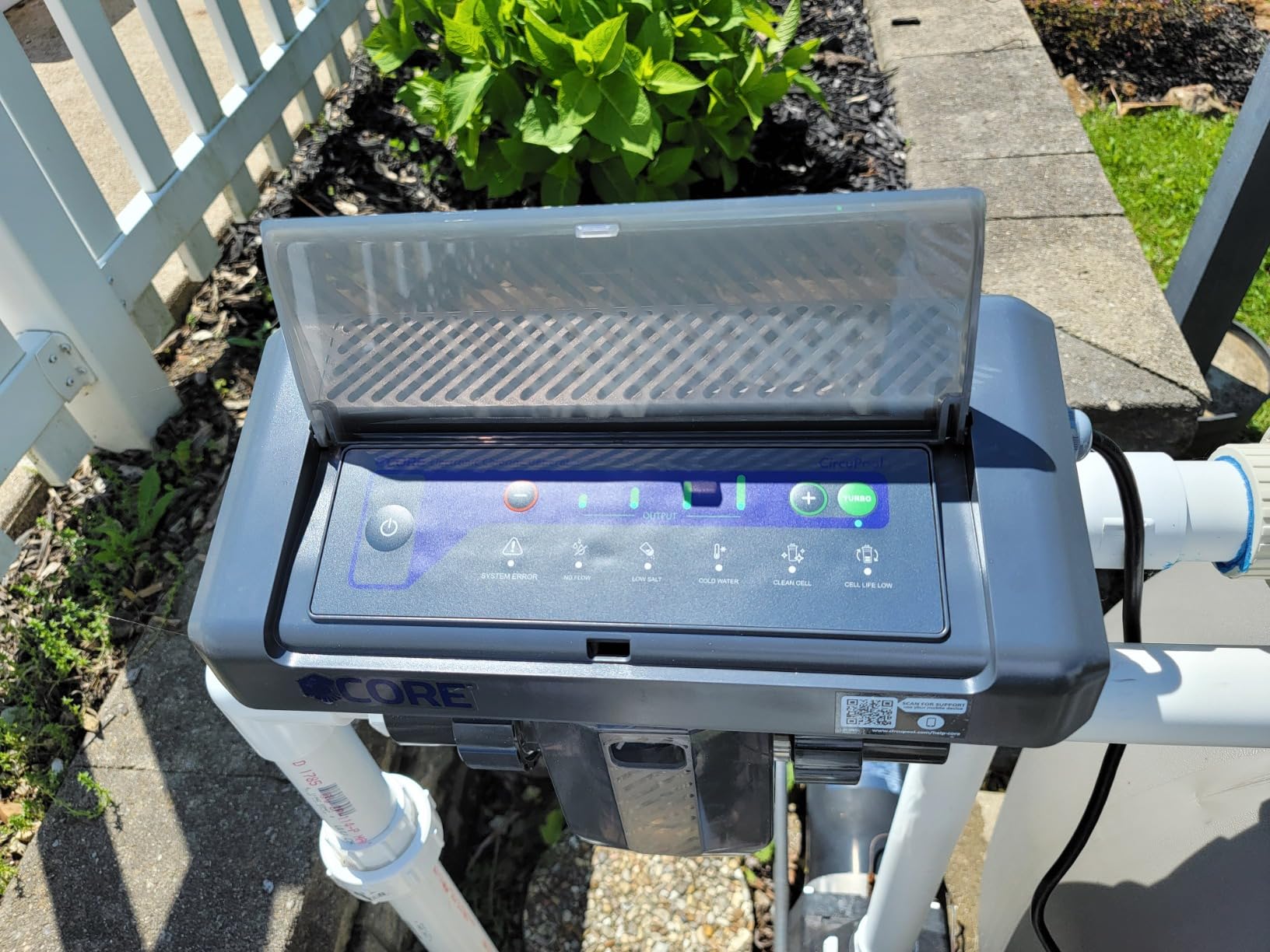
The CORE35 is the design that makes sense if you are replacing a system on a cramped pad. The control box and cell live in one body, so there is no separate power unit to mount and no cell cord to route across the pad. It weighs 11 pounds and installs with minimal wiring.
The sensor suite is the quiet strength. It tracks flow, salinity, temperature, cell scaling, and cell lifespan, and reports cell scaling directly, which means you find out about calcium buildup before output drops. A 55,000 gallon version of the same platform exists if your pool is larger than the 35,000 gallon rating.
Then there is the warranty. Eight years is the longest limited warranty in this roundup, and the IP66-rated housing is built for continuous outdoor exposure. Reviewers who converted from a failed premium unit frequently point to the combination of quick install and long coverage as the reason they were satisfied.
What Smart Sensor Owners Should Check
Understand what the sensor alerts are telling you before you panic. A scaling alert means the plates have calcium on them and the cell needs a soak, while a low-flow alert usually means the pump is running below what the switch can detect rather than a genuine blockage.
Verify the flow switch threshold against your pump settings. If you run a variable speed pump on a low-speed program for most of the day, you may need to make sure enough flow reaches the cell or the system will report no flow and stop producing.
Where This One Falls Short
Output is the limit. At 1.4 pounds of chlorine per day, a 35,000 gallon pool is at the top of what this cell handles comfortably, and anyone in a hot climate with a heavy bather load will feel that. Owners with big pools frequently size up to the 55,000 gallon version instead.
The interface is also heavier than a basic chlorinator needs to be. First-time salt system owners report that the sensor suite takes more setup attention than a simple output dial, and the install still assumes some plumbing skill even though the wiring is minimal.
4. Jandy Zodiac AquaPure PLC1400 – Built for a Tight Equipment Pad
Jandy Zodiac AquaPure PLC1400 PLC 1400 Saltwater Cell Kit Aqua Pure
3-port cell kit
25 x 8.5 x 5 inches
7.98 pounds
Solid titanium plates
The Good
- Titanium plates with precious metal coatings
- Automatic reversing cycle limits scaling
- Three-port housing gives 90 degree plumbing flexibility
- Integrated sensor port and larger unions
The Bad
- Cell kit only
- control unit may be separate
- Less plug-and-play than an all-in-one
- Reversing cycle not documented on the unit
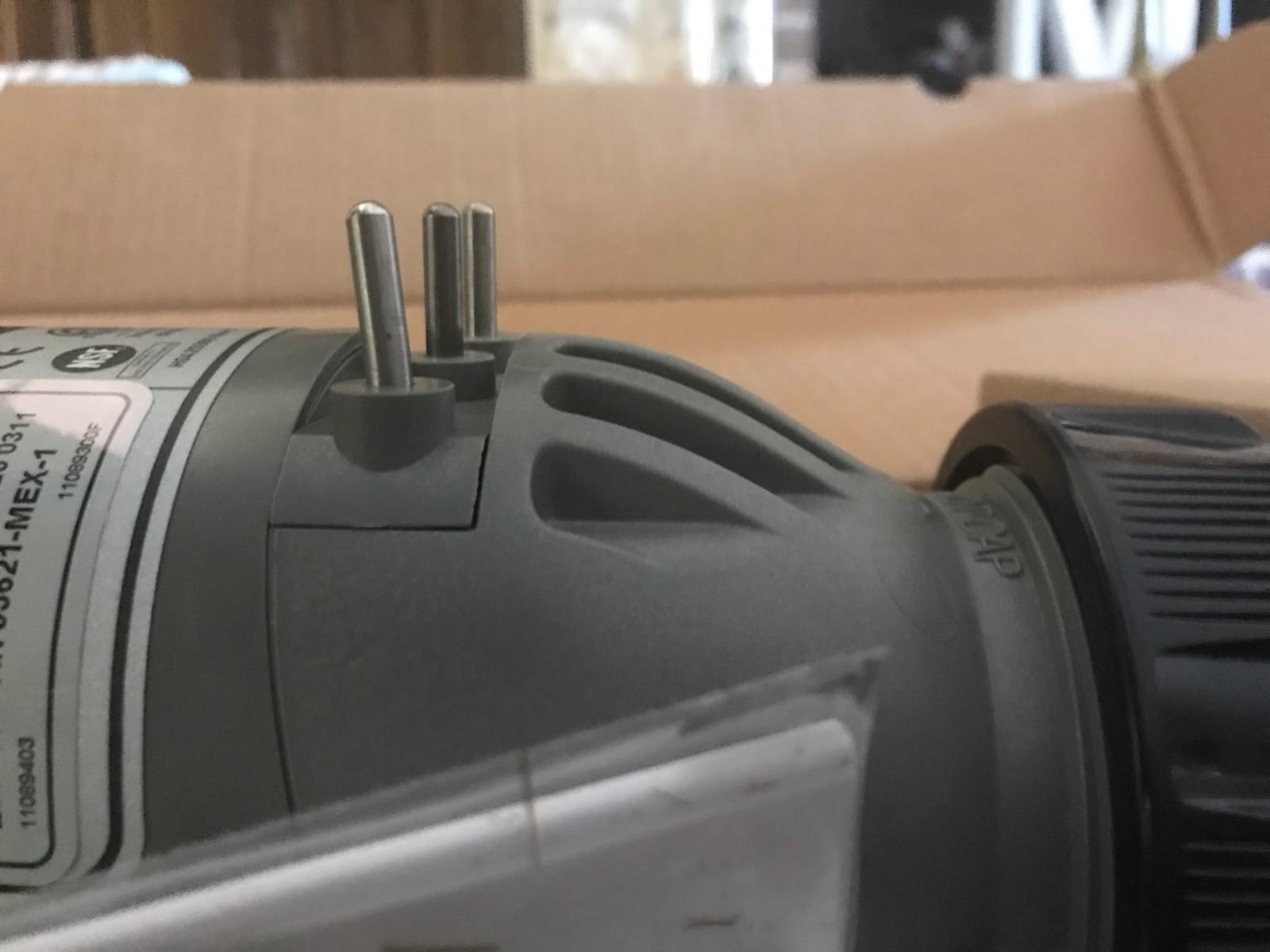
This one solves a problem the others do not. The three-port housing lets the plumbing enter and exit at 90 degrees to the cell run, which is exactly what you want when you have four inches of horizontal return pipe and no straight run to spare. The sensor sits in the third port and the unions are larger, so installation is genuinely easier in a confined space.
The cell itself is the reason long-term owners stay on this platform. Solid titanium plates carry multiple coatings of precious metals for chlorine production efficiency, and the automatic reversing cycle keeps calcium from building up on the plates. Cell life is the recurring theme in reviews of this kit.
Be clear-eyed about what you are buying. This is a cell kit, not a complete generator. A control unit and the cell wiring may need to be sourced separately, which makes it a strong fit if you already own a compatible Jandy or Zodiac control and a weak fit if you want a box-and-plug it weekend install.
Who This Plumbing Design Helps
If your equipment pad is tight, this solves the single most common installation frustration. Return line plumbing can be reconfigured to any of three orientations without cutting the pipe, which saves a plumber visit on a job where access, not skill, is the problem.
The integrated sensor port is the second practical win. Rather than hunting for a spot for a separate flow switch, it lives in the housing where the flow already is, and the larger unions mean you can break the joint to service the cell without special tools.
Where This One Falls Short
It is not a complete system. Buyers who wanted a full generator report the cell kit alone is less plug-and-play than an all-in-one, and the missing control unit is the part of the purchase that catches people out. Confirm what you already have on the pad before ordering.
Documentation is thin. The reversing cycle is a genuine feature and the main long-term selling point, yet it is not prominently described on the unit itself, so most owners only learn about it from a manual or a forum post. Ask the seller directly what control unit pairs with this cell.
5. APX Performance E-CHLOR – The Fastest Weekend Install
E-CHLOR Plug-in Salt Chlorine Generator | 32,000 gal Max | APX Performance
32,000 gallons max
110V plug-in
3-year warranty
Variable speed pump ready
The Good
- Two unions and a 110V outlet is the whole install
- Supplied cutting template for accurate layout
- Includes a cleaning plug for cell service
- Smart sensors explain the cause of problems
- Works with variable speed pumps and winter
The Bad
- Short power cord
- No built-in timer
- 32000 gallons is the real ceiling
- Calibration takes a few tries
Reviewers describe this install the same way over and over: two unions and a 110V outlet is the entire job. A supplied cutting template lets you lay out the plumbing accurately on the first attempt, which is the difference between an afternoon and a weekend when you are new to return line work.
It is also the common replacement for a failed premium unit. Several owners replaced a dead Pentair IC40 with this and reported dramatic water results at a fraction of what the nameplate brand costs. Output runs up to 15 percent higher than other compact chlorinators, and the 4.5 rating reflects that.
The sensors are more useful than they look. Salt level, temperature, cell scaling, and cell lifespan are tracked independently, and the alerts tell you the cause rather than lighting an anonymous error code. That saves a diagnostic call in most cases.
Getting the Install Right the First Time
Read the output-percentage guidance before you fire it up. Owners running smaller pools report needing to tune the percentage down after the first few days, and the calibration takes a couple of tries if you have never run a salt cell. Starting conservative costs you nothing.
Check where your nearest 110V outlet is. This is a plug-in design, so the cord is the one hard constraint, and a panel-mounted outlet across the pad may be out of reach. Extension cords on pool equipment are a bad idea, so measure before you commit.
Where This One Falls Short
Capacity is the ceiling. At 32,000 gallons rated, this is a mid-size system, and the output is lower than a full-size premium cell, so a 32,000 gallon pool in Florida heat sits at the limit of what it can hold comfortably. The 50 percent setting keeping an 11,500 gallon pool clear is a better guide to real-world capacity than the headline rating.
There is no built-in timer, so you need an external timer to cut power to the cell when you want it resting. A cleaning plug is included, which is a nice touch, but the short cord and missing timer are the two reasons this ranks below the bigger units for a full-size inground build.
6. EverCrystal 40,000 Gallon – The Clear Cell and Metal Box
EverCrystal Salt Water Pool Chlorinator System – Up to 40,000 Gallons
Pools to 40,000 gallons
Clear housing
Self-cleaning cell
Model ECLI40-1T
The Good
- Clear housing shows chlorine production live
- Self-cleaning cell cuts manual scale work
- Real-time salinity voltage and temperature readout
- Metal control box beats plastic housings
- Union fittings and plug-and-play setup
The Bad
- Only 18 reviews of long-term history
- Manual and support contacts hard to find
- One year of after-sales support coverage
The 4.8 rating is the highest in this roundup, and the reason is straightforward: this is a see-it-working system. The clear housing lets you watch chlorine production at a glance, and the self-cleaning cell handles the scale removal you would otherwise be doing with a muriatic acid soak. The display shows salinity, voltage, current, temperature, and cell operation.
The metal control box is a real upgrade over the plastic housings that dominate this price bracket. Pool equipment lives in a wet, sun-baked, chemically aggressive environment, and a metal box tolerates that better than a plastic one over ten summers. Union fittings and plug-and-play setup keep the install short.
Salt calibration is built in at plus or minus 800 ppm, which speeds up the first-week setup considerably. Available variants cover 25,000 and 40,000 gallon pools in clear or white housings, so you can match the clear one to a preference for visible output.
What the 4.8 Rating Does Not Tell You
Eighteen reviews is a thin base for a category where cell longevity is the entire cost story. Owners on r/pools routinely disregard reviews under a year old, and that caution applies most here, because nobody yet knows how this cell performs at year four or year six.
Find the manual and the support contact before you buy, not after. Documentation is the most common friction point buyers report, and knowing how to reach the manufacturer matters more when your after-sales coverage is measured in a single year.
Where This One Falls Short
After-sales support runs one year, which is the shortest coverage here. CircuPool and Hayward write their coverage in years and state cell lifespans in hours, and that plain language is what long-term owners say they trust when budgeting for a decade of use.
Because the cell life claim is unproven at scale, treat the replacement cost as a known future expense rather than a distant possibility. Plan for a cell purchase earlier in this unit’s life than you would with a brand that publishes a long rated-hours figure.
7. WESTAHO 40,000 Gallon – The Lowest-Cost Complete System
Salt Chlorine Generator, Westaho Pool Salt System for Inground Pools Up to 40,000 Gallons, 1.4 lb Chlorine Output, USA Titanium Cell with 10,000-Hour Lifespan, Built-in Power Supply
Pools to 40,000 gallons
1.4 lb chlorine per day
11 titanium plates
IP66 rated
The Good
- Built-in power supply removes the extra box
- 11 USA-made titanium plates
- 10000-hour cell life claim
- Magnetic flow switch
- Shuts off below 52F for cold climates
- Lowest cost of the complete systems here
The Bad
- 1.4 lb per day is modest at 40000 gallons
- Only 30 reviews of field history
- Highest 1-star share of this lineup
- 1.5 inch adapter fittings need care
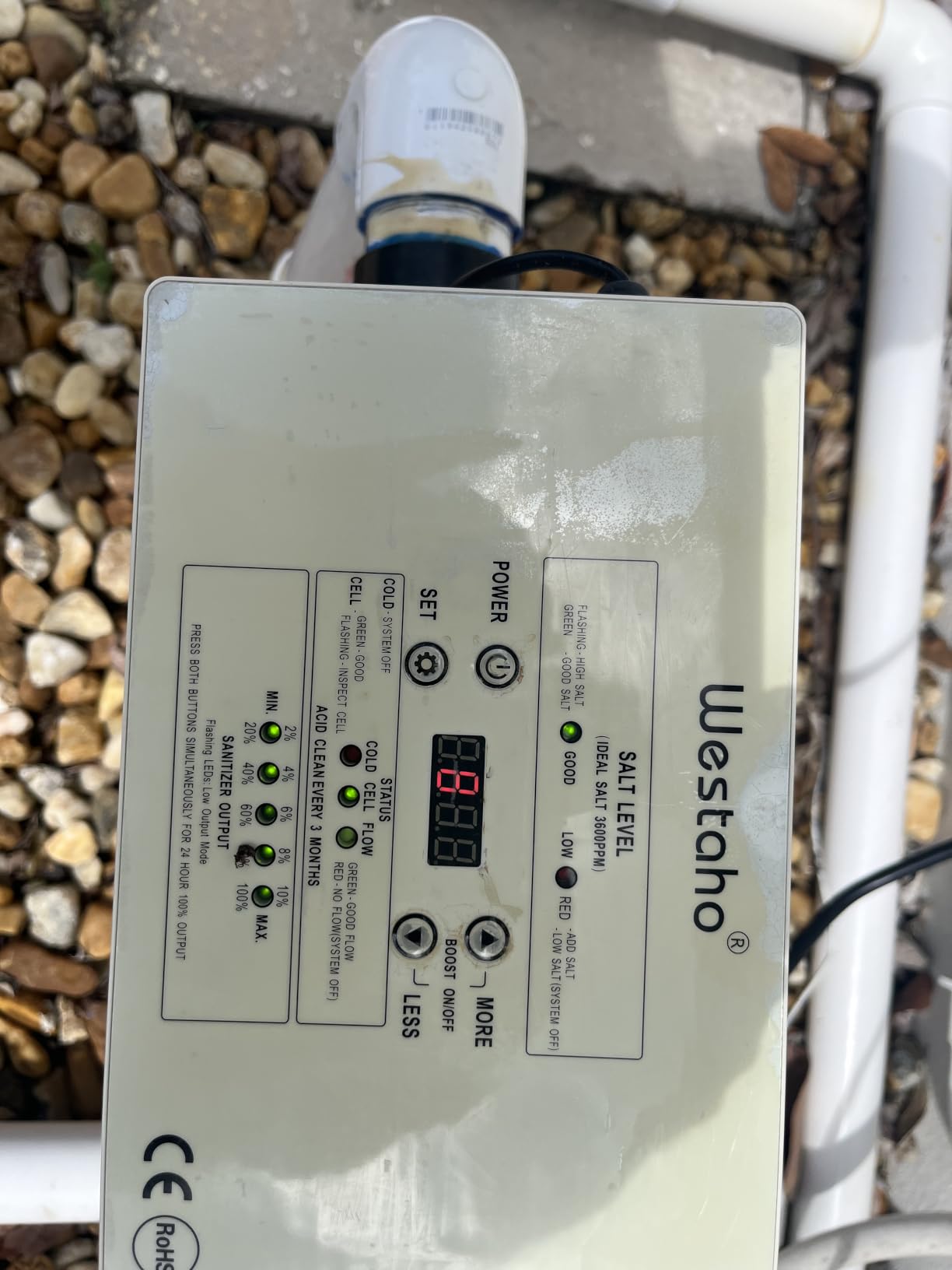
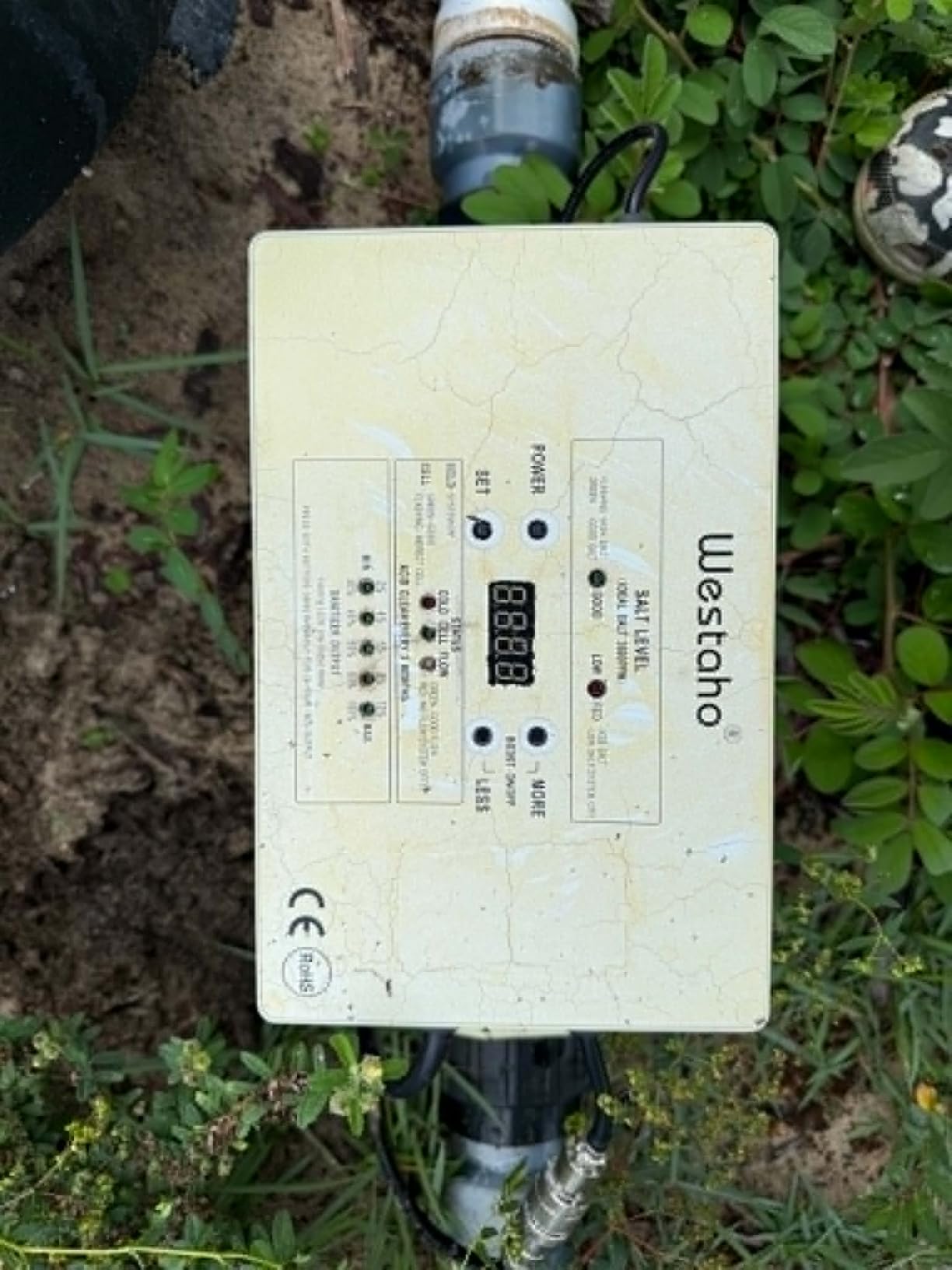
The design decision that sets this apart is the built-in power supply. Most competitors need a separate power unit mounted on the pad and a cord run to the cell. Folding the supply into the body removes the most common source of install friction, so the install is closer to the APX plug-in experience than to a full control box job.
The magnetic flow switch is the other upgrade. It replaces the mechanical flow switch used on most systems, and it is more sensitive and more durable, which matters on the troubleshooting side where false no-flow alarms are the most common complaint in this category. The cell uses 11 titanium plates made in the USA rated for up to 10,000 hours, roughly seven years of typical use.
Cold climate protection is genuinely useful in northern states. The system shuts itself off below 52F, which protects the cell and takes one seasonal worry off the list that owners in cold regions raise every year.
What to Watch in the First Month
Tune the output rather than assuming the rating will carry you. At 1.4 pounds of chlorine per day, a 40,000 gallon pool sits at the top of what the cell handles, and the display shows cell usage so you can watch the consumption rate climb if the pool is working harder than the design assumed.
Verify your pipe size before ordering. It is designed for standard 2 inch pool pipe and includes a 2 inch to 1.5 inch adapter, but that adapter needs to be sized carefully, and a mismatch here means a second trip to the hardware store.
Where This One Falls Short
The 1-star share is the highest of any product in this roundup at 21 percent, and with 30 reviews that is a meaningful fraction of the total. The common thread in negative reviews is documentation and the cell life claim rather than the electronics, which is consistent with a young product line rather than a broken one.
Field history is the honest limitation. Thirty reviews does not tell you what happens in year five, and the 10,000 hour rating is a manufacturer figure. If you want the strongest evidence of cell longevity available, choose a brand whose owners have already reported multi-year results.
8. Fengind 26,500 Gallon – The Only App-Controlled System Here
Salt Chlorine Generator for Pools up to 26,500 Gallons with App Control
Up to 26,500 gallons
Wi-Fi app control
1.1 lb chlorine per day
2.5 kg
The Good
- Least expensive complete system in the roundup
- Wi-Fi app with Standard and Boost modes
- All-in-one control and cell body
- Polarity reversal at 4h 8h and 12h intervals
- Fits 1.5 inch and 1.25-1.5 inch pipes
- Tri-sensor shutdown on low salt or low temperature
The Bad
- Smallest capacity at 26500 gallons
- Lowest average rating here
- IPX5 is a step below IP66 units
- Listing manufacturer name does not match the brand
- App setup requires phone and Wi-Fi pairing
This is the one system here you can control from your phone, and for a lot of owners that is the whole pitch. The app handles Standard and Boost modes, remembers your previous settings, and adjusts output across a 25 to 100 percent range from your phone. Salt level, temperature, and flow are monitored by tri-sensor monitoring with automatic shutdown at low salt or below 10C.
The all-in-one body combines the control box and the electrolytic cell, which cuts install time. The cell produces 1.1 pounds of chlorine per day across a 10C to 42C range, and the self-cleaning titanium plates reverse polarity at 4, 8, and 12 hour intervals to limit scale buildup. Fittings accommodate both 1.5 inch and 1.25 to 1.5 inch plumbing.
There is also a child lock and voltage surge protection with audible alarms, which matters more than it sounds on equipment sitting next to a wet deck.
What App Control Actually Changes
Boost mode is genuinely useful during a heat wave or a heavy bather weekend. You can push output up from the phone without walking out to the pad, and the memory function means you are not re-learning the settings every time the power blips.
Set the app up properly before you trust it. Monitoring is app-dependent, so it needs phone setup and Wi-Fi pairing, and a system you cannot read locally is a system you will not check. Keep the physical panel as your source of truth.
Where This One Falls Short
Capacity is the hard limit. At 26,500 gallons it is the smallest system here, and the listing copy leans on above-ground pool language despite the gallon rating, which tells you how the product was positioned. Check your pool volume before anything else.
The 4.0 average is the lowest here, with a 63 percent five-star share, and the IPX5 waterproof rating is a step below the IP66 units in this group. Most importantly, the manufacturer name on the listing does not match the brand, which can complicate a warranty claim. Verify the warranty terms in writing before you buy.
How to Size a Salt System for Your Inground Pool
Size up. Within reason, it is hard to have a too-big chlorine generator, and the forum consensus is emphatic on this point. Extra capacity extends cell life because the cell works less hard at a lower output percentage, and a cell that runs at 50 percent gives you roughly twice the calendar years of one running flat out.
The common rule of thumb is to oversize by 1.5 to 2 times your pool volume. A 20,000 gallon pool is well served by a unit rated for 40,000 gallons, and a 30,000 gallon pool deserves a 60,000 gallon rating if the extra headroom is available in the model you want.
Two situations justify extra caution. In hot climates with high evaporation, owners in Florida, Texas, Arizona, and Southern California report needing 20 to 30 percent more capacity than nominal gallonage suggests. And a pool with a supplemental UV or ozone unit still needs the generator to cover the full load, because those systems do not replace chlorine.
Avoid the reverse mistake. Owners report running their generators three to four days straight at high output during peak algae pressure, then dropping to a normal nine-hour daytime run. If your unit cannot hold that peak without wearing itself out, you undersized it.
What Pool Owners on Reddit and Trouble Free Pool Report
The search results for this keyword are dominated by forums, and the owner consensus is consistent enough to be worth quoting. Long-term owners repeatedly recommend Hayward and AquaRite-class systems because replacement cells are easy to find at any pool store, even when they admit the cell is not the longest-lasting option available.
CircuPool is called out as the only major brand with no warranty penalty for self-installation, which is decisive for DIY owners. Trouble Free Pool threads also describe the SJ models as very simple and easy to use, with status lights and no acid required for cell cleaning, while RJ and RJ+ models get the credit for the digital screen, real-time salinity display, and finer output increments.
On the troubleshooting side, the recurring theme is a salt system that works fine until the cell dies mid-season, and the answer being a cell that is a drop-in replacement for the existing housing and flow switch. Buyers list the deal breakers they have actually hit: no replacement cell availability, a controller that cannot be reused with a new cell, false flow-switch alarms, and a cell you cannot see into.
One practical note that shows up again and again: add the salt, do not pour it into the skimmer. Salt poured into a skimmer can attack plumbing fittings and the skimmer itself, and splash-out is the usual reason owners need to add salt again after a busy season.
Corrosion in a Saltwater Pool: A Protection Checklist
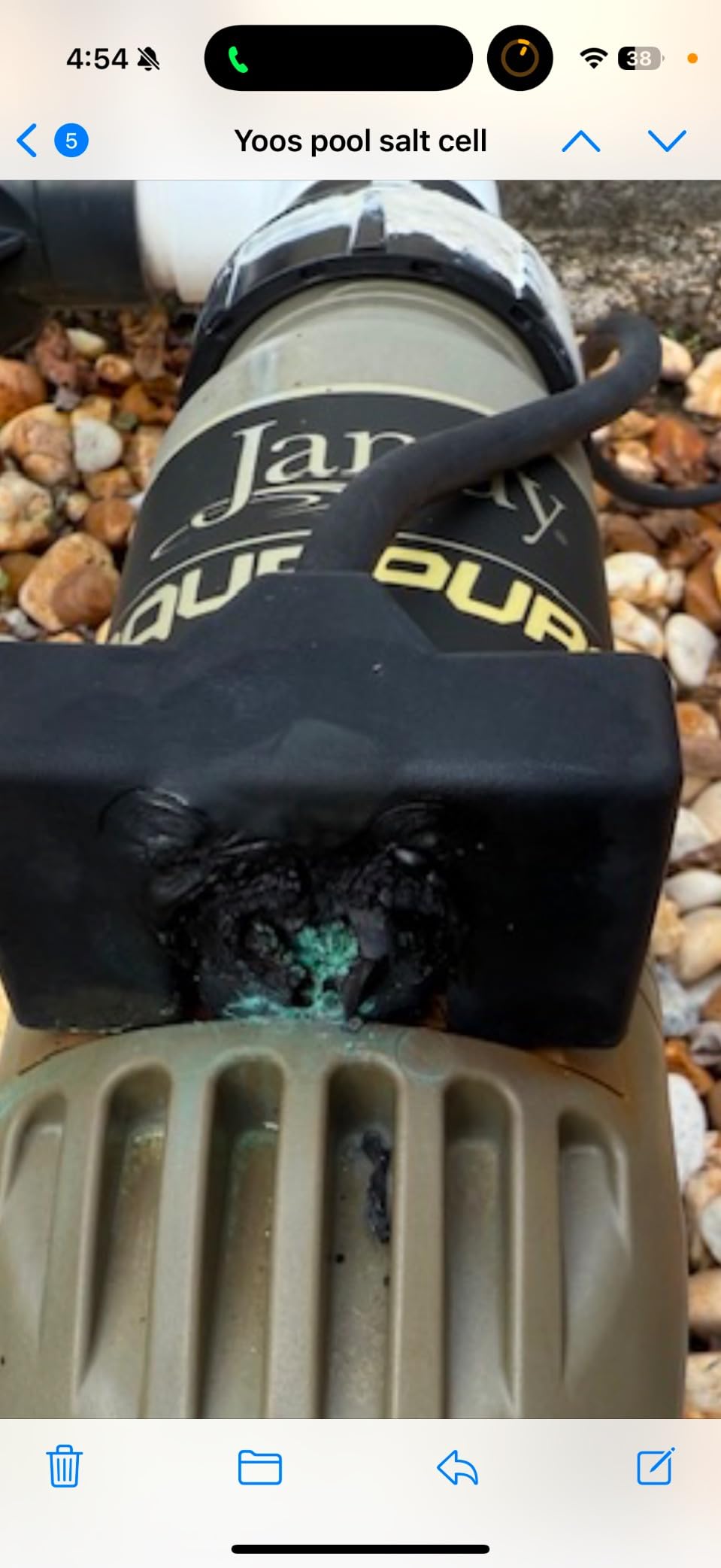
Corrosion is the loudest complaint in every forum thread about salt systems, and not one roundup competitor covers it. Salt water is more aggressive on metals than plain chlorinated water, and the hardware that suffers is usually the hardware you forgot about.
Heaters. A copper heat exchanger in a salt pool corrodes faster than in a chlorine pool. If your pool has a heater, plan on more frequent anode replacement and expect the unit to have a shorter life than it would have in a chlorine pool.
Steel steps and ladders. Steel components are the most commonly reported casualties. Stainless steel ladder rails hold up far better than painted or galvanized steel, and replacing steel steps is a known cost of conversion that buyers often budget for too late.
Metal fittings and fasteners. Even the screws holding the cell housing corrode. When you install, use stainless hardware in the wet plumbing, and check the housing screws at season end.
Bonding hardware and the light niche. The niche and any metal parts in the water should be checked annually. Salt speeds up galvanic reactions between dissimilar metals.
Natural stone coping and patio. Some natural stone reacts with salt and etches or darkens. Test a small hidden area before conversion if your coping is limestone or sandstone.
Heater and salt cell off-season storage. Salt crystallizes in the cell and fittings during storage, which is why flushing the cell before winterizing matters more in a salt pool than in a chlorine pool.
The honest downsides go beyond corrosion. You cannot lower CYA by adding anything, so a pool carrying 120 ppm of stabilizer from the chlorine era needs to be partially drained before it will sanitize properly, and a new cell producing no chlorine is very often a high CYA problem rather than a bad cell.
Salt Pool Water Chemistry and Maintenance Schedule
Salt systems raise pH consistently, so muriatic acid becomes a permanent resident of your equipment pad. Most owners keep it on hand permanently and adjust on the same weekly rhythm they used for chlorine.
Weekly, test salt and confirm it sits inside 2,700-4,500 ppm. Test pH and total alkalinity, and add acid to hold pH between 7.2 and 7.8 with total alkalinity around 80-120 ppm. Check free chlorine stays between 1 and 3 ppm.
Monthly, check calcium hardness, which should sit around 200-400 ppm. Too little calcium etches plaster and the cell plates; too much scales the plates and the heater. Balance here is what keeps the cell alive.
Still need shock, and you do not need algaecide. Shock remains necessary for heavy rain, a bather load spike, or a cloudy pool, and a weekly low-dose shock in high bather-load pools is what keeps the cell from carrying all the sanitizing. Algaecide is a redundancy that a functioning salt system makes unnecessary.
Keep cyanuric acid between 60 and 80 ppm and calcium hardness between 200 and 400 ppm, and never let CYA run high in a salt pool. A stabilized pool under a salt system will not sanitize properly, and that single chemistry error is behind a large share of the new cells that produce nothing complaints.
If you also want the rest of the equipment side of pool care covered, our pool automation roundup breaks down the control panels that let a salt generator talk to your pump, heater, and lighting.
Frequently Asked Questions
Are salt water pool systems worth it?
For most inground pool owners, yes. You stop buying and measuring liquid or tablet chlorine, the residual stays steadier between tests, and the water feels gentler on skin and swimwear. The trade is an upfront hardware cost, a replacement cell every several years, and ongoing attention to corrosion on metal components. Owners who converted report the convenience alone justifies it.
What is the downside to salt water pools?
The honest downsides are corrosion on metal fittings, heaters, steel steps, and bonding hardware, plus the fact that you cannot lower stabilizer levels by adding anything. Salt also raises pH steadily, so muriatic acid stays on the pad permanently. And a bad cell is a worse failure mode than a depleted tablet feeder because the cell is the core component of the whole system.
What are the best salt chlorine generators for inground pools?
The Hayward AquaRite is the best overall pick for most inground pools because replacement cells are available at ordinary pool stores and it drops into existing plumbing. The CircuPool RJ45+ offers the highest chlorine output in the group at 1.9 pounds per day, and the CircuPool CORE35 is the easiest to install with an 8-year warranty. All three are rated well above typical residential pool volumes.
How to know if a salt cell is bad?
Watch for a persistent check cell warning light with no corresponding salt or flow problem, and for a free chlorine reading that will not hold even after you raise the output percentage. If your cell housing is clear, look for scale on the plates or a lack of bubbling. The four diagnostic steps are confirm the salt level, confirm real flow through the cell, soak the cell to strip scale, then test again before replacing.
Why is my new salt cell not producing chlorine?
The most common cause is chemistry, not hardware. Check that cyanuric acid is between 60 and 80 ppm, because a pool carrying high stabilizer from the chlorine era will not sanitize even with a working cell. Also confirm the salt level has fully dissolved and stabilized, that the cell was rinsed of manufacturing residue, and that the pump is moving enough flow for the switch to register.
Conclusion: The Best Pool Salt Systems for Inground Pools in 2026
The best pool salt systems for inground pools in 2026 come down to what you already own and how confident you are with plumbing. The Hayward AquaRite is the safest default because replacement cells are everywhere and it fits existing hardware. The CircuPool RJ45+ wins on raw output and a long warranty, and the CORE35 is the cleanest install on a tight pad.
Whichever one you choose, oversize it, keep cyanuric acid between 60 and 80 ppm, and budget for corrosion on metal parts before you convert. Those three decisions do more for a ten-year ownership experience than the model name does.