
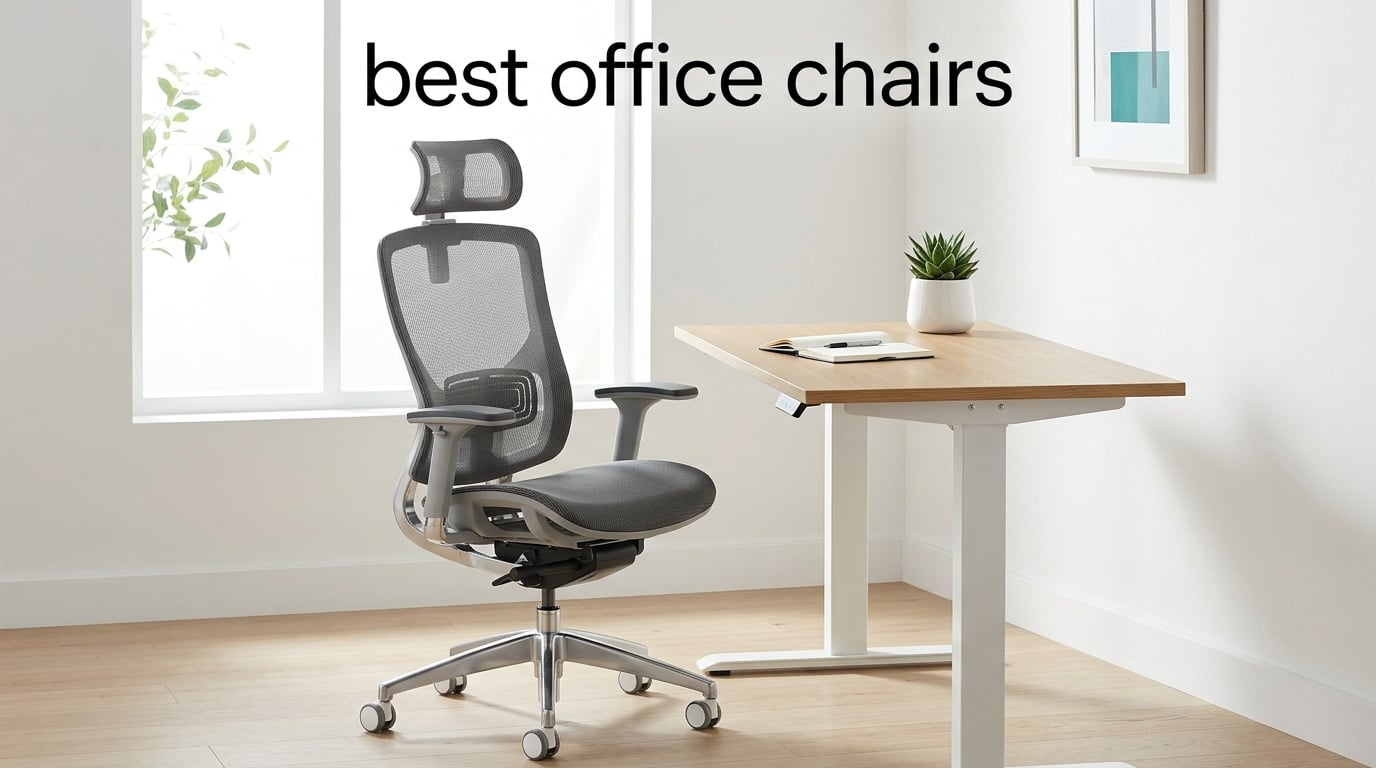
The best office chair is the one that puts your feet flat on the floor, your knees near 90 degrees, and a supportive surface behind your lower back, and that choice depends far more on your height, weight and daily hours than on brand name. We compared 12 chairs, focusing on lumbar support, adjustment range, build quality and the fit each one offers real bodies.
Every chair in this guide is a real, currently sold model with a verifiable spec sheet, a stated weight capacity, and thousands of owner reviews behind it. No pricing appears here, because prices move daily and the buttons below take you to the live listing. What follows instead is the information that actually decides whether a chair works for you: seat height range, whether the lumbar support moves, how many recline positions exist, and how tall or heavy a person the frame is designed to carry.
A note on how we worked. We did not sit in all 12 chairs for a month each, so we have not invented a single comfort measurement. What we did was read every spec sheet against the recurring complaints in owner reviews, and we cross-checked fit data against the body measurements people actually report. When we say a chair suits 5’6″ to 6’2″ users, that range comes from the manufacturer, and we flag where the fit range is narrower than the marketing implies. If you want to go deeper on one material first, our guide to the best mesh office chairs is a good companion read.
How We Chose the Best Office Chairs in 2026
Chair shopping is mostly a fit problem, not a features problem. We built this list around six criteria, in this order of weight.
Lumbar support that moves. A fixed plastic bar is not lumbar support, it is decoration. We gave the highest marks to chairs with a lumbar dial or slider that changes depth and height.
Seat height range. We recorded the published low and high points of every seat, then mapped that to a height band. This is the single number that decides whether a chair fits you.
Stated weight capacity and base build. We prefer published figures and named certifications such as BIFMA or EN1335 over vague durability claims.
Tilt and recline control. At least two recline positions, a tension knob, and a lock that holds. Multi-position recline lets you shift position through the day instead of sitting frozen upright.
Armrest adjustment. Flip-up arms matter enormously in small home offices, and height-adjustable arms decide whether your shoulders stay relaxed at a keyboard.
Owner review patterns. We read the complaint threads, not the top reviews. Recurring issues such as a lumbar pad that presses, armrest foam that cracks, or a warranty card that contradicts the listing all fed into our verdict.
Top 3 Picks for the Best Office Chairs (October 2026)
These three are the short list. The first is the safest all-round buy, the second is the strongest value per feature, and the third is the pick for bigger frames.

BestOffice Ergonomic Mesh…
- Breathable ventilated mesh back
- Adjustable 17.1-20.3 inch seat height
- BIFMA-certified 250 lb frame
- Assembles in 10-15 minutes

SIHOO M18 Mesh Chair with…
- Adjustable lumbar and headrest
- Memory foam seat over mesh
- 330 lb capacity
- 3-year warranty

GABRYLLY High Back Mesh Chair
- High back with headrest
- Flip-up armrests
- 90-120 degree tilt lock
- 300 lb capacity
All 12 Best Office Chairs Side by Side
One glance at every chair in the roundup, with the specs that separate them. The full detail on each sits in the individual reviews below.
| Product | Key Specs | Buy |
|---|---|---|
|
|
Check Latest Price |
|
|
Check Latest Price |
|
|
Check Latest Price |
 |
|
Check Latest Price |
 |
|
Check Latest Price |
 |
|
Check Latest Price |
 |
|
Check Latest Price |
 |
|
Check Latest Price |
 |
|
Check Latest Price |
 |
|
Check Latest Price |
 |
|
Check Latest Price |
 |
|
Check Latest Price |
1. BestOffice Ergonomic Office Chair – The Most Proven Budget Task Chair
BestOffice Ergonomic Office Chair | Mid-Back Swivel Desk Chair | Dark Black
19 lb mesh-back task chair
Seat height 17.1-20.3 inch
250 lb capacity
Assembles in 10-15 minutes
The Good
- Ventilated mesh back stays cool in long sessions
- Curved mid-back with lumbar support
- Fast 10-15 minute assembly
- BIFMA-certified frame rated to 250 lb
The Bad
- Mid-back design gives little upper-back or head support
- Only one recline position and two height positions
- Basic sponge cushion versus memory foam
This is the chair I recommend first to anyone who wants a competent task chair without a research project. It holds a 4.3 star average across more than 64,000 reviews, the largest sample in this roundup, and it currently ranks first in Home Office Desk Chairs. That volume is why it tops the list: when this many people own something, the failure modes are well documented, and this one has few.
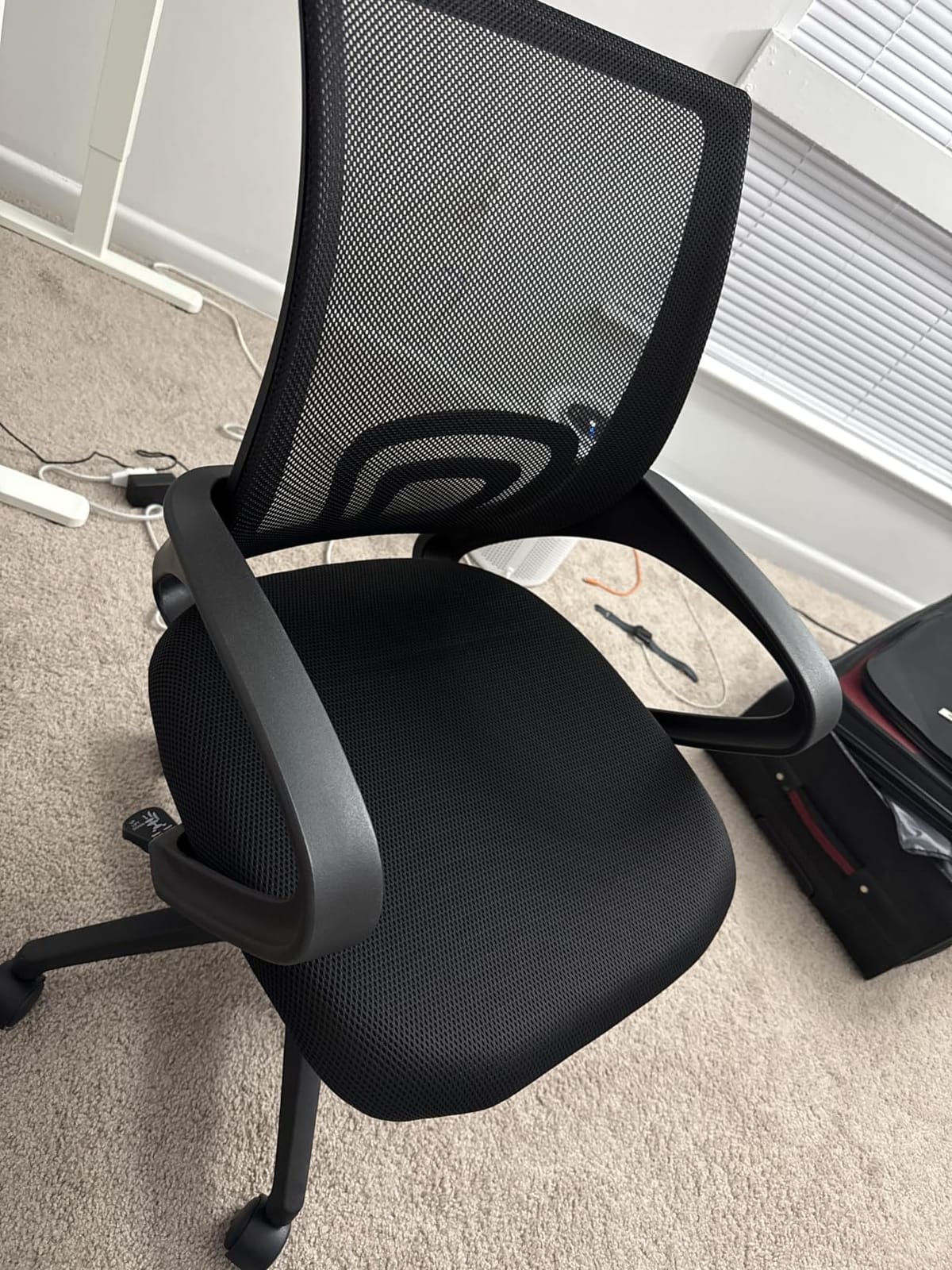
The design is simple by intent. You get an alloy steel frame, a fully ventilated mesh back, a contoured mid-back with a fixed lumbar curve and standard armrests. Seat height runs from 17.1 to 20.3 inches, a 3.2 inch range that sits slightly higher than most task chairs, so it favours shorter and mid-height sitters.
The honest limit is that this is a mid-back chair with no headrest and no upper-back support, so leaning back to read stops the frame around your shoulder blades. Owners who wanted head support moved up a tier, which is a reasonable trade at this build quality.
Assembly is the other quiet win. The stated 10 to 15 minutes with included hardware is confirmed by owners, which is rare in this category. Plenty of budget chairs take a full afternoon; this one does not.
Who this chair suits
Shorter and mid-height sitters at a standard desk who want airflow more than padding. The 17.1 inch low point is among the friendliest starting heights in the roundup, and the 250 lb BIFMA-certified limit rules it out for heavier users.
What to check before you buy
Sit into the fixed lumbar curve and decide quickly whether you tolerate it. Support comes from the shape of the back rather than an adjuster, and if you need to change lumbar depth daily you will find that unsatisfying. Our roundup of the best entry-tier office chairs compares several with movable lumbar support.
2. SIHOO M18 Ergonomic Office Chair – Best Value With a Real Headrest
SIHOO M18 Ergonomic Office Chair, Mesh Back Desk Chair with Headrest
Memory foam seat with mesh backrest
Adjustable lumbar and headrest
Rated for 5 ft 6 in to 6 ft 2 in
330 lb capacity
The Good
- Four-point support at head back hips and hands
- Breathable mesh with a firm wide seat
- 330 lb capacity suits heavier users
- 3-year warranty with free replacement parts
The Bad
- Lumbar pad is thin and firm against the lower back
- Armrest shells have sharp seams and thin padding
- Backrest screws and tilt lock can loosen with heavy use
The SIHOO M18 is the pick for anyone who has ruled out mesh because they find mesh seats hard. It pairs a wide memory foam seat with a mesh back, so the load-bearing part of you is padded and the heat-generating part is ventilated. That combination is rarer than it should be, and it holds a 4.3 average across roughly 17,000 reviews.
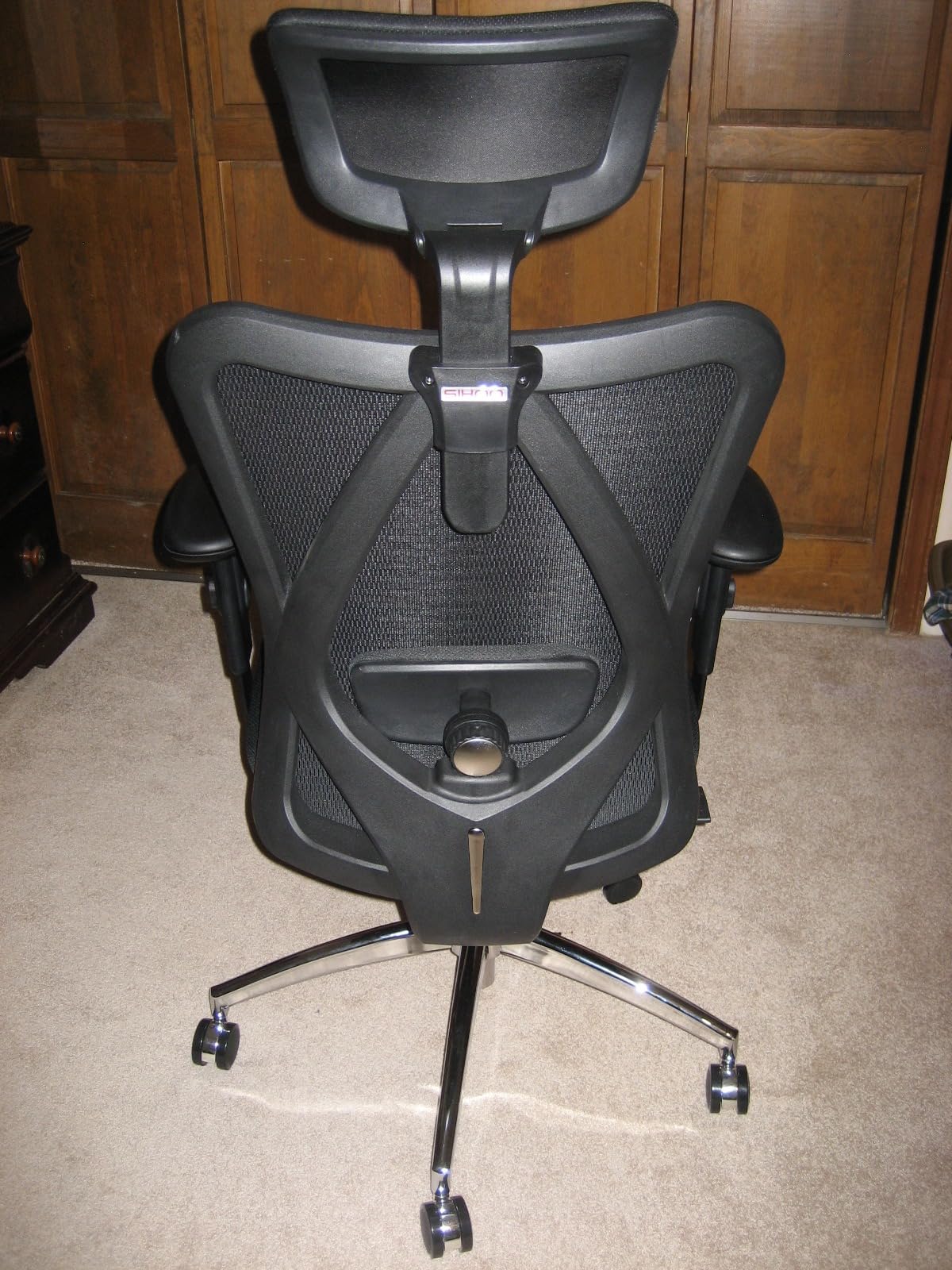
It also solves the headrest question properly. The headrest adjusts, the lumbar adjusts and the back support is separately tuned, giving four support points at the head, back, hips and hands. Fit is stated for users from 5’6″ to 6’2″, a wide band for this class.
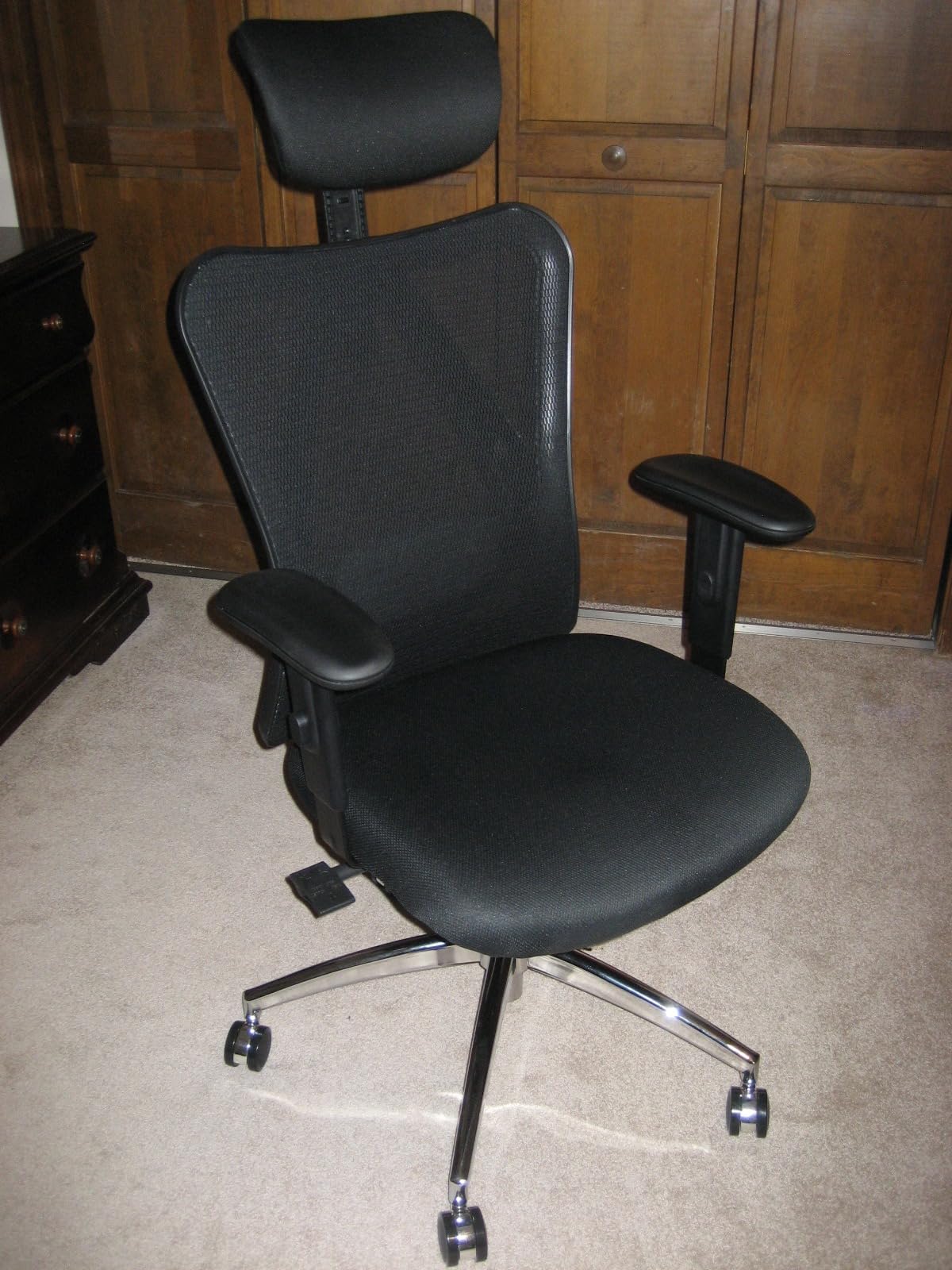
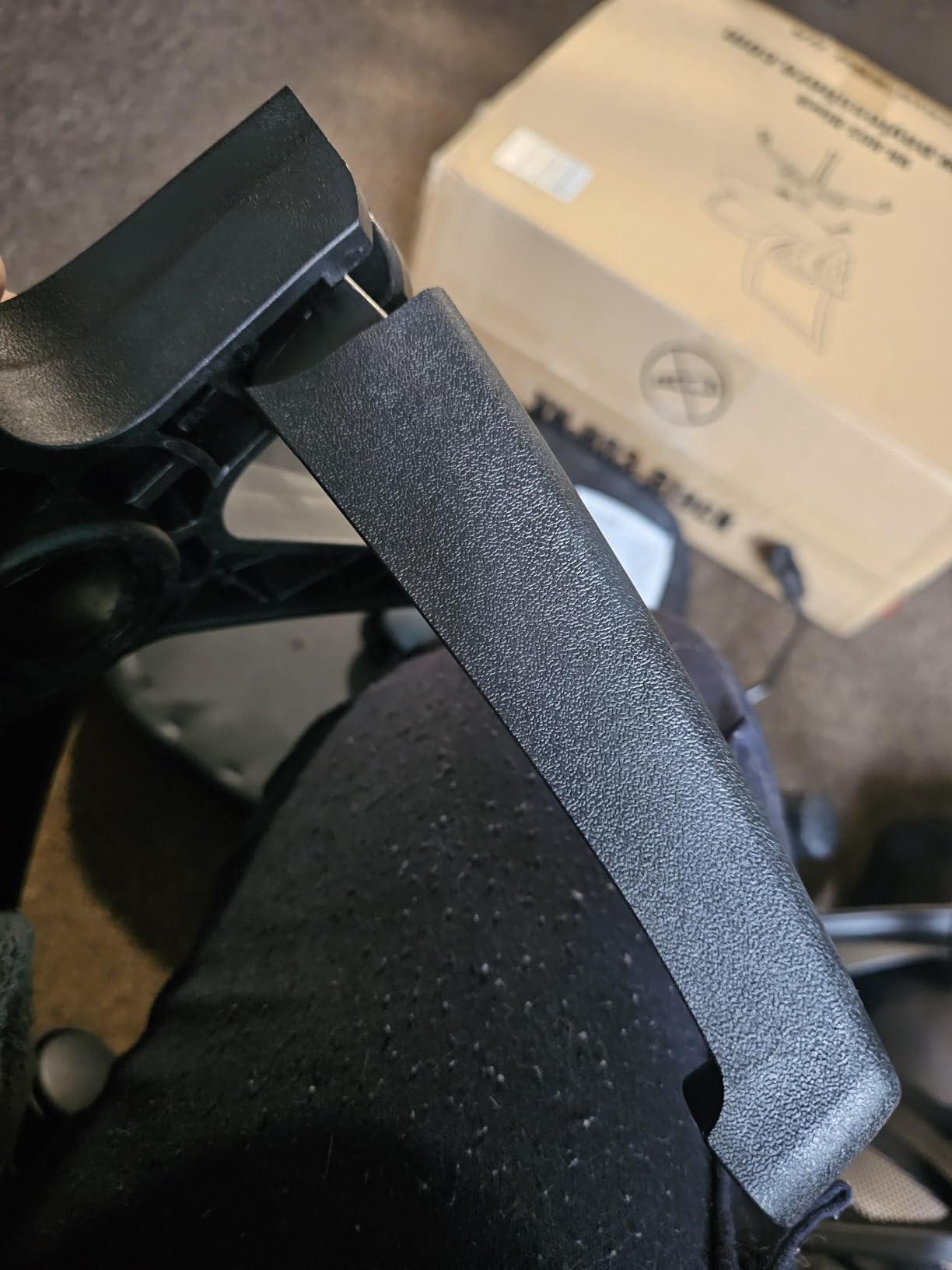
The complaint thread is narrow but consistent: the lumbar piece is thin and hard, and reads as a bar pressing into the lower back rather than broad support. The armrest shells come next, with owners describing sharp seams and padding that feels thin after many months.
A third theme is hardware. Owners report backrest screws loosening and, in some cases, an upright tilt lock that stops holding under heavy daily use. Solid on day one, average at year three is the trade you make here.
Who this chair suits
People who want a headrest, a padded seat and a stated 330 lb capacity without moving up a tier. Repeat buyers report ordering multiple units for family or a shared office, which suggests the same fit works for more than one body.
What to check before you buy
Note the return window before you commit, because lumbar comfort takes weeks to judge. This listing pairs 30-day returns with a 3-year warranty and free replacement parts, stronger coverage than most at this level and a real offset to the two complaints above.
3. GABRYLLY High Back Mesh Chair – Best Roomiest Chair for Bigger Frames
GABRYLLY Ergonomic Office Chair, High Back Home Desk Chair with Headrest, Flip-Up Arms, 90-120° Tilt Lock and Wide Cushion, Big and Tall Mesh Chairs for Man Woman, Black Task Chair
High-back mesh chair with headrest
Flip-up arms raise 45 degrees
300 lb capacity with Class-4 gas lift
Seat height 18.9-23.6 inch
The Good
- Sturdy quiet build that stays solid at 300 lb
- Roomy 20.5 inch wide seat and tall back
- Flip-up arms clear a desk
- 3-position tilt lock from 90 to 120 degrees
The Bad
- Armrests sit high and will not lower for some forearms
- Lumbar support comes from the mesh panel with no adjuster
- Height range tops out around 6 ft 1 in
The GABRYLLY has the highest average among the chairs here with a deep review history, at 4.4 stars across 14,200 reviews, and it earns that on build quality. Owners describe a chair that does not wobble, creak or rattle, even loaded to its 300 lb rating. For a mesh chair in this class, that is the differentiator.
The frame is unusually large. The seat is 20.5 inches wide and 20 inches deep, the back is high, and seat height runs from 18.9 to 23.6 inches, a 4.7 inch range that starts higher than almost everything else here. That makes it a natural fit for taller users and anyone who has been sitting with their knees too low.
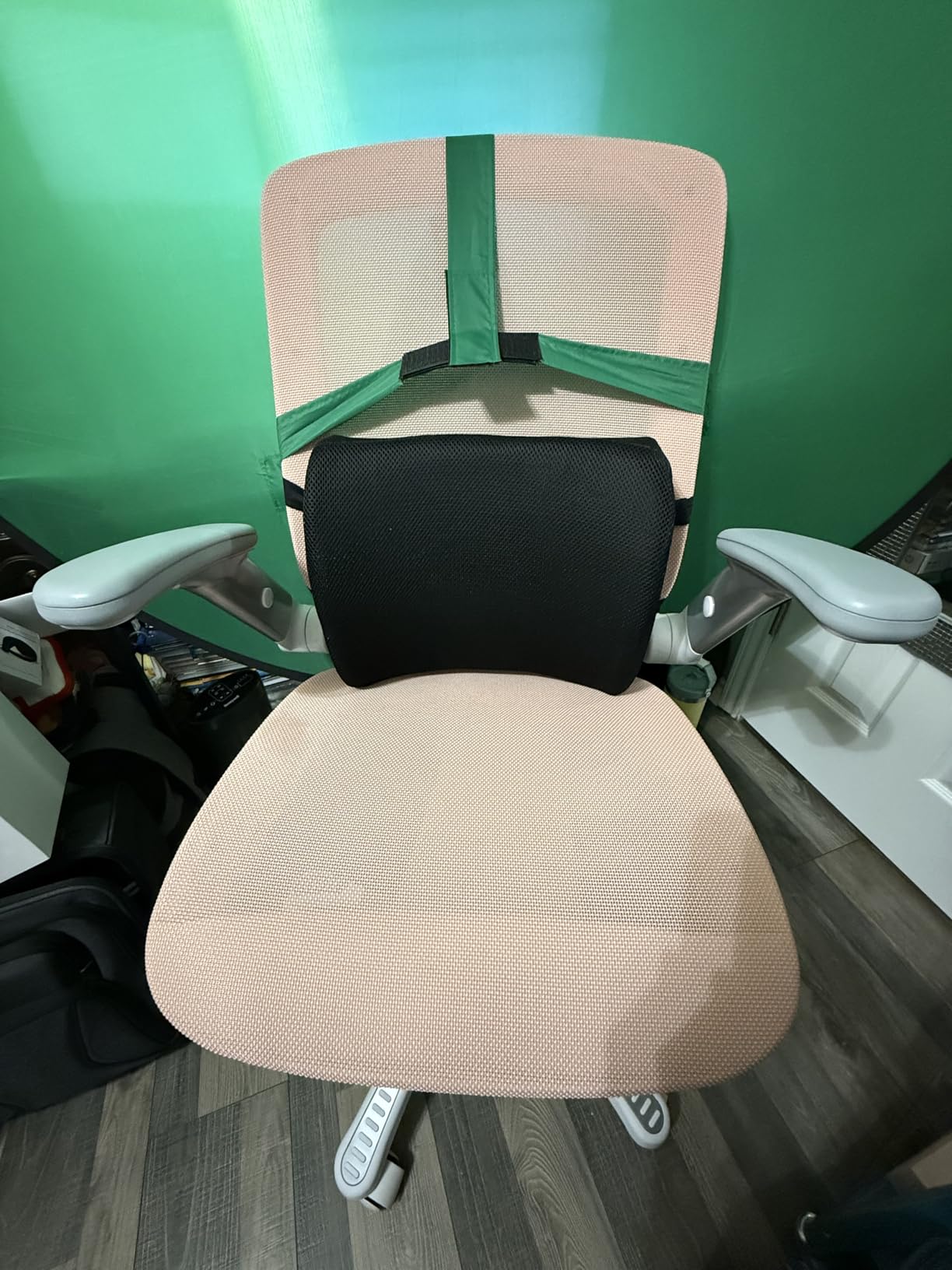
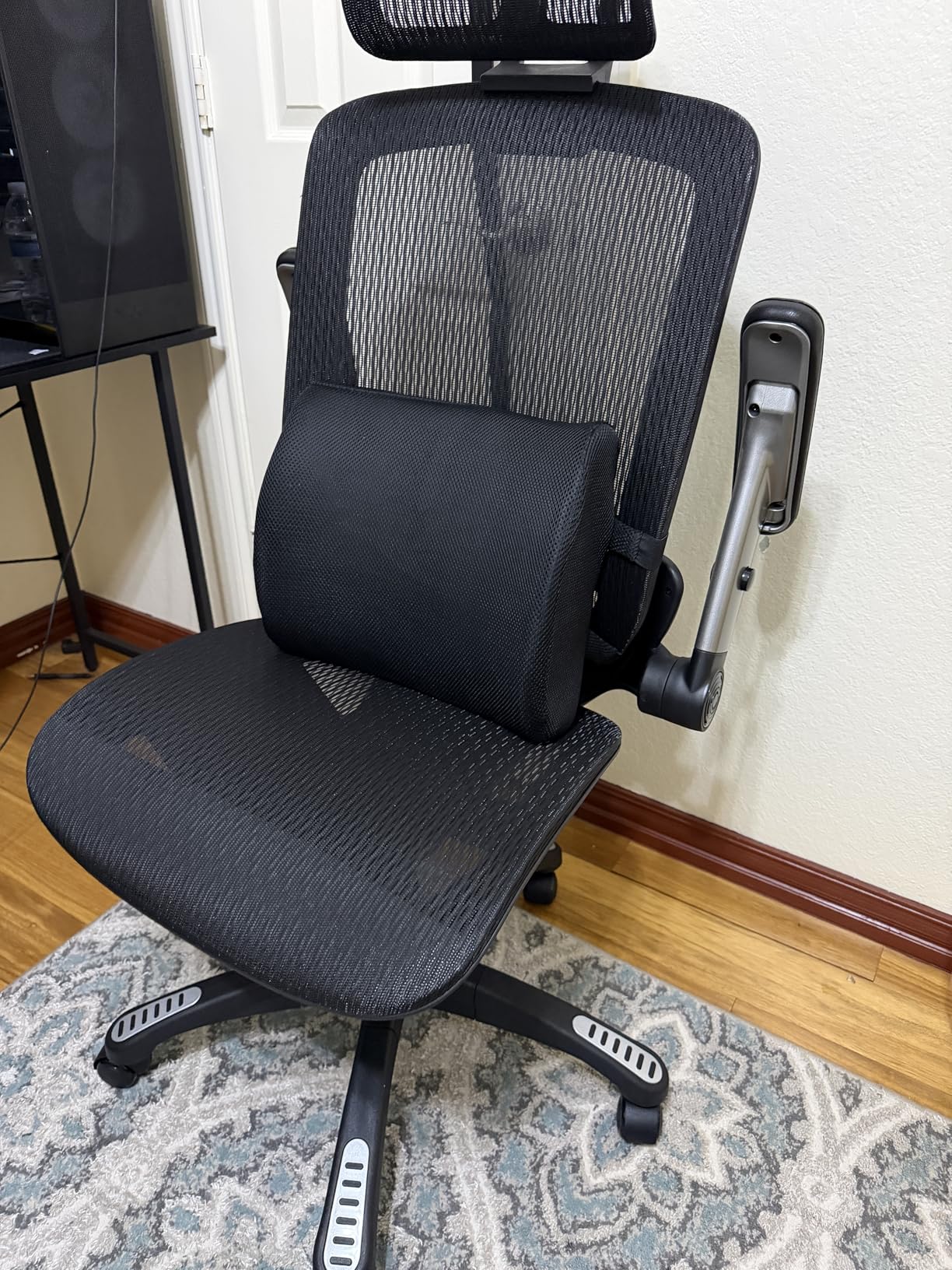
The flip-up armrests are what people notice first in a real home office. They raise 45 degrees so the chair slides under the desk without catching, and with the PU mute wheels that are gentle on wood floors they solve the classic small-space problem. The three-stage tilt lock from 90 to 120 degrees also gives a genuine change of position rather than a token wobble.
Where it falls short is lumbar adjustability. Support comes from the contour of the mesh panel, with no mechanism to push in or pull out. Armrest height is a second recurring note, because the arms sit relatively high and do not drop far enough for some forearms, which can lift the shoulders during long typing.
Who this chair suits
Larger and taller users who have found standard task chairs cramped, and the strongest candidate in this list for anyone over six feet. The roomy seat and 300 lb capacity are the two reasons, and the flip-up arms also make it a good fit for a small home office.
What to check before you buy
Check your armrest clearance if you can, since height is the main fit variable. The stated range also tops out around 6’1″, so users well above that may want a longer gas lift fitted. Our guide to the best office chairs for tall people maps seat height to body height in detail.
4. HOLLUDLE 3D Lumbar Mesh Chair – Best Adjustable Lumbar Support
HOLLUDLE Ergonomic Mesh Office Chair – 3D Adjustable Lumbar Support & 3D Armrests, V-Shaped Back, Adjustable Desk Chair for Office & Home, White
3D lumbar support with five adjustments
3D armrests and 2D headrest
BIFMA and EN1335 certified
5-year warranty
The Good
- 3D lumbar support is the most adjustable here
- Breathable mesh with a modern V-shaped back
- 3D armrests and adjustable headrest
- 5-year warranty among the longest here
The Bad
- Assembly takes 20-30 minutes and the arms are fiddly
- Seat can feel firm and the top height suits users up to about 6 ft 1 in
- Sharp unfinished metal edges near the caster mounts
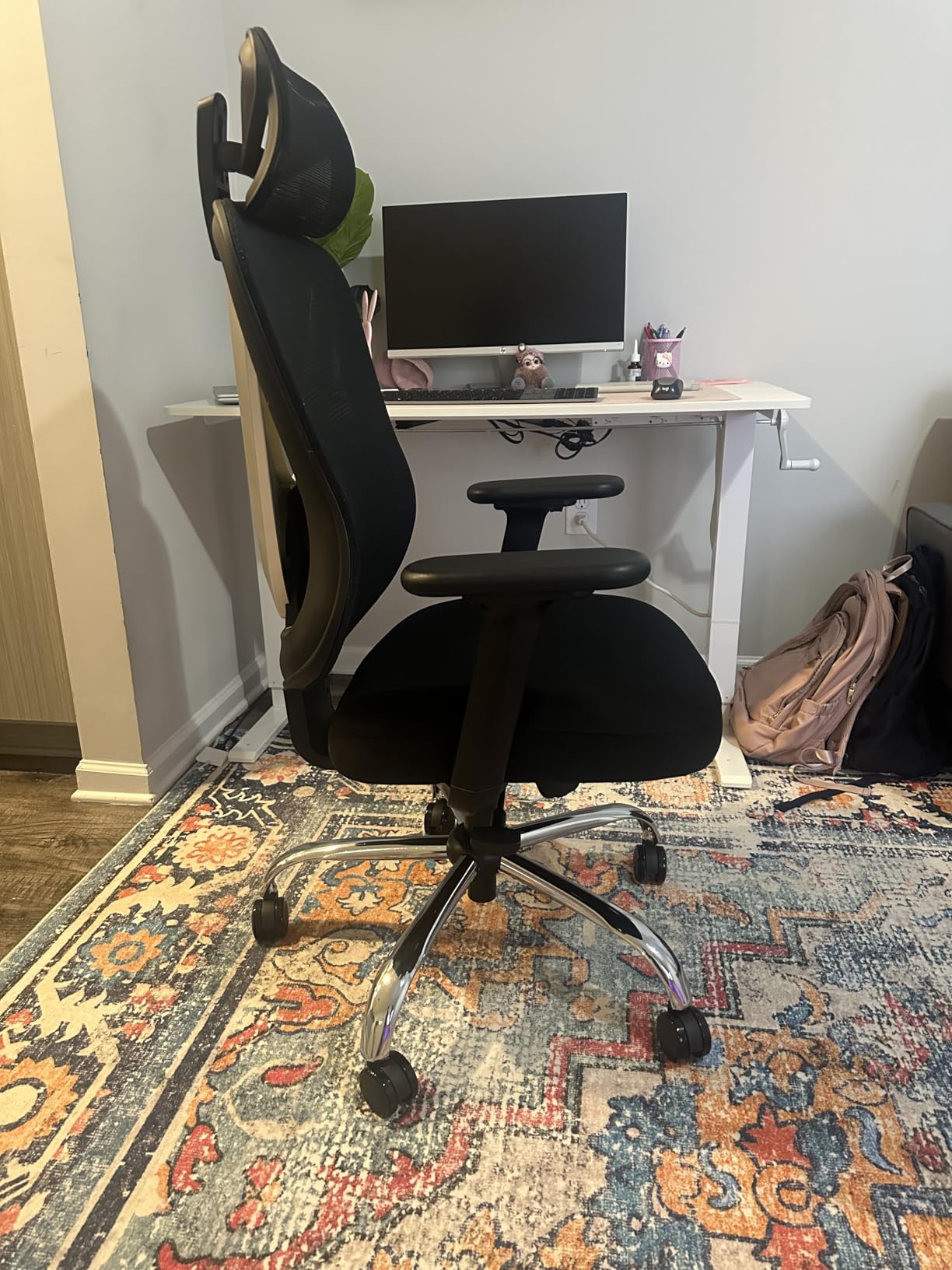
If lower-back fatigue is your main problem, this is the chair to look at first. The lumbar support moves in five directions: up, down, forward, backward and rotating. No other chair here offers that range, and it is the feature that separates a chair that works for one spine from a chair that works for most spines.
It holds a 4.4 average across roughly 6,400 reviews, and the review summary is unusually consistent: the lumbar system comes first, followed by mesh breathability. The armrests are 3D, moving in height, forward and back, and rotating, and the headrest is 2D with height and rotation. That is a level of adjustability usually reserved for chairs well above this tier.
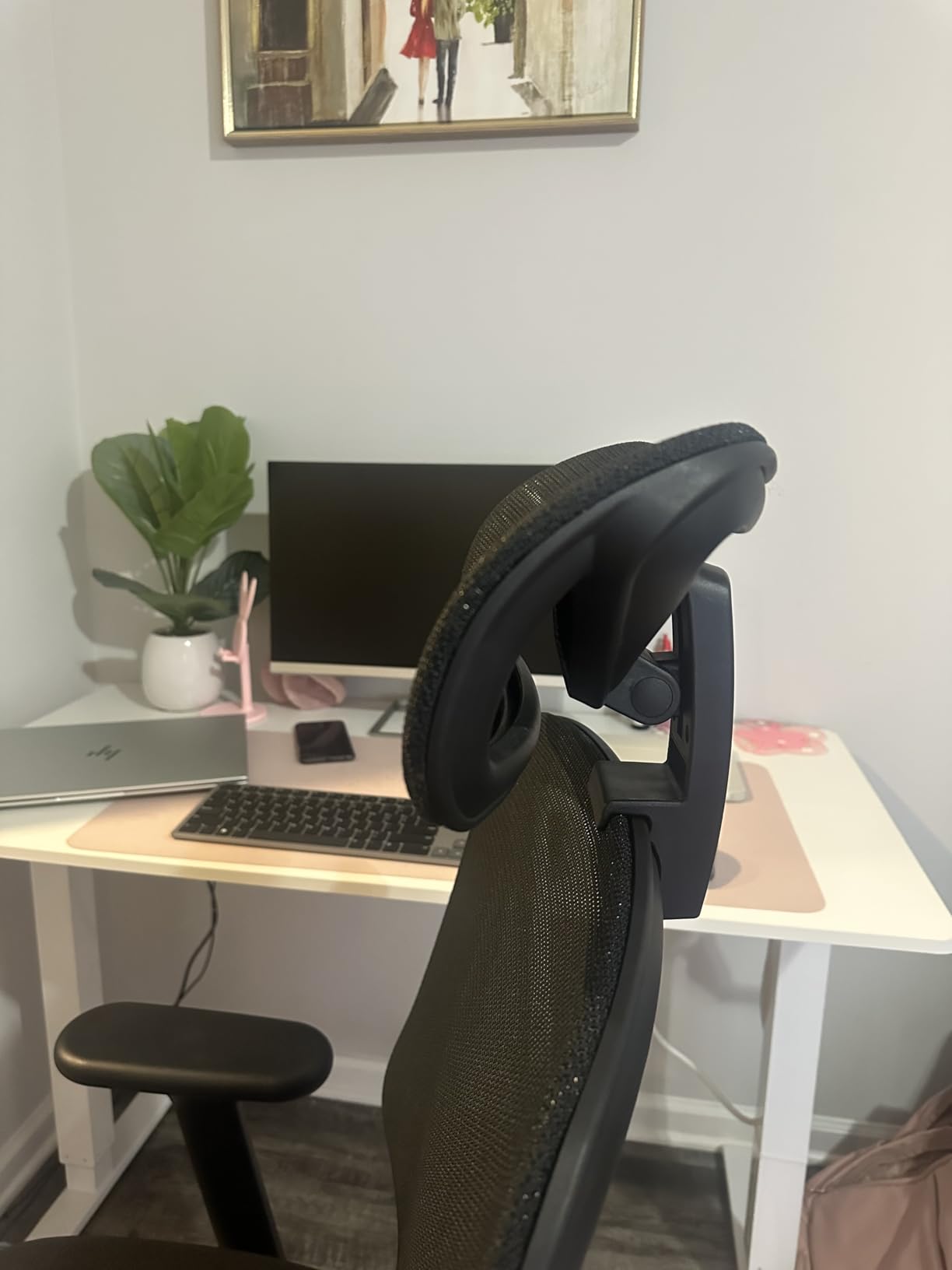
Owners also like the styling, which matters more than people admit in a home office. The V-shaped silver back reads as a design object rather than office equipment.
The negatives are practical. Assembly takes 20 to 30 minutes and attaching the arms is fiddly, so budget the time. The seat is on the firm side, and there is a recurring note about sharp, unfinished metal edges near the caster mounts that can catch bare feet.
Who this chair suits
People with existing lower-back discomfort, and anyone whose old chair had a lumbar support they could never line up with their spine. It also suits users who want an adjustable headrest and true 3D arms without moving up a bracket.
What to check before you buy
Measure your seat-to-desk relationship first, because the listed seat height of 19.69 inches and a limited top end make this a chair for users up to about 6’1″. The 5-year warranty is among the longest stated coverage among these twelve chairs and a real offset to the assembly effort.
5. Furmax High Back Executive Chair – Best Executive Styling With a Rocking Base
Furmax Office Executive Chair High Back Adjustable Managerial Home Desk Chair, Swivel Computer PU Leather Chair with Lumbar Support (1, Black)
Faux leather executive chair
Armless design with molded lumbar back
4-level gas lift tested above BIFMA
300 lb capacity
The Good
- Contoured lumbar back with cushioned PU seating
- 360 degree swivel with a rocking tension knob
- Gas lift tested to 1.5x the BIFMA standard
- PU leather wipes clean in seconds
The Bad
- Armless design leaves forearms unsupported during long typing
- PU leather runs warm compared with mesh
- Foam cushioning can flatten and creak
- Only two recline positions
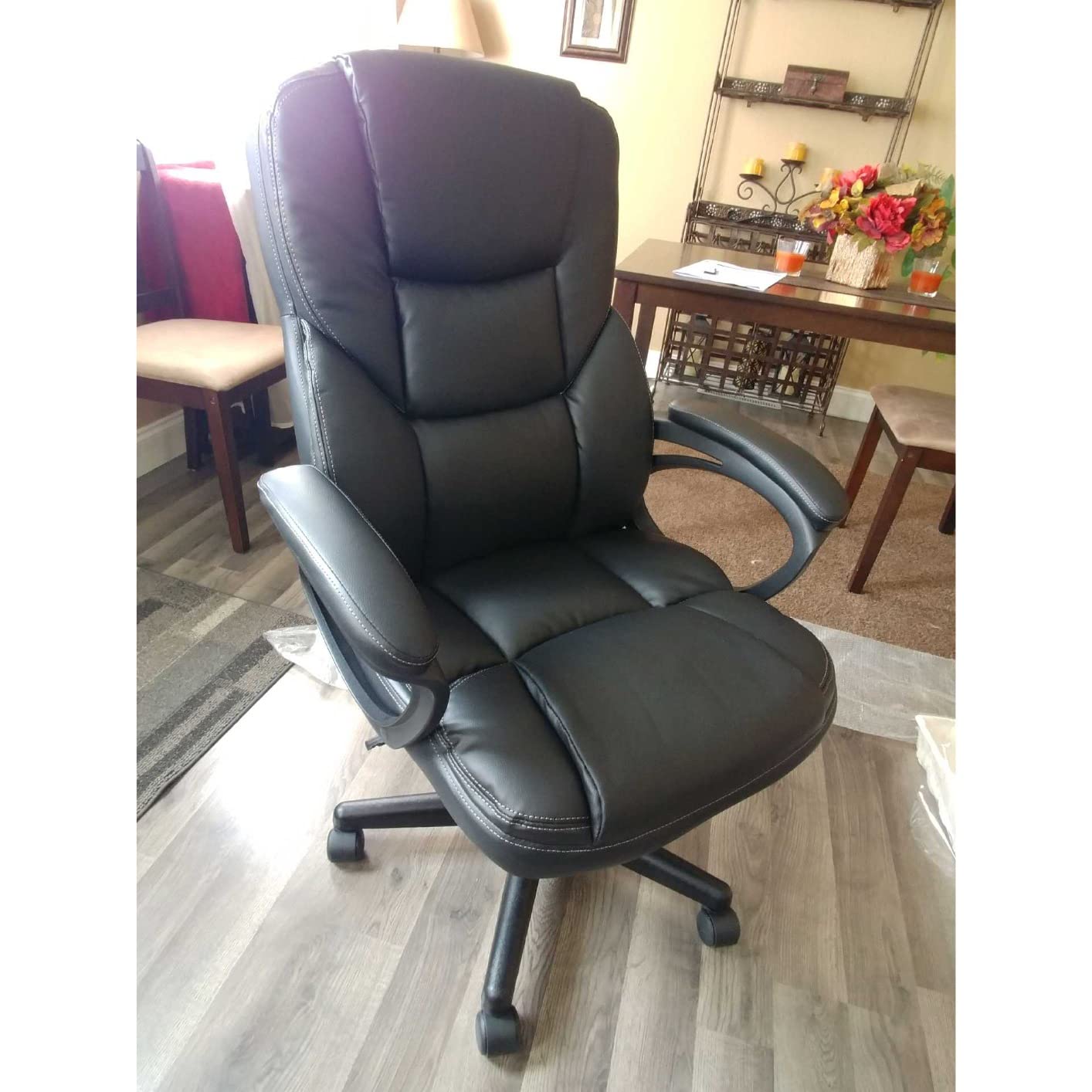
The Furmax is here for a specific taste. It is an executive chair, high-backed and upholstered in faux leather, and it looks the part on a video call the way most mesh task chairs do not. The mid-century styling suits a home office that doubles as a meeting space, and the PU surface wipes clean in seconds, which matters if you eat at your desk.
Mechanically it is more interesting than the styling suggests. The gas lift is a heavy-duty four-level unit tested to 1.5 times the BIFMA standard with minimal sink, the kind of specification that predicts a chair still working after several years. The base swivels 360 degrees and rocks, a tension knob sets how much resistance that rocking has, and a one-touch pneumatic lever gives three seat-height positions.
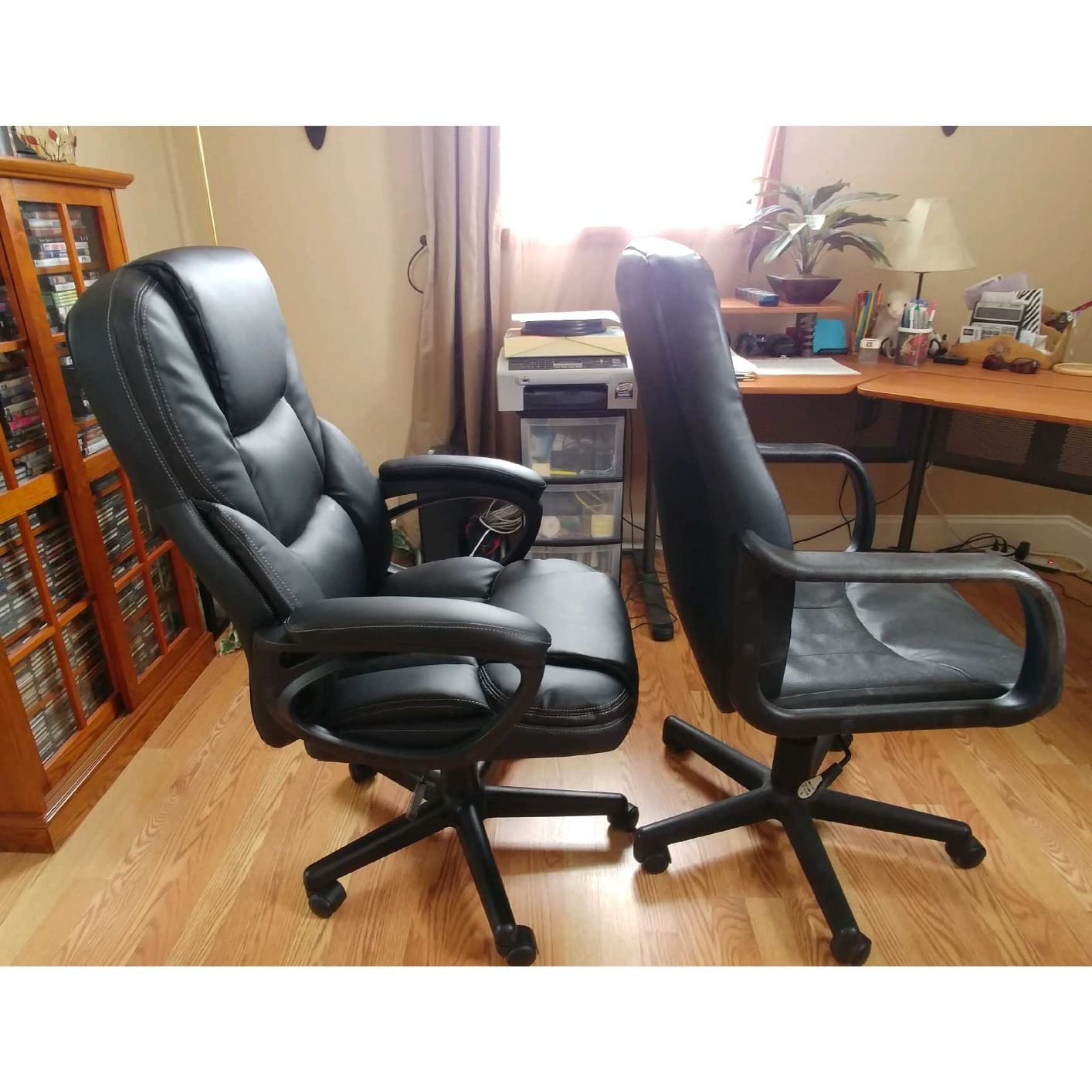
The design decision that defines this chair is the armless frame. For a manager on a lot of calls that is an advantage: nothing to bump, nothing to snag, a cleaner line under a desk. For anyone typing for hours it is a real drawback, and owners say so plainly, because with no armrests your forearms and shoulders carry the upper body.
The other drawbacks are material. PU leather runs warm against the skin compared with mesh, which matters in a hot room. Foam cushioning in this band is the part most likely to flatten and creak over years of daily use, and there are only two recline positions to change position with.
Who this chair suits
People who want an executive look, easy-clean surfaces and a rocking swivel base, and who spend part of the day on calls rather than typing. It also suits shared spaces where a wipe-clean chair stays presentable longer than mesh or fabric.
What to check before you buy
Check whether you can work armless for a full day, because that is not a small adjustment. A 300 lb capacity leaves plenty of headroom, and the listed seat height of 21.2 inches is relatively high, so taller sitters get on better with it.
6. TRALT Lumbar Mesh Desk Chair – Best for Heavier Users
TRALT Office Chair – Ergonomic Desk Chair with Adjustable Lumbar Support, Mesh Computer Chair, Executive Chairs for Home Office Comfortable Lumbar Support (Black)
Adjustable depth lumbar mechanism
19.7 inch wide seat with 17.3 inch depth
Class 3 BIFMA-certified gas lift
330 lb metal-core base
The Good
- Lumbar mechanism adjusts depth to follow the spine
- High-resilience foam resists bottoming out
- Class 3 certified gas lift resists sinking
- 330 lb base with a reinforced metal core
The Bad
- Soft casters can drag on hard floors
- Printed instructions have low contrast
- Some screws finish partly loose
- Warranty length differs between listing and card
Weight capacity is the reason the TRALT earns its place. It is rated to 330 lb on a nylon base with a metal core, driven by a Class 3 BIFMA-certified gas cylinder, and the seat is 19.7 inches wide and 17.3 inches deep. Fewer than a third of the chairs here publish a capacity that high, and the difference matters above 250 lb.
It also has the more thoughtful lumbar design. Rather than a fixed bar, the mechanism adjusts in depth to follow the spine’s natural curve, and owners consistently credit that with easing lower-back pain. The seat is high-resilience molded foam, chosen to bounce back rather than sag, which answers the commonest long-term complaint about cheaper foam seats.
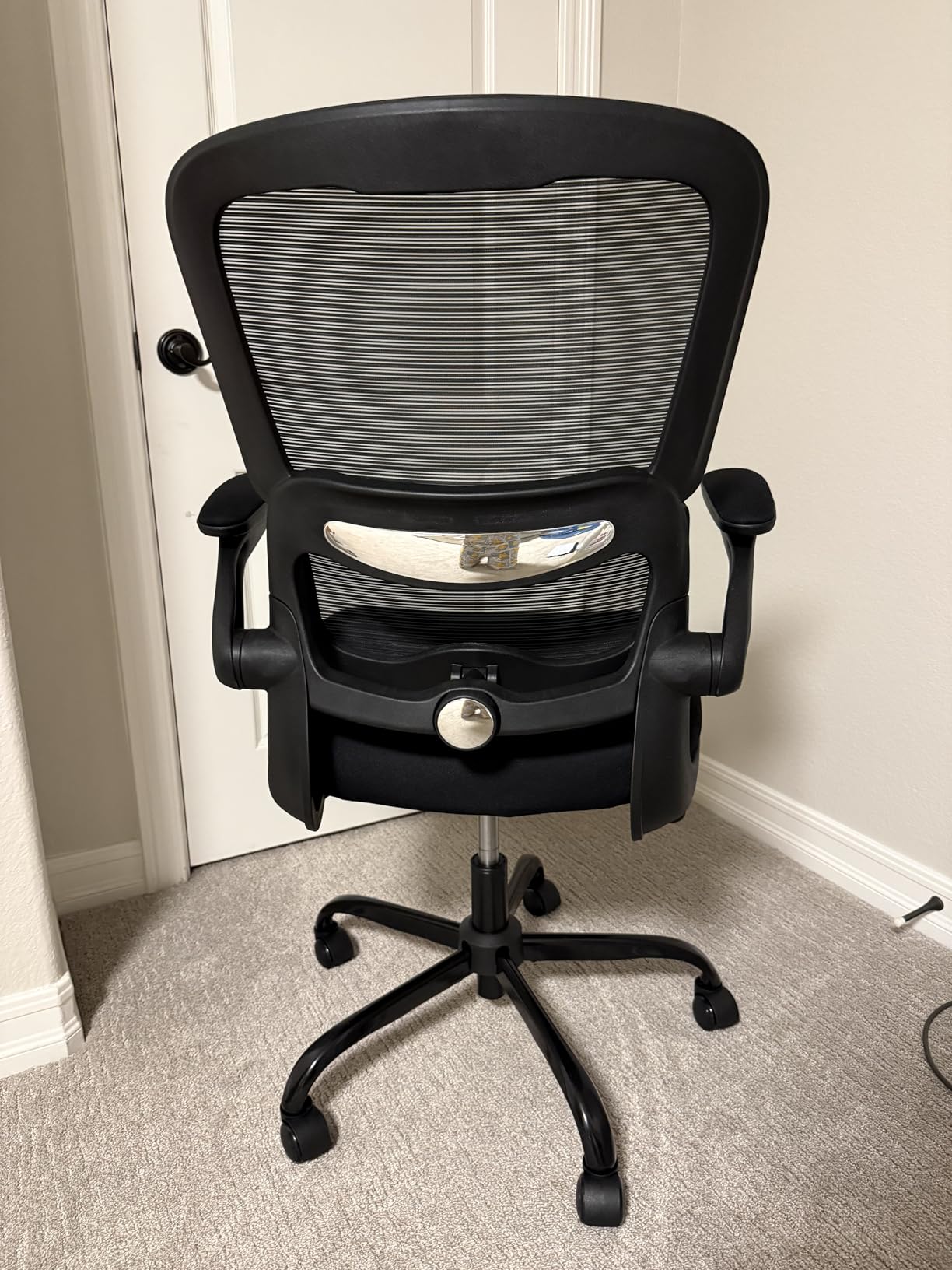
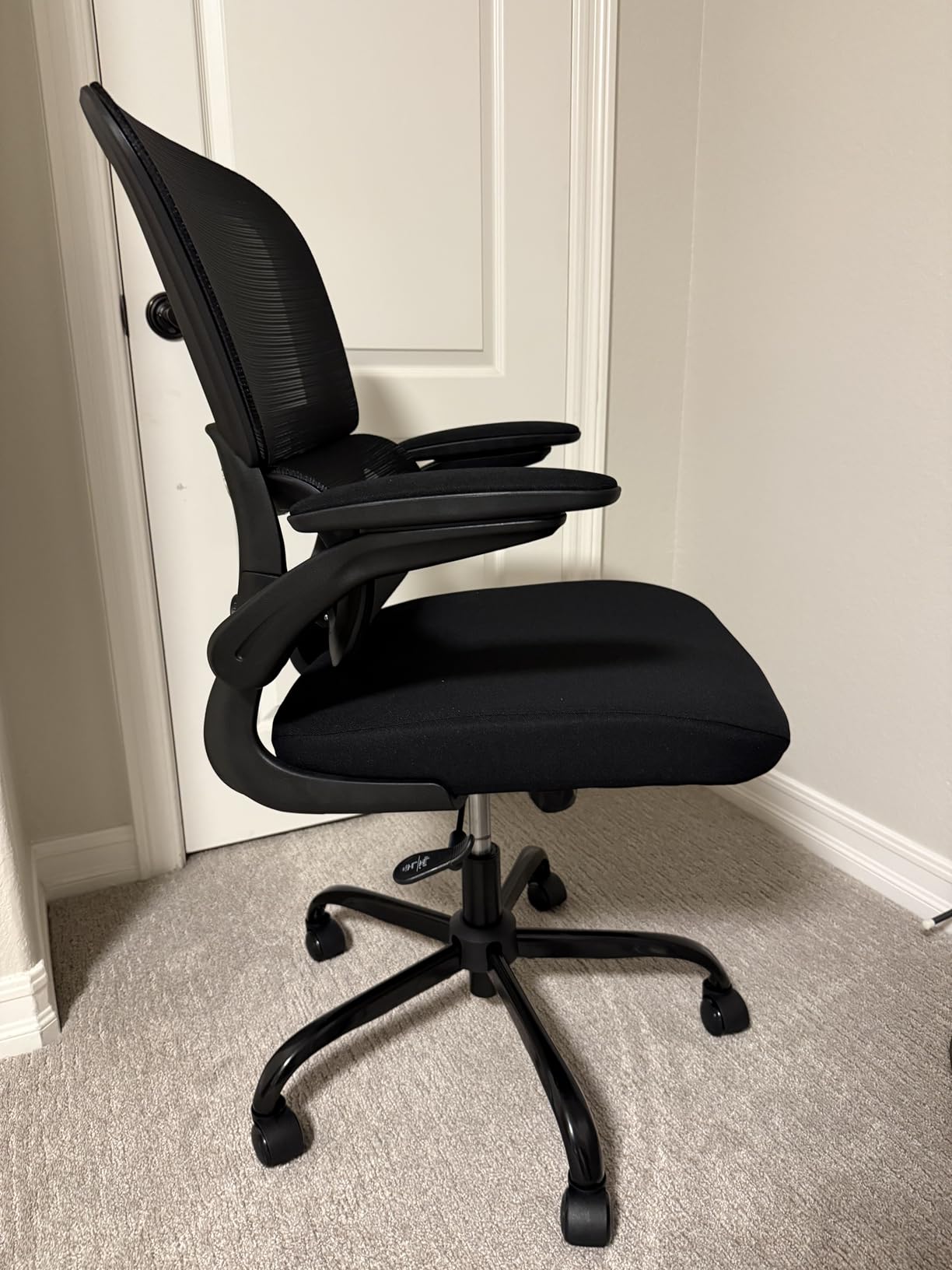
Seat height runs from 17.7 to 21.7 inches, a full four inches, and the stated fit is roughly 5’4″ to 6’2″. Assembly is listed at 15 minutes, which owners broadly confirm, and there is a two-year warranty alongside BIFMA basic durability certification.
Two details deserve attention. The casters are soft and non-circular, and owners on hard floors report dragging and question their long-term durability, so a replacement set of hard-floor wheels is a sensible first purchase. The warranty wording also differs between the listing and the card in the box, so confirm it in writing if length matters to you.
Who this chair suits
Users above 250 lb, and anyone who has found budget foam seats bottom out after a few months. The armrests flip up to save desk space, making it a good fit for a small home office as well as a heavier frame.
What to check before you buy
Check your floor type, because the caster choice is the one weak spot. Carpet is fine as supplied; on wood or tile, budget for hard-floor casters. Have the manual open on your phone before you start, since the printed instructions have low contrast.
7. Staples Hyken Mesh Task Chair – Best Modular Mesh Chair
Staples Hyken Ergonomic Mesh Task Chair, Lumbar Support, Swivel, Black
High-back mesh task chair
Detachable headrest and armrests
Swivel tilt with lock and tension knob
250 lb capacity
The Good
- Full mesh seat and back stay cool in long sessions
- Modular design lets the headrest and arms come off
- Meets or exceeds ANSI/BIFMA standards
- High back and headrest suit a long workday
The Bad
- Seat is short and narrow for users around 5 ft 9 in and taller
- Mesh seat wears unevenly causing a one-sided lean
- Lumbar pad and headrest slip out of position
- Backrest sits at a fixed recline angle
The Hyken is the chair I would put in a hot room. The seat and back are both full mesh, not a mesh back over a foam seat, making it the most genuinely ventilated design here. Owners who game at a desk or work in a warm office consistently point to that as the deciding factor.
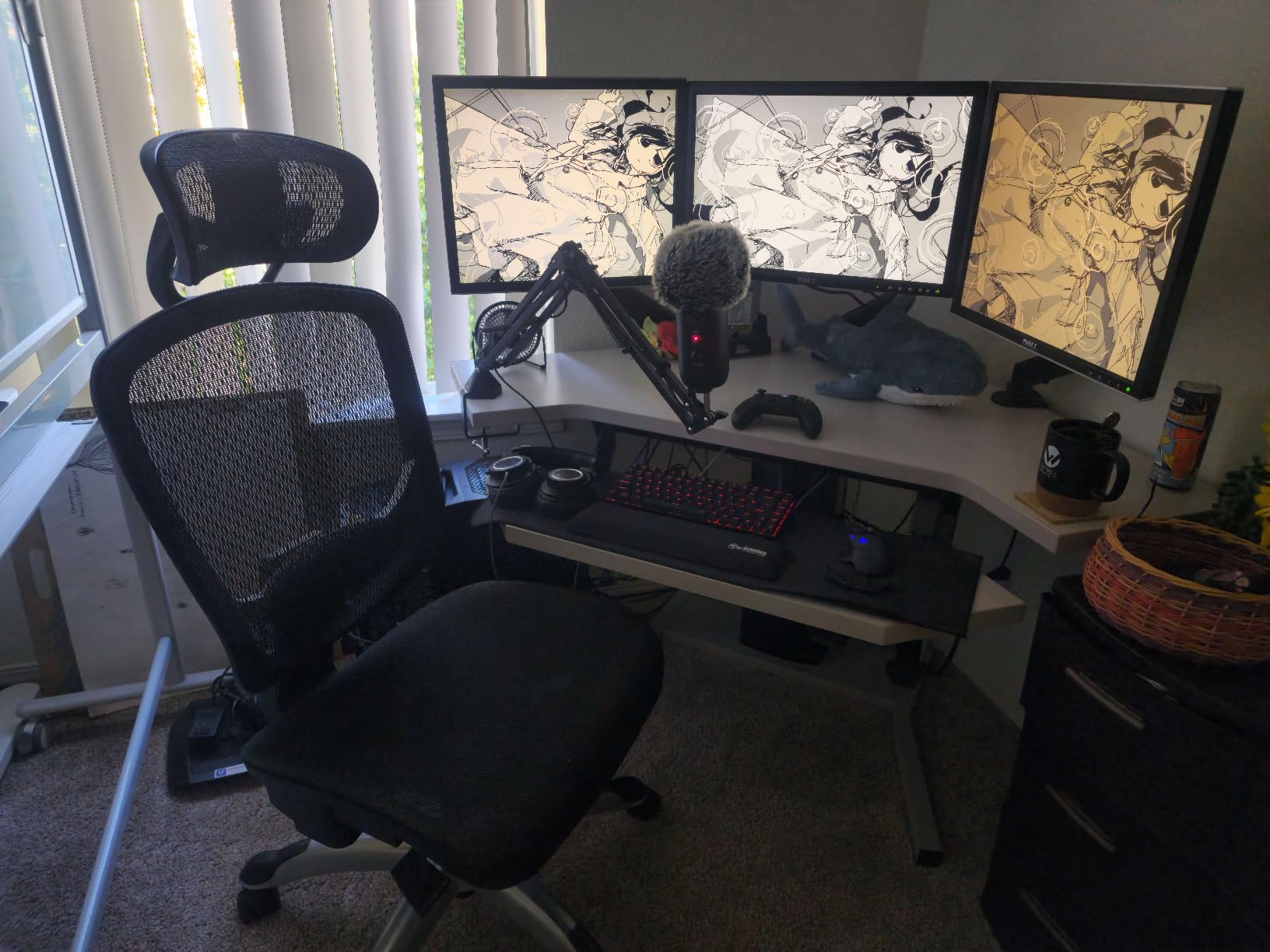
What it has that most chairs here do not is a modular design. The headrest and armrests both detach, so you can strip it back to a plain mesh task chair in a space where a high back would be in the way, and reassemble it when you want neck support. It meets or exceeds ANSI/BIFMA standards, has a swivel tilt with an upright lock and tension knob, and is rated to 250 lb.
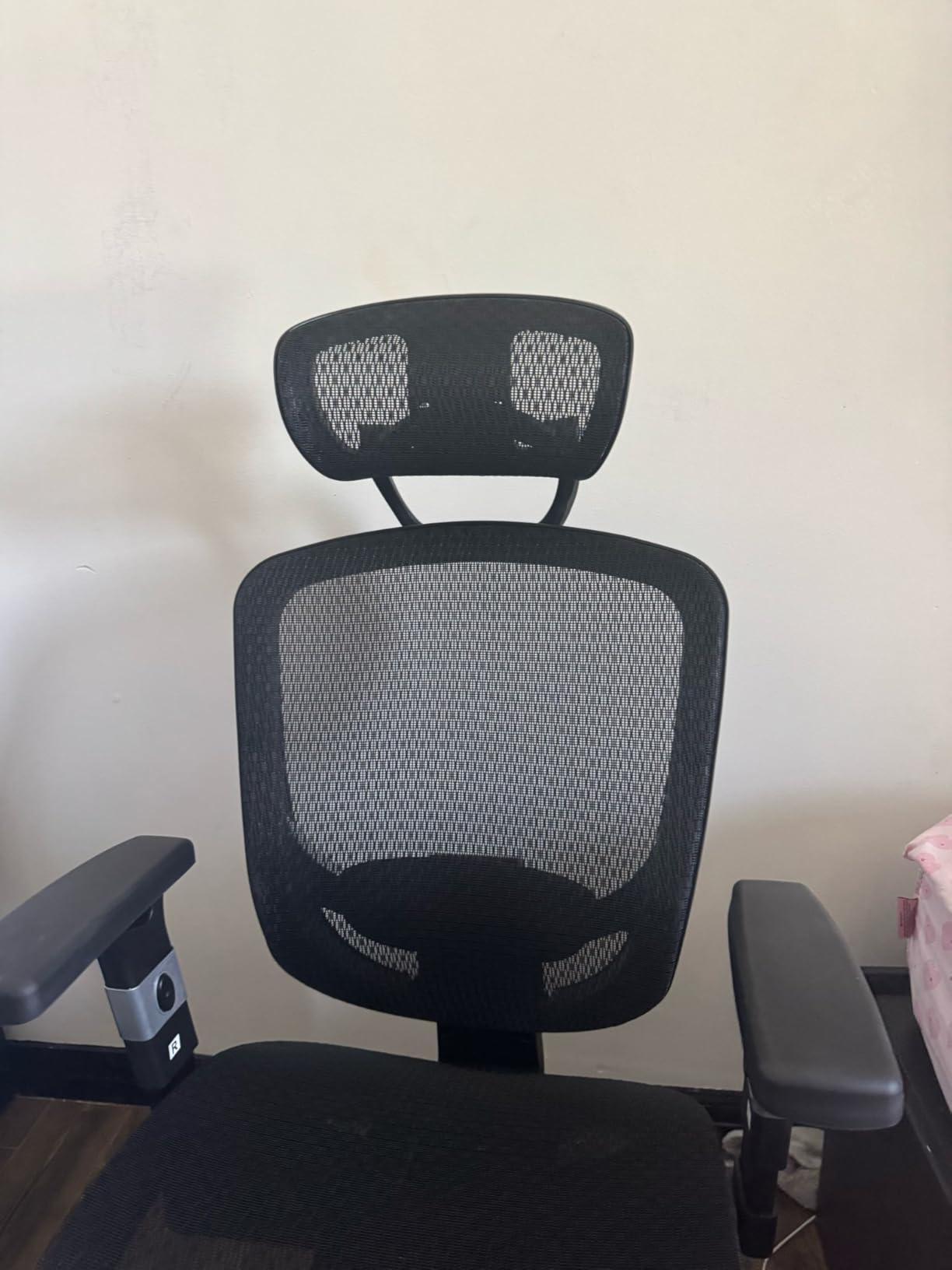
The dominant negative theme is fit, and it is specific. The seat is short and narrow, and owners around 5’9″ and taller describe it as cramped with feet unsupported. The pattern suggests a good match for users roughly 5’5″ to 5’7″, which is exactly the band most undersized complaints come from.
Long-term reports are mixed. Some owners describe it holding up for years of daily use, a good sign. Others report the mesh seat wearing unevenly so they lean to one side, the lumbar pad and headrest slipping out of position, and armrest foam cracking with bolts loosening. The fixed backrest angle is a further limit, with little user control over recline.
Who this chair suits
Shorter users who run warm and want the coolest seat possible, and anyone who needs to change the chair’s configuration later, such as a shared desk that doubles as a meeting space. The detachable parts also make it a good way to test whether you want a headrest at all.
What to check before you buy
Check the seat depth against your own, because this is the chair most likely to feel small. At 5’9″ or taller, look for a deeper seat, or our roundup of the best office chairs for shorter users will match your measurements better. Around 5’5″ to 5’7″, this is one of the coolest options open to you.
8. FelixKing Flip-Up Arm Mesh Chair – Best for Tight Desks
FelixKing Office Chair, Ergonomic Desk Chair Breathable Mesh Chairs Adjustable High Back Lumbar Support Flip-up Armrests, Executive Rolling Swivel Comfy Computer Chairs Home Office Black
Five-point support with adjustable lumbar
Flip-up armrests for desk clearance
300 lb base with three-stage gas rod
Assembles in about 15 minutes
The Good
- Adjustable lumbar supports an upright working posture
- Breathable mesh with a collapse-resistant foam seat
- Flip-up arms let the chair slide under a desk
- Silent PU casters and a 300 lb base
The Bad
- Seat cushion feels thin after several hours
- Backrest does not recline independently
- Flip-up arms cannot lock raised and flop down
- Limited height adjustment range
The FelixKing exists for a specific problem: a desk you cannot get a chair into. Its flip-up armrests clear the desk edge, the base is compact at 25.2 inches square, and the whole chair is 23.1 lb, so it moves between rooms easily. In a small apartment office, those are the features that matter and the ones most spec sheets ignore.
Support comes from five contact points at the head, shoulder, back, hips and hands, with an adjustable lumbar mechanism for depth plus adjustable seat height and tilt angle. The base uses a three-stage gas rod and a thickened plate rated to 300 lb, and the wheels are silent PU casters. Assembly is listed at about 15 minutes with included tools, and the parts and service warranty runs five years.
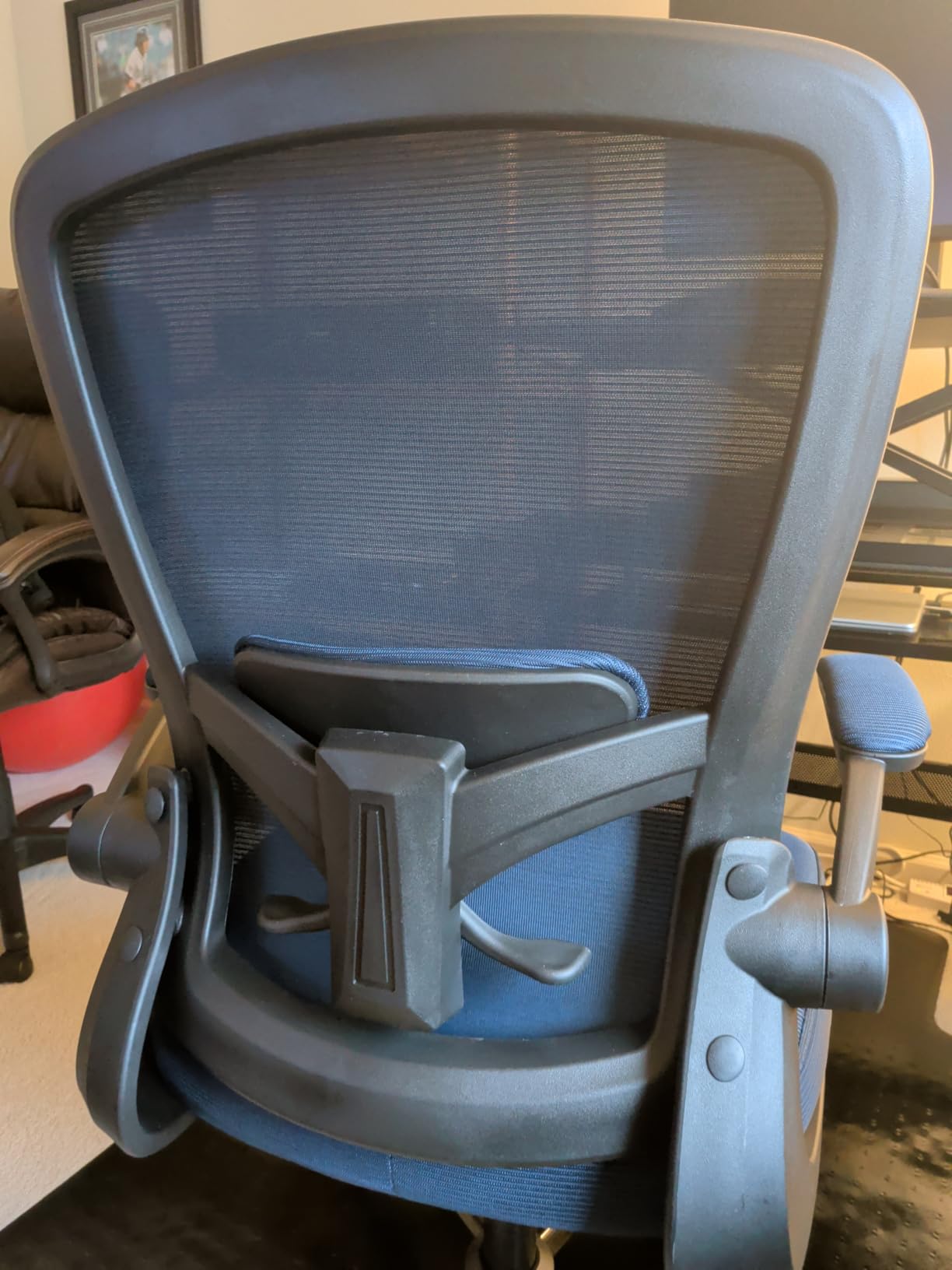
What owners like is the lumbar, which encourages an upright posture in a way fixed-support chairs do not, and a breathable back paired with a collapse-resistant foam seat that is well judged for value.
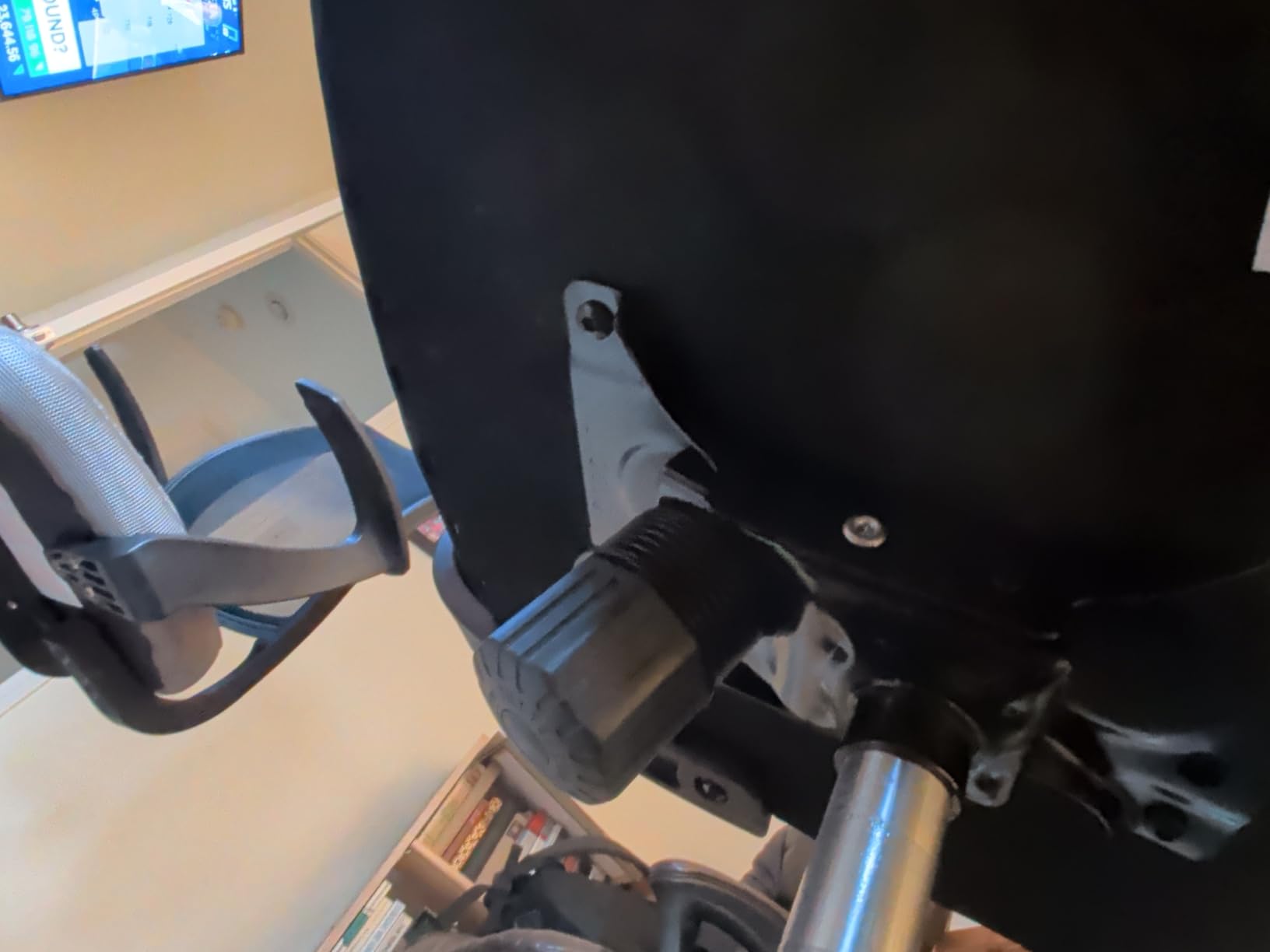
What owners do not like is where the advertised features and the actual mechanism diverge. The backrest does not recline independently, the whole seat tips instead, and the recline tension cannot be loosened enough to recline with real ease. The flip-up arms, the main selling point, cannot be locked raised and flop back down under weight.
Who this chair suits
People in small home offices who need a chair that fits under a desk, and anyone who wants adjustable lumbar and flip-up arms in the same frame. At 300 lb capacity, it covers a wider body range than its simple styling suggests.
What to check before you buy
Check whether you need a real recline. If you alternate between upright work and leaning back to read, the tipping seat and fixed tension will frustrate you, and a chair with a staged tilt lock is the better target. Treat the flip-up arms as a convenience, not a locked feature.
9. NEO CHAIR Flip-Up Arm Desk Chair – Best Starter Chair on a Budget
NEO CHAIR Office Desk Chair, Ergonomic Mesh with Flip-Up Armrests, Ivory
Entry-level mesh desk chair
Padded flip-up armrests for compact rooms
20.7 lb frame with FSC wood core
300 lb capacity
The Good
- Mesh back with a contoured backrest for airflow
- Flip-up padded arms suit small desks and tight rooms
- Smooth height adjustment with tilt tension and 360 swivel
- SGS-certified gas lift with a wide balanced base
The Bad
- No adjustable lumbar mechanism at all
- No headrest so neck support is limited
- Single recline position
- Polypropylene frame and a 1-year warranty
This is the chair to buy if you are furnishing a first home office, a dorm room or a corner of a kitchen table, and are not yet sure how many hours a day you will spend in it. It is light at 20.7 lb, ranks first in its category, and carries a 4.3 average from about 2,200 reviews. The padded flip-up armrests are the detail that separates it from other entry-level mesh chairs.
It also carries more certification than most at this level: an SGS-certified gas lift and an FSC-certified wood frame inside the mesh. Seat height, tilt tension and 360-degree swivel are all adjustable, the base is wide and balanced for a light chair, and the wheels roll smoothly. The footprint is small at 24.4 by 23.5 inches with a 17 inch backrest width.
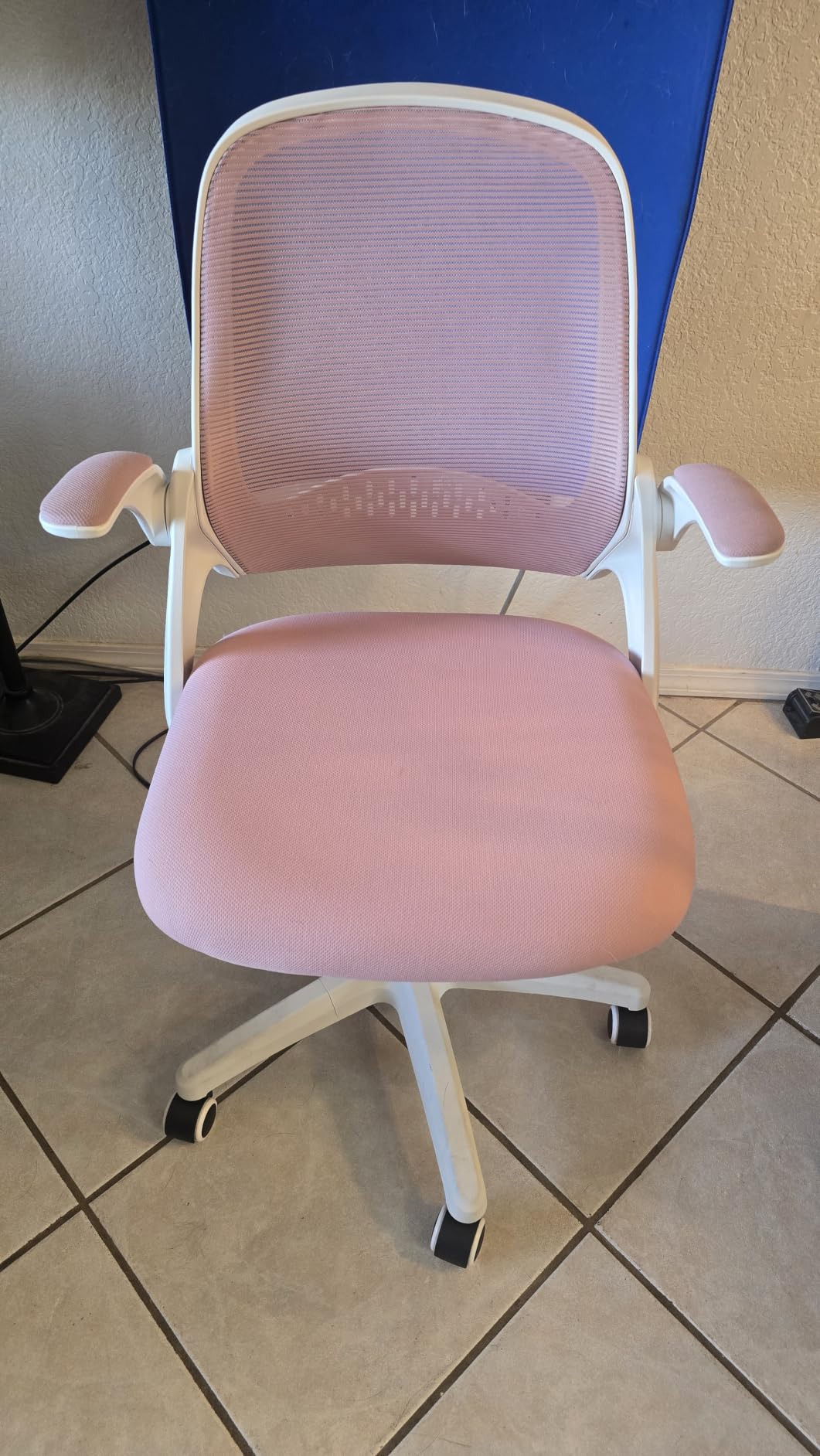
Be clear-eyed about what is missing, because the two absences are the story. There is no adjustable lumbar mechanism, so lower-back support is fixed to the frame and contoured backrest. There is no headrest either, which limits neck support for all-day work. If you already know you sit for ten hours, this is a first chair, not a final one.
The frame is polypropylene rather than steel or aluminium and the manufacturer warranty is one year, the shortest stated coverage here. That is an honest signal about expected lifespan, and worth weighing against the fact that it does the basic job well and takes up almost no space.
Who this chair suits
Students, renters, and anyone setting up a shared or temporary desk where storage and budget matter more than adjustability. It also suits people who have already decided they do not want a headrest, which is a larger group than you might expect.
What to check before you buy
Weigh the one-year warranty against how long you expect to keep it, and set your return deadline before ordering so you have a plan if the fixed lumbar does not suit your spine. If you want to know how a headless design feels, our guide to the best petite office chairs covers small-frame fit in more detail.
10. MOLENTS BIFMA X5.1 Mesh Task Chair – Best Build Quality With a Tall Seat
Ergonomic Office Chair, Mesh Computer Desk Chairs with BIFMA X5.1 Certified, Adjustable Lumbar Support, 3D Arm, Tilt Back, Wide Seat, Comfy Swivel Work Task Chair for Company and Home (Obsidian Black)
BIFMA X5.1 certified mesh task chair
Seat height 19.5-23.3 inch
3D sliding armrests
90 to 120 degree recline
The Good
- Two-direction lumbar adjustment that visibly eases back pain
- Heavy planted build that holds up for taller users
- Taut springy mesh that stays comfortable over long sessions
- Excellent packaging with labelled hardware
The Bad
- Sliding armrests give when pulled
- Levers are not obvious and need the manual
- Full mesh with no padding can feel hard
- Lumbar adjustment range is modest
This chair has the highest rating among the models here with an established review base, at 4.7 stars, and owners frequently compare it favourably to chairs costing several times more. The reason is structural. It weighs 35 lb, it is BIFMA X5.1 certified, and the base is rated to 300 lb, so the chair sits planted rather than creaking when you shift your weight.
It also solves the tall-user problem better than most. Seat height runs from 19.5 to 23.3 inches, a 3.8 inch range, and the overall height extends to 42.4 inches. Owners above six feet report that the build holds up for them specifically, and the lumbar support adjusts up and down as well as forward and back.
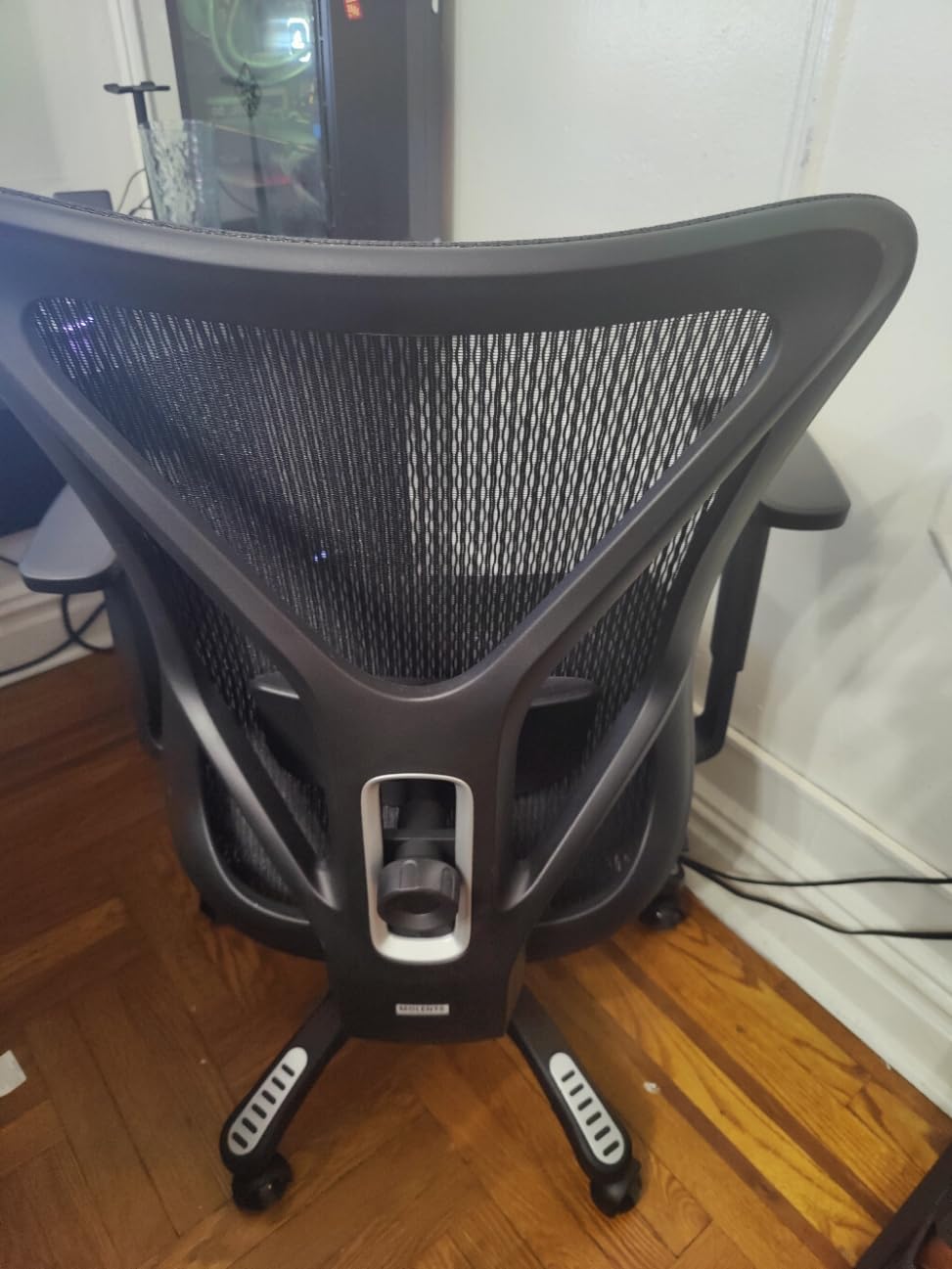
Two details stood out in the review summaries. The mesh is high-elastic with a slight bounce, described as taut and snag-free rather than the netting that catches fabric and peels after a year. The packaging is unusually good, with labelled screws, handed markers and a handled Allen key, and the after-sales team has been reported as proactively shipping free upgrades such as rollerblade wheels, foam seat covers and headrests.
The trade-offs are honest but minor. The 3D armrests slide forward, back and side to side, a genuinely useful range, but they give slightly when pulled, which some find irritating. The levers are less obvious than on most chairs and need the manual. And it is full mesh with no padding, so sitters who like a cushioned seat should know that now.
Who this chair suits
Taller users and anyone who has found standard chairs leave their knees too high, plus heavier sitters who want a rigid, planted feel. It is also the pick for people who want a serious recline, with three positions from 90 to 120 degrees and adjustable tilt tension.
What to check before you buy
Check that a hard mesh seat suits you, and expect a short learning curve on controls that are not intuitively placed. Activate the two-year warranty with the manufacturer on day one, and note that the lumbar moves in two directions with a modest range rather than the five-way movement on the HOLLUDLE.
11. Solviva Mesh Chair with Headrest – Highest Rated, Least Proven
Solviva Mesh Office Chair with Headrest, Lumbar Support, 3D Arms, Wide Seat
Mesh back with a padded wide seat
Adjustable headrest and 3D armrests
120 degree recline with rocking
300 lb capacity
The Good
- Padded wide seat with a breathable mesh back
- Adjustable headrest supports the neck when leaning back
- Three recline settings and 3D armrests
- Sturdy feel with a reinforced five-star base
The Bad
- New listing with a small review pool and limited long-term data
- Listed only in black
- Seat-height range of only 2.96 inches
This is the highest-rated chair here at 4.9 stars, and we are deliberately not giving it the top spot. The reason is the review count: around 370 ratings against more than 64,000 on our first pick. A 4.9 average on a small pool is encouraging rather than proven, and every visible review is positive, which is the pattern you see before a long-term record exists.
The design itself suits long sessions. It pairs a breathable mesh back with a generously padded wide seat, 21 inches deep, making it one of the few chairs here that does not force a choice between airflow and cushioning. The headrest adjusts, the lumbar is supportive without pressing hard into the lower back, and the armrests are 3D, moving up, down, forward, backward and side to side.
Position changes are handled well. The backrest reclines to 120 degrees with a rocking function, tilt tension control and 360-degree swivel, and owners describe three practical settings: upright, rocking and relaxed. The base is a reinforced five-star metal base with an SGS-certified gas lift rated to 300 lb, and the 35.3 lb weight suggests solid parts rather than thin ones.
The obvious limitation is seat-height range. At 2.96 inches of travel, this is the narrowest stated range in the roundup and a genuine fit constraint. If you are very short or very tall, a narrow range is the most likely reason a chair will not work for you. Colour availability is also limited to black.
Who this chair suits
Sitters who want a padded seat but run warm, and anyone who leans back and wants a headrest that actually meets them. The recline range and rocking function make it a good match for reading and thinking time as well as typing.
What to check before you buy
Measure your current seat height, then subtract 2.96 inches and see whether that range brackets where you sit today. If it does not, keep looking, because no amount of cushioning compensates for a seat that cannot reach your legs. Otherwise this is worth trying, with the awareness that you are an early adopter of its long-term record.
12. Serta Bryce Executive Chair – Best Memory Foam Cushioning, Weakest Record
Serta Bryce Executive Office Chair – Ergonomic Computer Desk Chair with Patented AIR Lumbar Technology – Adjustable Height – Memory Foam Body Pillows – 360° Swivel Rolling Base – Bonded Leather – Gray
Bonded leather executive chair
Patented AIR lumbar that moves with the body
Layered memory foam with pocket coils
275 lb capacity
The Good
- Pillow memory foam seat and body cushions owners call exceptionally comfortable
- AIR lumbar pivots and moves with the body
- Does not swallow an average-sized sitter
- Clear assembly instructions explaining every lever
The Bad
- Bonded leather peels and tears at the seams over time
- Seat geometry encourages sliding forward when reclining
- Creaking and reported gas lift sinking
- Headrest sits too far back and does not adjust
This is the most polarising chair here, and that is why it made the list. It has the lowest average at 4.0 stars across roughly 2,600 reviews, with 58 percent five-star ratings and a double-digit share of one-star ratings. Reviewers split sharply: some owners call it the most comfortable chair they have ever owned, and others report structural failure inside two years.
The comfort claim has a real mechanism behind it. The patented AIR lumbar support pivots and moves with the body rather than pressing at a fixed point, and the backrest combines layered memory foam body pillows with pocket coils in the seat. Against 275 lb of capacity and a 19.5 inch seat depth, it also avoids the classic executive-chair problem of swallowing an average-sized sitter, which owners specifically praise.
What separates the happy owners from the unhappy ones is materials and hardware. Bonded leather begins peeling and tearing at the seams within months to a couple of years for a number of buyers. Seat geometry pushes sitters forward, especially when reclining, and the seat height can reset upward. Some units creak, some report gas lift sinking, and some have had armrest brackets and bolt holes snap or strip. The headrest also sits too far back and does not adjust. Assembly is a two-person job, though owners report finishing in under 30 minutes with clear instructions.
Who this chair suits
Someone who values a deep, cushioned, memory-foam sit above everything else, and who will keep it in a climate-controlled room rather than a hot one. If you like the feel of a well-padded executive chair and judge materials by touch rather than expected lifespan, this is the chair here tuned for exactly that.
What to check before you buy
Check the warranty terms first, because coverage is a one-year limited warranty, a short window for a chair in this category. Look closely at the bonded leather and seams in owner photos, and be honest about whether the seat will be re-covered in a few years. If long-term durability is your priority, any of the mesh chairs above is a safer structural bet.
How to Pick the Best Office Chair for Your Body
Specs are only useful when they are matched to a body. This section is the part most roundups skip, and it is where the fit problems actually get solved. Work through it before you choose a model, not after.
Step one: measure your seat height requirement
Sit down and measure the distance from the floor to the top of your thigh where you naturally sit, then subtract two inches for a slight knee bend. That is the seat height you need. Anything that cannot reach it is wrong for you, and the range matters as much as the top number.
The published seat heights break down like this. A 17.1 inch low point suits sitters around 5’5″ and shorter, an 18.9 inch low point suits mid-height sitters, and a 19.5 inch low point suits taller users. At the top end, a 20.3 inch ceiling suits a person around 5’9″, while a 23.3 inch ceiling suits someone around 6’2″ or taller. Height bands published by manufacturers are the best guide available, and they matter more than any other number on a chair.
Step two: check the seat depth and your knees
A seat that is too short leaves your feet dangling, which strains the lower back. Look for at least two inches of clearance between the front edge of the seat and the back of your knee. Seats here range from 17.3 inches deep on the TRALT to 21 inches on the Solviva, so the spread is real, and the Hyken is the chair most likely to leave tall users cramped.
Step three: decide how much lumbar you need
Lumbar support falls into three categories in this roundup. Adjustable mechanisms, which move in depth or height, exist on the HOLLUDLE, the TRALT, the FelixKing and the MOLENTS. Body-moving systems, which pivot with the sitter, exist on the Serta Bryce. Fixed contours, which are shaped into the back and cannot move, exist on the BestOffice, the GABRYLLY, the Staples Hyken and the NEO CHAIR.
If you already have lower-back pain, buy adjustable. If you have never had trouble and are replacing a chair that already worked, a fixed contour is fine. Do not pay for an adjustable lumbar you will never move, but do not buy a fixed one if your pain is posture-related.
Headrest: do you actually need one?
This is the most argued-about feature in the category, and the honest answer is that most people do not need one. A headrest earns its place when you routinely recline to read, when you take long calls with a headset, or when you have neck issues a clinician has told you to manage with posture. For straightforward upright typing, a tall back is often more useful than a headrest, and a poorly positioned headrest can push the head forward and create the neck discomfort it was meant to solve.
Two chairs here let you test the idea, which is unusual. The Staples Hyken has a detachable headrest, and the FELIXKING sits in the middle of the range with no headrest at all. If you are undecided, pick a chair where the headrest is removable rather than one where it is welded on.
Mesh or foam, and does it matter?
Mesh wins on airflow and on not catching clothing, and it keeps its shape longer than foam. Foam wins on immediate comfort and on feeling less hard under the sitter. The practical answer is the hybrid used by the SIHOO M18, the GABRYLLY and the Solviva: mesh back, padded seat, so the ventilated area handles heat and the load-bearing area handles comfort.
Two warnings. A foam-only chair in this price band is the part most likely to flatten and start creaking, and a mesh seat in a hot climate is a genuine advantage, not a gimmick. If you have ever disliked the feel of mesh, pick a hybrid and not a full mesh design.
Weight capacity, warranty and casters
Choose a capacity with headroom above your own weight, not just above it. If you are 200 lb, a 250 lb chair will do, but a 300 lb chair is more comfortable because the frame is stiffer. Capacities here run from 250 lb on the BestOffice and the Hyken up to 330 lb on the SIHOO M18 and the TRALT.
Warranty length is a rough proxy for the manufacturer’s confidence in the parts, and it varies widely here: one year on the NEO CHAIR and the Serta Bryce, two years on the TRALT and the MOLENTS, three years on the SIHOO M18 and the GABRYLLY, and five years on the HOLLUDLE and the FelixKing. Read the warranty terms before you order rather than after, and activate anything that requires registration.
Finally, check the casters against your floor. Carpet casters roll well on carpet and drag on hard surfaces, and hard-floor wheels can mark wood. This is a small detail that annoys people daily, and replacement casters cost very little to fit later.
Adjusting a new chair in five minutes
Before the first long sitting session, set the chair in this order. Start with the seat height until your feet are flat and your knees are near 90 degrees. Then set the backrest so your lower back sits in the small gap between the seat and the lumbar support. Set the armrests next so your forearms rest flat with your shoulders relaxed. Then set the tilt tension to something light enough to move without standing up, and lock it upright. Only then adjust the headrest, if there is one, by looking straight ahead rather than up.
If you do this in the wrong order, you will set the lumbar for the wrong posture and then wonder why it feels wrong. Five minutes of adjustment is the difference between a chair that works and one that sits in the corner.
Frequently Asked Questions
How do I choose an office chair that fits my height?
Start with seat height. Measure from the floor to the top of your thigh where you sit naturally, and subtract two inches for a slight knee bend. Then look for a chair whose published seat-height range brackets that number, and check the manufacturer’s stated height band, which is the most reliable guide. Under 5 ft 5 in usually needs a low minimum of 17.5 inches or lower, mid-height sitters around 5 ft 6 in to 5 ft 10 in need roughly 18 to 20 inches, and users above 6 ft need a top end above 22 inches. Seat depth is the second check, and you want at least two inches of clearance behind your knee.
Is a mesh or cushioned office chair better?
Mesh wins on airflow, durability and not catching clothing, and it keeps its shape longer than foam. Cushioning wins on immediate comfort and feels less hard under you. Most sitters who dislike mesh are actually reacting to a full mesh seat, and the best compromise is a hybrid: mesh back with a padded seat, as used by the SIHOO M18, the GABRYLLY and the Solviva. If you run warm, go full mesh. If you sit for long hours and dislike hardness, go padded or hybrid.
Do I actually need a headrest on an office chair?
Most people do not. A headrest earns its place if you routinely recline to read, take long calls with a headset, or have neck issues that a clinician has told you to manage with posture. For straightforward upright typing, a tall back is usually more useful. A badly positioned headrest can push the head forward and cause the neck pain it was meant to solve, so adjust it to look straight ahead rather than up. If you are undecided, choose a chair with a detachable headrest, such as the Staples Hyken, so you can remove it later.
How long should an office chair last?
A well-built chair with a steel or reinforced base and a certified gas lift can last a decade or more, while a light polypropylene frame with a one-year warranty is realistically a few years of daily use. Signs it is time to move on include a gas lift that will not hold height, a mesh back that has torn or peeled, armrest padding that has cracked and split, or lumbar pads that have permanently slipped out of position. Buying within your return window and testing the chair through a full work week is the most reliable way to know which category you are in.
Should I buy a used Herman Miller Aeron?
A used Aeron is a genuinely strong value path, and owners on office chair forums repeatedly describe them as the long-term benchmark that stays comfortable for years. The risks are mechanical rather than cosmetic: check the tilt mechanism, the armrest height adjustment, the seat surface for mesh sagging, and above all the size, because a second-size Aeron is a very different fit from a first-size. Budget for casters and possibly a gas lift, and always sit in it for a full day before committing, since the return window on a used purchase is usually short.
The Verdict: Which Office Chair Should You Buy
Start with the BestOffice Ergonomic Office Chair. Its combination of a 64,000-review track record, a breathable mesh back, a 250 lb BIFMA-certified frame and a ten-minute assembly is the most dependable thing in this roundup, and it is the safest default answer to the question of which of the best office chairs to buy first.
Move up to the SIHOO M18 if you want a padded seat and a real adjustable headrest, to the GABRYLLY if you are a larger or taller frame, and to the HOLLUDLE if lower-back discomfort is your main problem and you need lumbar support that actually moves. Sit in each one for a full work week before you commit, set the chair in the order described above, and check the return window before your deadline passes rather than after.
Whatever you choose, take the breaks. The best office chair in 2026 is still a chair, and it works best alongside standing up every half hour rather than instead of it.