
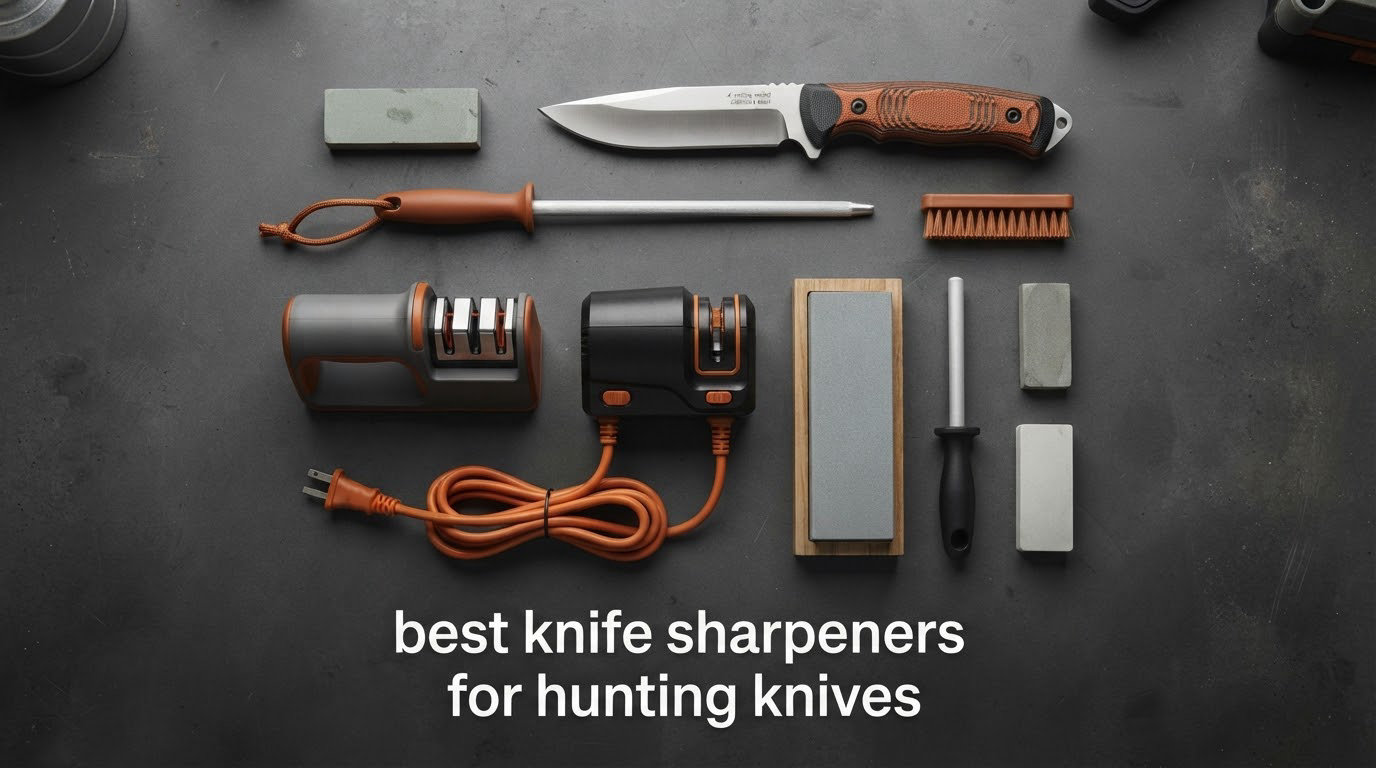
The best knife sharpeners for hunting knives are the ones that put a repeatable bevel on a carbon steel edge without slowing you down at 5 a.m. in a truck bed. Our pick for that job is the SHARPAL 101N 6-in-1 Pocket Knife Sharpener, because it packs into 2.4 ounces, carries both carbide and ceramic sharpening surfaces plus a tapered 400-grit diamond rod, and works on straight and serrated hunting blades without a separate strop or stone.
That verdict matters more than usual, because most sharpeners on the market are built for chef’s knives and thick kitchen steel. Hunting blades are thinner, often 1095 high carbon steel, and they take a punishment from bone, hide, sinew and trail grit. A dull edge on a skinning knife does not just slow the job down. It makes you push harder, which raises the odds of a slip on a wet handle.
We spent the last few months working through the field of candidates on this page, and we narrowed the shortlist to ten sharpeners that we think are worth a place in a hunting kit. Some are pocket pull-through tools, some are guided systems, one is a whetstone, and one is a bench stone with selectable angle guides. We looked at the same four things on each: angle control, grit range, whether it survives a pack, and whether it fits the steel you actually own.
One specification to keep in your head as you read: a fixed-blade hunting knife is normally set to a primary bevel of about 15-20 degrees per side. Thinner angles cut beautifully and roll over quickly on a blade that has met a elk’s shoulder blade. Most of the picks below can hold that range, and a few let you change it.
If you are still choosing the knife itself, start with our guide to the best hunting knife sets so you know what steel you will be sharpening.
Top 3 Picks for the Best Knife Sharpeners for Hunting Knives (October 2026)
SHARPAL 101N 6-in-1 Pocket…
- 6-in-1 pocket sharpener and survival tool
- Coarse carbide and fine ceramic slots
- Tapered 400-grit diamond rod for serrations
- Ferro rod and whistle

AccuSharp Manual Knife…
- Reversible carbide blades
- Sharpens straight and serrated edges
- About ten seconds a blade
- Ergonomic handle fits either hand

Work Sharp Guided Field…
- Five sharpening surfaces
- 20-25 degree angle guide
- Diamond plates and ceramic rod
- Leather strop included
The SHARPAL wins the top slot on completeness per gram. It is the only pick in the top three that also carries a ferro rod and a whistle, which makes it as much a survival item as a sharpener.
The AccuSharp is the fastest path back to a usable edge and sits in our kits for people who want one zero-friction tool. The Work Sharp Guided Field Sharpener is the pick when the bevel angle matters and you are away from a vehicle.
All 10 Sharpener Picks at a Glance in 2026
| Product | Key Specs | Buy |
|---|---|---|
|
|
Check Latest Price |
 |
|
Check Latest Price |
|
|
Check Latest Price |
 |
|
Check Latest Price |
 |
|
Check Latest Price |
 |
|
Check Latest Price |
|
|
Check Latest Price |
 |
|
Check Latest Price |
 |
|
Check Latest Price |
 |
|
Check Latest Price |
How to Sharpen a Hunting Knife (The Short Version)
Whatever tool you pick, the sequence matters more than the brand. This is the order we use before a season opens and again whenever a blade starts to drag.
1. Establish the edge you actually have. Run a fingernail lightly across each side. A knife that feels rough and grabs hair has a burr or a rolled edge, and it needs metal removed before anything else happens.
2. Start coarse only if the damage demands it. A 100 to 400 grit stage repairs chips and a dulled or rolled edge. If the knife is merely a little lazy, jump to 600 or 1000 grit and you will save steel.
3. Set the angle, then stay on it. 15-20 degrees per side suits most fixed-blade hunting knives. The primary bevel is the main edge you grind, and the burr that forms along it is metal pushed up from the other side.
4. Work up to a finer grit, 1000 to 3000. This resets the bevel so the two sides meet cleanly and you stop tearing instead of slicing.
5. Strop or hone to finish. A leather strop realigns the burr without removing more metal, which is why it is the step you can repeat most often between hunts.
One caution from knife forums, and it comes up again and again: not every blade wants a 15-degree edge. A thin-section 1095 fixed blade forced to too acute an angle will wire-edge, dull fast and frustrate you. Angle consistency over a long life matters more than chasing the sharpest number on the box.
What to Look For in a Hunting Knife Sharpener
Portability. If you hunt away from a vehicle, the sharpener has to live in a chest pocket or a pack without adding bulk or weight. Look for a lanyard hole, a body that clips or folds, and a weight you will actually carry. A 135 g tabletop kit is a camp tool, not a pack tool.
Angle guides. A guide or clamp that holds the blade at a set angle is the single feature that most improves consistency for a beginner. Preset slot sharpeners are fast but they cut at whatever angle the slots give you, and you cannot change it. Look for 15-20 degree coverage on fixed blades, and note whether 20 or 25 degree options are selectable.
Multi-stage grit. A coarse stage for a dull or chipped edge, a medium stage to reset the bevel, and a fine stage or strop to finish will cover everything a hunting knife asks for. Two stages is workable. One stage is not.
Serration coverage. Sawback and partially serrated hunting blades are common and are the one case where a tapered diamond rod earns its place. Diamond plates and flat stones do not clean up a serrated edge.
How We Picked
Ten sharpeners made the cut from a much longer list. Four things decided it.
Angle control. Can the tool hold a repeatable bevel, and can you change it? We gave credit to guides and clamps, partial credit to preset crossed slots, and very little to open-ended freehand.
Grit range and the finishing step. We wanted at least a coarse-to-medium path and ideally a strop or fine ceramic stage, because a hunting edge lives or dies on how it is finished.
Field durability. Metal bodies beat plastic, replaceable stones beat bonded stones, and a lanyard hole or protective handle matters when the tool lives in a pack. We also weighed how the tool behaves around moisture, since a wet stone left in a case will dull itself.
Fit with hunting steel. 1095 and 425HC high carbon steel, plus hardened steels like 154CM and A2, respond well to diamond and ceramic. A tool that only works on thin kitchen steel is useless to most of this audience.
1. SHARPAL 101N 6-in-1 Pocket Sharpener – Best All-Round Pack Sharpener
SHARPAL 101N 6-in-1 Pocket Knife Sharpener & Survival Tool
6-in-1 tool
2.4 ounces
400-grit tapered diamond rod
Sharpens straight and serrated blades
The Good
- Six functions in one pocket-sized tool
- Handles both straight-edge and serrated blades
- Carbide and ceramic abrasives tested to 10000 uses
- Lanyard hole for pack or pocket carry
- Only 2.4 ounces
The Bad
- Preset angle is fixed so the bevel cannot be adjusted
- Takes repeated passes to reset a very dull blade
- Slots will not repair deep nicks in hard steel
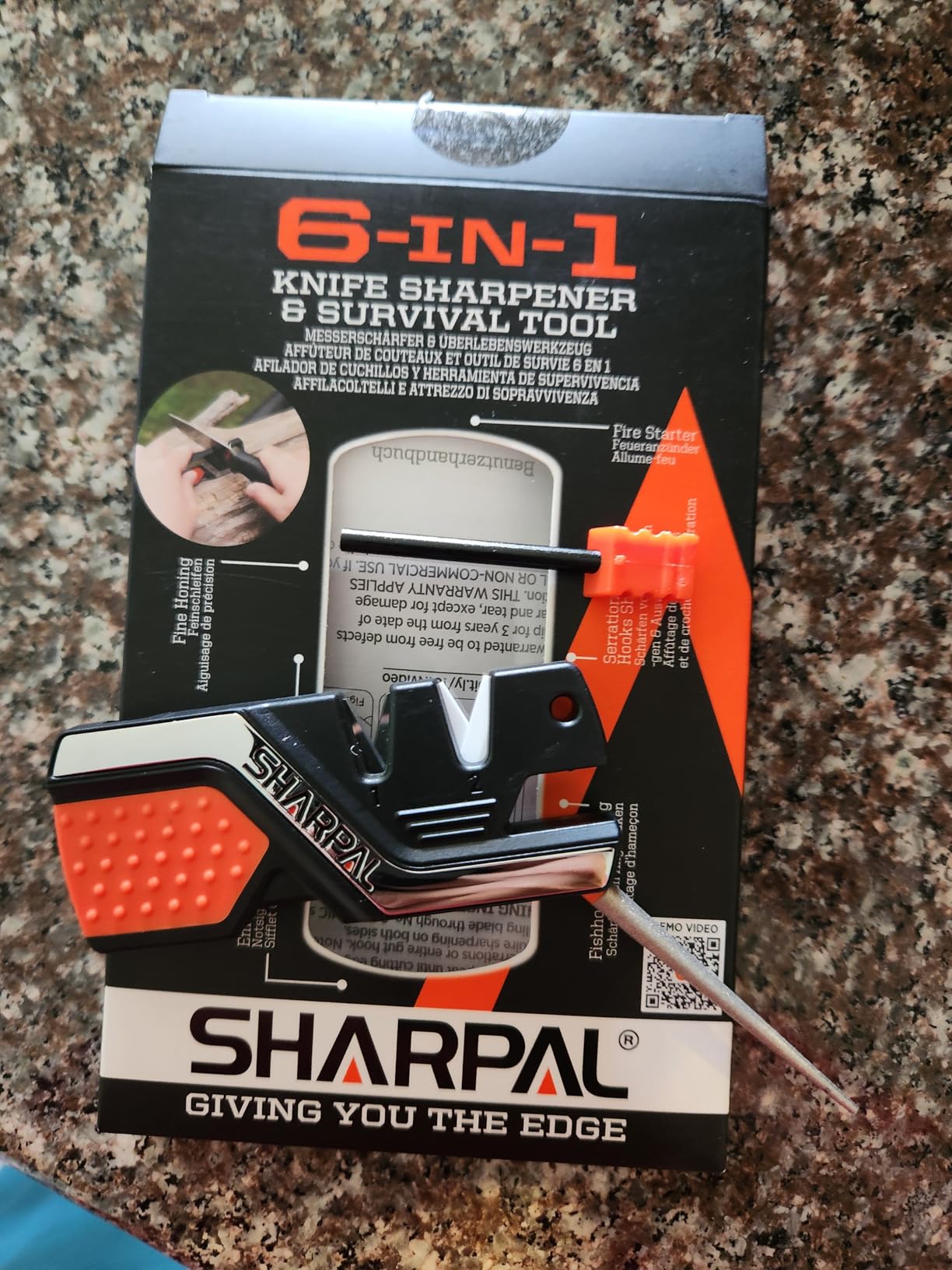
The SHARPAL 101N is the one I keep on my own lanyard, and it has been the tool that has never let me down when a knife goes dull a mile from the truck. Six functions live in a 2.4 ounce body: a coarse carbide V-notch slot, a fine ceramic slot, a tapered 400-grit diamond rod for serrations, gut hooks and fish hooks, a ferro rod, and a whistle.
What surprises people is how much of a range that covers on a hunting blade. The carbide slot resets a dull or slightly rolled edge after a few passes, the ceramic slot polishes the result, and the tapered diamond rod is the correct tool for a sawback or a partially serrated drop point. Reviewers treat it as an all-in-one survival carry item rather than a precision sharpening system, and that framing is fair.
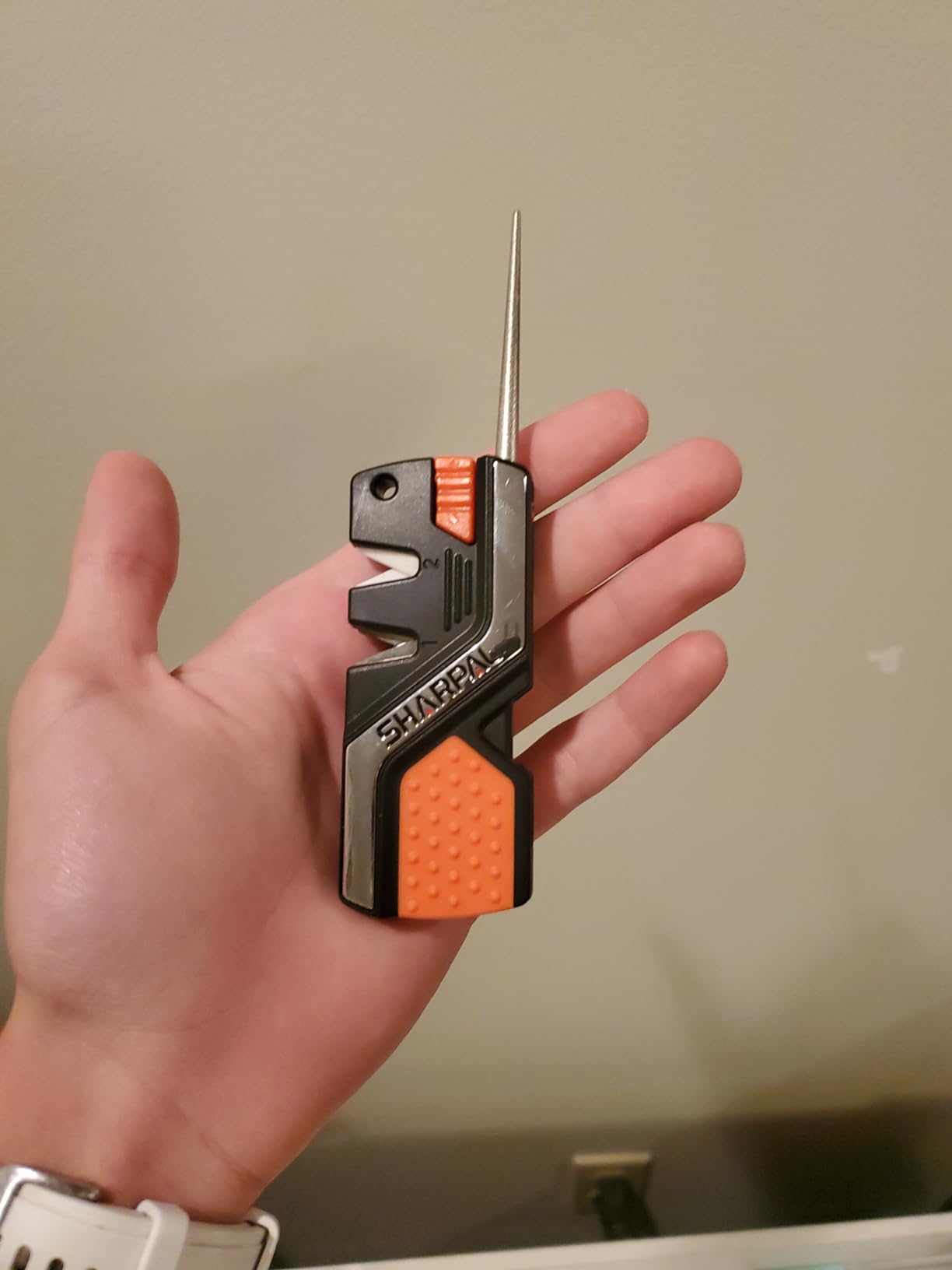
The honest limit is angle control. The V-notch is preset, so every pass happens at the same angle the tool was designed for, and that is fine for maintenance but wrong for anyone chasing a thin 15-degree primary bevel. There is also a speed trade, since a blade that has seen a season of skinning will need many repeated passes through the coarse slot. The carbide and ceramic abrasives are rated to 10000 uses, which is why it has stayed in so many kits.
Who this sharpener suits
It suits the hunter who wants one object in a chest pocket that handles every edge task on the trip, including a serrated or sawback blade. It also works as a camp tool for fish hooks, gut hooks and a ferro rod, so a single tool covers sharpening, fire starting and signalling.
If you own one fixed blade and one folder, both get sharpened well by this. It is also the easiest pick on the list to hand to somebody who has never sharpened anything, because there is no angle to think about and nothing to set up.
Who should skip it
Skip it if your problem is a hard, modern steel that has already chipped. Slots and pull-through surfaces are for restoring working edges, not for rebuilding a damaged bevel on hardened steel, and a stone or guided system does that job properly.
Skip it too if you care about a fine, keen edge. The finish here is a working field edge, not a mirror. For a mirror edge you want a whetstone and a leather strop, which is exactly what the next pick gives you.
2. Sharp Pebble 1000/6000 Whetstone – Best Whetstone for Learning the Craft
Sharp Pebble Whetstone Knife Sharpener – 1000/6000 Grit Sharpening Stone
1000 and 6000 grit corundum
Included angle guide
Non-slip bamboo base
Water-based
The Good
- Angle guide locks blade into a consistent bevel
- 1000 and 6000 grits cover most sharpening work
- Composition stays flat far longer than budget stones
- Bamboo base stays put on a countertop
- Ships with a manual and tips ebook
The Bad
- Needs practice to hold a freehand angle
- Eventually needs a flattening stone
- Too large to carry on a hunting trip
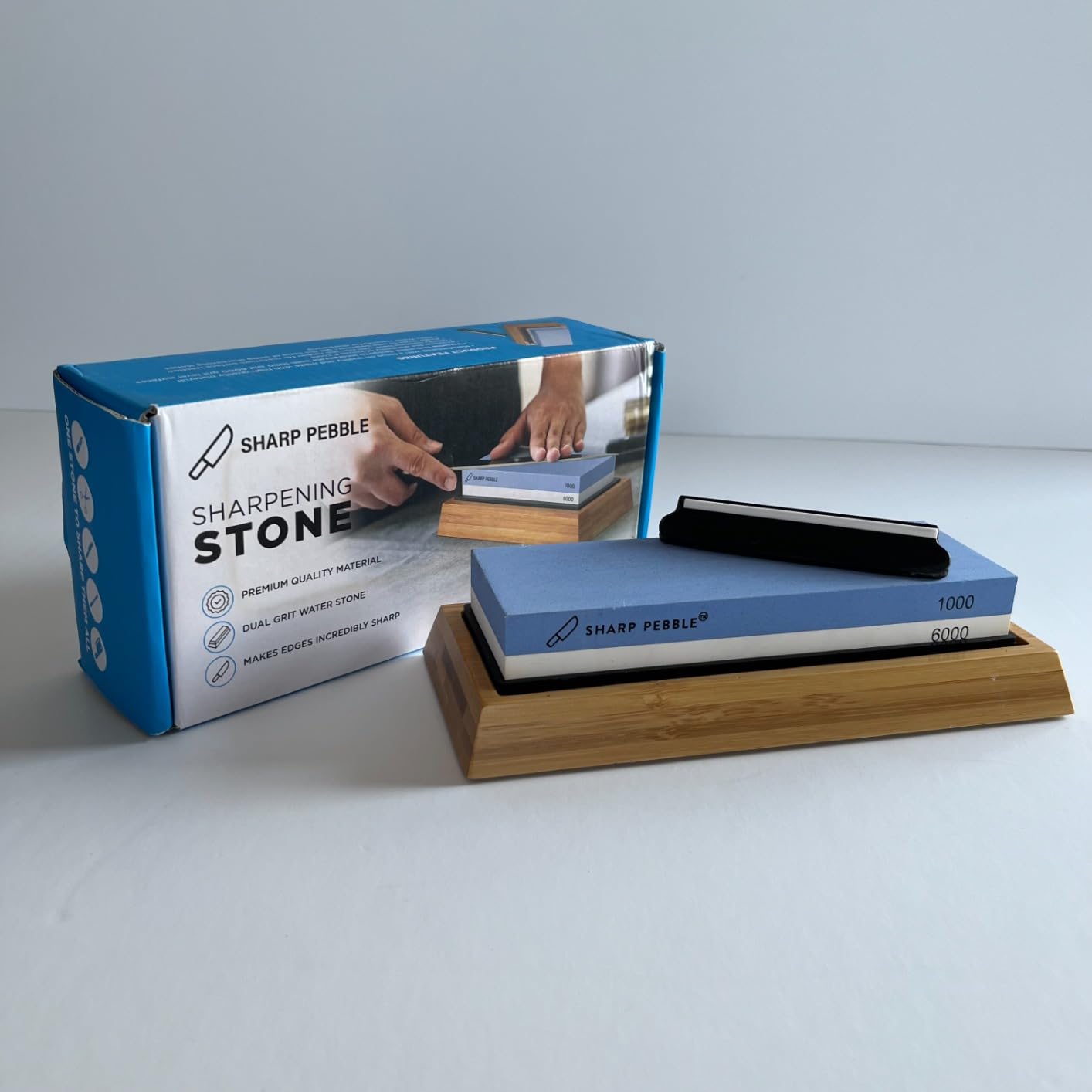
This is the pick for someone who wants to actually learn how to sharpen rather than push a blade through a slot. The 1000-grit side repairs a dull or damaged edge and the 6000-grit side polishes it to a keen finish, and the two together handle almost every task a hunting knife presents.
What separates it from a generic stone is the included angle guide, which locks the blade into position so the bevel stays consistent. That matters enormously for someone who has never done this before, and reviewers repeatedly single it out as the reason the stone works for them. The composition also holds a flat surface far longer than cheap stones, so your angles stay true over time.
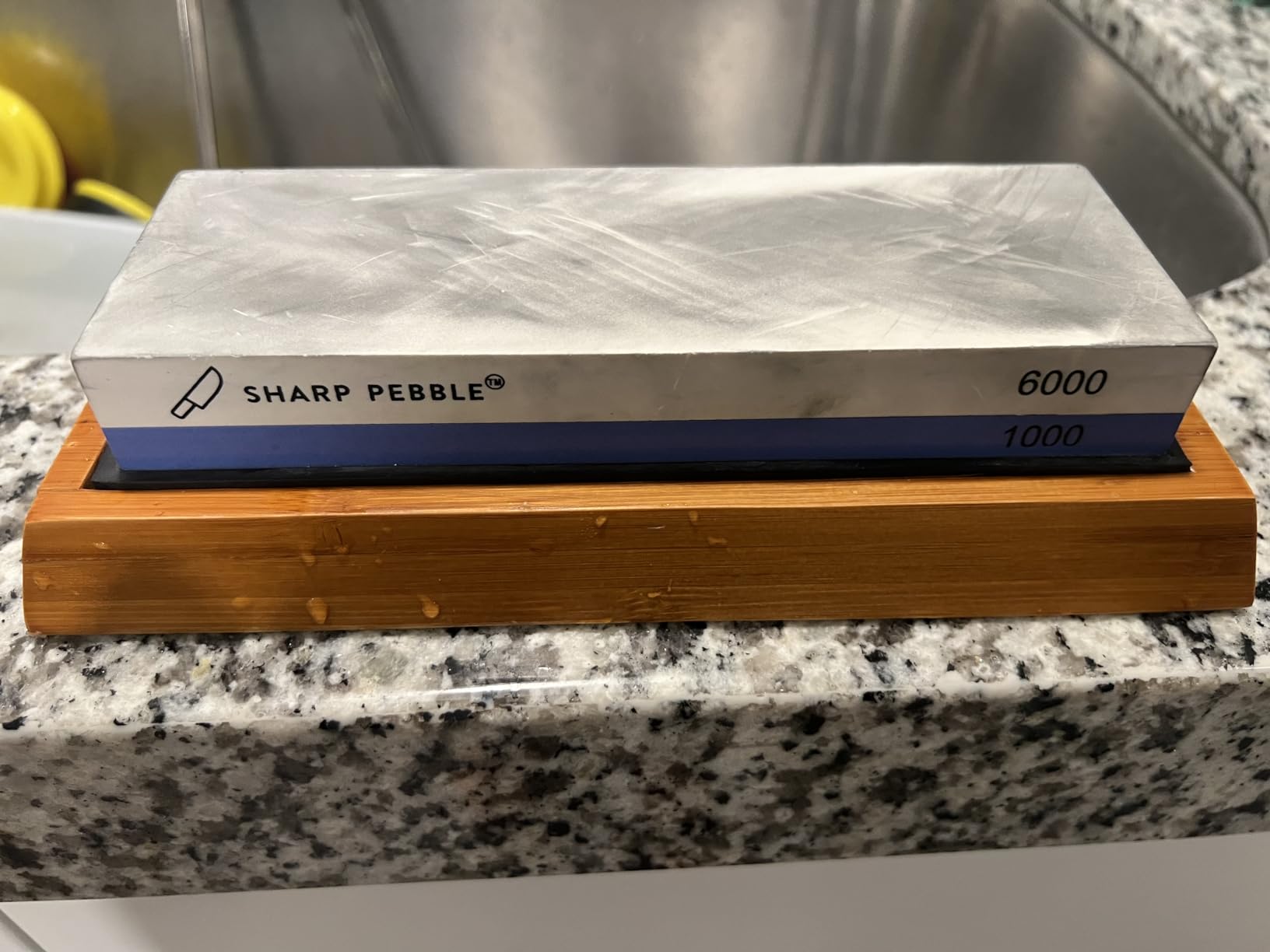
The catch is size and weight. At 2.1 pounds and 7.25 inches long, this is a home or camp kitchen tool, not a pack tool, and it needs a steady hand. A minority of owners find the freehand learning curve steeper than expected and move to a guided system instead, which is an honest trade for full angle control.
Who this sharpener suits
It suits a hunter with a few knives at home who wants a single 15-20 degree primary bevel they can reproduce on a 1095 fixed blade, a skinning knife and a drop point folder. The dual grit pairing covers the whole progression from a dull edge to a polished one without buying a stack of stones.
It also suits anyone who owns a single-bevel or custom blade. A whetstone with an angle guide lets you work deliberately, which is the only sane approach on a knife with no secondary bevel to hide a mistake.
Who should skip it
Skip it if you need to sharpen in the woods. Nothing about a 2.1 pound stone and a bamboo base belongs in a hunting pack, and carrying it means carrying a towel and water container too.
Skip it if you want a mirror edge immediately. 1000 and 6000 is a maintenance-friendly pairing, not a full progression to 8000 grit, so the finish is keen and clean rather than reflective. Add a leather strop and the finish changes character completely.
3. AccuSharp Manual Knife Sharpener – Best Value for Routine Maintenance
AccuSharp Knife Sharpener, Ergonomic Comfortable Handle, Compact & Easy to Use, Restore and Hone Straight & Serrated Knives, White
Reversible carbide blades
About ten seconds a blade
1.6 ounces
Dishwasher safe
The Good
- Fastest route back to a working edge
- Reversible carbide blades double tool life
- Handles straight and serrated edges
- Ergonomic handle fits either hand
- Dishwasher safe
The Bad
- Fixed guide angle means no thin bevel
- Removes more steel than a stone would
- Produces a working edge rather than a keen one
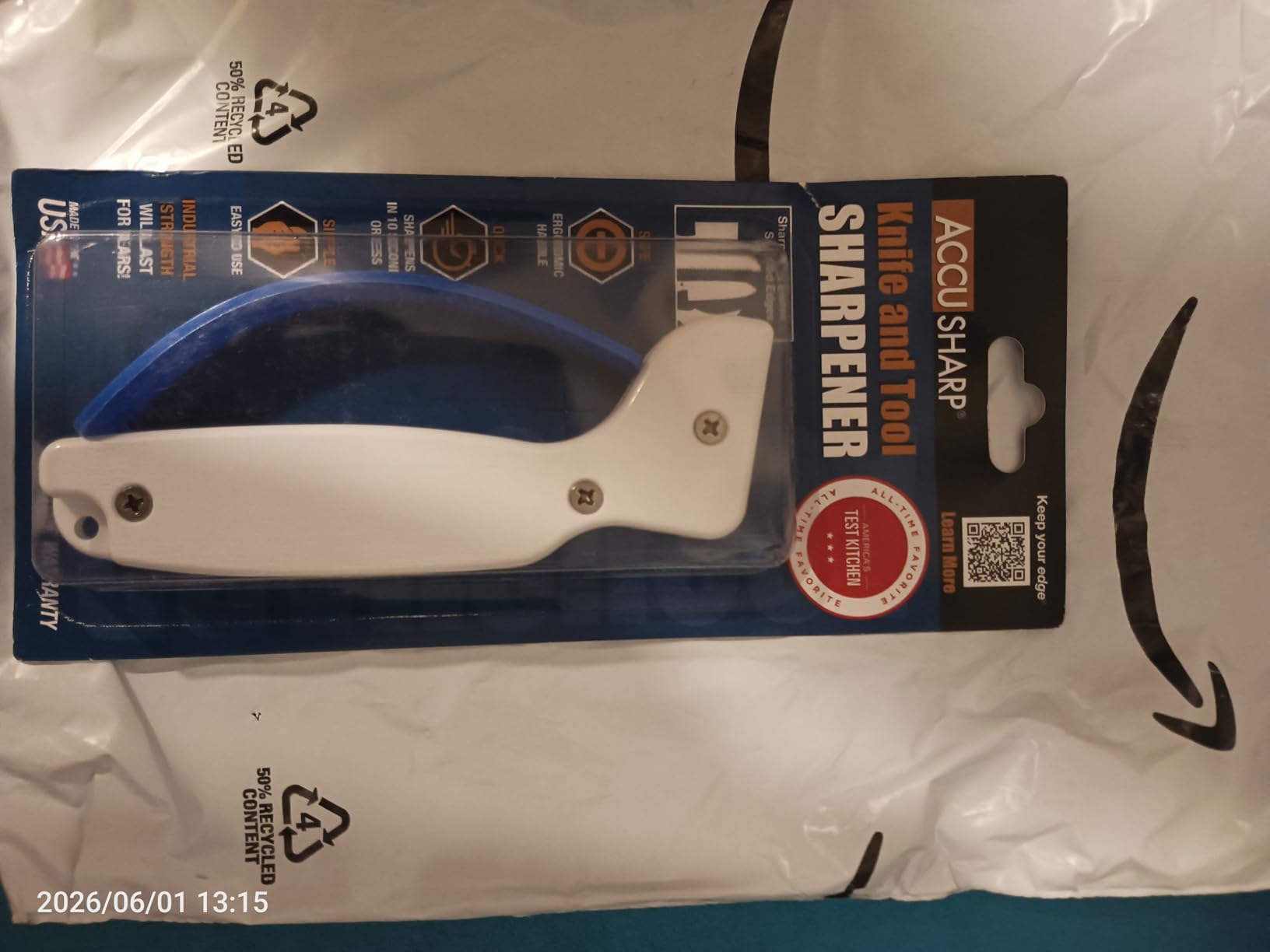
The AccuSharp is the sharpener I recommend to anyone who tells us they have never been able to really sharpen a knife. You draw the blade through the slot a few times and you have a working edge in roughly ten seconds, with nothing to set up and no angle to reason about.
Two details make it last. The carbide blades are diamond-honed, and they reverse so you get double the life out of them, with owners reporting 5 to 10 years between replacements. The handle is symmetric with a full-length finger guard, so it works for either hand and your fingers stay behind the blade on a slick, wet day.
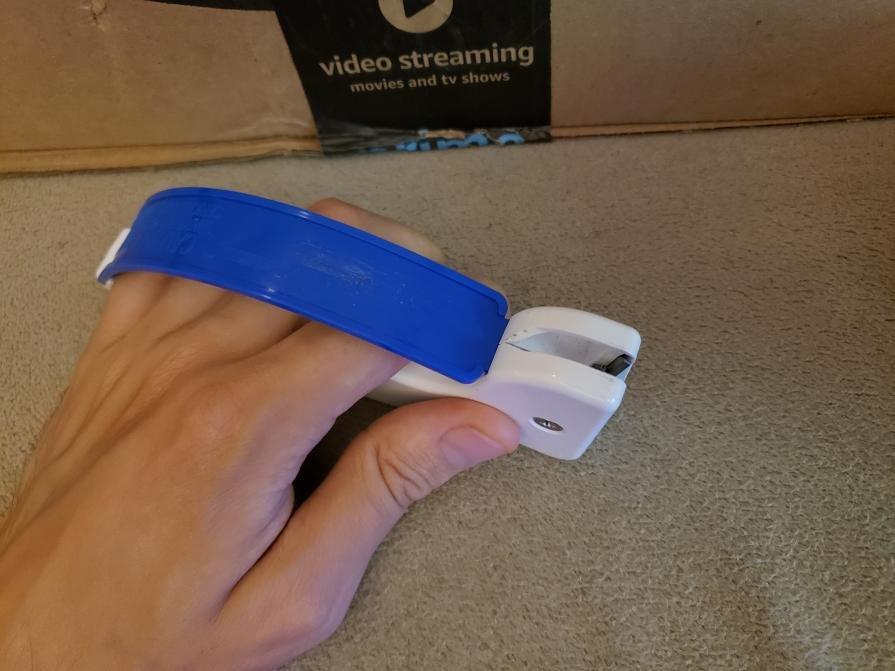
It also removes a noticeable amount of steel. That is fine for maintenance, which is what most people need, and wrong for a knife whose edge you are trying to reshape.
Who this sharpener suits
It suits first-time sharpeners, gift buyers, and anyone who wants one tool in a kitchen drawer that quietly fixes a dull knife every week. It is also the pick for a hunting knife that only needs an edge reset between trips rather than a full sharpening session.
It suits multi-knife households. A family that owns a fixed blade, a folder and a couple of kitchen knives can put one of these in a drawer and everyone can use it without instruction, which is not true of most sharpening tools.
Who should skip it
Skip it if you care about edge geometry. A fixed slot angle is not adjustable, and every pass reinforces the same bevel whether the knife needs it or not. Over years of casual use that adds up to more steel removed than a stone ever would.
Skip it as your only tool for a valuable thin fixed blade. For a custom or single-bevel hunting knife you want a guide you can set, not a slot you have to accept.
4. Smith’s Pocket Pal PP1 – Best Pocket Sharpener for Serrated Blades
Smith’s PP1 Pocket Pal Knife Sharpener Preset Carbide & Ceramic Stone Sharpeners Fold-Out Diamond Coated Rod Outdoor Hunting Knife & Hook Sharpener, Handheld, Compact, Lightweight, Multiuse
1 ounce
Two-stage carbide and ceramic
Fold-out tapered diamond rod
Preset crossed angles
The Good
- Handles serrations with the fold-out diamond rod
- One ounce fits even a watch pocket
- Coarse and fine stages restore worn edges
- Carbide and ceramic stones are replaceable
- Lanyard hole for keychain or pack
The Bad
- Diamond rod hinge is the weak point
- Ceramic stones are not reversible
- Returns a working edge rather than a fine keen edge
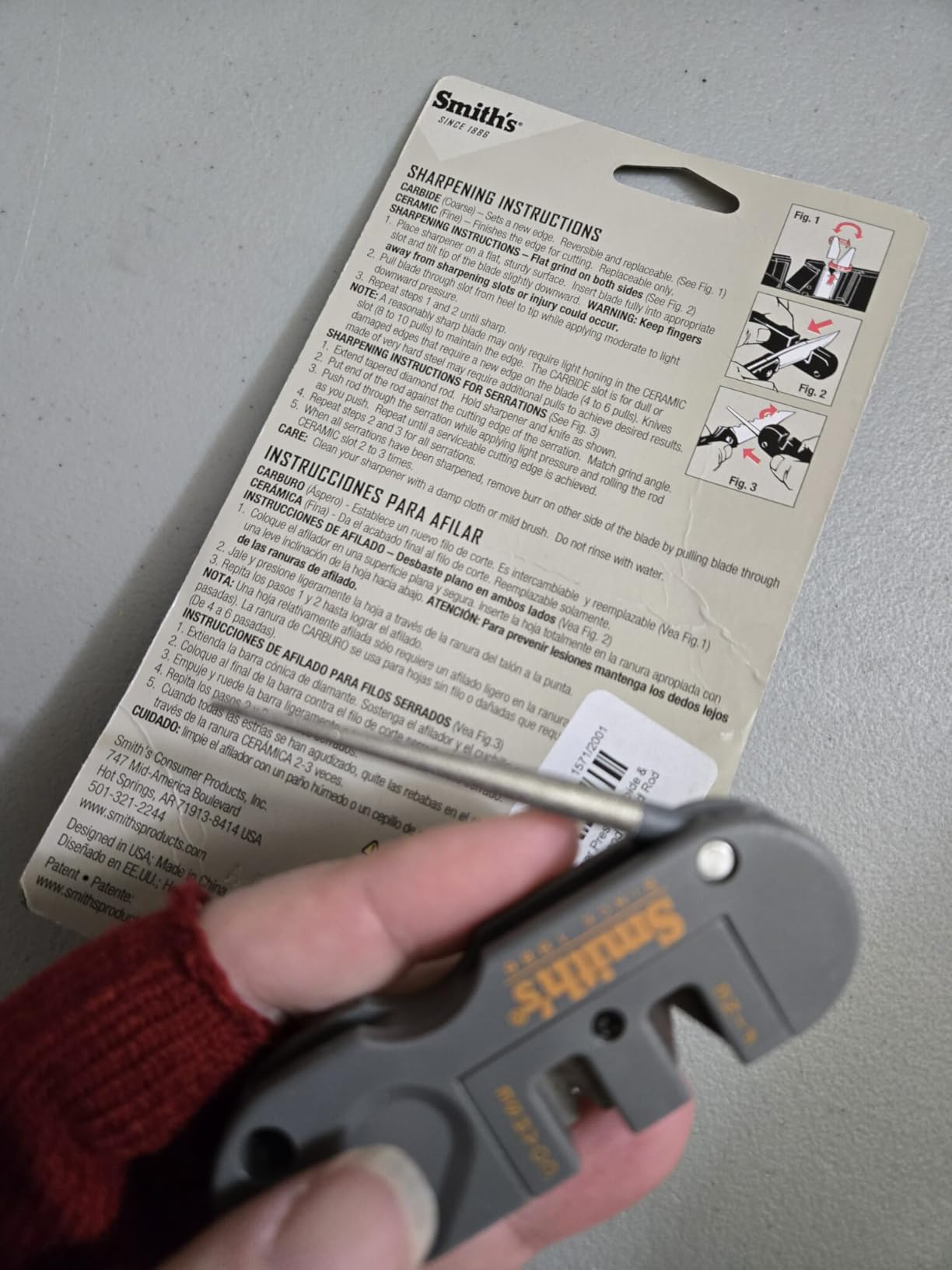
The Pocket Pal weighs one ounce and does more on a serrated hunting blade than anything else at this size. The fold-out tapered diamond-coated rod is the reason: it is the correct shape and grit for cleaning out the valleys of a sawback or a partially serrated drop point, and most pull-throughs of this size simply cannot do that.
Outside the rod, you get a two-stage pull-through with a coarse carbide slot for a dull or damaged straight edge and fine ceramic stones for a polished finish that also work on serrations. Preset crossed angles keep the results consistent, and three or four strokes through the coarse slot is usually enough to get a heavily worn blade working again.
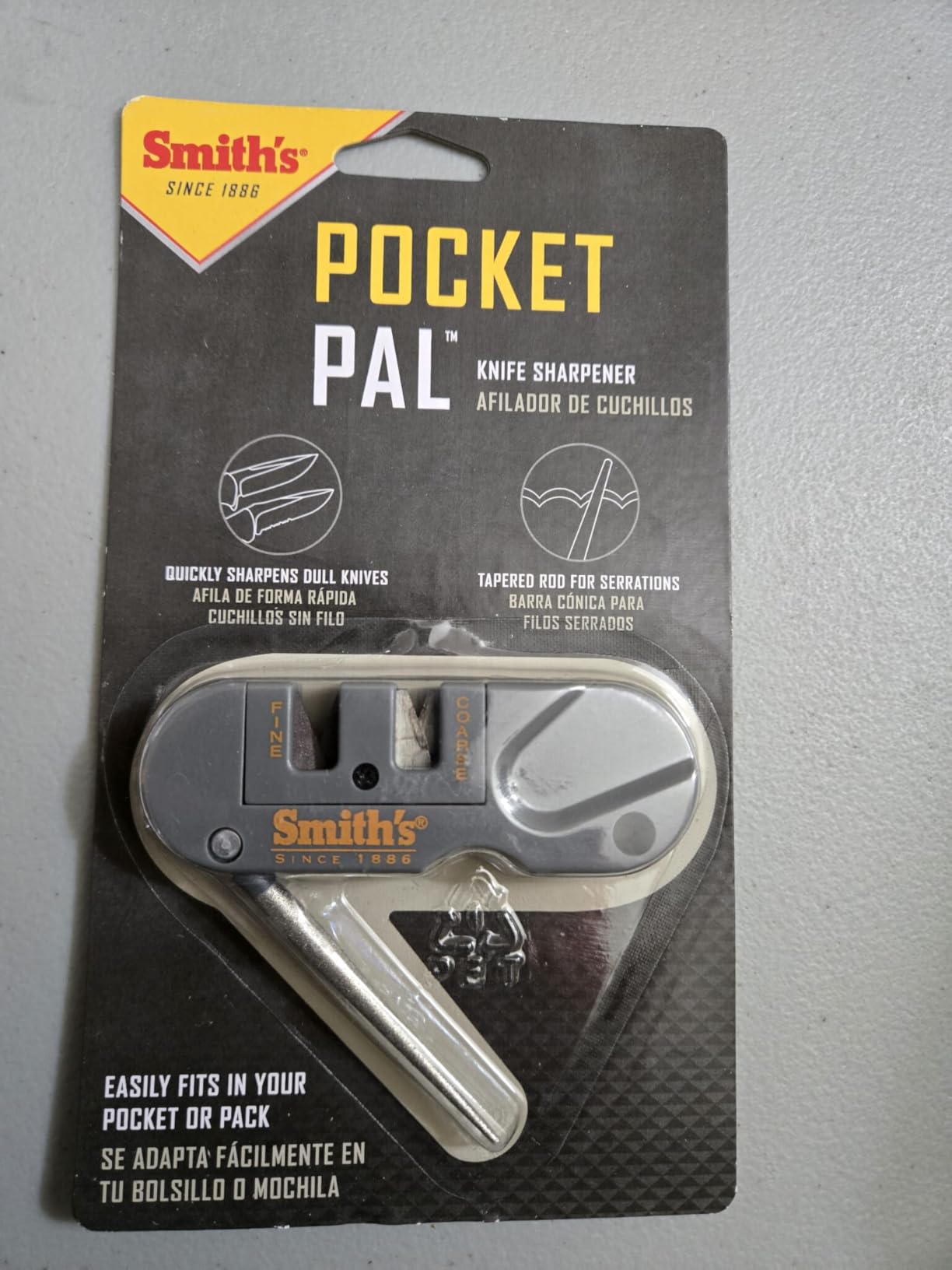
At 3.5 inches long with a lanyard hole, it is genuinely packable in a way that most field kits are not. The carbide and ceramic stones are replaceable, which matters over a long life, though only the carbide stones are reversible.
The weak point is the diamond rod hinge. It is a tight fit by design, and owners who have thrown it in a pack hard report it can work loose or snap. Treat it as a tool you stow carefully in a pocket rather than something you clip to a keyring and abuse, and it will hold up for years.
Who this sharpener suits
It suits a hunter whose main blade is serrated or sawback, or who carries a small sawback for processing. That rod is the feature no other pick at this weight offers, and it is why the tool shows up in so many fishing and game-processing kits.
It also suits anyone who wants a sharpener they will actually carry. One ounce changes behaviour, and a tool you have in your pocket gets used instead of a tool sitting in a drawer at home.
Who should skip it
Skip it if your knife is already sharp and you just want to keep it that way. The result is a working edge, not a fine keen edge, and there is no strop on this tool to refine it.
Skip it if you drop tools often. The fold-out rod is the most fragile part, and the whole tool is small enough to lose in tall grass.
5. Lansky Blademedic 4-in-1 – Best Metal-Body Pocket Sharpener
Lanksy Blademedic 4-in-1 Knife Sharpener – PS-MED01
4-in-1 sharpening
100 g metal body
Self-closing diamond rod
3 to 4 strokes to restore
The Good
- Four surfaces cover straight edges and serrations
- Metal body feels far sturdier than plastic
- Rod closes magnetically so it will not snag
- No oil stone or assembly needed
- Restores a dull edge in a few strokes
The Bad
- No angle guide so results depend on technique
- 100 g is heavy for a pocket carry
- Preset angles limit bevel customization
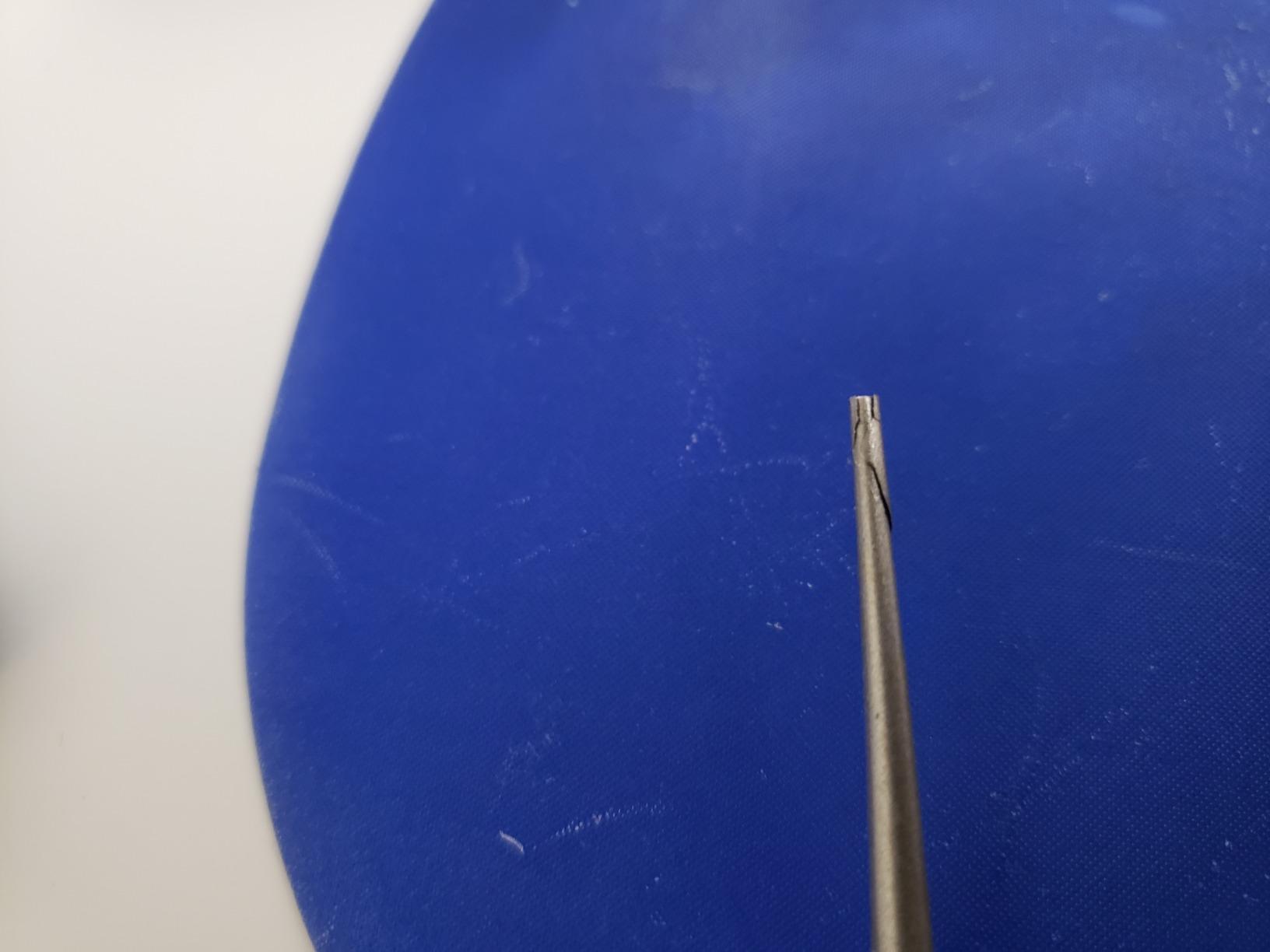
The Blademedic is the pocket sharpener for people who break things. The body is metal with well-anchored components, so it survives being dropped, sat on, and left in a hot vehicle, and that robustness is the whole reason it looks and feels different from plastic pull-throughs.
It covers four jobs: tungsten carbide draw-through, ceramic draw-through, a ceramic serrations tool, and a tapered diamond grid for serrations. Reviewers note that three or four strokes restore a dull blade and polish to a finished edge, with no stone, oil or assembly required at any point.
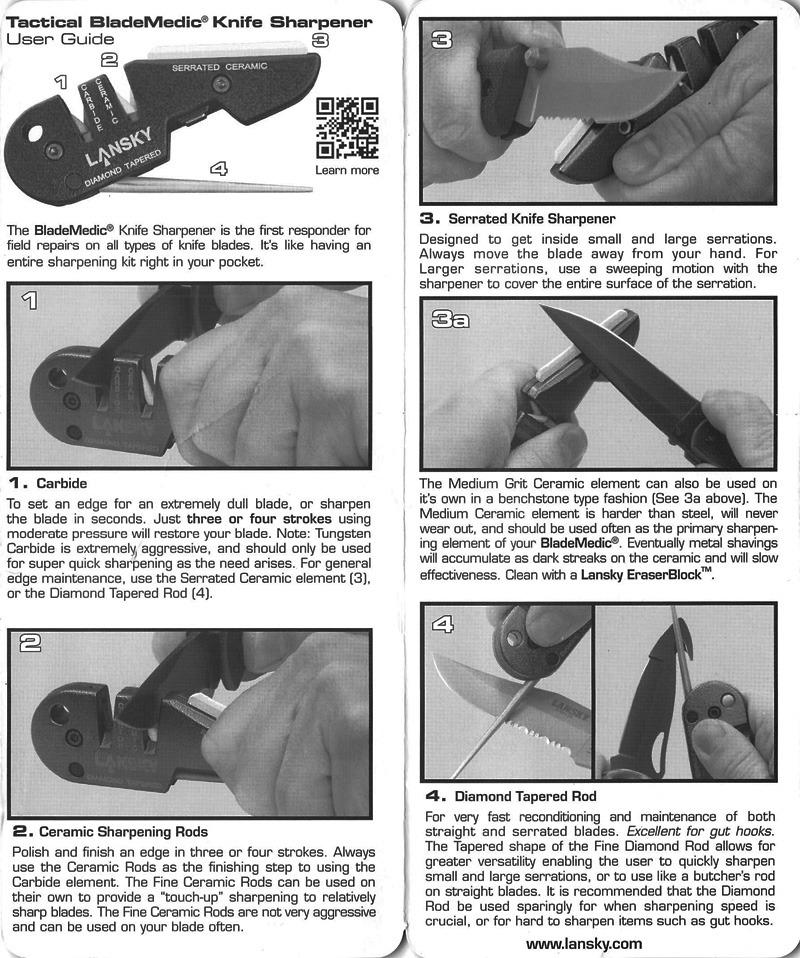
The detail I appreciate is the magnetic rod. The diamond rod holds itself closed, so it cannot swing open in a pocket, catch on a zipper and snap. Small thing, but it is the failure mode that kills most fold-out sharpeners.
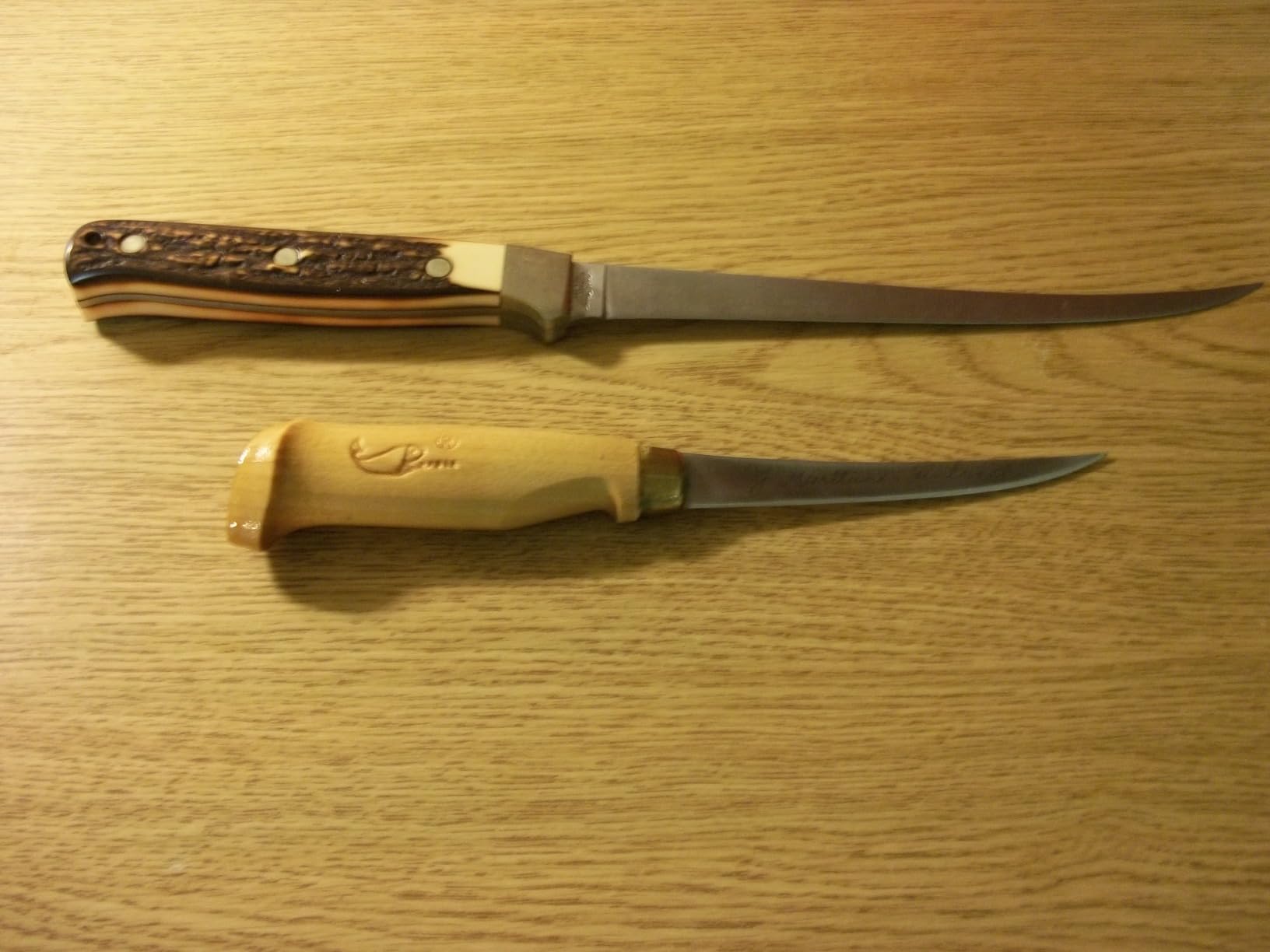
At 100 g it is noticeably heavier than a true pocket sharpener, and there is no angle guide at all, so the bevel is whatever your hand produces. Owners with decades of stone experience describe this combination honestly: a fast, dependable touch-up that is not trying to be a mirror-edge system.
Who this sharpener suits
It suits a bushcraft or fixed-blade owner who wants one durable object to cover straight edges and serrations. It is equally at home as an everyday carry sharpener for folding knives that get daily use and need a quick reset, not a session.
It suits cold and wet hunting conditions, where a metal body does not turn brittle and a magnetic rod does not need a precise click to stay shut. It is the pick for anyone who has broken a plastic sharpener before.
Who should skip it
Skip it if you are picky about bevel angle. There is no guide and no adjustment, so if you want a consistent 15-20 degree primary bevel across several knives, this will not get you there reliably.
Skip it if weight matters to you. 100 g is roughly four times what the one-ounce pocket tools weigh, and that difference is felt on a long day in the field.
6. Smith’s CCKS 2-Step Sharpener – Budget Pick for a Spare Tool
Smith’s CCKS 2-Step Knife Sharpener – Yellow – 2-Step Preset Coarse & Fine Slots – Outdoor Handheld Knife Sharpener – Fishing, Hunting, Fillet, Pocket Knives – Compact Plastic Portable Keychain Tool
Two-step carbide and ceramic
Under 2 ounces
Floats in water
Non-slip feet
The Good
- Cheapest dependable pack backup
- Two preset stages cover touch-up and honing
- Floats if dropped near water
- Lanyard hole for keychain or pack
- Cleans with a damp cloth
The Bad
- Coarse slot cannot set a fine bevel
- Short slot guide on very short blades
- Restores working edges only
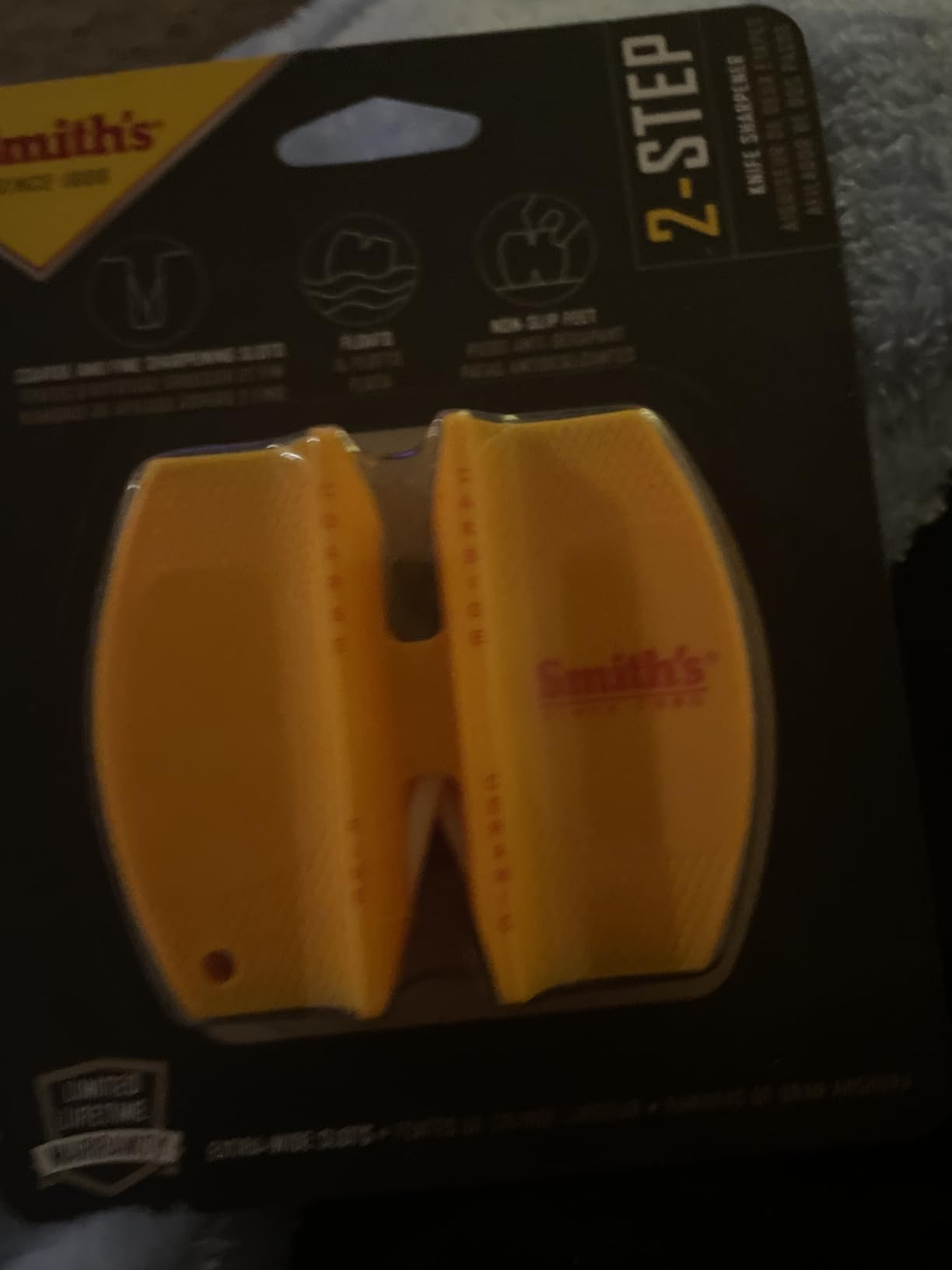
The CCKS is the sharpener you buy in a three-pack and hide in three places. It is under two ounces, it costs almost nothing, and it does the one job that matters in the field: turning a dull blade back into a working one in a handful of strokes.
The mechanism is the same proven one found on the bigger tools. Crossed tungsten carbide blades handle a dull edge, crossed ceramic rods do the final honing, and both are preset so the results stay consistent. Three to four passes through the coarse slot is the whole routine.
Two features make it more useful in hunting country than the price suggests. It floats, which matters when you drop it at a stream crossing, and it has non-slip rubber feet so it will not skate on a wet tailgate. There is a lanyard hole for a keychain, a backpack or a tackle box.
What it will not do is set a fine bevel or rescue a damaged edge. The coarse slot restores working edges, full stop, and the plastic slot guide is short enough that a very short blade such as a small folder may not seat properly.
Who this sharpener suits
It suits beginners who want to see what sharpening feels like before spending on a system, and it suits anyone who wants a backup that is acceptable to lose. A truck, a garage and a daypack are the three places these belong.
It suits people who sharpen a lot of different knives casually. Straight edges and serrated edges both go through the slots, and nothing needs cleaning beyond a damp cloth.
Who should skip it
Skip it as the only sharpener you own if you own good steel. There is no way to change the angle and no way to remove a burr properly, so a fine edge is not reachable.
Skip it for very short blades. The slot guide is short, and a small folder may not seat correctly, which leads to a bad pass and a frustrated user.
7. Work Sharp Guided Field Sharpener – Best Field Angle Control
Work Sharp Guided Field Sharpener, Compact Travel Knife Sharpener Tool
Five sharpening surfaces
20-25 degree guide
Diamond plates and ceramic rod
Leather strop included
The Good
- Highest rated pick here at 4.8 stars
- Angle guide gives repeatable 20-25 degree bevels
- Diamond plates and ceramic rod in one unit
- Leather strop included for finishing
- No tools or assembly needed
The Bad
- 135 g and 9.5 inches is bulky for a pocket
- Field usable but not a mirror edge setup
- Grooved rod is shaped for hooks not blades
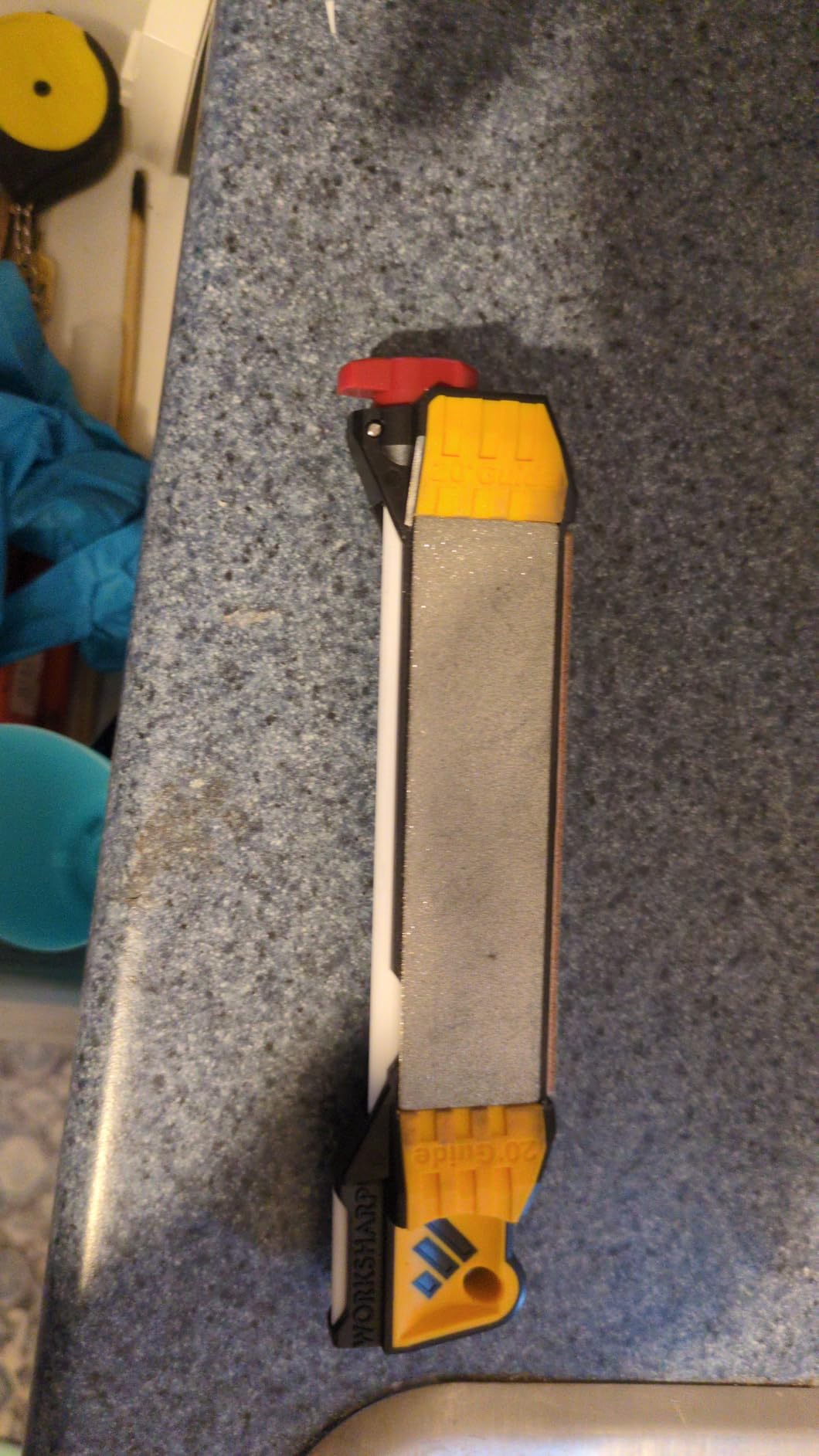
This is the sharpener I recommend when the bevel angle is the thing the hunter actually cares about. The 20-25 degree angle guide holds the blade in position across diamond plates, a rotating ceramic rod and a leather strop, so you get the same repeatable angle every time rather than a different result every time.
It is also the most complete single unit here. Five sharpening surfaces, removable diamond plates that expose a broad head wrench for faster work, a ceramic rod that rotates to expose coarse and fine surfaces, a grooved face for fish hooks, and a leather strop for the finishing pass. Nothing needs assembly, tools or set-up, and it is backed by a 3-year warranty.
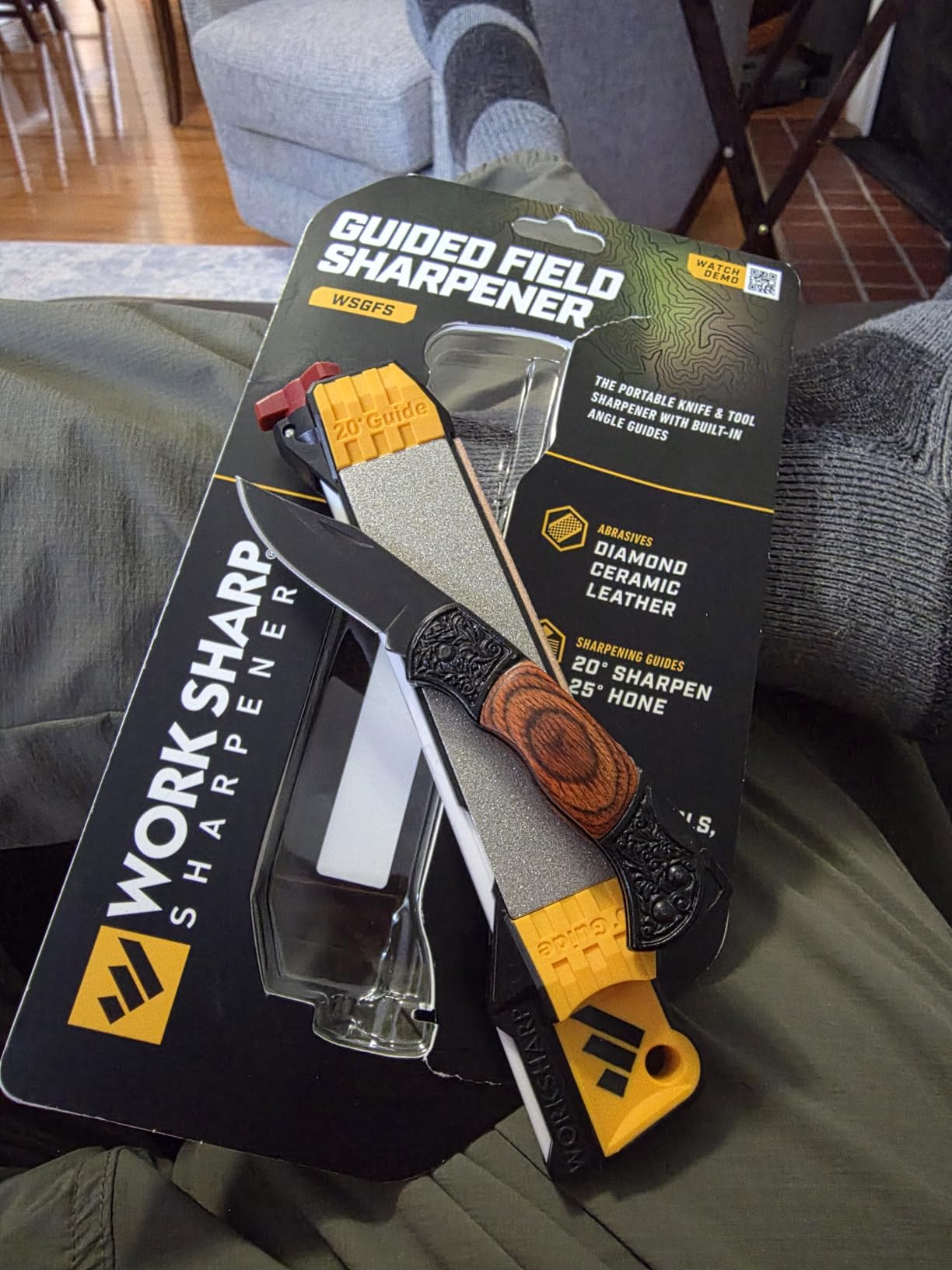
It carries the highest average rating of anything in this roundup, and the shape of the reviews matches why. Owners describe it as the most complete self-contained field sharpener, and the strop is the part people notice first, because it is the step that turns a merely sharp edge into a slicing one.
The limitation is size. At 135 g and 9.5 inches long, this is a camp or vehicle-cab tool, not a pocket tool, and the 20-25 degree guide is a coarser window than the 15-20 degrees a thin-section fixed blade ideally wants.
Who this sharpener suits
It suits a hunter who camps away from the truck and wants angle control without a bench. You can set up on a tailgate, work a blade to a repeatable 20-25 degrees, strop it, and put the whole thing back in the pack.
It suits people with several blades on different steels. The diamond plates cut fast on a hard 154CM or A2 edge that a ceramic-only tool would stall on, and the strop lets you finish without switching tools.
Who should skip it
Skip it if you need a 15 or 17 degree edge, which is common on thin-section 1095 fixed blades. The guide does not go that thin, and forcing a thin edge to sit on a 20 degree guide is a fight you will lose.
Skip it if you want a mirror edge. Five field surfaces get you a good working edge with a stropped finish, which is the right target for skinning, not a reflective benchstone result.
8. Smith’s DCS4 Diamond Combination Stone – Best for Hooks and Field Tools
Smith’s DCS4 4” Diamond Combination Sharpener – Double Sided Stone – Outdoor Field Knife Sharpener – Fish Hook & Pointed Tools Micro Sharpener – Lightweight, Compact, Handheld
Two-sided coarse and fine diamond
Color-coded labeled sides
Stone stores in handle
22.68 g
The Good
- Two diamond stages in a small handheld stone
- Interrupted surface holds filings and cuts faster
- Grooves and pads handle hooks and needles
- Handle doubles as a protective case
- Covers carving tools and small hardware
The Bad
- Dry the diamond before storing it
- Heavier and bulkier than a pull-through
- Both sides feel coarse until the plating breaks in
The DCS4 is the jack-of-all-trades field stone. It is a double-sided diamond stone with a coarse face at roughly 325 grit and a fine face at roughly 750 grit, colour coded and labelled so you are not guessing in the dark, and it weighs 22.68 g.
Unlike a pull-through, it removes metal at an angle you control, which makes it the better choice when a hunting knife has a real dulling problem rather than a soft edge. The multiple layers of micron-sized monocrystalline diamond have an interrupted surface that collects metal filings, which keeps the stone cutting instead of glazing.
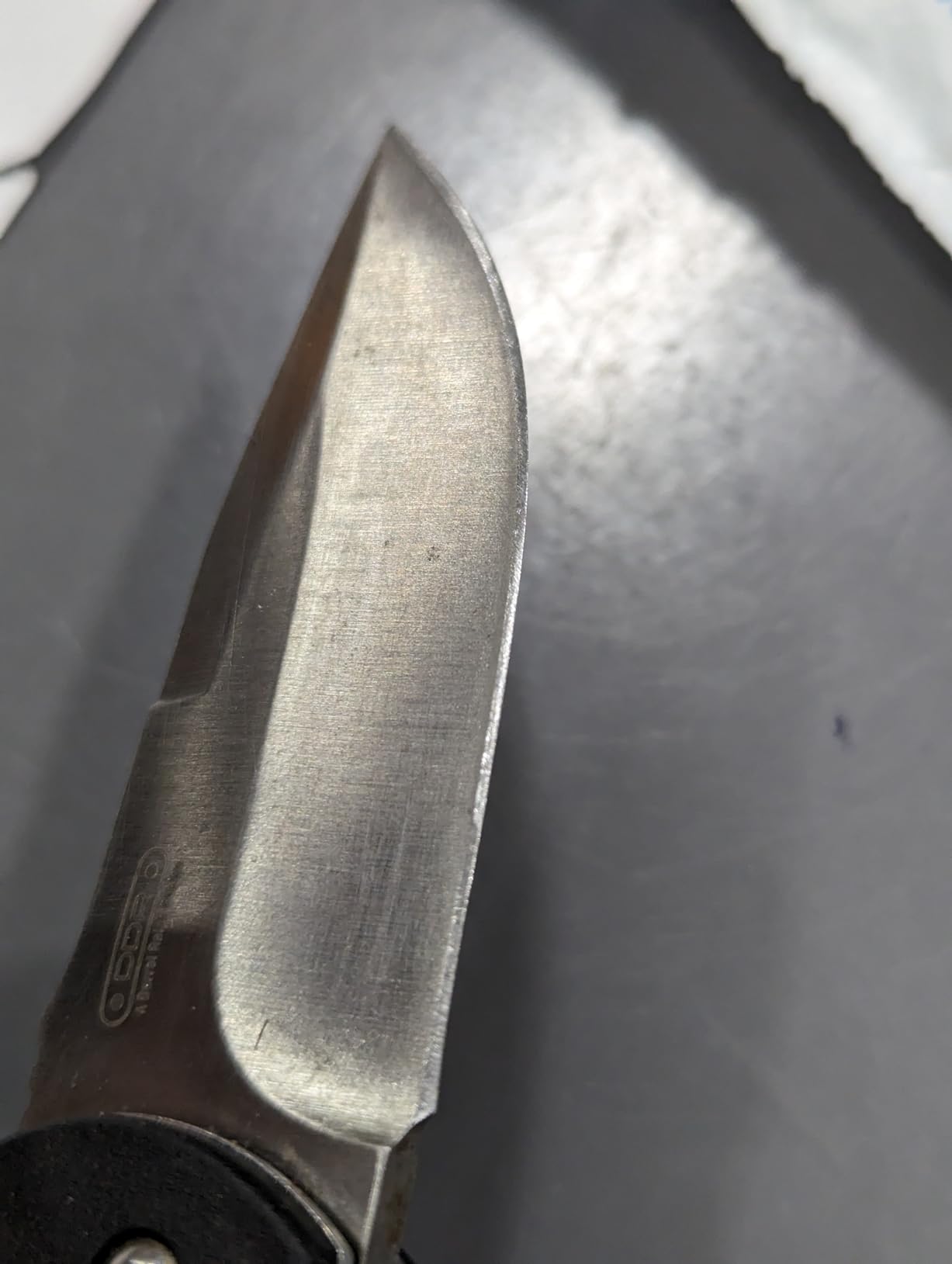
Each side also carries a micro-tool sharpening pad and a groove, and those cover more than knives. Fishing hooks, sewing needles, awls, a woodcarving gouge, small chisels and a hand axe all fall into that category.
The handle is a soft-grip rubber grip with a thumb guard and drainage ports, and it stores the stone inside its own opening, which protects the diamond face in a pack. Two things to watch: dry the surface before you stow it, and expect both sides to feel coarser than the grit numbers suggest until the plating breaks in.
Who this sharpener suits
It suits a hunter who needs one handheld stone for more than knives. Owners use it on carving tools, fish hooks and sewing needles as happily as on a drop point, and the colour-coded sides make it fast to learn.
It suits someone who wants to control the angle without buying a guided system. Freehand on a stone is more demanding than a slot, but it is also the only way to reach a thin 15-20 degree bevel on a thin-section fixed blade.
Who should skip it
Skip it if you need something to throw in a pants pocket. It is bigger and heavier than a pull-through, and it is a stone rather than a tool, so it belongs in a pack pocket or a shirt pocket.
Skip it as a one-stop sharpening solution. Two diamond stages will not take you to a keen polished finish, and it has no strop, so you are finishing the job somewhere else.
9. Work Sharp Benchstone 3-Sided – Best for At-Home Guided Work
Work Sharp Benchstone Knife Sharpener, 3 sided for faster manual pocket or hunting knife sharpening
400 and 800 grit diamond plus ceramic
20 and 25 degree guides
Pivot-response base
3-year warranty
The Good
- Three abrasives move from repair to polish
- Selectable 20 and 25 degree guides
- Pivot base follows curved blade spines
- Compact footprint fits a small camp table
- Replacement abrasives available
The Bad
- Replacement abrasives cost extra over time
- 15 and 17 degree guides are not included
- Fine ceramic is slow on badly damaged edges
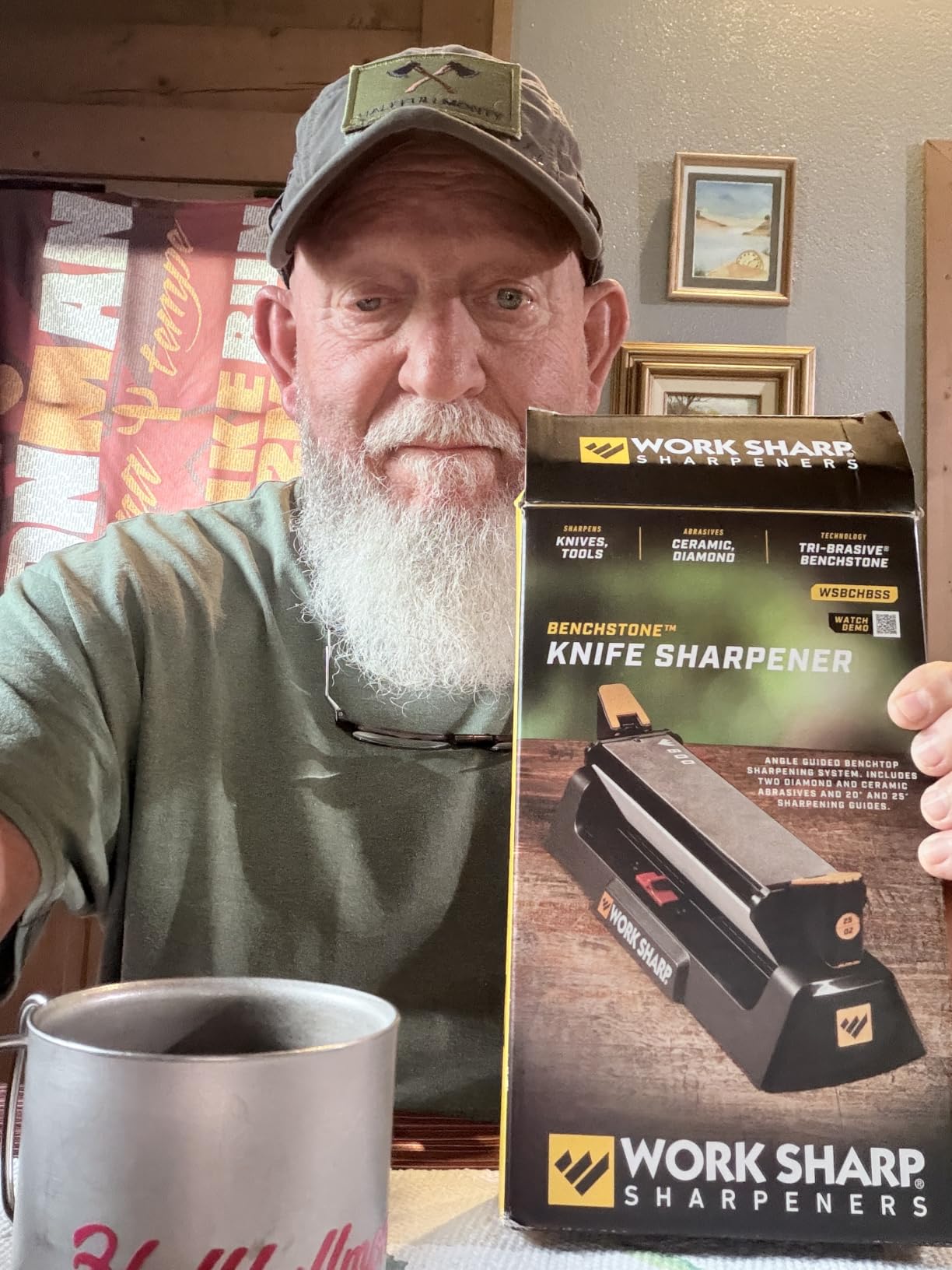
The Benchstone is the home-station answer for someone who wants guided sharpening without a full stone system. It has three abrasive surfaces, 400 grit medium diamond, 800 grit fine diamond and a fine ceramic stone, and the progression from repair through bevel reset to polish happens on one small block.
The angle guides are the reason to choose it. They set to 20 or 25 degrees and come out for freehand work, so you can hold a coarser edge on a skinning knife or a finer one on a thin drop point without buying another tool. Additional 15 and 17 degree guides are sold separately, which is worth knowing before you commit to a very thin edge.
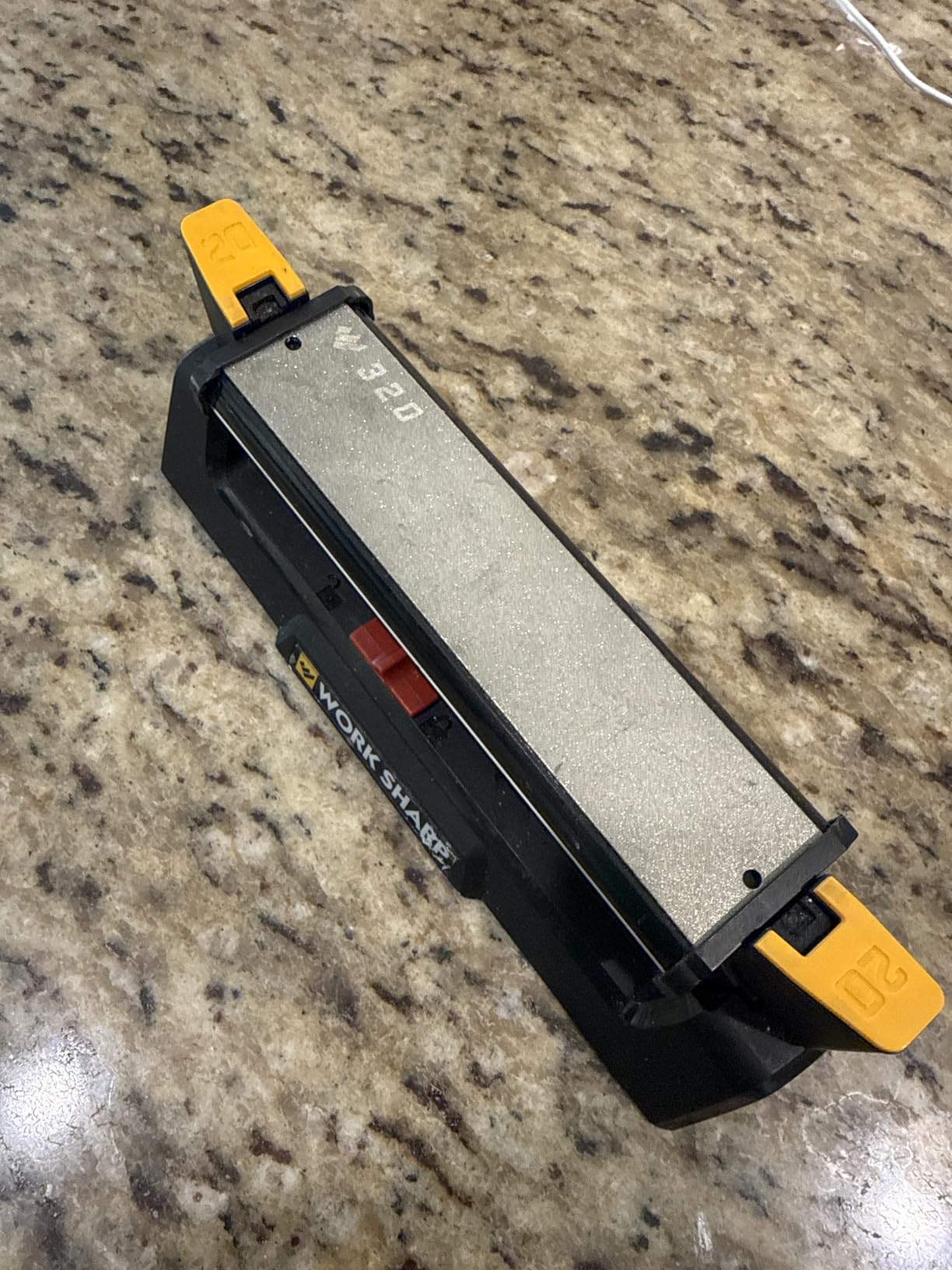
The pivot-response base follows the curve of a blade so you get contact along the whole edge instead of rocking on a flat stone, and it locks out to a rigid flat surface for straight work. A 3-year warranty and available replacement abrasives mean it is built to stay on a bench for years.
Two honest limits. Replacement abrasives are an ongoing cost, and the fine ceramic face is not fast on a heavily damaged edge, so a badly chipped knife still needs a coarser diamond stage to get started.
Who this sharpener suits
It suits a hunter with a small camp table or a vehicle cab who wants to sharpen properly rather than touch up. Three surfaces and two angle options cover the majority of real sharpening work on fixed blades and folders.
It suits owners of custom or high-end blades. A selectable guide and freehand capability let you work on something you care about without worrying that a fixed slot is grinding an angle you did not choose.
Who should skip it
Skip it if you need a 15 or 17 degree edge out of the box. Those guides are a separate purchase, and this is a compact block rather than a full wet stone system, so it is not the right tool for very thin, very keen work.
Skip it if you want a one-time tool with no running costs. The replacement abrasives add up over years of regular use.
10. Lansky D-Sharp Diamond System – Best for Multi-Angle Control
Lansky D-SHARP Diamond Pull Through Quad Angle Knife Sharpener, Green (DSHARP)
17, 20, 25 and 30 degree angles
600 grit diamond slots
800 grit ceramic benchstones
4.8 ounces
The Good
- Four selectable bevel angles in one unit
- Round diamond rods cut faster than flat carbide
- Solid metal casing holds together over years
- Handles knives fillet tools and a hand axe
- Portable for a pack or tool bag
The Bad
- No true mirror or razor edge
- 7 inches long is too bulky for a pocket
- Wrong angle setting wastes time
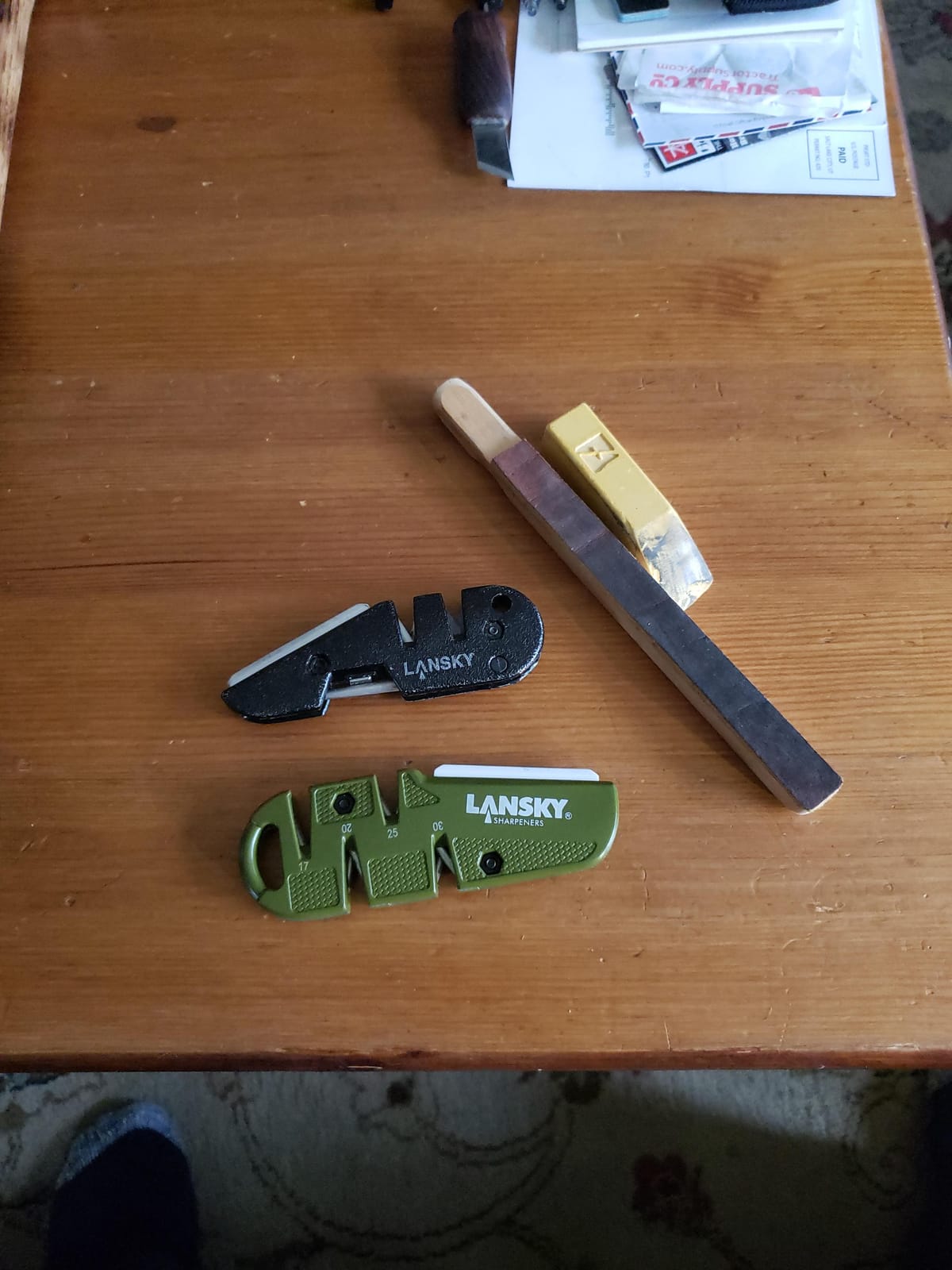
The D-Sharp is the pick for anyone who owns more than one type of hunting blade and needs to change the bevel angle between them. Four selectable settings, 17, 20, 25 and 30 degrees, cover thin slicing edges through to a durable work edge, and the ceramic benchstone handles serrations as well as fine polishing.
It also does something the other guided tools here do not. The sharpening surfaces are round diamond rods rather than flat carbide scrapers, and owners with decades of stone experience point to that as the reason it cuts faster and more smoothly. Blade forums recommend exactly this kind of guided, angle-selectable system for someone sharpening 425HC or 1095 hunting blades.
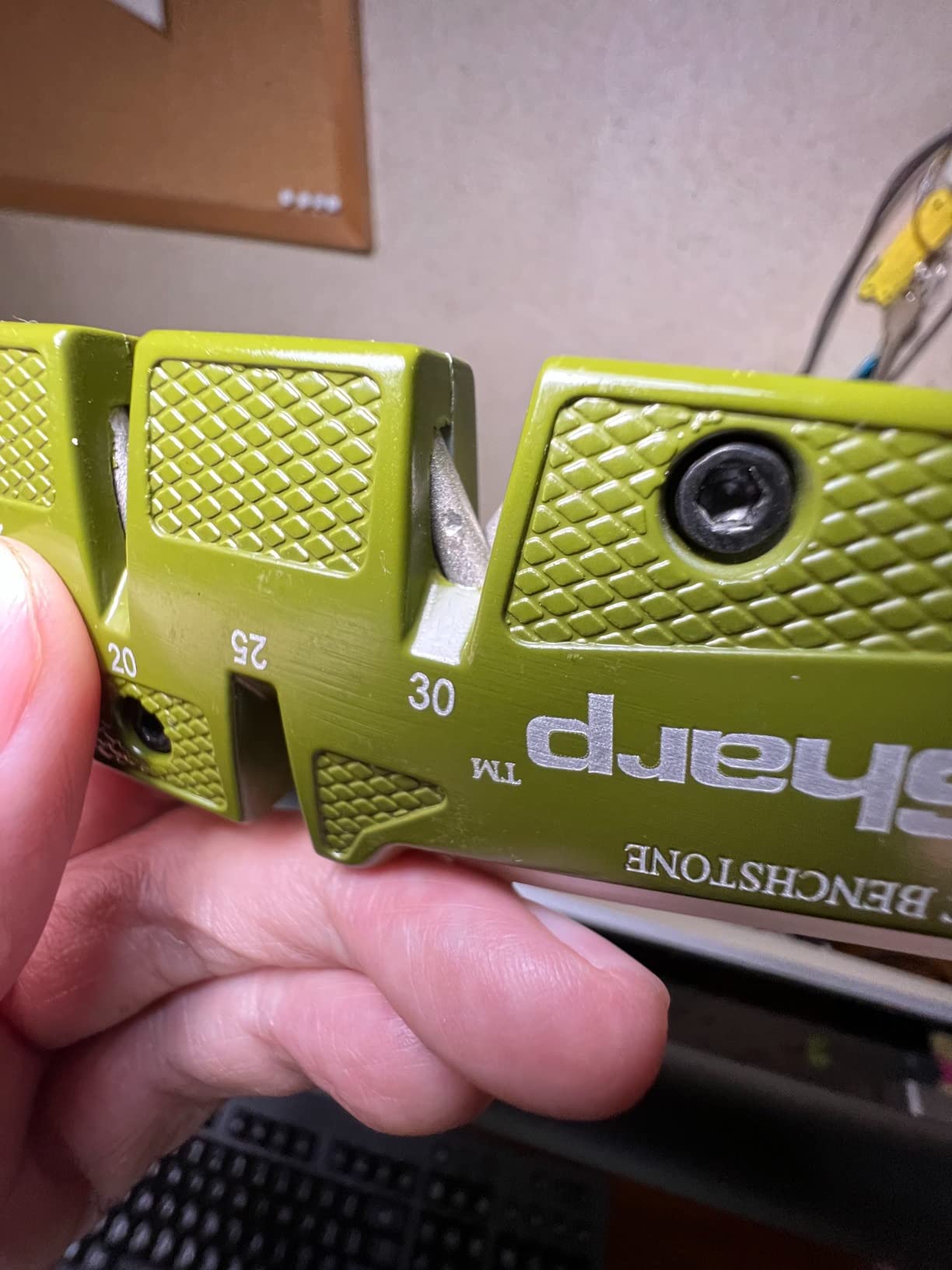
Build quality is the other argument. The solid metal casing with a rubberized grip and thumb rest stays together over years of use, and it is covered by a one-year manufacturer warranty. It is also genuinely multi-purpose, from filet knives and pocket knives through to a hand axe.
The catch is that it is a fast touch-up, not a mirror-edge solution, and at 4.8 ounces and 7.17 inches long it belongs in a pack or a tool bag rather than a pocket. Pick the angle deliberately too, because the wrong setting wastes time and can leave you worse off than where you started.
Who this sharpener suits
It suits someone with a small knife collection. A 17 degree edge on a thin drop point, a 25 degree edge on a skinner and a 30 degree edge on a chopper are all reachable on one unit, and a hand axe is within scope.
It suits a hunter who wants guided angle control without setting up a full Lansky stone system at camp. You can put a correct bevel on a blade in the woods with this, which is the main thing it is good at.
Who should skip it
Skip it if you want a mirror or razor edge. The 800 grit ceramic polish is good, but it will not reflect, and a whetstone set is the route to that finish.
Skip it if you carry minimal gear. At 4.8 ounces and over seven inches, it is a tool bag item, and there are lighter options for a pocket.
Buying Guide: Matching a Sharpener to Your Hunting Knife
Whetstone, guided manual system, pull-through or powered. These are the only four categories on this list, and they are not interchangeable. The most common mistake we see is buying a tool for the wrong category of blade, so it is worth sorting out which one you need before you spend.
Pull-Through vs Guided System vs Whetstone vs Powered
A pull-through sharpener has slots or rods that hold a preset angle. It is the fastest and cheapest option, and it is the right choice for maintenance between hunts. Its limit is that the angle is fixed, so it cannot set a thin primary bevel and it will not repair a badly damaged edge.
A guided system holds the blade at a chosen angle with a guide or clamp, and usually covers several angles. This is where the 15-20 degree target for fixed blades becomes controllable, and it is the best category for a beginner who wants consistency. Whetstones give you full control and the best finish, but they carry the highest learning curve.
Powered sharpeners are a different tool again. For thin-section fixed blades they generate heat and remove metal fast, which is how a fine bevel turns into a scalloped one.
Our roundup of electric knife sharpeners covers that category well for thick kitchen steel, but it is the wrong pick for a hunting knife. A whetstone route suits anyone who wants to learn properly, and we have covered Japanese steel in more detail in our guide to sharpeners for Japanese knives.
Grit Progression: Where to Start and When to Stop
You do not need to start at 100 grit on a hunting knife. Start coarse, at 100 to 400, only when there is a chip, a ding or an edge that has rolled over from bone contact. A knife that is simply a little lazy should start at 600 or 1000, and you will keep more of the blade’s geometry by doing so.
From there, work up. A 1000 to 2000 stage resets the bevel so the two sides meet cleanly, and 3000 to 8000 or a fine ceramic stage refines the result. Finish on a leather strop to realign the burr, and that stropping step is the one you repeat every few uses because it removes almost no metal.
Matching the Sharpener to Your Blade Steel
1095 and other high carbon steels. Easy to sharpen, forgiving of mistakes and capable of a very keen edge, but they lose an edge to dirt and rust quickly. Diamond plates and ceramic both work well, and a leather strop makes a bigger difference here than on any other steel.
425HC. The common Buck hunting steel, and it sits in the same easy-to-sharpen group as 1095 with slightly more toughness. Knife forums consistently recommend a guided, angle-selectable system for it, which is exactly what the D-Sharp and the Work Sharp guides provide.
154CM, A2 and other hardened steels. These hold an edge far longer and demand a coarser diamond stage to do real damage repair. Avoid pull-throughs and electric sharpeners here. Start with 400 grit diamond and work up, and expect each sharpening session to take longer.
Serrated and Sawback Hunting Blades
Serrated and sawback blades are the most commonly mishandled part of this topic, and the fix is simple: you need a tapered diamond rod. Flat diamond plates and stones do not reach into the valleys, and a slotted pull-through will round the tips of the teeth off instead of cleaning them.
Every serrated-capable pick here ships one. The SHARPAL 101N, the Smith’s Pocket Pal, the Lansky Blademedic, the Work Sharp Guided Field Sharpener and the Lansky D-Sharp all have a tapered diamond rod for serrations, gut hooks and fish hooks. For a sawback, work each tooth in turn from the base to the tip, light pressure, and check with a glove rather than your thumb.
When Not to Use an Electric Sharpener
Do not use a powered sharpener on a thin-section fixed blade. The fast rotating abrasive puts heat into the edge, and heat softens and thins the steel just where the geometry is already delicate. The result is a scalloped, uneven edge that is harder to fix than the dull one you started with.
Powered sharpeners are fine on thick, hard-edged steel such as axes, cleavers and thick-skinned knives. They are the wrong tool for a 1095 thin-section drop point, a single-bevel blade, or anything you have spent real money on.
Gifting a Sharpener to Someone Who Never Sharpens
The single most common question we see from people buying a sharpening gift is what to give someone who has never done it. Answer it this way: avoid a whetstone with no instructions, and avoid a premium apex system with thirty steps. Both intimidate, and the recipient ends up not using it.
Give a guided system with visible angle settings, or a simple pull-through if you want something foolproof. The most common piece of positive feedback on this page follows exactly that pattern: people who had never sharpened a knife before report finally getting a keen edge the first time they used a guided tool. Add a short card telling them to start on the coarse stage and finish on the fine one.
Frequently Asked Questions
What is the best way to sharpen a hunting knife?
The best way to sharpen a hunting knife is a five-step grit progression at a controlled angle. Start at 100 to 400 grit only if the edge is chipped or rolled, otherwise begin at 600 to 1000. Hold a 15-20 degree primary bevel per side, move up to 1000-3000 grit to reset the bevel, then finish on a leather strop to realign the burr without removing more metal.
What is the best sharpening angle for hunting knives?
A fixed-blade hunting knife is normally sharpened to a primary bevel of about 15-20 degrees per side. Thinner angles cut more keenly but roll over quickly on thin-section steel after contact with bone or hide. Thicker angles around 25 degrees are more durable. Consistency matters more than the exact number, and a guided system helps you hold the same angle every time.
Do pull-through knife sharpeners really work?
Yes, for maintenance they work well and they are what most hunters should use between trips. A pull-through sharpener restores a dull or slightly rolled working edge in a few strokes, and preset crossed angles keep results consistent. It cannot set a thin 15 degree bevel, cannot repair a damaged edge, and removes more steel than a stone would over years of regular use.
What is the best sharpener for a 1095 carbon steel hunting knife?
1095 is easy to sharpen and responds well to both diamond plates and ceramic. For a carry-everyday answer, the SHARPAL 101N covers straight edges and serrated blades at 2.4 ounces. For control, the Sharp Pebble 1000 and 6000 whetstone with its angle guide holds a consistent 15-20 degree bevel and lets you work the steel deliberately at home.
What is the best knife sharpener for serrated hunting knives?
A tapered diamond rod is the only tool that properly cleans serrations and sawback teeth. Flat diamond plates and whetstones do not reach into the valleys, and slotted pull-throughs round the tooth tips off. In this roundup the SHARPAL 101N, the Smith’s Pocket Pal PP1, the Lansky Blademedic, the Work Sharp Guided Field Sharpener and the Lansky D-Sharp all include one.
Are electric knife sharpeners good for hunting knives?
Generally no. Powered sharpeners generate heat at the edge and remove metal quickly, which suits thick steel but thins and scallops the delicate geometry of a thin-section fixed blade. They are a poor choice for 1095 drop points, single-bevel blades and any valuable hunting knife. A guided manual system or a whetstone gives you the control these blades need.
How often should I sharpen my hunting knife?
Strop before you sharpen. A leather strop realigns the edge without removing metal, so a quick strop after most uses will keep a hunting knife working far longer between full sharpenings. Expect a real sharpening session after heavy skinning, after the blade hits bone or a stone, or whenever a fingernail test shows the edge has gone rough.
The Sharpener to Buy First in 2026
Start with the SHARPAL 101N. It is the best knife sharpener for hunting knives overall because it covers the widest range of real jobs in the smallest weight: straight edges, serrations, gut hooks, fish hooks, a ferro rod and a whistle, all in 2.4 ounces with a lanyard hole already in the body.
Then add one thing to match how you hunt. If you camp away from a vehicle, the Work Sharp Guided Field Sharpener gives you repeatable 20-25 degree bevels and a leather strop. If you want to learn the craft at home, the Sharp Pebble 1000 and 6000 whetstone with its angle guide is the one that will teach you the whole sequence.
One last piece of advice we give everyone. Strop more often than you sharpen, and check the edge with a fingernail rather than by memory. A 2026 hunting season is much easier when your knife is sharp before the deer is down instead of after.