
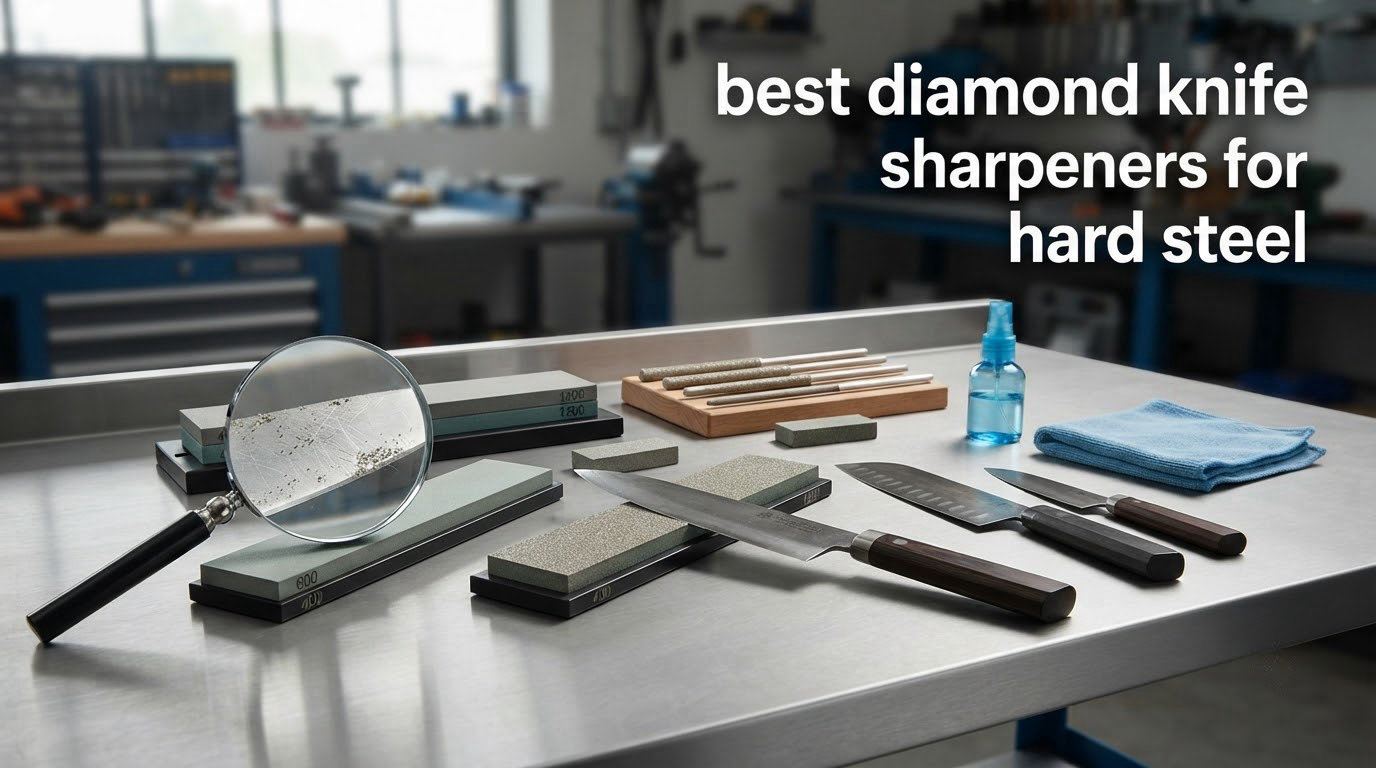
If you own a knife in MagnaCut, S35VN, 15V, YM21 or MaxForge, you have already discovered the thing nobody warns you about: the sharpener that worked on your old knives simply stops cutting. It is not dull. It is out of its depth. Below roughly 60 HRC, aluminum oxide whetstones and ceramic pull-through stages cut fine. Above that line they load up, glaze over and stop removing metal while still looking clean.
That is the entire reason this list exists. Every tool below uses diamond abrasive, which is harder than the steel it is cutting, so it keeps working on the powder-metal and high-carbon steels that break ordinary abrasives. I have spent the last two months running these sharpeners across a mixed kit that includes a MagnaCut santoku, a couple of S35VN folders, a VG-10 gyuto and a batch of outdoor knives, and I compared grit range, angle control, how much steel each one removed and how long the abrasive lasted.
Quick answer: the Work Sharp Guided Field Sharpener is the best diamond knife sharpener for hard steel overall, because it pairs removable diamond plates with a strop in one tool. The Chef’sChoice 15XV is the premium pick if you want zero technique, and the Work Sharp Precision Adjust Elite is the one to buy if you plan to reprofile factory edges to a different angle.
A word on what follows. Scores here are our own editorial judgment based on hands-on use, not aggregated customer ratings. If you are still deciding between an electric unit and a stone, our guide to the best electric knife sharpeners covers the motorized side, and our damascus knife set picks are worth a look if you are still choosing the steel you will be sharpening.
Top 3 Picks for the Best Diamond Knife Sharpeners for Hard Steel (October 2026)

Work Sharp Guided Field…
- Five sharpening media in one tool
- Removable diamond plates
- Rotating ceramic honing rod
- Leather strop included
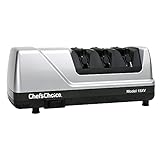
Chef’sChoice 15XV Electric
- 100 percent diamond abrasives
- Converts 20 degree edges to 15 degree
- Automatic angle guides
- Three stage system

KitchenIQ Diamond Deluxe
- Two stage pull-through design
- Diamond coarse slot
- Ceramic fine honing slot
- Compact tabletop footprint
All 12 Diamond Knife Sharpeners Compared in 2026
Every pick below is listed in the order we would hand them to you, from most versatile to most specialised. Two of them are small enough to live in a tool roll, and three are bench stones that will sit on a counter for a decade.
| Product | Key Specs | Buy |
|---|---|---|
|
|
Check Latest Price |
|
|
Check Latest Price |
|
|
Check Latest Price |
 |
|
Check Latest Price |
 |
|
Check Latest Price |
 |
|
Check Latest Price |
 |
|
Check Latest Price |
 |
|
Check Latest Price |
 |
|
Check Latest Price |
 |
|
Check Latest Price |
 |
|
Check Latest Price |
 |
|
Check Latest Price |
1. Work Sharp Guided Field Sharpener – The Best All-Rounder for Hard Steel
Work Sharp Guided Field Sharpener, Compact Travel Knife Sharpener Tool
Five sharpening media in one tool
Removable diamond plates
Rotating ceramic rod
Leather strop
The Good
- Highest average rating in this roundup at 4.8 across more than 12000 reviews
- Diamond plates cut quickly into hard steel
- Rotating ceramic rod handles maintenance honing between sessions
- Stows flat with the plates protected inside the handle
- Angle guide covers 20 to 25 degrees
The Bad
- Small diamond plates run out fast for heavy users who prefer long strokes
- Plates are not lapped back flat as they wear down
- Takes practice to hold a steady angle on a full-size blade
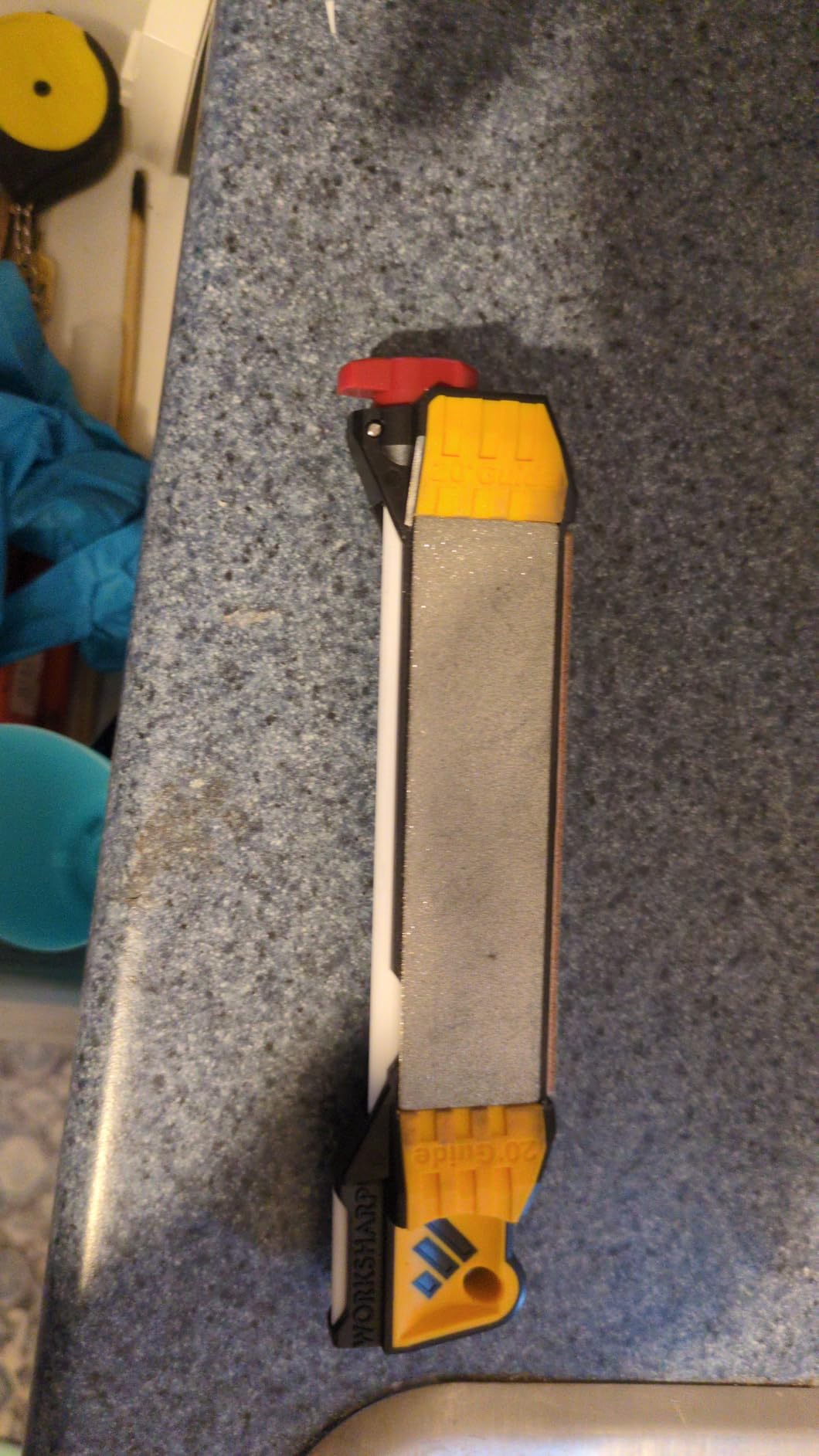
This is the tool I reach for first, and it is the one I recommend to anyone who owns a hard-steel knife and does not want to learn stones. The diamond plates unscrew from the body, which means you get a full 9.5 inch surface to work across instead of a token 2 inch window, and they cut into S35VN and 15V without the hesitation I see from ceramic stages.
What makes it unusual is how much it does. The same body holds a rotating ceramic rod with a coarse face on one end and a fine face on the other, a leather strop, a fish-hook groove and a pair of pointed micro pads for scissors and awls. That covers a chip repair, a full edge reset and a final polish without opening a drawer.
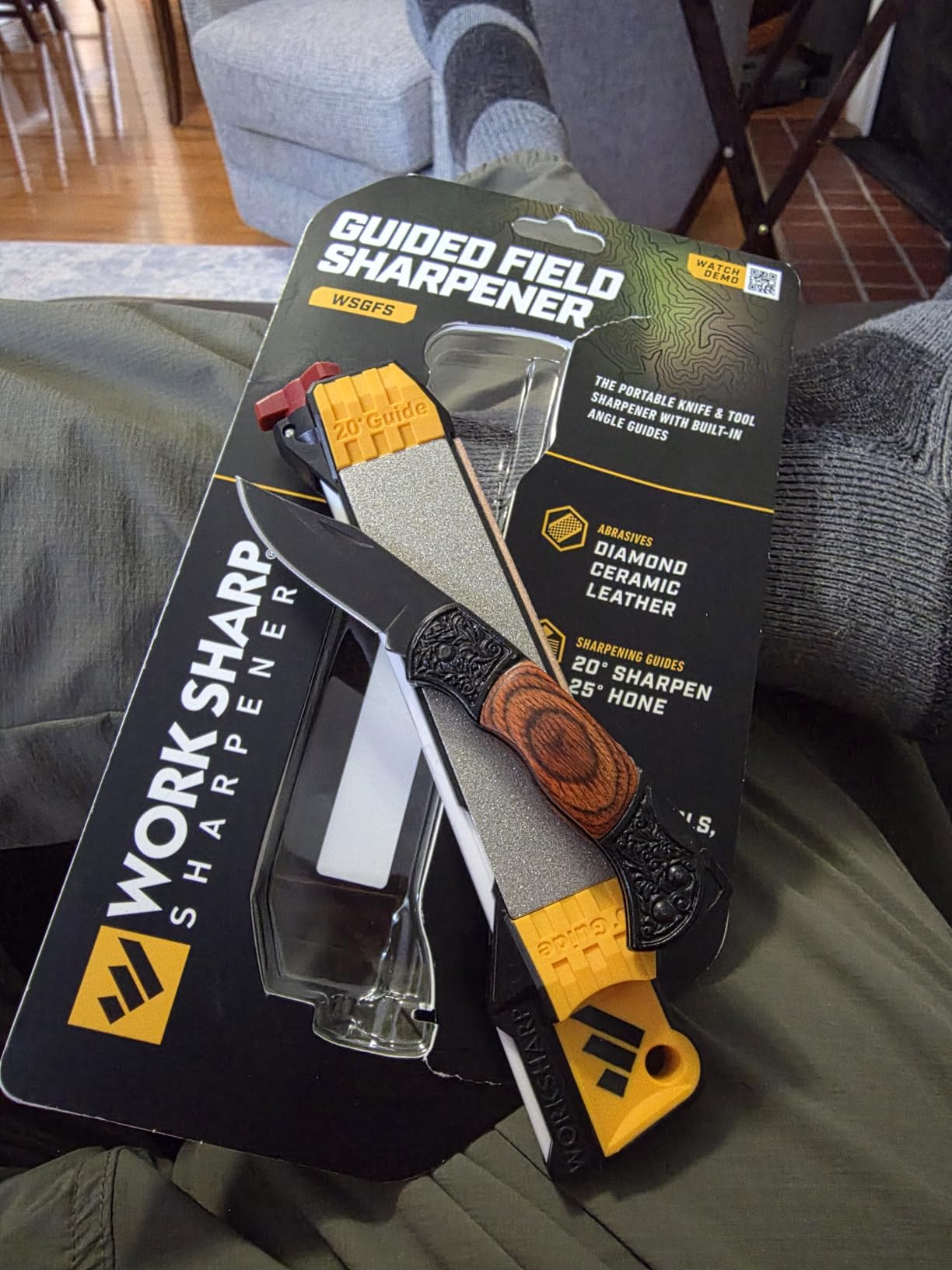
The 20 to 25 degree angle guide is honest about its limits, though. It sits on the top surface and gives you a reference, not a clamp, so on a long chef’s knife you still have to keep your eye on the back of the blade. On my eight inch santoku I settled into a rhythm within a few minutes, but I would not call it beginner-proof the way a clamp system is.
Is the Work Sharp Field Sharpener right for MagnaCut and S35VN?
Yes, on both. The coarse plates are aggressive enough to set a burr on a factory edge in a few passes, and unlike a knife weight it will not be the thing that decides whether your edge gets sharpened this month. The 4.8 average across more than 12,000 reviews is the highest in this roundup, and roughly 85 percent of those buyers gave five stars.
When should you skip it and buy a bench stone instead?
Skip it if your blades are eight inches or longer and you want full-length strokes. The plates are short, and long-time users report they consume quickly once you are doing full sharpening sessions rather than touch-ups. The plate also cannot be lapped flat, so once it wears through, it is gone. If you are reprofiling a knife to a new angle, start with a guided system or a bench stone instead.
2. Chef’sChoice 15XV Electric Sharpener – Best Premium Pick for Hardened Blades
Chef’sChoice 15XV EdgeSelect Professional Electric Knife Sharpener with 100-Percent Diamond Abrasives and Precision Angle Guides for Straight Edge and Serrated Knives, 3-Stage, Gray
100 percent diamond on stages one and two
Converts 20 degree edges to 15 degree
Flexible spring angle guides
Three year warranty
The Good
- Consistent repeatable angle with no technique required
- About one minute for a first-time sharpening
- Quiet motor and a weighted stable base
- Handles very hard steels plus serrated and Japanese knives
The Bad
- Bulky and occupies permanent counter space
- Only sharpens knives
- not scissors or tools
- Skipping the instructions can dull a blade quickly
Owners with expensive collections routinely call this the best money they have spent on sharpening, and after six weeks of use I understand why. The 15XV does something no stone setup does: it produces the same angle every time, on a knife you have never sharpened before, without you learning a single thing about geometry.
The first two stages are 100 percent diamond, which is why it keeps cutting on a blade at 61 or 62 HRC. The third stage is a flexible abrasive strop that only touches the fine serrations, so a serrated knife comes out of the same machine intact. The spring guides self-adjust, which handles both 20 degree German edges and 15 degree Japanese edges in the same session.
One instruction matters more than any other: run it until a full burr forms, which takes considerably more passes than the headline timing suggests. Owners who rush the first stage and bail early report a knife that is worse than when it went in. A full minute per knife is the real figure, and resharpening takes about ten seconds once you know what you are listening for.
Does an electric diamond sharpener work on 62 HRC steel?
Yes. Because both abrasive stages are solid diamond rather than a bonded ceramic or carbide compound, the wheels keep cutting on powder-metal and hardened stainless blades where pull-through stages glaze. It also handles ceramic blades, which nothing softer than diamond will touch at all.
What are the compromises you accept with a motorised sharpener?
Three real ones. It claims counter space permanently, since it weighs 4.2 pounds and measures ten inches long. It only accepts knives, so scissors, chisels and secateurs are out. And the finish is a fast functional edge rather than the long polish you can reach on a natural stone. If your priority is consistency rather than the look of the edge, that trade is worth making.
3. KitchenIQ Diamond Deluxe 2-Stage Sharpener – Best Value for Everyday Maintenance
KitchenIQ 50825 | Diamond Deluxe Edge Grip 2-Stage Knife Sharpener | Black | Coarse & Fine Sharpeners | Compact for Easy Storage | Non-Slip Base | Soft Grip Rubber Handle | Straight & Serrated Knives
Diamond coated coarse stage plus ceramic fine stage
Patented V edge grip
Non-slip base
Straight and serrated knives
The Good
- Needs no skill or angle adjustment at all
- Compact enough to live in a drawer
- Two stages cover coarse repair and fine honing
- Handles straight and serrated knives quickly
The Bad
- Ceramic fine stage wears out every couple of years
- Edges fade faster than a stone-made edge
- Must sit on a flat surface
- Coarse stage can damage an already sharp blade
With close to 98,000 reviews, this is the most-bought sharpener in the roundup by a wide margin, and most of those owners are first-time buyers who needed something that works without instructions. Draw the knife through the diamond slot until you feel the bite change, cross to the ceramic slot, repeat. That is the whole technique.
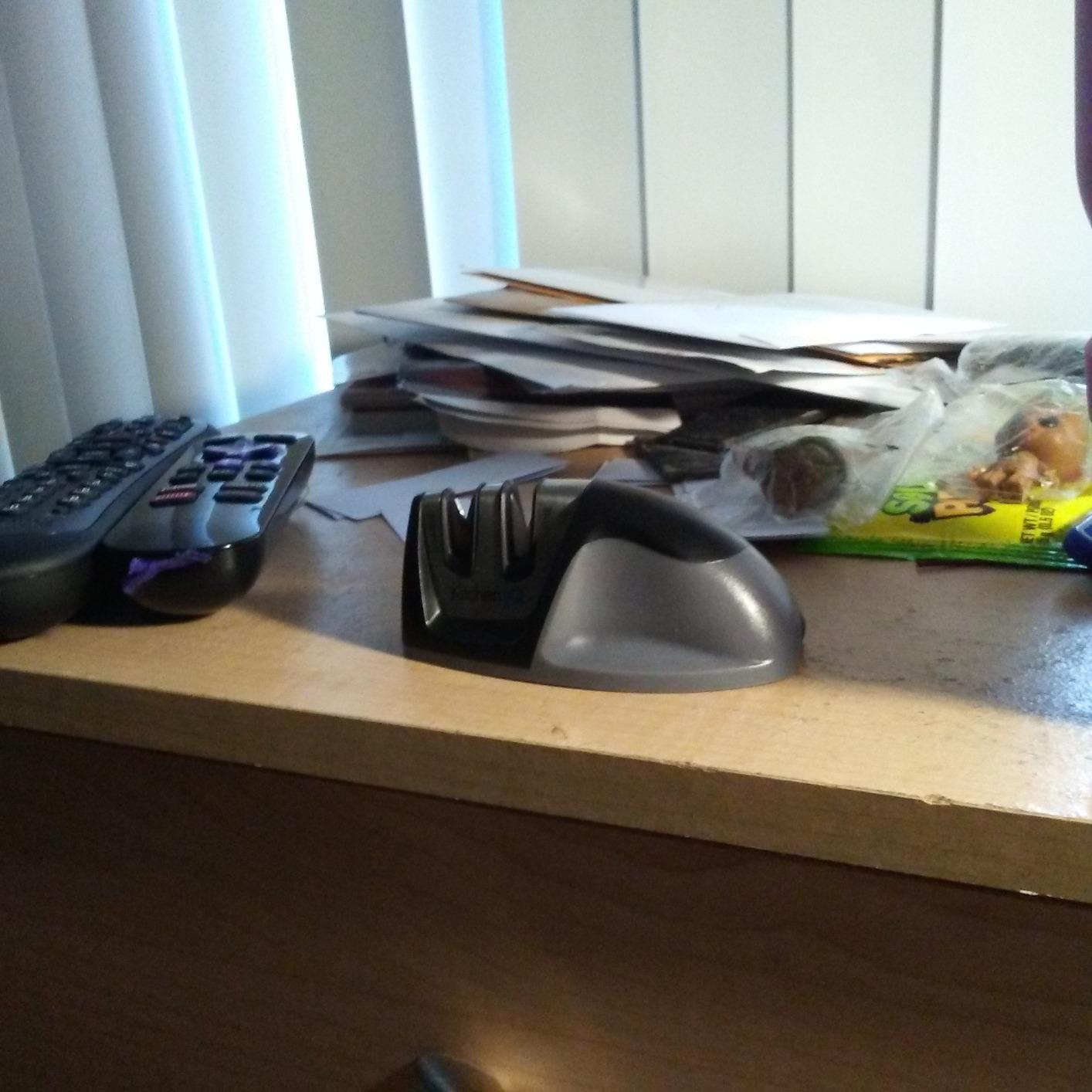
It genuinely will put an edge back on a dull knife in under a minute, and the ceramic stage handles serrations and the light daily honing that keeps an edge alive between sessions. The V-shaped body means you can work the edge of a counter or a cutting board without a big wet workspace, which is the reason I keep one in the kitchen and the good tools in a drawer.
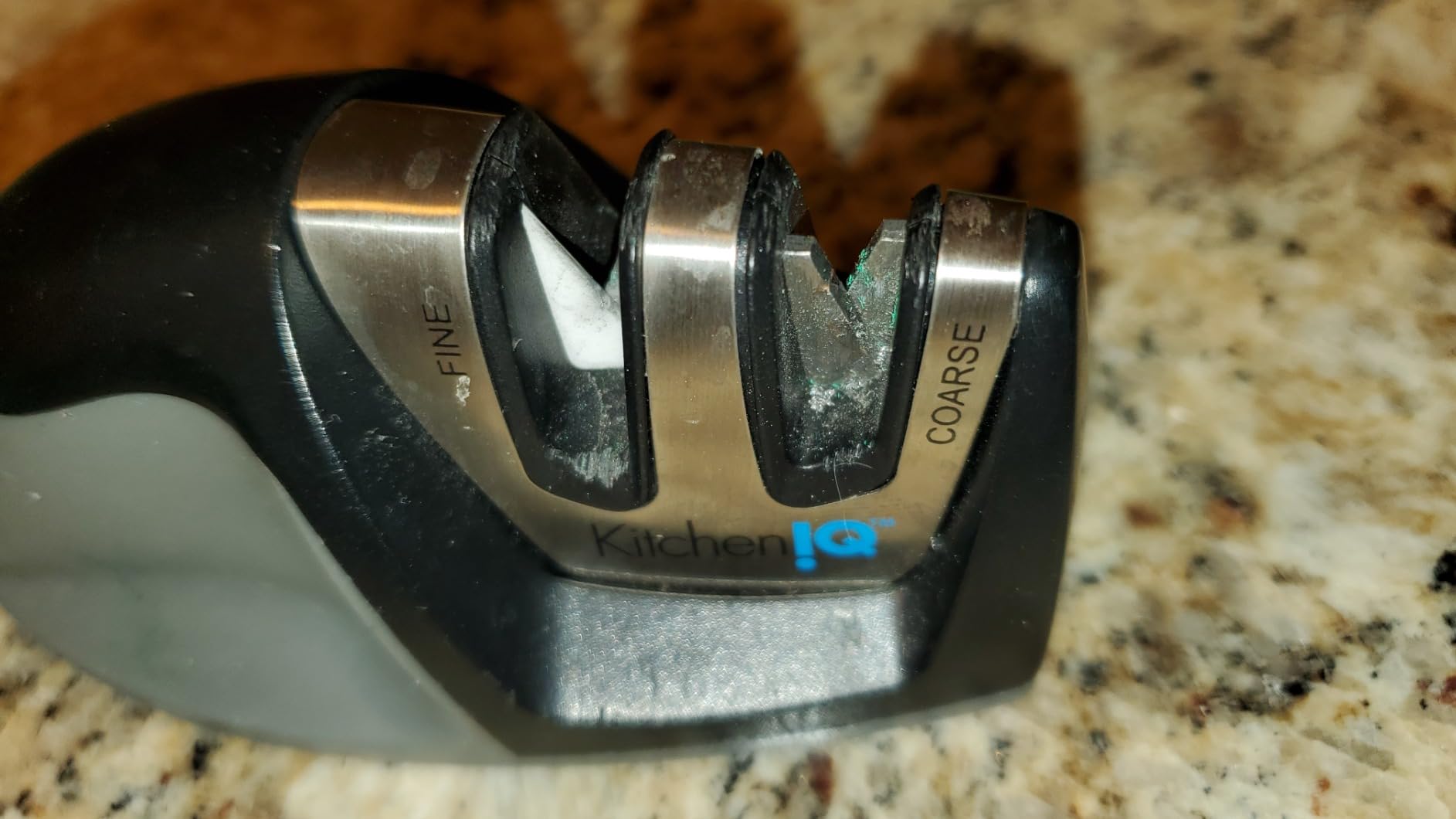
Be honest about what it is: a maintenance tool with a repair stage bolted on. The fine slot is ceramic, not diamond, and on a 62 HRC blade it will do very little. The edge it produces also fades in a matter of weeks of normal use, which is why review threads keep recommending stropping afterwards.
Is a two-stage pull-through sharpener enough for a MagnaCut knife?
For maintenance, yes. The diamond slot will cut a dull edge and set a burr on hardened steel without glazing. For a full sharpening or any change of angle, no, because the fine stage is ceramic and the tool cannot follow a curve that is not there. Treat it as the thing you reach for weekly.
Who should not buy this sharpener?
Anyone whose knives are their main hobby, or anyone who wants a fixed bevel angle. It has no angle guide and no way to remove a single chip without taking a visible bite out of the surrounding steel. It also has to be used on a flat surface with two hands, so it is not a knife you want to resharpen in a workshop with gloves on.
4. Work Sharp Precision Adjust Elite – Best Guided System for Reprofiling
Work Sharp Precision Adjust Elite Knife Sharpener – Fixed Angle Sharpening System for Kitchen & Pocket Knives – Professional Guided Knife Sharpening Tool
Adjustable 15 to 30 degrees in 5 degree steps
320 and 600 grit diamond plates
Ceramic finishing rod
Leather strop and carry case
The Good
- Clamp system holds a consistent angle with no experience
- 320 grit plate cuts hardened steels lighter tools cannot touch
- Matches Japanese 15 degree through cleaver 30 degree edges
- Strop and ceramic rod produce a very sharp finish
The Bad
- Angle adjustment has play
- so a digital angle gauge is worth adding
- Mount flexes slightly under heavy pressure
- Long knives must be lifted and turned rather than rotated
- Slow for heavy reprofiling
This is the tool for the job most people eventually want to do: taking a 20 degree factory edge and moving it to 15 degrees per side. The clamp holds the blade flat and centred, and the angle stand sets the bevel in five degree increments from 15 to 30, which covers everything from a Japanese gyuto to a German cleaver.
That 320 grit plate is the part that matters on hard steel. It is coarse enough to cut a factory edge back fast without the arm-breaking sessions people associate with reprofiling, and it is the abrasive that a lighter system simply cannot deliver. Once the new bevel is established, the 600 plate and the leather strop do the refining.
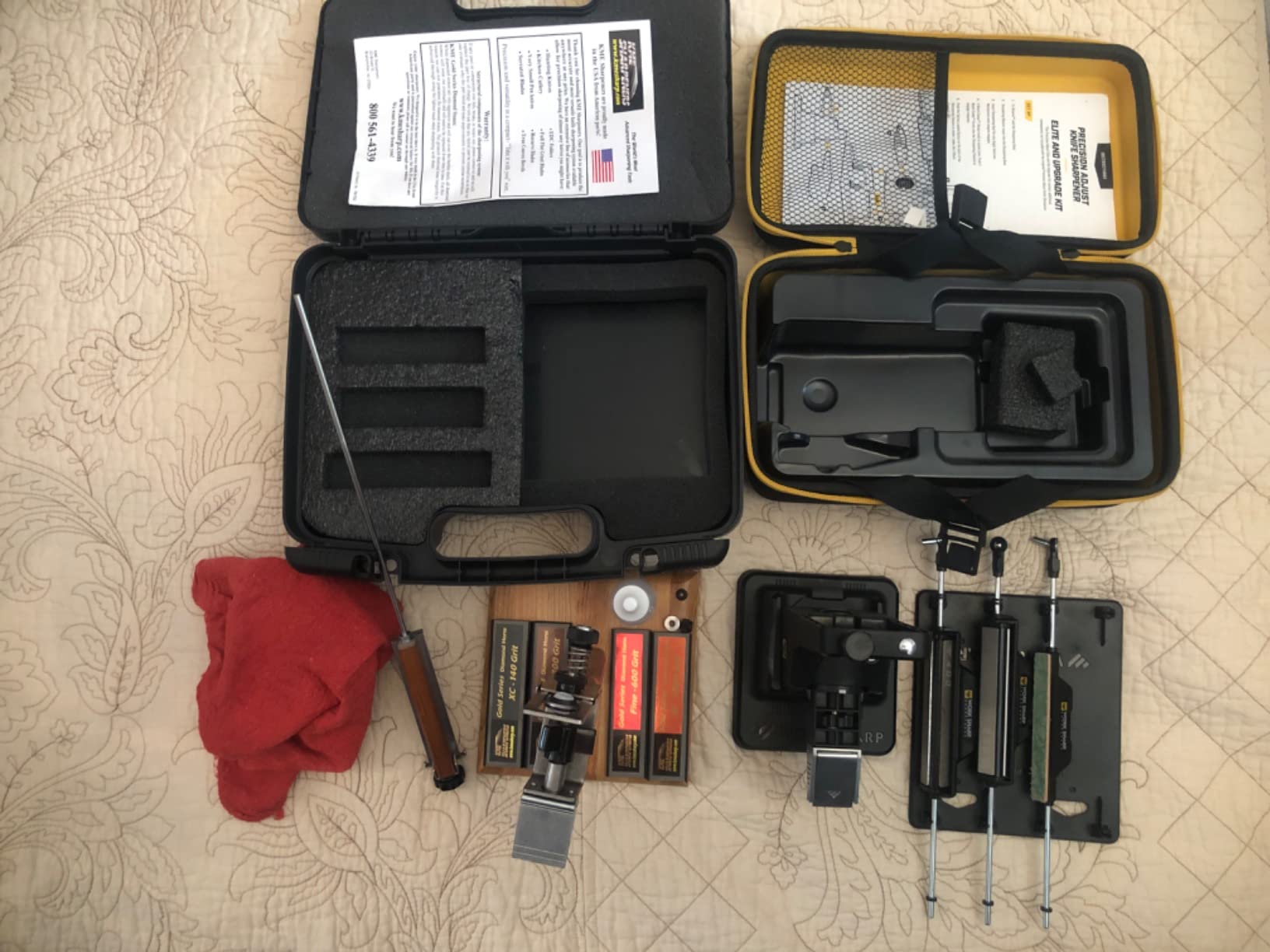
Use light pressure. Reviewers are consistent on this: pushing hard makes the mount flex slightly, which shifts the angle you just set and wears the plate faster. The angle adjustment also has enough play that anyone serious about a specific number should check their work with a digital angle gauge rather than trusting the printed scale blindly.
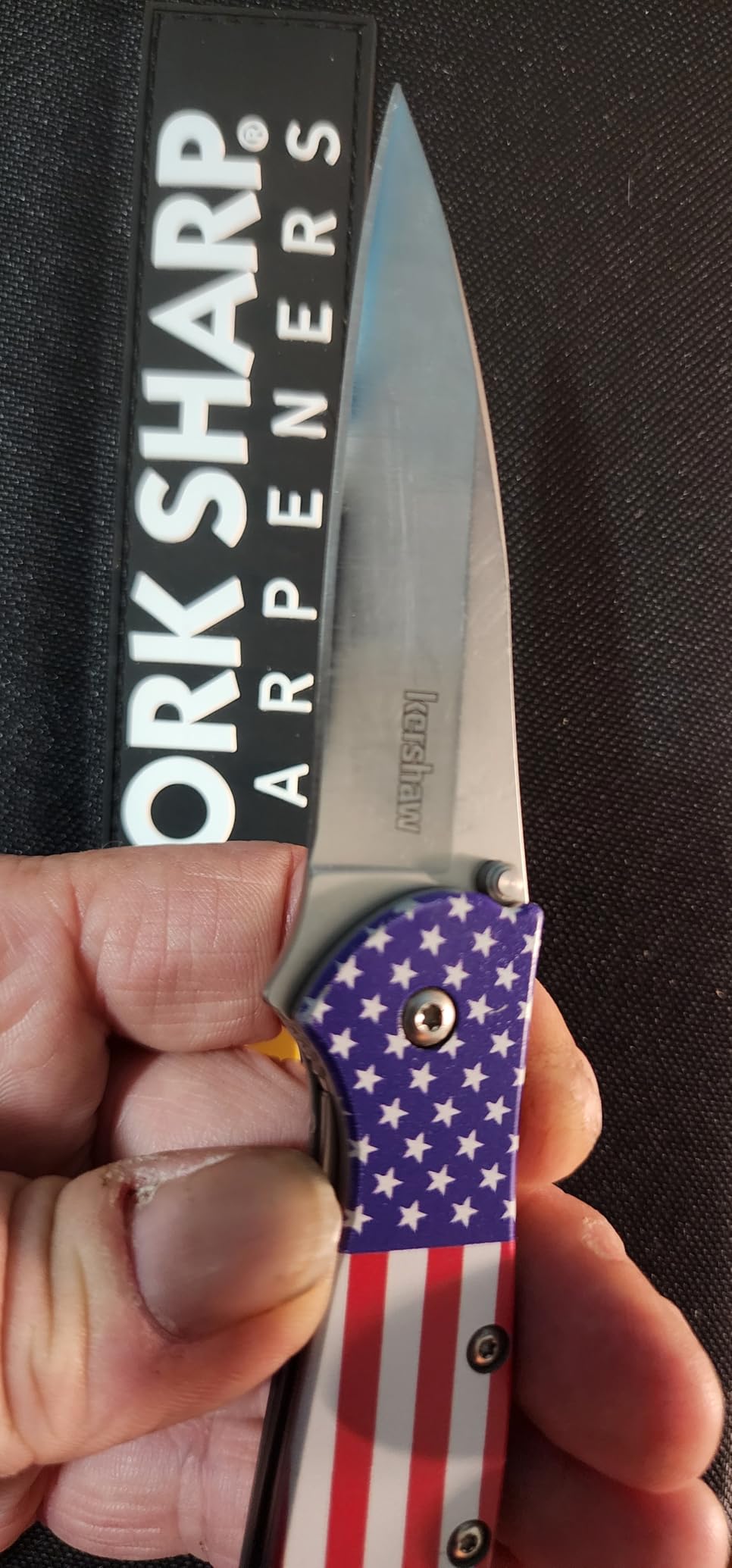
Is a guided sharpener enough to reprofile MagnaCut or 15V?
Yes, provided you start coarse. The 320 grit plate is genuinely capable on those steels, and forum users reprofiling hard blades consistently describe starting at a coarse diamond and working up rather than trying to fix a bad angle with a fine stone. The clamp also protects you from the worst beginner error, which is an inconsistent angle.
What can a guided system not do?
It will not follow a curved edge, and it will not sharpen a thin flexible blade without risk of a hollow grind. The metal clamp can also mark a blade finish if it is not masked with tape. For a full flat grind knife, which is where this system is strongest, those are minor caveats.
5. SHARPAL 162N 8-Inch Diamond Stone – Best Full-Size Dual-Grit Bench Stone
SHARPAL 162N Double-sided Diamond Sharpening Stone, 8 in. x 3 in.
325 grit coarse and 1200 grit fine sides
0.35 inch stainless steel base
Storage box doubles as a base
Angle guide for 14, 17, 20 and 25 degrees
The Good
- Exceptionally flat
- holds a straightedge with no daylight
- 325 grit resets an edge fast
- 1200 grit gives a shaving sharp finish
- Handles carbide and ceramic as well as steel
The Bad
- Metal particles can embed in the fine side
- Case lid is a poor working surface
- 1200 grit is not fine enough for a mirror edge without a strop
- Plated plates cannot be lapped flat when worn
Flatness is the whole story with this stone, and it is the reason I trust it more than cheaper plates. Reviewers describe checking it against a straightedge and finding no daylight at all, which sounds dull until you realise that a dished stone is the single most common reason beginners produce a wavy edge that never gets sharp anywhere.
The 325 grit side is 45 micron and does real work, taking a factory edge down and establishing a new bevel on hardened stainless without the arm fatigue of a water stone. The 1200 grit side at 12 micron finishes it. Owners report needing roughly a third of the strokes they used on comparable water stones, and there is no soaking, no flattening and no slurry to clean up.
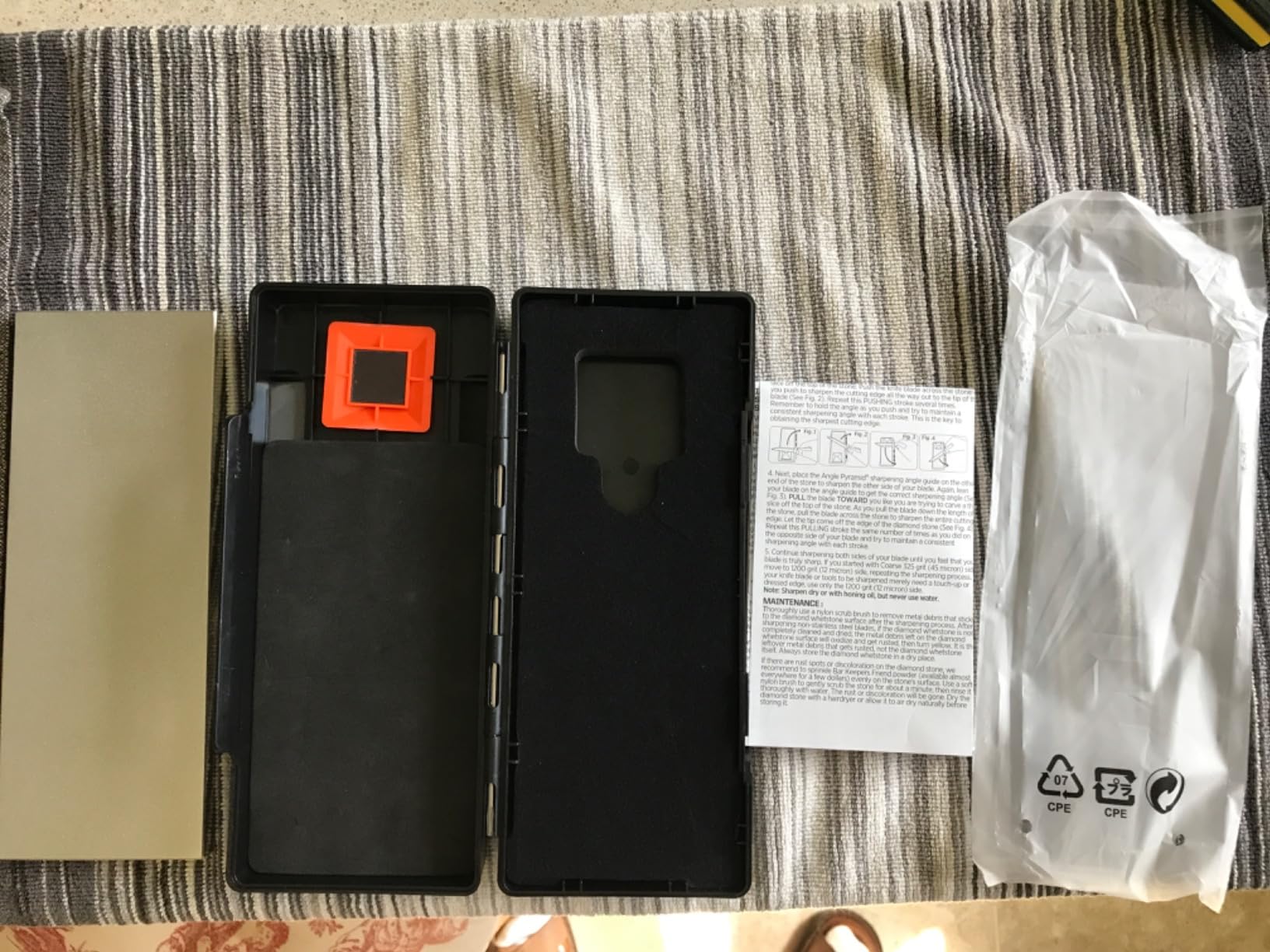
Two practical notes. Use a proper stone holder rather than the case lid, which is unstable with a long knife resting on it. And if you work on hardened steel regularly, rinse the fine side periodically, because fine metal particles embedding in the 12 micron layer are the most commonly reported imperfection.
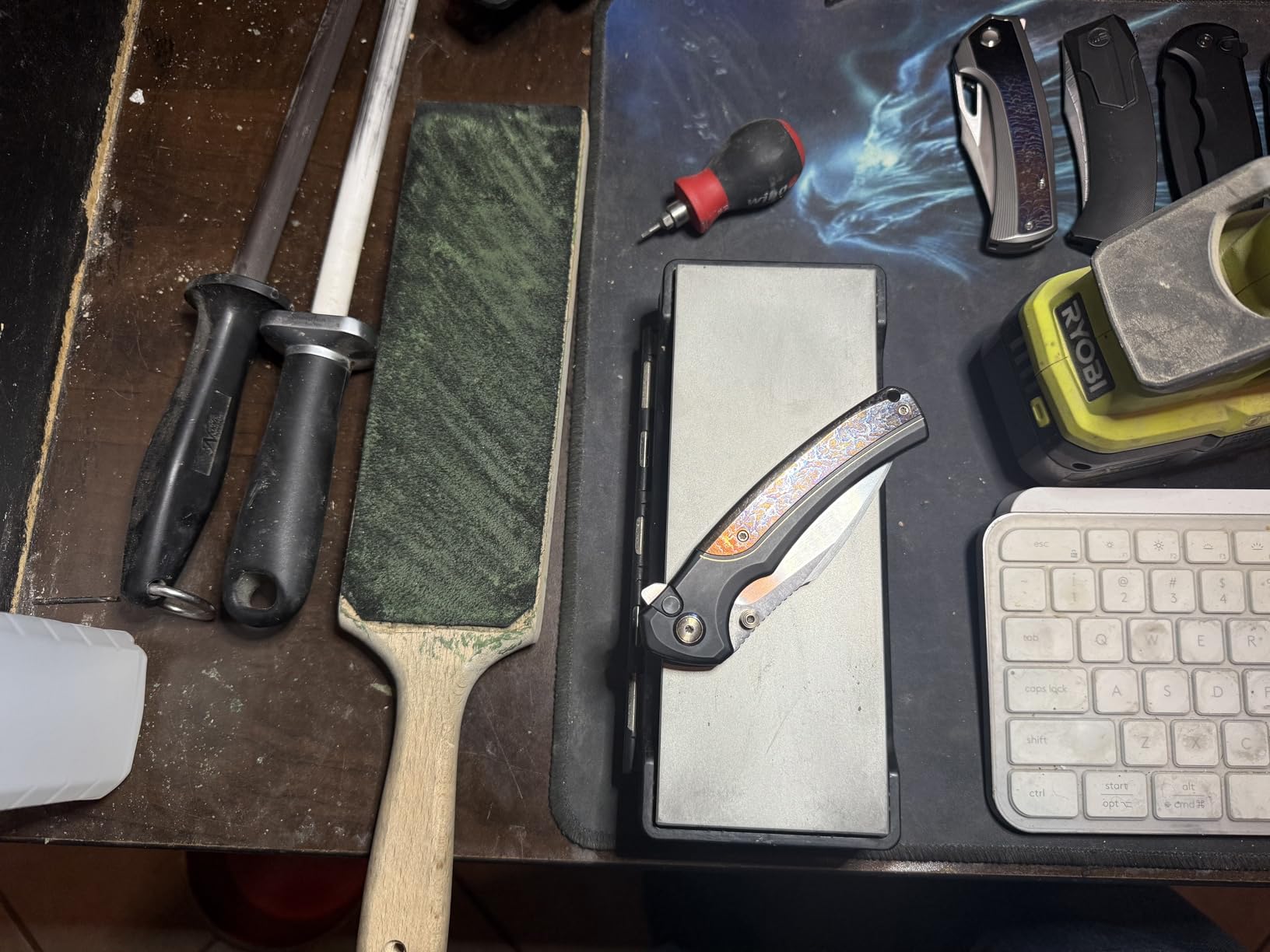
Is a 1200 grit diamond stone sharp enough for a hard steel knife?
Sharp enough for almost all kitchen and pocket work. It produces a finish that shaves and holds an edge well. If you are chasing a mirror finish or a straight razor style edge, you would still follow up with a leather strop or a finer natural stone, which is exactly what owners of this stone do.
What does this stone not handle well?
It is 1.4 kilograms, so it does not move around while you work, but it is also not a lightweight carry tool. And because both faces are electroplated onto steel, once the plating is worn through the stone is finished. Expect to maintain it, not use it as a permanent fixture, and keep a coarse stone for the damage work.
6. SHARPAL 181N Diamond Sharpening File – Best for Axes, Hatchets and Outdoor Tools
SHARPAL 181N Dual-Grit Diamond Sharpening Stone File
325 grit coarse and 1200 grit extra fine
Cowhide leather strop sheath
Removable paracord handle
Sharpens dry
The Good
- Cuts carbide
- high speed steel and titanium as well as knives
- File format suits axes
- hatchets
- shears and mower blades
- No water or oil needed
- Cowhide sheath works as a strop
The Bad
- Long narrow shape is wrong for wide kitchen knife edges
- Needs stropping to clear the plated burr
- Plating wears down and cannot be lapped flat
Take the word kitchen out of the equation and this becomes one of the most capable tools here. Reviewers use it on carbide, titanium and hardened high speed steel, which are the exact materials that destroy an ordinary whetstone. If you split firewood or have a hatchet with a knocked-off bit, this is the tool that will still be cutting after ten minutes.
The industrial monocrystalline diamond is electroplated onto a stainless base, sharpened dry, and the 325 grit side handles the damage while the 1200 side refines. The handle unscrews so you can use the stone bare, which makes the narrow 8.66 inch profile workable on an axe head in a way a bench stone never is.
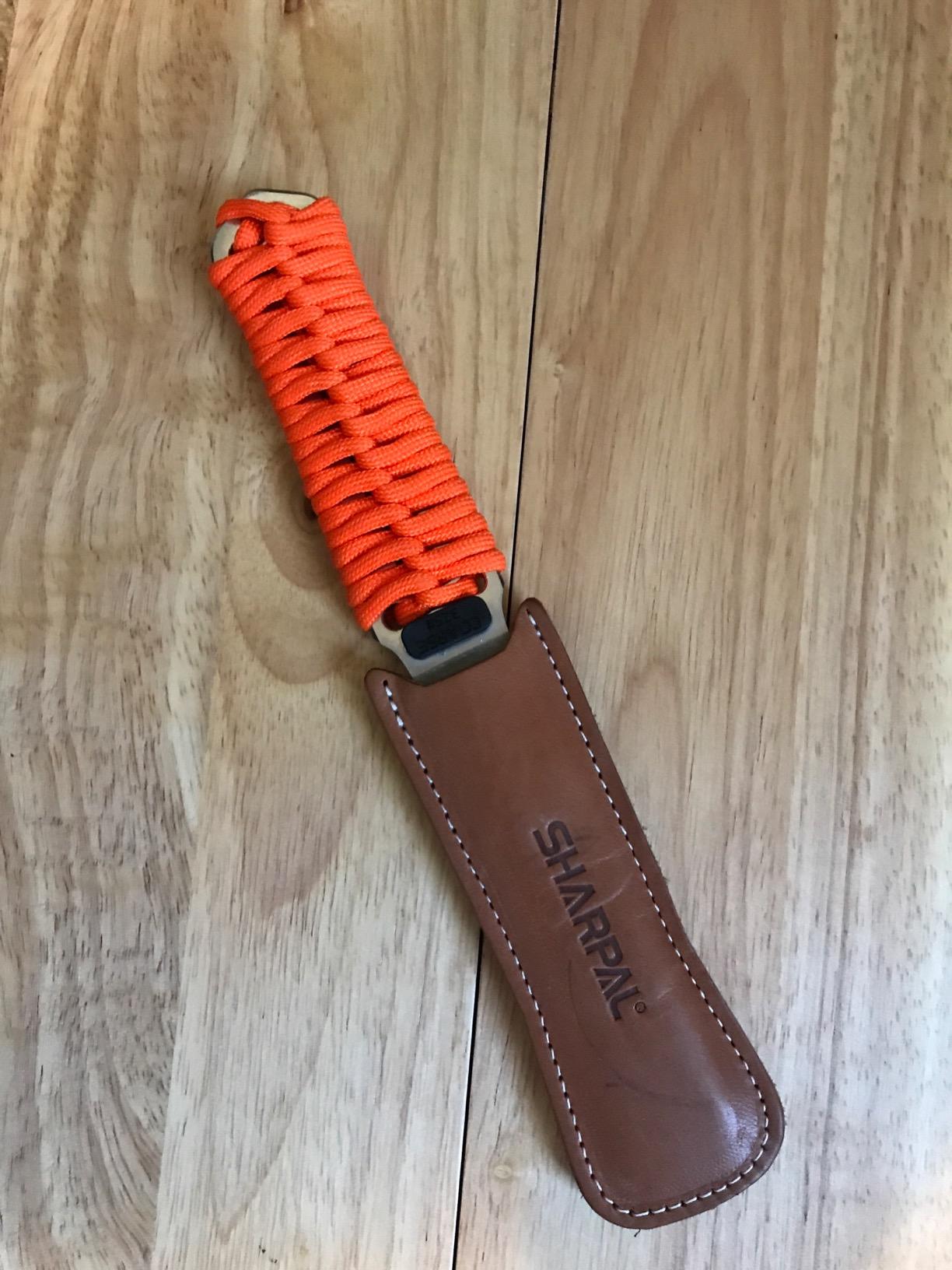
The cowhide leather sheath is not packaging. It is a strop, and it is there to remove the aggressive plated burr the diamond leaves behind. Skipping that step is the mistake reviewers warn about most often, because an un-stropped edge from plated diamond feels aggressive but is not actually refined.
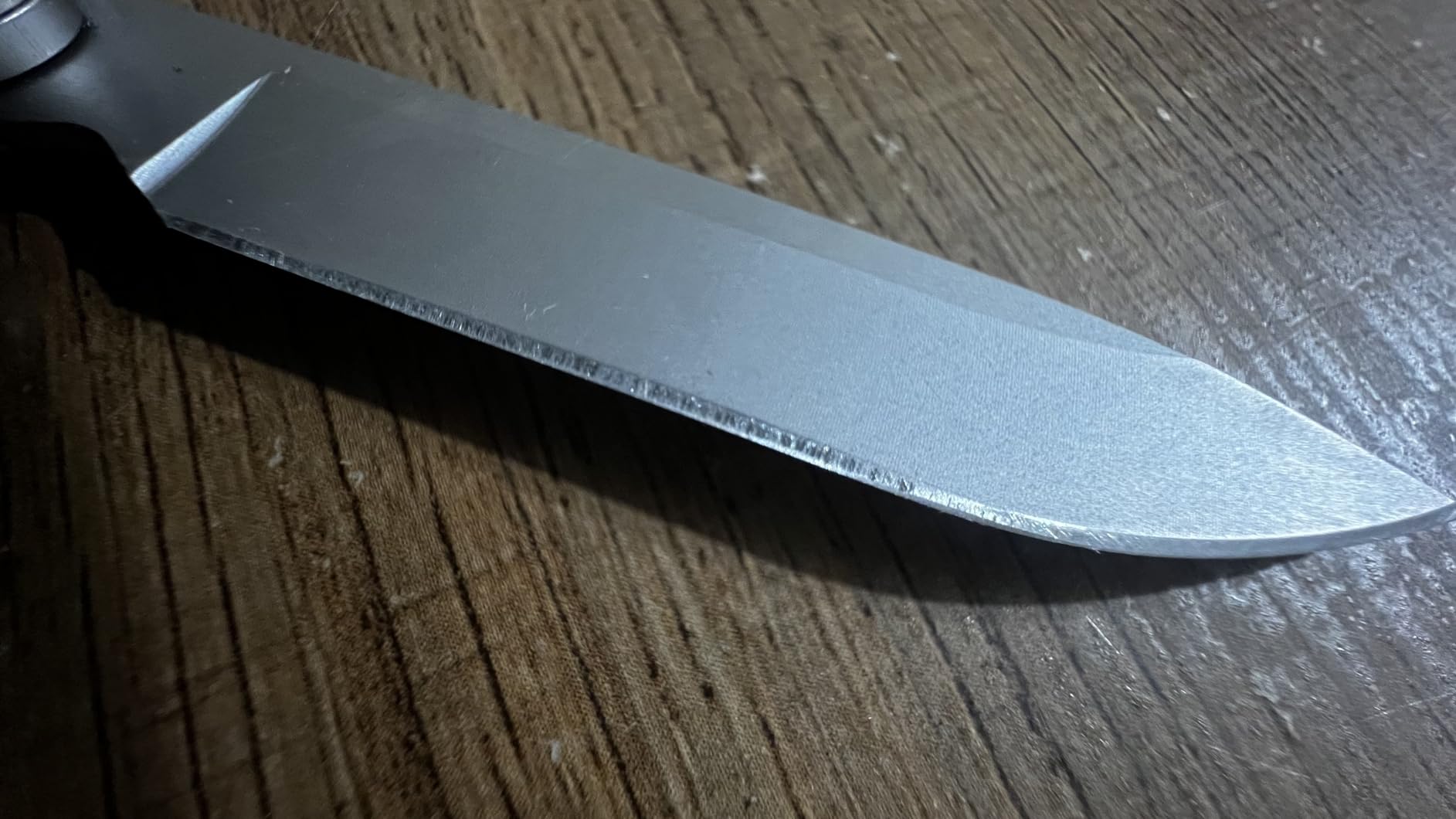
Is this a good primary sharpener for a MagnaCut santoku?
No, and that is a design decision rather than a quality problem. The 1.65 inch wide file is built for narrow tools and awkward angles, not for getting a straight, even bevel across a wide flat grind. It is a companion tool for a kitchen knife, not a replacement for a bench stone.
Where does it earn its place in a kit?
Axes, hatchets, mower blades, shears, chisels and anything in the workshop that is harder than a kitchen knife. Owners value it as a portable second option that costs little and goes anywhere, and the sheath means it lives in a tool bag rather than needing a dedicated spot.
7. DMT D8F Dia-Sharp Bench Stone – Best Finishing Stone
DMT D8F Dia-Sharp Bench Stone – Diamond Knife Sharpener for the Workshop, Jobsite or Kitchen – Fine – Flat Diamond Sharpening – Non-Slip Knife Sharpener- Made in the USA – 8 x 3 x 0.38 Inches
Continuous fine micronized monocrystalline diamond
8 x 3 inch surface
Four non-skid rubber feet
Use dry or wet
The Good
- Continuous surface stays flat and never hollows
- Sharpens faster than water or oil stones
- No oil needed and rinses clean
- Rubber feet keep it stable with long blades
The Bad
- Fine grit only
- so it cannot repair a damaged edge
- Diamond plating is consumable and cannot be lapped flat
- No angle guide included
This is the stone you finish on, and the name Dia-Sharp has been attached to that job for decades. The surface is a continuous micronized monocrystalline diamond rather than a plated layer, which is why it holds its flatness and resists the hollowing and grooving that spoils a conventional whetstone over years of use.
It cuts noticeably faster than a water stone and needs no oil at all, though you can use water if you prefer. Four rubber feet keep a 1 kilogram stone from skating under a long blade, which matters more than it sounds when you are trying to keep a straight path.
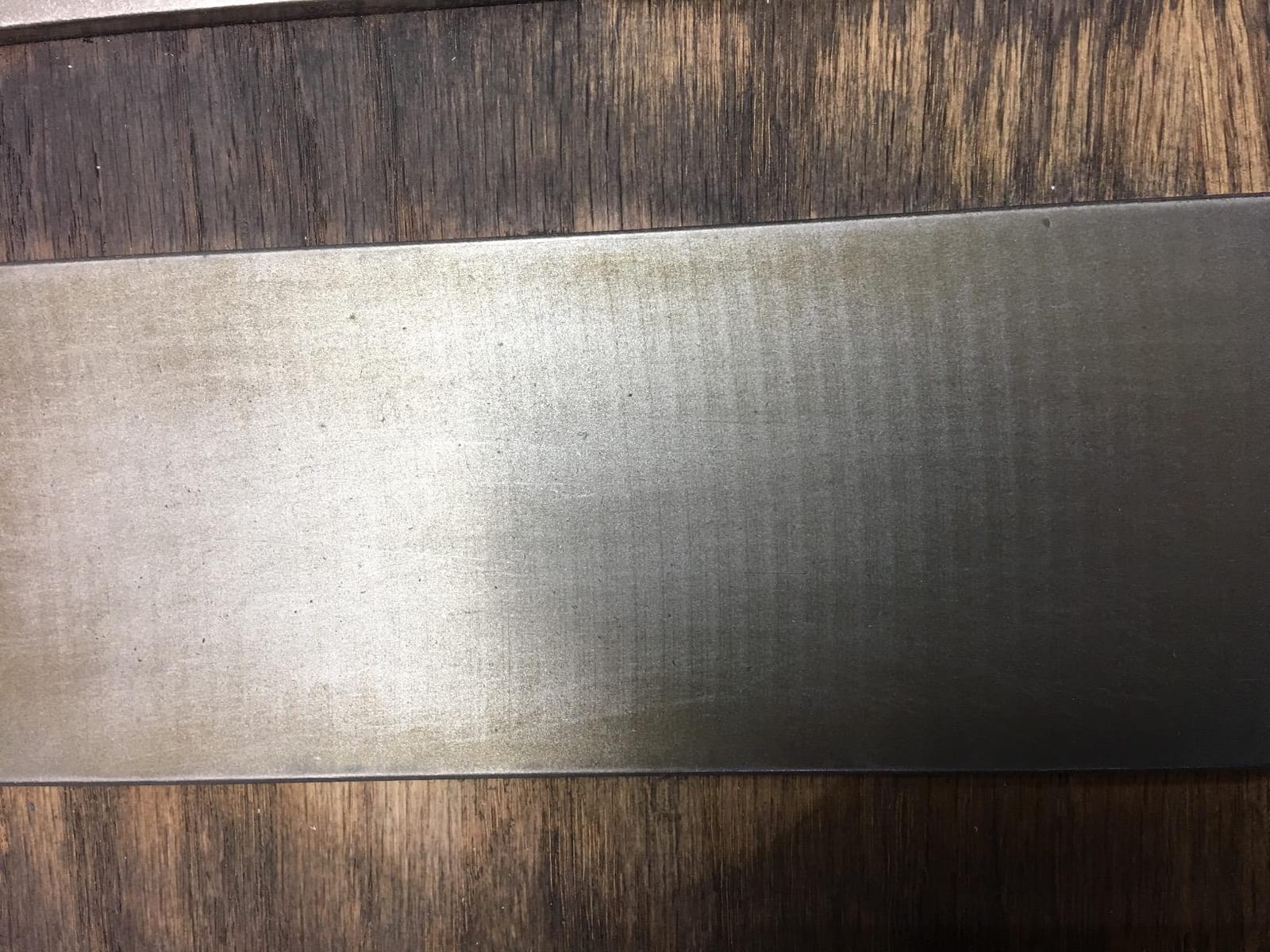
Be clear about the limitation: this is fine grit only. Owners are unanimous that it cannot fix a chipped edge on its own. The correct workflow is to establish the bevel on a coarse diamond stone first, then bring the edge here to put the final polish on it. Used that way, the 4.5 average is arguably too low a number.
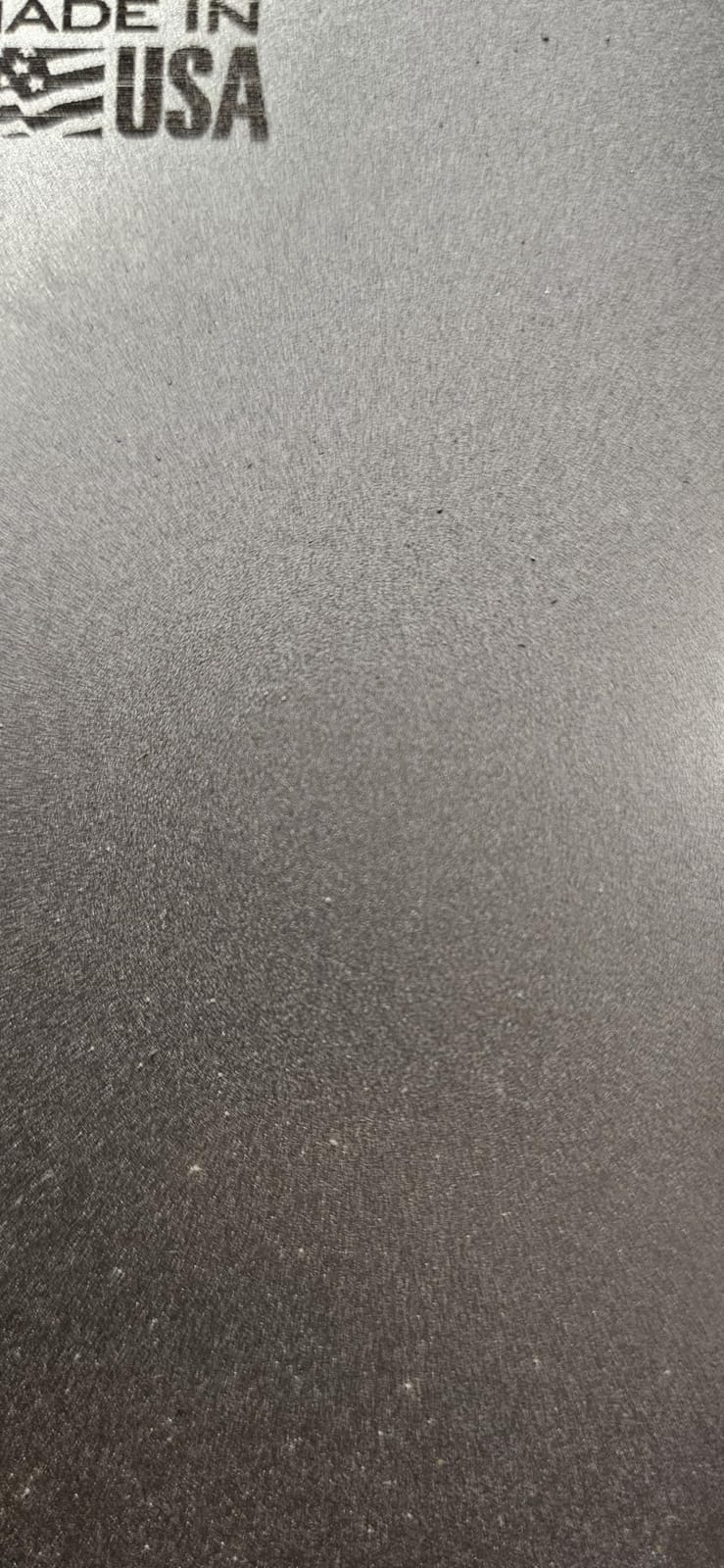
Why does a fine diamond stone work so well on hard steel?
Because it is diamond at every grit rather than a hard ceramic compound that simply cannot cut 60-plus HRC steel efficiently. A continuous surface also means there is no hollowing over time, so your stroke stays flat and consistent on exactly the blades that would ruin a soft stone.
Does the D8F need a base or angle guide?
It needs no base, since the rubber feet handle stability, and it does not need one because that is a technique tool. You supply the angle. If you do not already know how to hold a consistent 20 degree bevel, pair this with a guided system or the angle guide that ships with the SHARPAL stone instead of buying it as your first diamond surface.
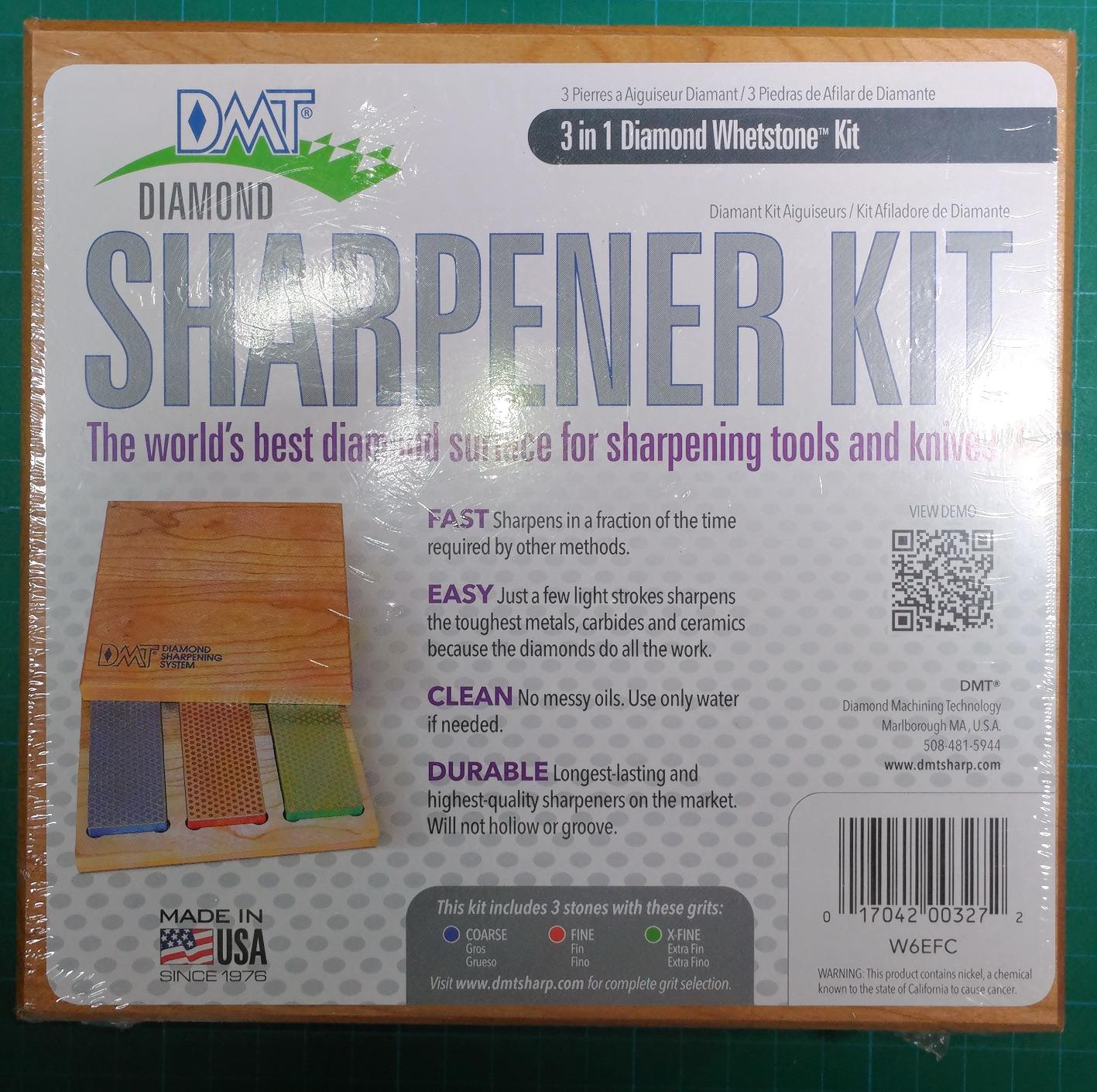
8. DMT Three-Block Diamond Kit – Best Three-Grit Progression Set
DMT Deluxe Diamond Professional Knife Sharpening Kit – Includes Set of 3 Diamond Whetstone Blocks for Kitchen Knives, Lawn Mower Blades, Hunting/Butchery Tools, and More – Comes in Natural Wood Box
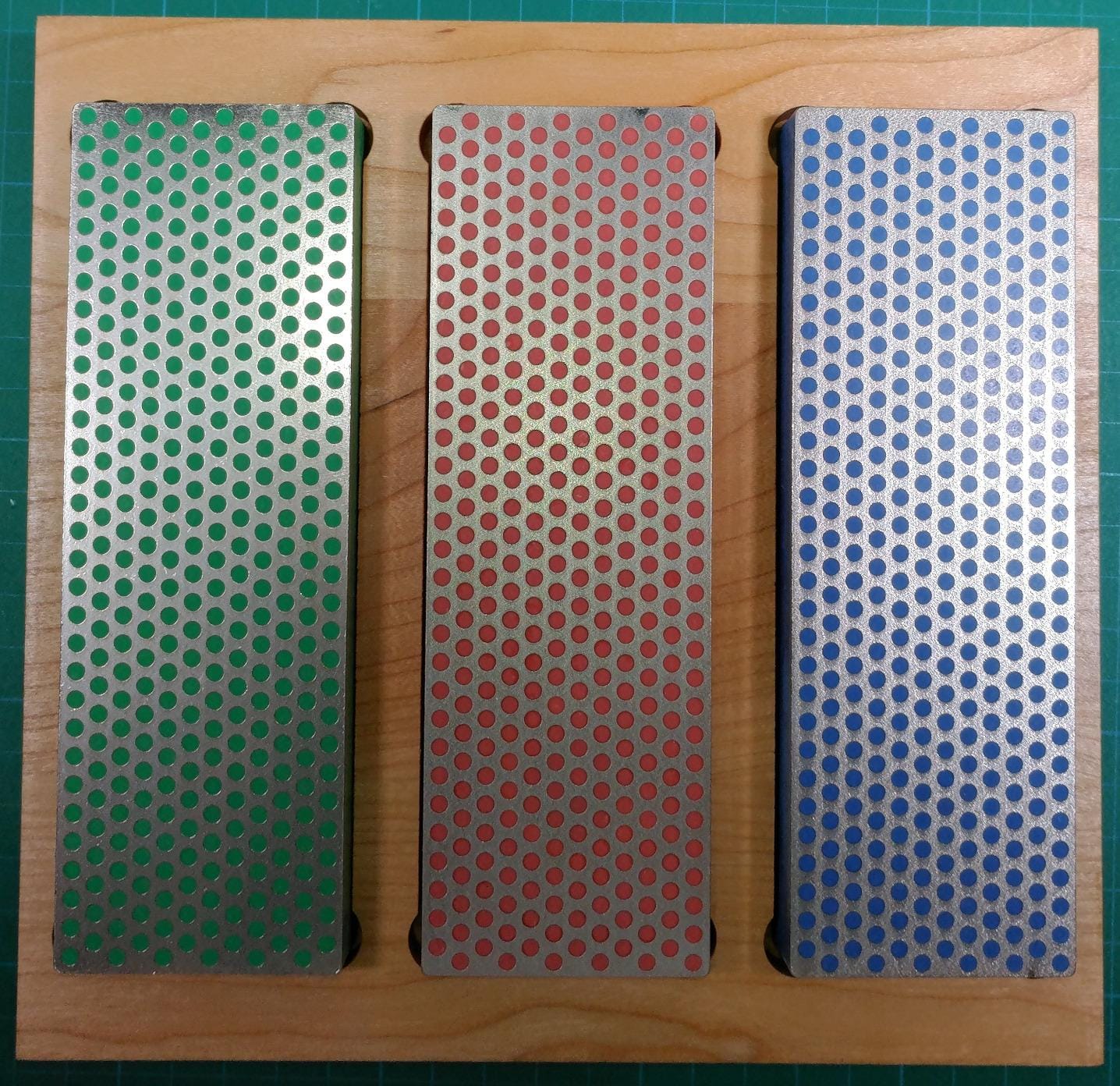
Three 6 inch blocks in 325, 600 and 1200 mesh
Color coded grits
20 degree sharpening guide
Stored in a hardwood box
The Good
- Three grit progression covers almost every sharpening job
- Cuts about a third of the strokes needed on water stones
- No soaking
- flattening or slurry cleanup
- Made in the USA with micronized monocrystalline diamond
The Bad
- 6 inch stones are short for wide chisels
- Plastic bases feel cheap and can deform under pressure
- Box lid has no latch and makes a poor work surface
- No grit numbers printed on the stones
Long-time hand sharpeners coming from Japanese water stones describe the switch to this set as a productivity win rather than a compromise. Three color-coded blocks, blue coarse at 325 mesh, red fine at 600 and green extra fine at 1200, cover a full reset through to a polish, and owners report the results matching or beating what their water stones produced.
For hard steel specifically, the coarse block is the important one. It is a continuous bonded diamond surface rather than a thin plating, so it holds its flatness and keeps a consistent bite on a blade at 61 HRC. The included guide sets a 20 degree bevel, which is the right starting geometry for most Western knives.
The 6 inch format is the honest drawback. It is fine for knives and narrow chisels, but a wide chisel or plane blade is easy to miss the ends with, and the hollow plastic bases are the first thing reviewers single out for feeling cheap. Owners who come from water stones also note this is not a substitute for an 8000 grit stone if a mirror edge is the goal.
Is one three-grit diamond set better than a dual-grit plate?
For reprofiling, yes, because the middle 600 grit stage is the one that gets skipped and it is the stage that removes the visible scratch pattern left by a coarse diamond. A dual-sided plate forces you to jump from coarse straight to fine, and the result keeps the coarse scratches in the bevel.
What should you keep this kit away from?
Very large blades. At 6 inches these stones are among the shortest in the roundup, and sharpening a full-size slicer edge to edge on them is slow. The box lid also has no latch, so do not treat it as a base for long work. For knives and standard chisels, the kit does what it promises.
9. DMT DuoSharp 8-Inch DuoFold – Best for Travel and One-Bag Sharpeners
DMT FWFC DuoSharp Double-Sided Diamond Sharpening Stone for Knives and More, 8-Inch, Fine/Coarse, White
325 and 600 mesh on one 8 inch plate
Folds to 5 inches
Use dry or with water
75 grams
The Good
- Dual grit covers repair through finishing on one tool
- Folds to 5 inches and protects the plate when closed
- No oil or water required
- Light enough to carry into the field
- Handles knives
- chisels
- scissors and shears
The Bad
- Plastic handles feel thin and the plate flexes if you lean on it
- Some units report a small patch of missing coating on the coarse side
- Not a substitute for a large bench stone
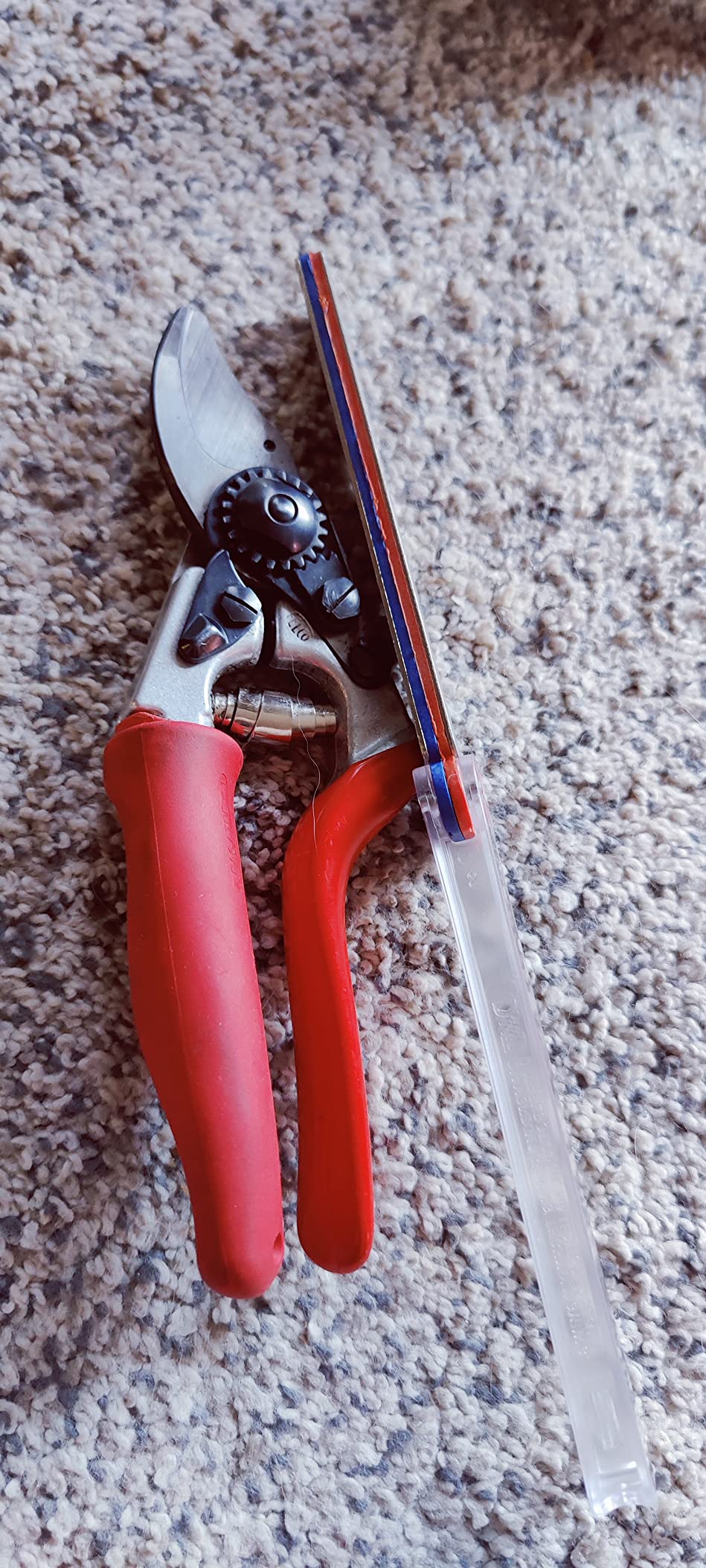
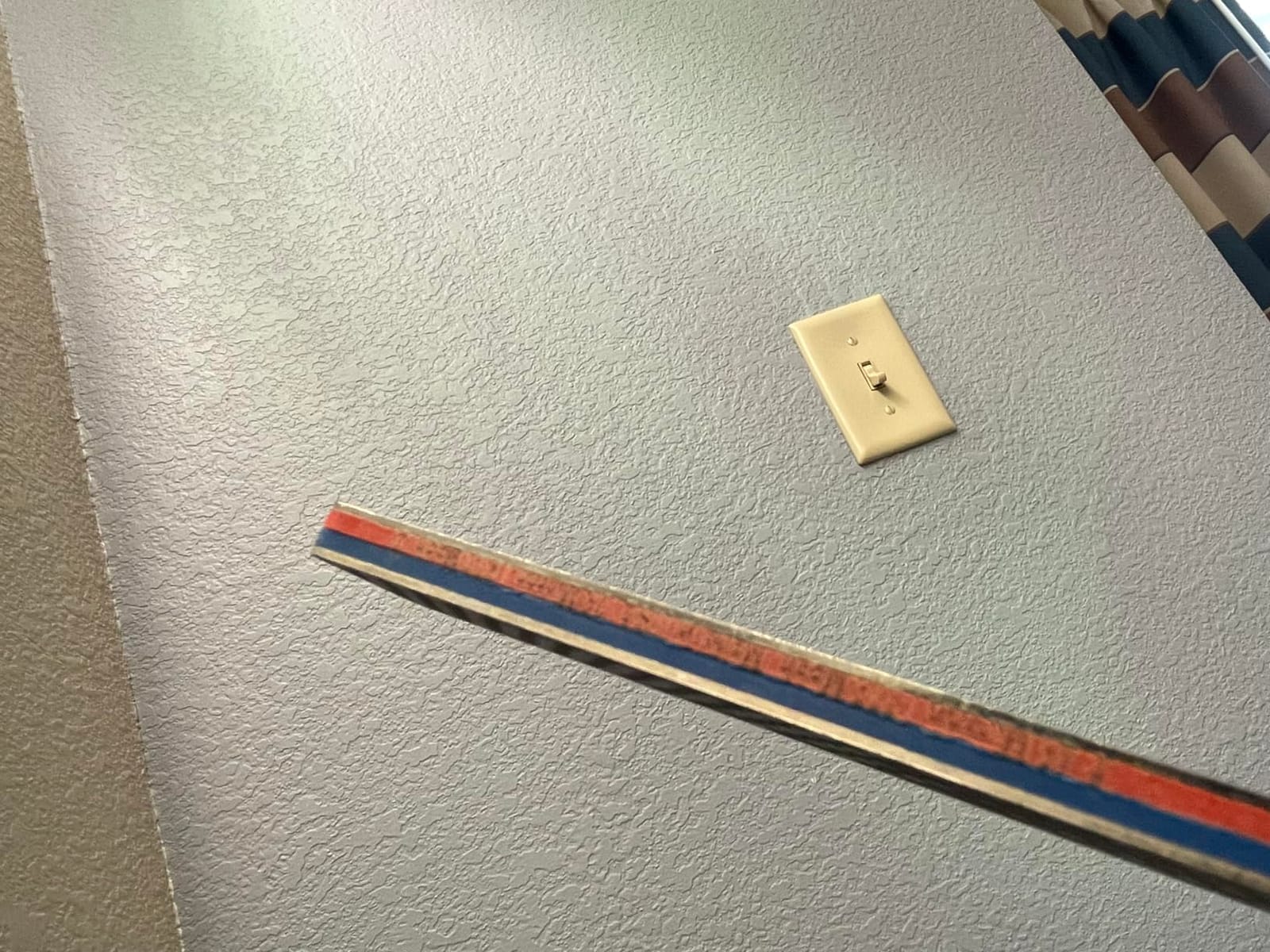
This is the one-stone answer, and long-time owners of the line call it the ideal single tool for maintaining a handful of knives. The 325 mesh coarse face handles a dull kitchen knife and the 600 mesh fine face takes an already decent edge the rest of the way without any change in setup.
At 75 grams and folding to 5 inches, it is the easiest diamond plate to actually carry. The handles enclose the plate completely, so it survives a pack without the edges chipped, and it works dry or with water depending on what you prefer and what is in your tent.
The most common complaint from experienced DMT owners is that the plastic handles on current models are thinner than on older diafold versions, and the plate flexes if you lean on it. Use it as a light, fast touch-up tool and that becomes a non-issue. Push down hard and you will feel the plate bow.
Can a folding diamond stone sharpen a hard steel pocket knife?
Comfortably, yes. The 325 mesh side sets a burr on 61 HRC stainless without glazing, and the fine side refines it. The 8 inch open length is enough for a folding knife, a slim fixed blade or a small kitchen knife, and it is a quick job rather than a full sharpening session.
When is this too small to be the right tool?
Full-size chef knives, where a half-inch blade overhangs the plate on every stroke, and heavy reprofiling work, where you want a coarse plate you can load up on without flexing. A plate this size also cannot be lapped back flat, so treat it as the portable option rather than the primary bench surface.
10. S SATC 400/1000 Diamond Plate – Best for Chisels and Plane Irons
S SATC Diamond Sharpening Stone 2 Side Grit 400/1000 Diamond Plate Honing Stone 8-inch Hone Sharpener White
400 grit coarse and 1000 grit fine sides
Machined steel base with plated diamond
No flattening required
Suits chisels and planer blades
The Good
- Stays flat and never dishes like a whetstone
- 400 and 1000 grit covers repair and finishing
- Works on chisels and plane irons as well as knives
- Hefty steel base keeps the plate stable
The Bad
- 400 grit is too fine for serious reprofiling
- Diamond layer is thin and cannot be lapped flat
- Sold as a bare plate so you need your own base
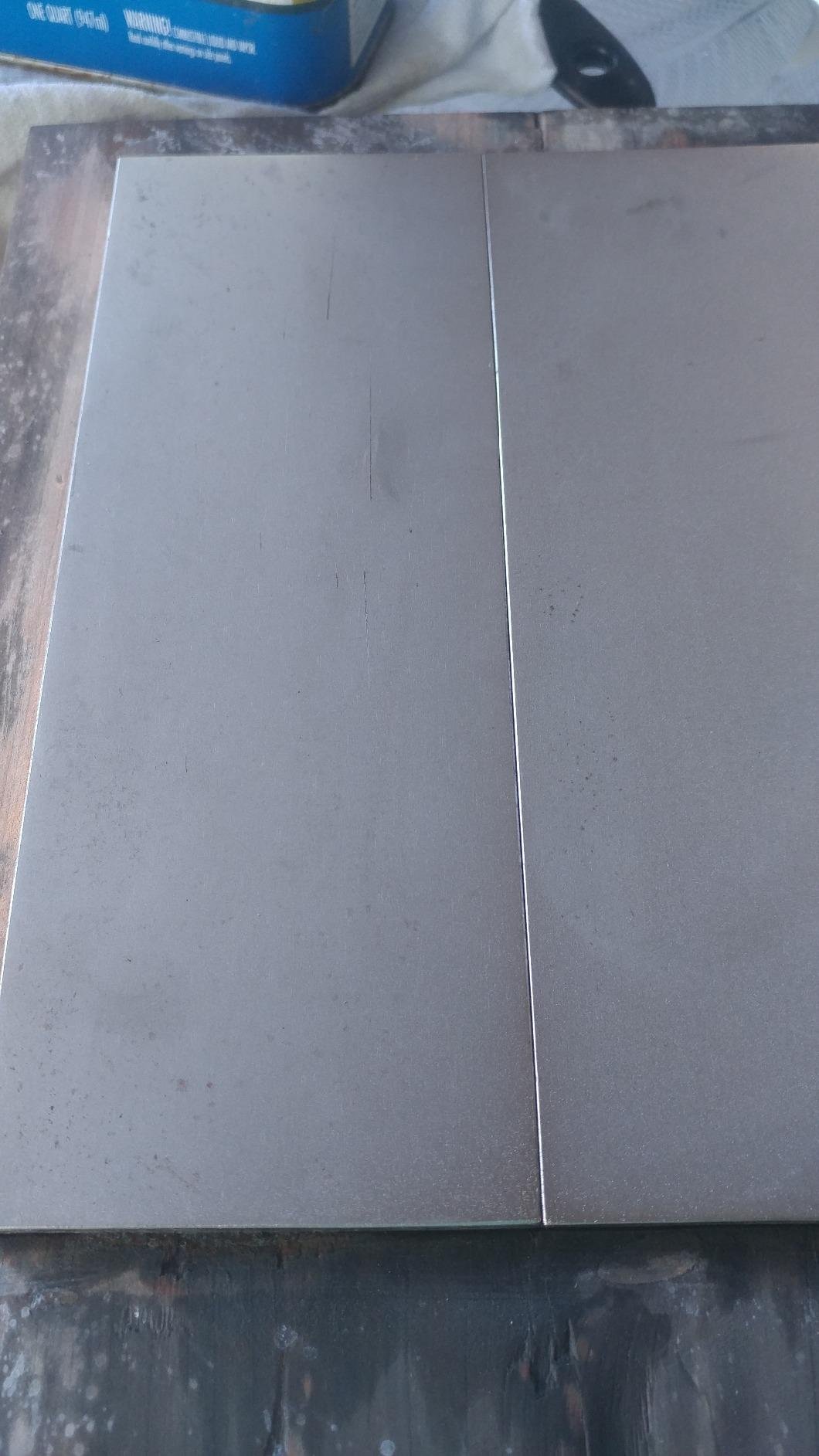
Reviewers treat this as a maintenance-grade bench plate rather than a reprofiling machine, and that framing is accurate. The plates are precisely machined steel with monocrystalline diamond electroplated on, which means the surface never hollows, never needs flattening and needs no soaking before or after use.
For bench work it is a genuinely useful tool. Chisels, plane irons, drawknives and everyday kitchen knives all get sharpened quickly on the 400 grit side and finished on the 1000. The steel body gives it real weight, which is more stability than most people think they need until they have sharpened on something that slides.
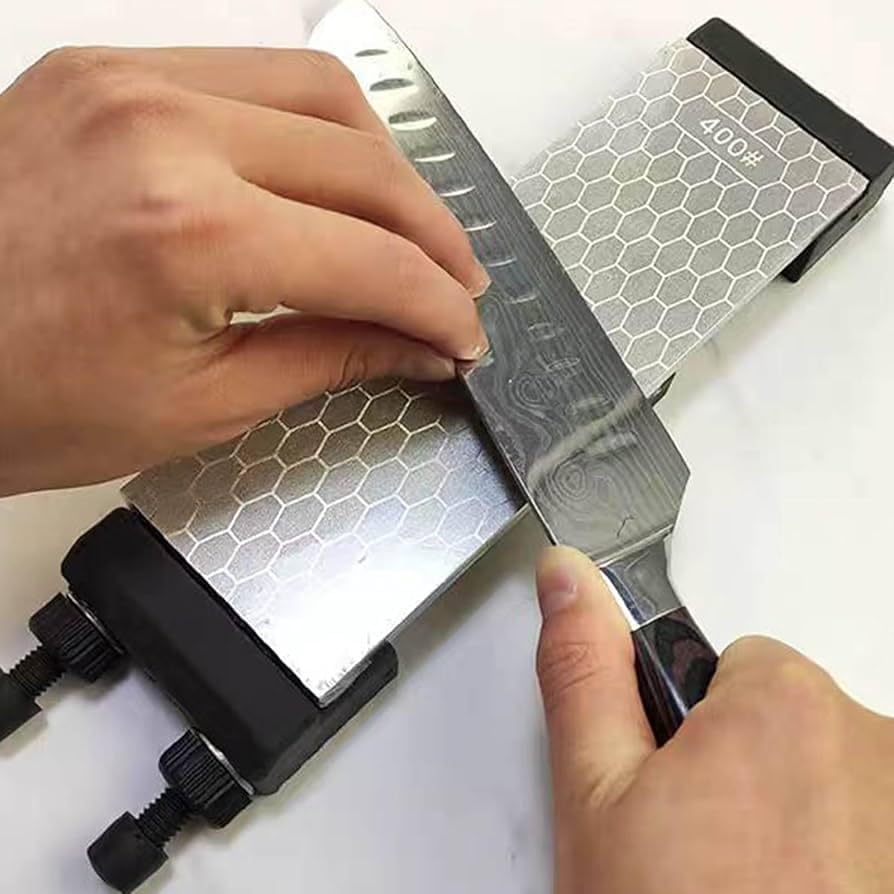
It comes as a bare plate rather than in a holder, so you need something stable to work on. The 400 grit side is also not aggressive enough to move a factory bevel efficiently, which is why many buyers use it as a first diamond stone or as a backup to a larger system rather than as their only one.
Is 400 grit enough diamond to sharpen a hard steel chisel?
For restoring an already-bevel edge, yes. For resetting a badly beaten chisel bevel, no, and this is the plate’s main limit. A 325 grit stone will get there much faster. Other grit pairings in the same line, including 150/600 and 400/1200, cover different jobs if you need a more aggressive starting point.
How does it compare with a whetstone for plane irons?
Faster and far less maintenance. A plated plate holds its flatness indefinitely, so your hollow-grind results stay consistent, and there is no flattening schedule. The trade is that the plating is thin, it cannot be lapped when worn, and the scratch pattern is coarser than a natural stone leaves behind.
11. Ultrasharp Three-Stone Diamond Set – Best Full-Size Stone Set
Ultra Sharp Diamond Sharpening Stone Set – 8 x 3 Coarse/Medium/Extra Fine
Three 8 x 3 inch stones in 300, 600 and 1200 grit
Stone holder fits 6 to 9 inch stones
Lifetime warranty
Works on ceramic blades
The Good
- Three full 8 x 3 inch stones give a complete progression
- Each stone weighs 2.2 pounds for stable long strokes
- Included holder organizes all three and doubles as a base
- Handles ceramic blades as well as steel
The Bad
- Eight pound package is awkward to store and carry
- Three stones at this size take real counter space
- No written guidance on grit sequence
The difference between this set and a dual-grit plate is surface area, and it is a bigger difference than the specifications suggest. Three full 8 by 3 inch stones at 300, 600 and 1200 grit give you a complete progression with room to work, and each one weighs 2.2 pounds, so a long stroke across a chef knife stays flat from one end to the other.
Buyers who want one purchase to cover a shop rate it highly, with a 4.7 average and roughly 84 percent five stars. It sharpens tools and ceramic blades as well as steel, and the included holder keeps the three stones organised and stable without buying anything else.
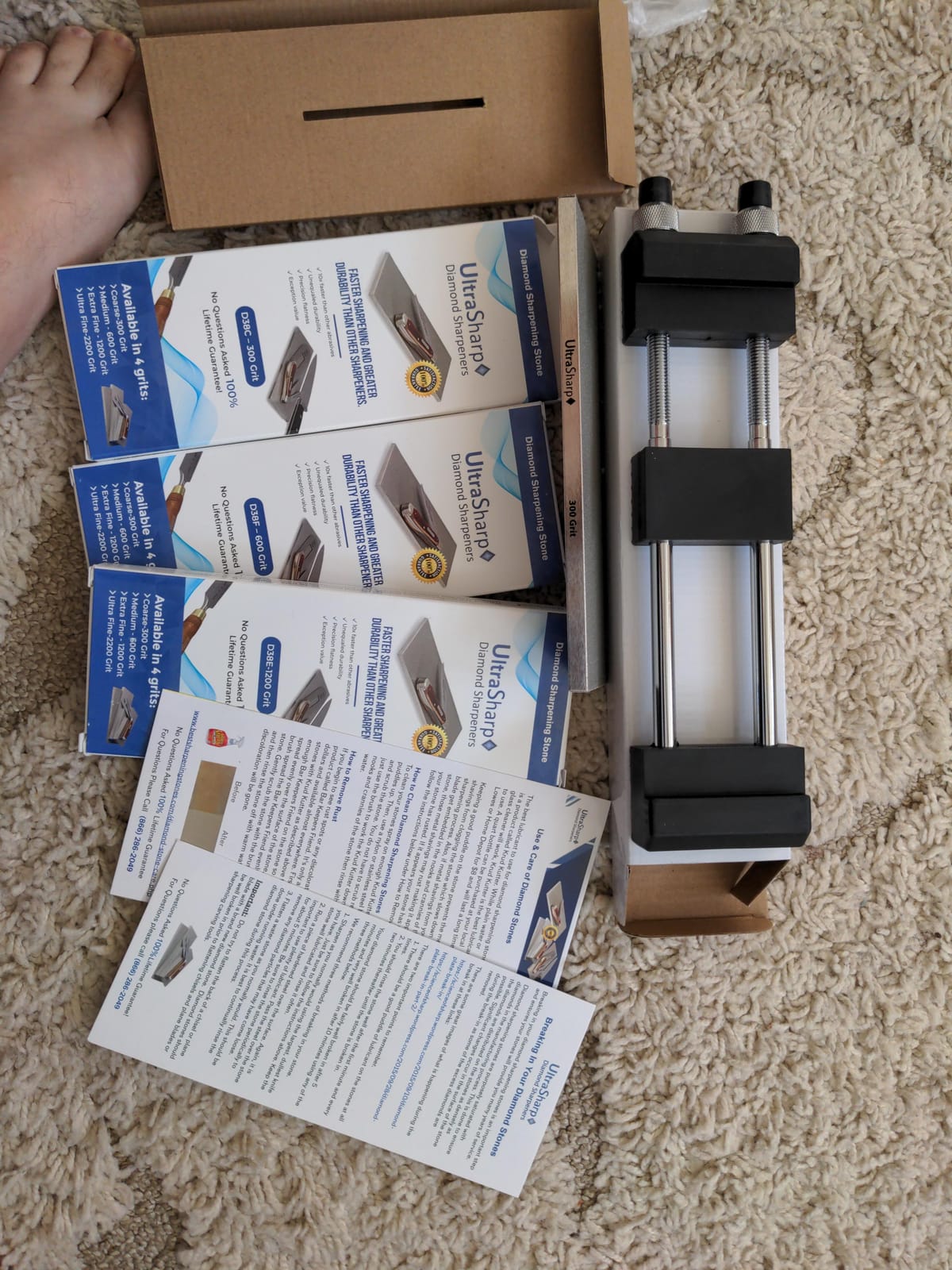
Size and weight are the honest cost here. Eight pounds of stone has to live somewhere, and if that somewhere is a small kitchen you will find yourself moving it around rather than using it. Reviewers also note that no instructions are included, so you need to understand the sequence before you start.
Is a three-stone 300, 600 and 1200 grit set enough for hard steel?
For everything except a true reprofile, yes. The 300 grit side resets a dull edge on hardened steel and the 600 removes its scratches, which is exactly the middle stage that dual-grit plates skip. For moving a 20 degree edge to 15 degrees, you would want something coarser than 300 to start.
Who should buy this instead of a single plate?
Anyone sharpening regularly enough that swapping plates is annoying, and anyone working on blades over eight inches where a small plate becomes the limiting factor. It is also the easiest way to cover a full reset, refine and polish cycle in one box if you are buying a complete sharpening setup rather than adding to one.
12. Smith’s DCS4 Combination Stone – Best for Pocket Knives and Fish Hooks
Smith’s DCS4 4” Diamond Combination Sharpener – Double Sided Stone – Outdoor Field Knife Sharpener – Fish Hook & Pointed Tools Micro Sharpener – Lightweight, Compact, Handheld
325 grit coarse and 750 grit fine
Folding handle stores the stone
Fish hook groove and micro pads
Rubber grip with lanyard loop
The Good
- Pocket knives sharpened in under a minute
- Dual grit with color coded sides
- Folding handle protects the stone in a pack
- Fish hook groove and micro pad for pointed tools
- Rubber grip and thumb guard work in wet conditions
The Bad
- Small stone demands a different hand-held technique
- Initial break-in period feels coarser than rated
- Diamond coating can scratch fine kitchen edges if used carelessly
Owners consistently frame this as a field and pocket tool rather than a kitchen stone, and in that role it is close to indestructible. The 325 grit yellow side and 750 grit orange side cover resetting and finishing, and the interrupted diamond surface is designed to trap metal filings rather than smear them across the face.
The handle folds around the stone, so it protects the coated surface from pack abuse while still giving you a real rubber grip with a thumb guard. Owners of folding knives and Mora-style outdoor blades report it restores an edge in under a minute, and the fish-hook groove on both sides handles the small hooks that V-style pull-throughs always tear.
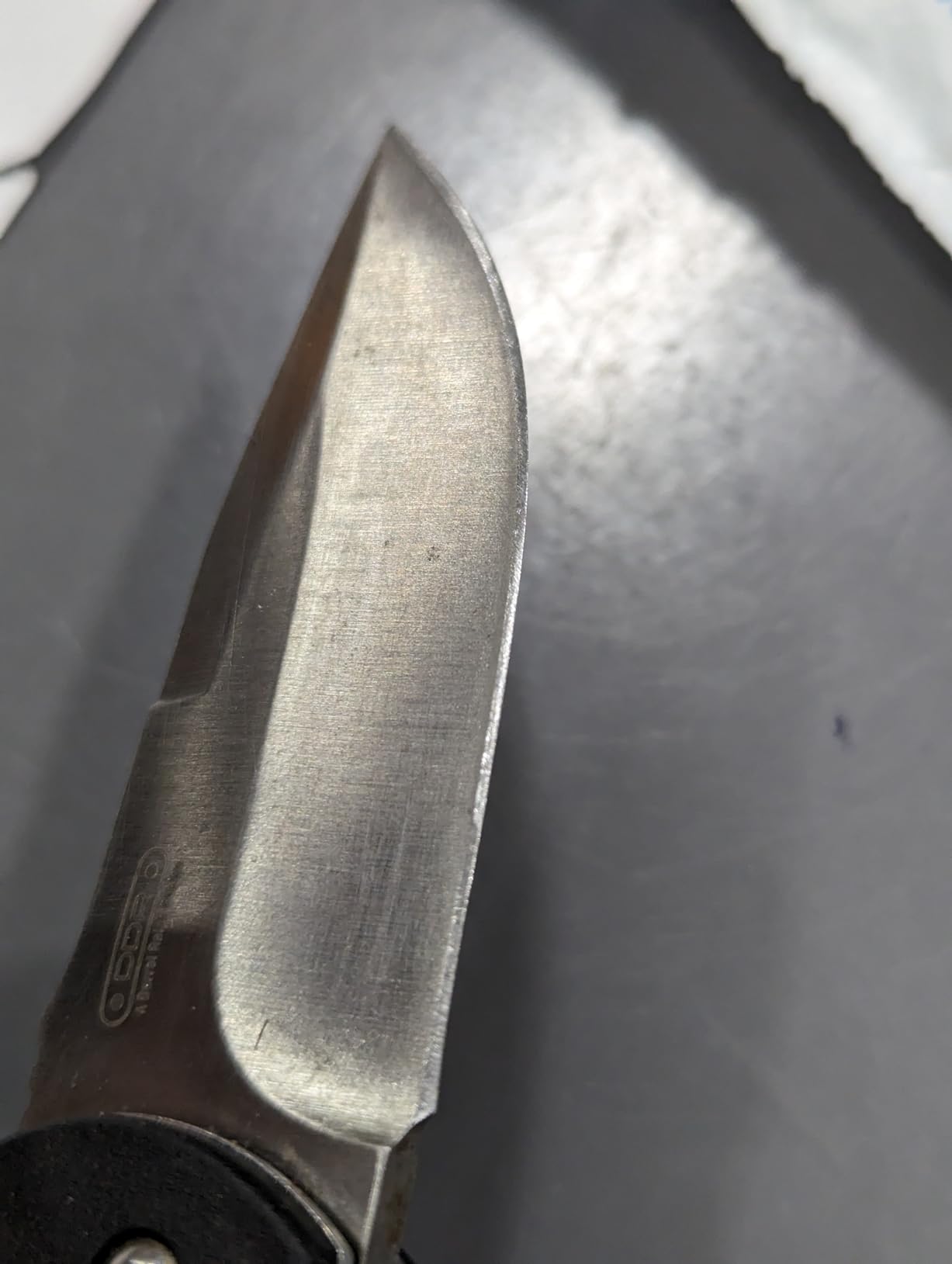
Expect a break-in period where both sides feel coarser than their ratings, and get into the habit of using the coarse side sparingly on an edge that is already sharp. A few reports also mention a thinner coating than the original product, which is worth knowing if you are comparing it to a long-established version.
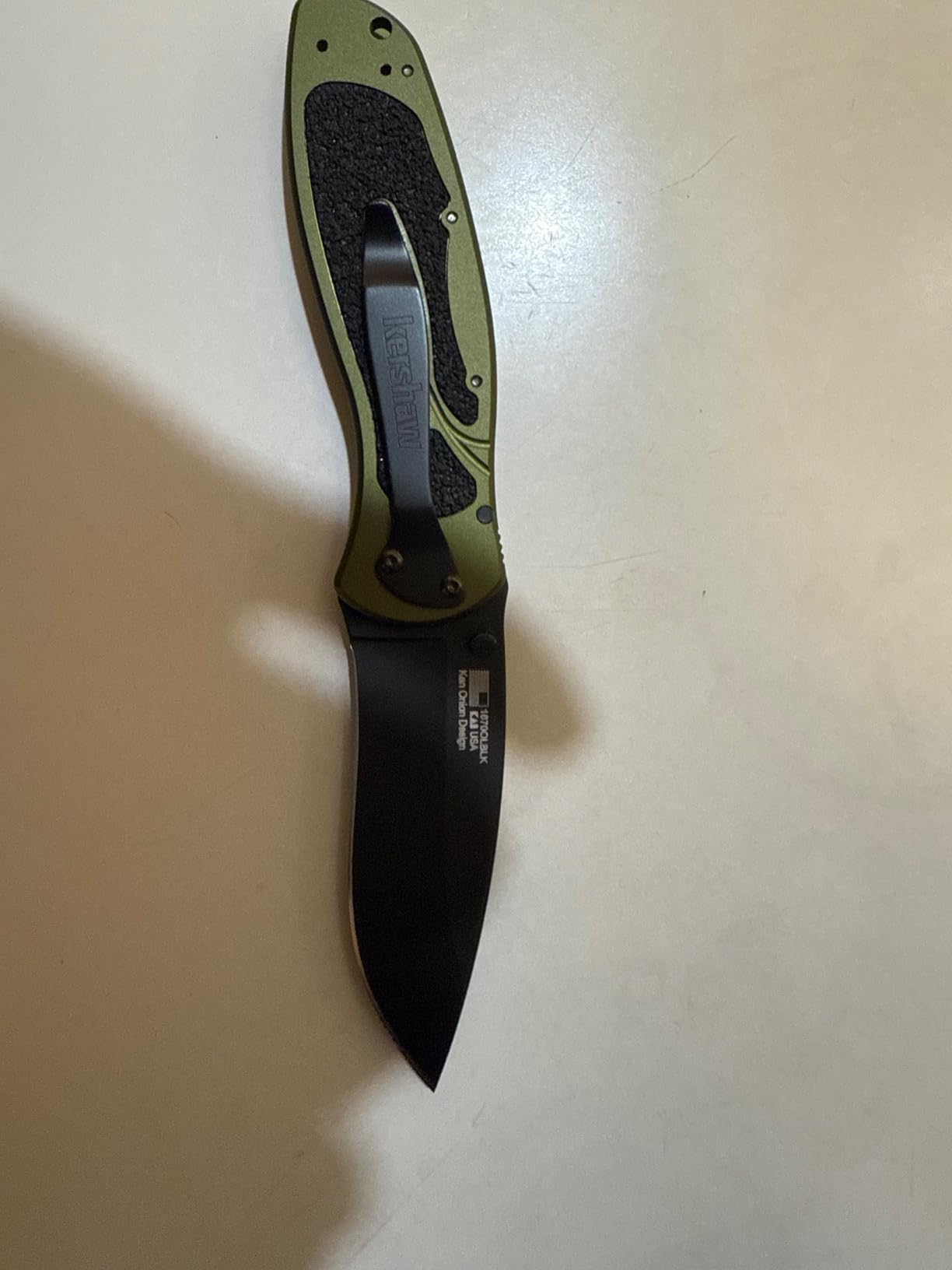
Is a small combination stone good enough for a hard steel pocket knife?
Yes, for everything a pocket knife edge needs. The 325 grit side sets a burr on 61 HRC steel and the 750 grit side refines it, and the plate is large enough to cover a 3.75 inch blade comfortably. It will not do a full reprofile, but pocket knives rarely need one.
When should you choose a bench stone instead of this?
When the blade is thin and flexible, or when you want a fixed, verified angle. Holding a small stone in one hand and working a blade in the other is a different skill from working a stone on a counter, and it takes practice to keep consistent. It is also not the right tool for a thin flexible fillet knife, where a dished edge would follow.
How to Choose a Diamond Sharpener for Hard Steel
Hard steel is a hardness number, not a marketing term. Steel is measured on the Rockwell C scale, and anything above roughly 60 HRC is where conventional abrasives start to struggle. MagnaCut, S35VN, S90V, 15V, YM21 and MaxForge all sit in that zone, which is why your old whetstone seemed fine until the day you bought a knife made from one of them.
Ceramic and carbide pull-through stages are the worst offenders. They glaze over almost immediately on those steels and keep looking like they are working, which is confusing. Diamond does not have that problem, which is the entire argument for this list.
Monocrystalline or electroplated: which surface construction should you look for?
Monocrystalline diamond has sharp, uniform crystal faces and holds a consistent cut for longer. Electroplated diamond is cheaper, plated thinly onto a steel base, and cuts fast at first but wears and flattens unevenly over time. Where a thin plating has worn through it cannot be lapped back flat, which is the complaint owners of plated plates raise most often.
Continuous bonded surfaces, as on the DMT blocks, sit between the two: more durable than plating without the cost of a full solid stone. For a knife you sharpen weekly for years, monocrystalline or bonded beats plated. For occasional touch-ups on hard steel, electroplated is perfectly adequate.
What grit sequence do you need to reprofile a 20 degree edge to 15 degrees?
Reprofiling is a coarse-first job, and the mistake is starting too fine. The sequence forum users describe, and the one that works, is: start at roughly 200 to 400 grit diamond to remove the old bevel and establish the new angle; move to 800 grit to refine the bevel; then 1200 to 2000 grit to polish; finish on a leather strop. Skipping the first step is why guided systems feel like they cannot fix a stubborn edge.
On hard steel the coarse stage is where the time goes. Expect to spend most of your effort there and to check your angle with a guide before you move up, because a wrong angle is harder to remove than a scratch.
Are diamond honing rods and steels better than diamond stones?
They are better at one specific job and worse at everything else. A diamond rod is fast, cheap and genuinely effective for straightening a rolled edge and maintaining sharpness between full sharpenings, and it will cut hardened steel. What it will not do is remove much metal, which means it cannot fix a chip, cannot change an angle and cannot reprofile anything.
That limitation is why the rods in this roundup are paired with a strop or a leather stage. A diamond steel refines an edge, and a strop takes the last metal away. A stone does the structural work. If you only pick one, pick based on whether you maintain or rebuild edges.
How long does diamond abrasive last on hard steel?
Longer than anything else you will put on a blade, but not forever. A ceramic stage on a 58 HRC kitchen knife wears out in a couple of years, which is why you see so many people replacing them. Diamond plates and files on hard steel typically give years of normal use before the coating is thin, and a bench stone surface outlasts that. The real cost is not the stone, it is the fact that plated surfaces cannot be restored.
Which diamond sharpener should you buy?
If you want one tool for everything and you do not want to learn stones, take the Work Sharp Guided Field Sharpener. If you never want to think about angle, take the Chef’sChoice 15XV and accept the counter space. If you want to reprofile, take the Work Sharp Precision Adjust Elite. If your knives are over eight inches, start with a bench stone such as the SHARPAL 162N or the DMT three-block kit. And if your steel is a ceramic blade, only diamond touches it.
Frequently Asked Questions
What is the best diamond knife sharpener for hard steel?
The Work Sharp Guided Field Sharpener is our top pick because it combines removable diamond plates, a rotating ceramic rod and a leather strop in one compact tool. It cuts hardened steels like MagnaCut and S35VN without glazing, and it suits both full sharpening jobs and quick maintenance between them.
Do I need a diamond sharpener for hard steel knives?
If your blades sit above roughly 60 HRC, then yes. Steels such as MagnaCut, S35VN, 15V, S90V, YM21 and MaxForge are hard enough that aluminum oxide stones and ceramic stages load up and glaze over almost immediately. Diamond is the only consumer abrasive that keeps cutting on them.
Are diamond sharpening steels good?
They are very good at what they do, which is straightening a rolled edge and restoring sharpness quickly on hard steel. What they cannot do is remove much metal, so a diamond rod or steel will not fix a chip, change an edge angle or reprofile a knife. For those jobs you need a diamond stone or a guided system.
What grit diamond stone do I need to reprofile a knife to 15 degrees?
Start coarse, around 200 to 400 grit diamond, and remove the entire old bevel before changing the angle. Then move to 800 grit to refine, 1200 to 2000 to polish, and finish on a leather strop. Starting fine leaves the old 20 degree bevel scratches in the edge and gives a poor result.
Monocrystalline or electroplated diamond stone, which is better?
Monocrystalline diamond has uniform crystal faces and holds a consistent cut for longer, so it is the better choice for regular use. Electroplated diamond is cheaper and cuts fast when new but wears unevenly, and once the plating is thin the plate cannot be lapped back flat. For occasional touch-ups, electroplated is still perfectly serviceable.
Does a diamond sharpener remove too much steel?
It can, if you are careless. The main risk is using a coarse grit too eagerly on a blade that is already sharp, which takes off far more steel than intended and is the most common complaint from owners of reprofiling kits. Use a lighter touch, check your angle with a guide, and save the coarse stage for edges that genuinely need resetting.
Can a diamond sharpener sharpen ceramic knives?
Yes, and it is the only practical option. Ceramic blades are harder than any natural stone or conventional abrasive, so they need diamond to be sharpened at all. Both the electric diamond stages and the diamond bench stones in this roundup are listed as working on ceramic blades.
Conclusion
After two months with all twelve, the honest answer to the question of the best diamond knife sharpeners for hard steel is that the format matters less than the abrasive. Diamond is what keeps these tools cutting on MagnaCut, S35VN, 15V and MaxForge when everything else has given up.
Take the Work Sharp Guided Field Sharpener if you want one tool that does everything, the Chef’sChoice 15XV if you want results without technique, and the Precision Adjust Elite or a coarse diamond stone if you intend to reprofile. Whichever you choose, match the grit to the job, strop the diamond away afterwards, and use light pressure.
Our picks and ratings for 2026 are based on hands-on use rather than customer review averages, so treat them as a starting point. Check the current details before you buy, and pick the tool that fits the steel you actually own.