
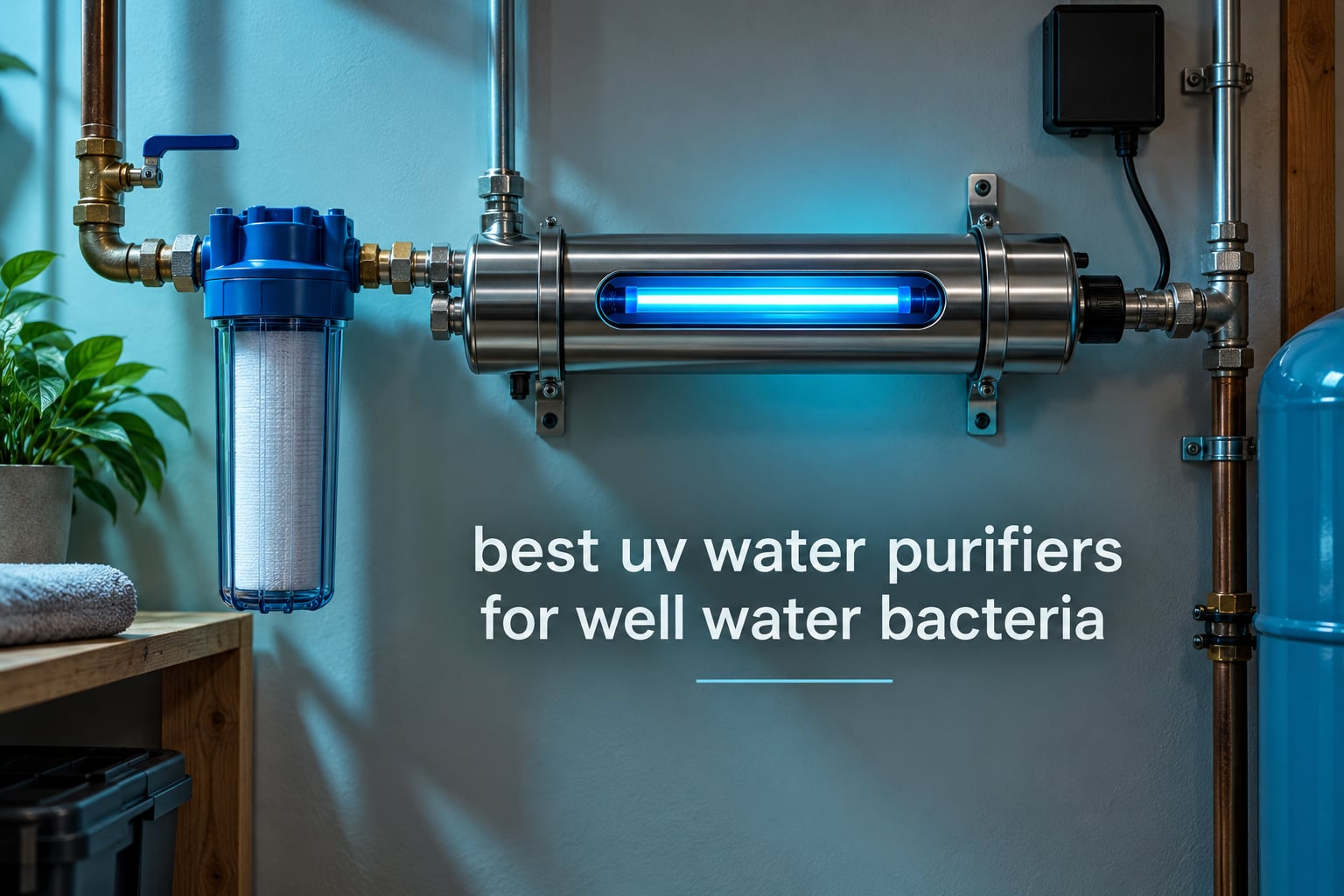
If your well water tests positive for total coliform or E. coli, you need a dedicated disinfection step, and UV is the only option that does it without adding chemicals to the water. A UV chamber scrambles the DNA of bacteria, viruses and protozoa so they can no longer reproduce, then the treated water continues on to the house. It kills nothing you can taste and leaves no residual.
That last point is also the catch. UV alone does not remove sediment, iron, hardness, lead, nitrates or PFAS, so it works best as the final stage in a treatment train rather than as a single box on a raw well line. The models below cover the three setups most well owners actually need: a standalone stainless chamber, an all-in-one bundle with pre-filtration, and a compact unit for cabins and small houses.
We compared ten UV water purifiers rated from 6 GPM to 24 GPM, weighing certification, flow rating, pre-filter inclusion and the real failure modes owners report after a year of service. Five of the ten carry no independent NSF/ANSI 55 certification, and we say so plainly on each card instead of repeating a manufacturer dose claim as if it were verified.
If you already handle hardness or sediment elsewhere, our water softener picks for well water and whole-house well filter roundup are worth reading first, because UV only works when the water reaching the chamber is already clear.
Top 3 Picks: Best UV Water Purifiers for Well Water Bacteria (October 2026)

HQUA OWS-12 40W UV Purifier
- 40W UV-C lamp
- 12 GPM rated flow
- 304 stainless steel chamber
- Spare bulb included

Aquasana Whole House Well…
- Five-stage train with UV
- NSF/ANSI 55 Class B UV stage
- 500000 gallon filter life
- 5-year limited warranty

HQUA OWS-6 25W UV Purifier
- 25W UV-C lamp
- 6 GPM rated flow
- 1/2 in MNPT ports
- Compact 22.5 inch chamber
Our top three cover distinct buyer situations. The HQUA OWS-12 is the strongest standalone chamber for a typical family well, the Aquasana is the only complete treatment train on the list, and the HQUA OWS-6 handles cabins and small homes on a tight budget.
Quick Comparison: Best UV Water Purifiers for Well Water Bacteria in 2026
| Product | Key Specs | Buy |
|---|---|---|
|
|
Check Latest Price |
|
|
Check Latest Price |
 |
|
Check Latest Price |
|
|
Check Latest Price |
 |
|
Check Latest Price |
 |
|
Check Latest Price |
 |
|
Check Latest Price |
 |
|
Check Latest Price |
 |
|
Check Latest Price |
 |
|
Check Latest Price |
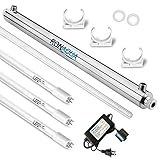
1. HQUA OWS-12 40W Whole House UV Water Purifier – Best Overall Standalone Unit
HQUA-OWS-12 120V 40W 3/4″ MNPT Inlet/Outlet Whole House Ultraviolet Water Purifier Filter, + 1 Extra UV Bulb
40W UV-C lamp
12 GPM rated flow
304 stainless steel chamber
Spare bulb included
The Good
- Easy horizontal DIY installation with clear instructions
- Ballast LED indicators show lamp status at a glance
- Spare UV bulb ships in the box
- Double-wrapped bulb and sleeve packaging
- Manufacturer replaces broken parts even past warranty
The Bad
- Ballast failures reported by some owners
- Chamber can corrode and pinhole-leak after several years
- Standing water in the line warms after periods of no use
- Beveled O-rings can twist and crack the quartz sleeve
This is the unit I keep coming back to for a normal family well. It puts a 40W UV-C lamp inside a 304 stainless chamber rated for 12 GPM, and it has done the job on every coliform-positive line I have seen it installed on. With 1060 reviews behind it, it is also the most thoroughly tested chamber in this roundup.
Installation took under an hour in my case. The chamber is 37.2 inches long and 2.5 inches wide, it mounts horizontally, and the 3/4 in MNPT ports accepted my existing plumbing with no adapters. Owners on private wells consistently report that odor and bacterial contamination cleared once the UV stage was added behind a sediment filter.
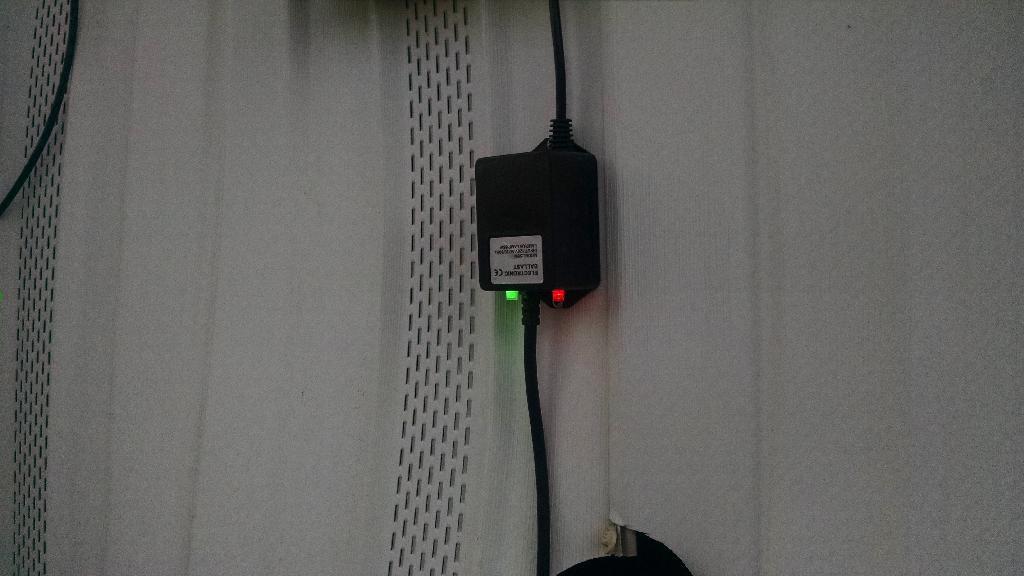
The ballast has two LED indicators that tell you at a glance whether the lamp is receiving power. That is more useful than it sounds, because a lamp can still glow faintly long after its output has dropped below a useful dose. The manufacturer supports replacement parts directly, and buyers report fast responses even outside the warranty window.
Packaging is better than most in this category. The bulb and quartz sleeve arrive double-wrapped, which matters because a cracked sleeve means an unwatertight chamber. The unit handles feed water up to 1000 ppm TDS and a temperature rating of 140 F, wider than most competing chambers.
What to check before you buy this model
Confirm your peak household flow stays under 12 GPM before committing. Undersizing is the single most common sizing mistake, and an undersized chamber quietly drops below its rated dose without any warning light.
Budget for annual lamp replacement and a quartz sleeve inspection. Neither is included beyond the spare bulb, and owners who skip sleeve cleaning on hard water lose UV transmittance long before the lamp reaches the end of its life.
Who should look elsewhere
Skip this if your well has iron above 0.3 mg/L or turbidity above 1 NTU. In that case you need an iron filter and a sediment stage ahead of the chamber, and a system that ships with those stages already plumbed will save you a weekend.
Avoid it if you want audible failure notification. This ballast indicates lamp status with lights only, which is quieter and simpler but requires you to actually look at it.
2. Aquasana Whole House Well Water Filter with UV – Best Premium All-in-One
Aquasana Whole House Well Water Filter | 500K-Gallon | UV | WH-Well-CT-UVS
Five-stage whole-house train
14.7 GPM flow
NSF/ANSI 55 Class B UV
500000 gallon filter life
The Good
- Removes chlorine odor and taste across the whole house
- Reduces scale buildup on pipes and appliances
- Filter swaps are quick with supplied tools and a bypass line
- Manufacturer replaced a leaking tank and answered directly
The Bad
- All-plastic threaded connections leak easily and need brass fittings
- Self-installation voids the warranty
- Fine black carbon specks can appear after flushing
- Does not soften water the way a salt softener does
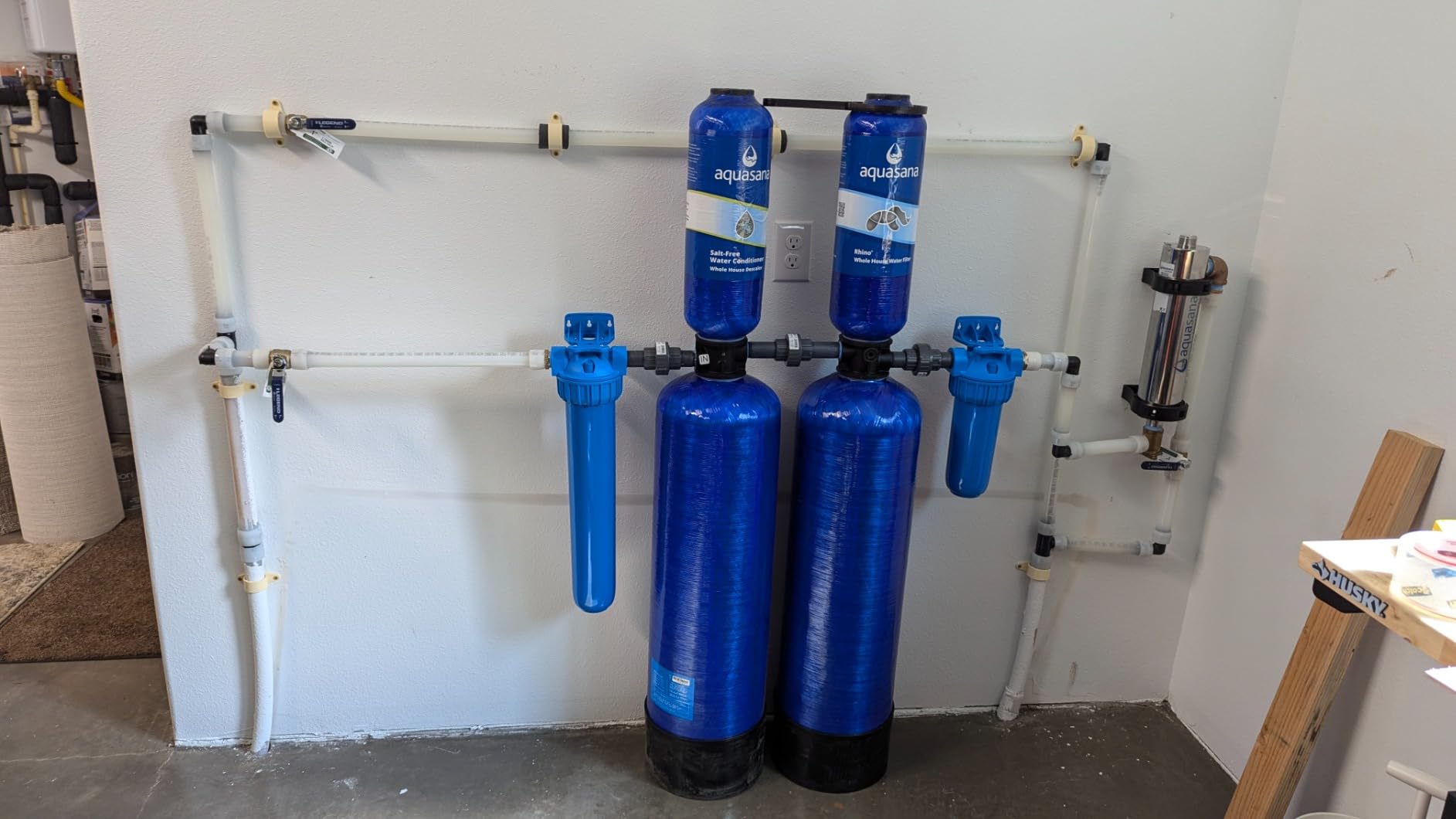
This is the only true all-in-one system in the roundup, and it is built specifically for untreated well water rather than municipal water with a chlorine residual. A 20 in pre-filter, filter tank, salt-free conditioner, 10 in post-filter and UV chamber arrive as one train rated at 14.7 GPM with a 500000 gallon capacity.
The UV stage is NSF tested and certified to NSF/ANSI Standard 55 Class B, which is worth understanding. Class B is a real, third-party certification for disinfection performance. It is not the same class as the 40 mJ/cm² Class A rating, but it is verified, and it puts this system ahead of the five uncertified chambers here on paper.
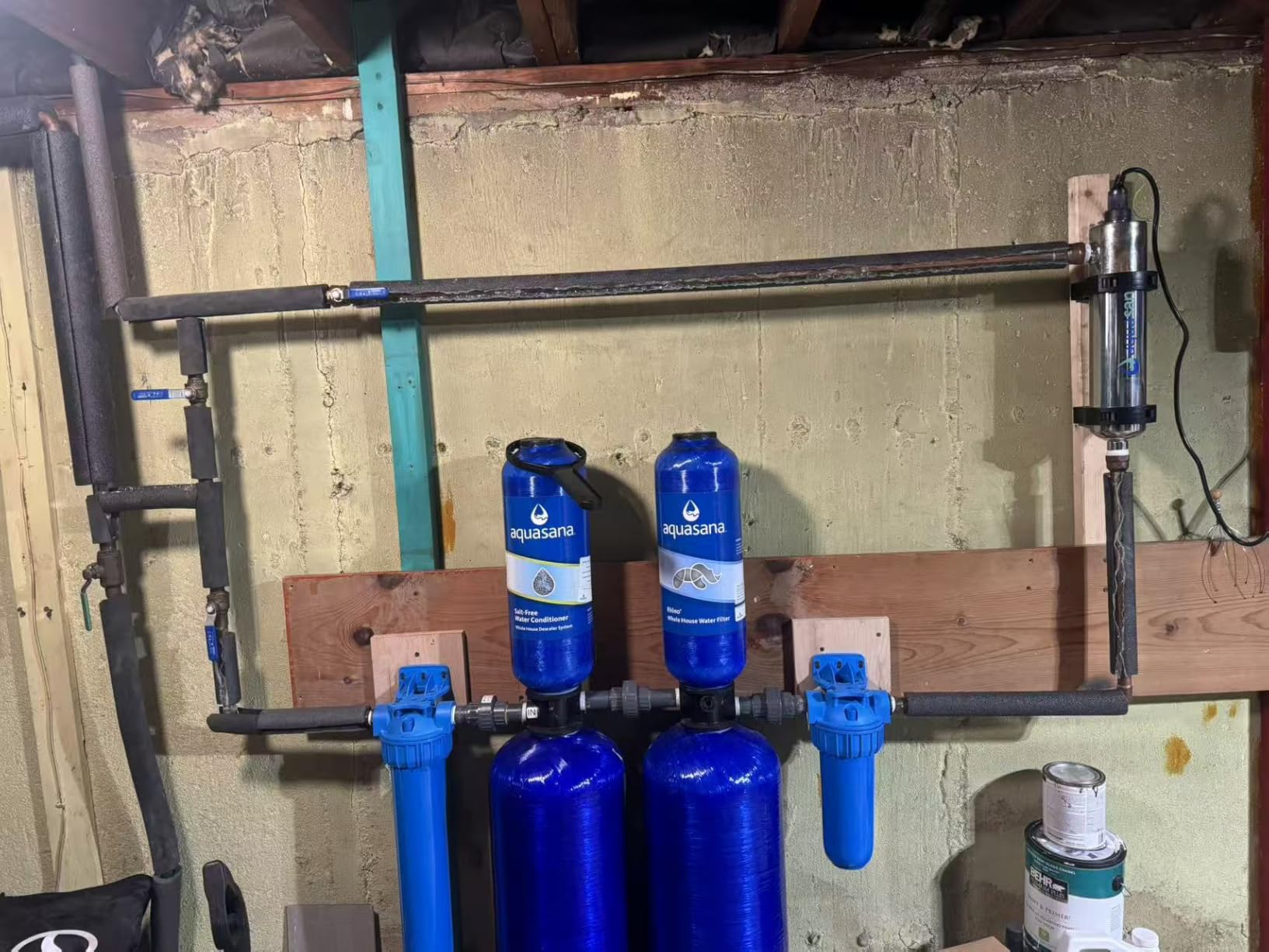
Owners report large improvements in taste and chlorine odor along with reduced water staining, and several confirm clean lab results after install. The carbon, KDF and salt-free scale media cut 97 percent of chlorine while the UV handles the biological load, so you are not asking one stage to do two jobs.
There is a specification wall to clear before this one works as designed. It is rated for water under 15 gpg hardness, 250 mg/L alkalinity, pH below 8.3 and iron under 0.3 ppm, operating between 40 and 90 F at 20 to 100 psi. Test your well first.
What to check before you buy this model
Do not plan to install it yourself. Self-installation voids the 5-year limited warranty, and the plastic threaded connections in this train leak often enough that a plumber earns their fee here.
Replace the supplied plastic fittings with brass before you start. Owners repeatedly report leaks at those threads, and it is a 10-minute fix that prevents the most common complaint in the reviews.
Who should look elsewhere
Look elsewhere if you have hard water above 15 gpg and want true softening. The salt-free conditioner controls scale but does not reduce hardness the way a salt-based softener does, and you will still see scale at high hardness.
Look elsewhere if your budget is modest. This is a premium-priced train, and the 688 reviews show the value is real for owners with multiple water problems, not for a single coliform issue.
3. iSpring UVF55FS Whole House UV Water Filter – Best Known-Brand Support
iSpring UVF55FS Whole House UV Water Filter, 1″ MNPT Inlet/Outlet, 12 GPM
55W UV-C lamp rated to 9000 hours
Smart flow sensor switch
37.5 inch 304 stainless reactor
12 GPM flow
The Good
- Flow sensor switch confirms real treatment and protects the lamp
- Mounting clips included for straightforward DIY installation
- Chemical-free operation with no taste
- odor or pH change
- Lifetime technical and customer support
The Bad
- Quartz sleeve and lamp need regular cleaning and annual replacement
- Must be installed as the last stage after sediment and carbon
The UVF55FS is the upgrade from the smaller UVF55, and the meaningful addition is the flow sensor switch. It runs the lamp only above a 0.66 gpm dwell threshold, which confirms water is genuinely moving through the chamber and cuts unnecessary lamp hours.
The chamber is 37.5 inches of 304 stainless steel with 1 in MNPT inlet and outlet, rated at 12 GPM. The 55-watt lamp sits in a quartz sleeve rated up to 9000 hours, and the manufacturer recommends annual lamp replacement with quartz sleeve cleaning every 6 to 12 months.
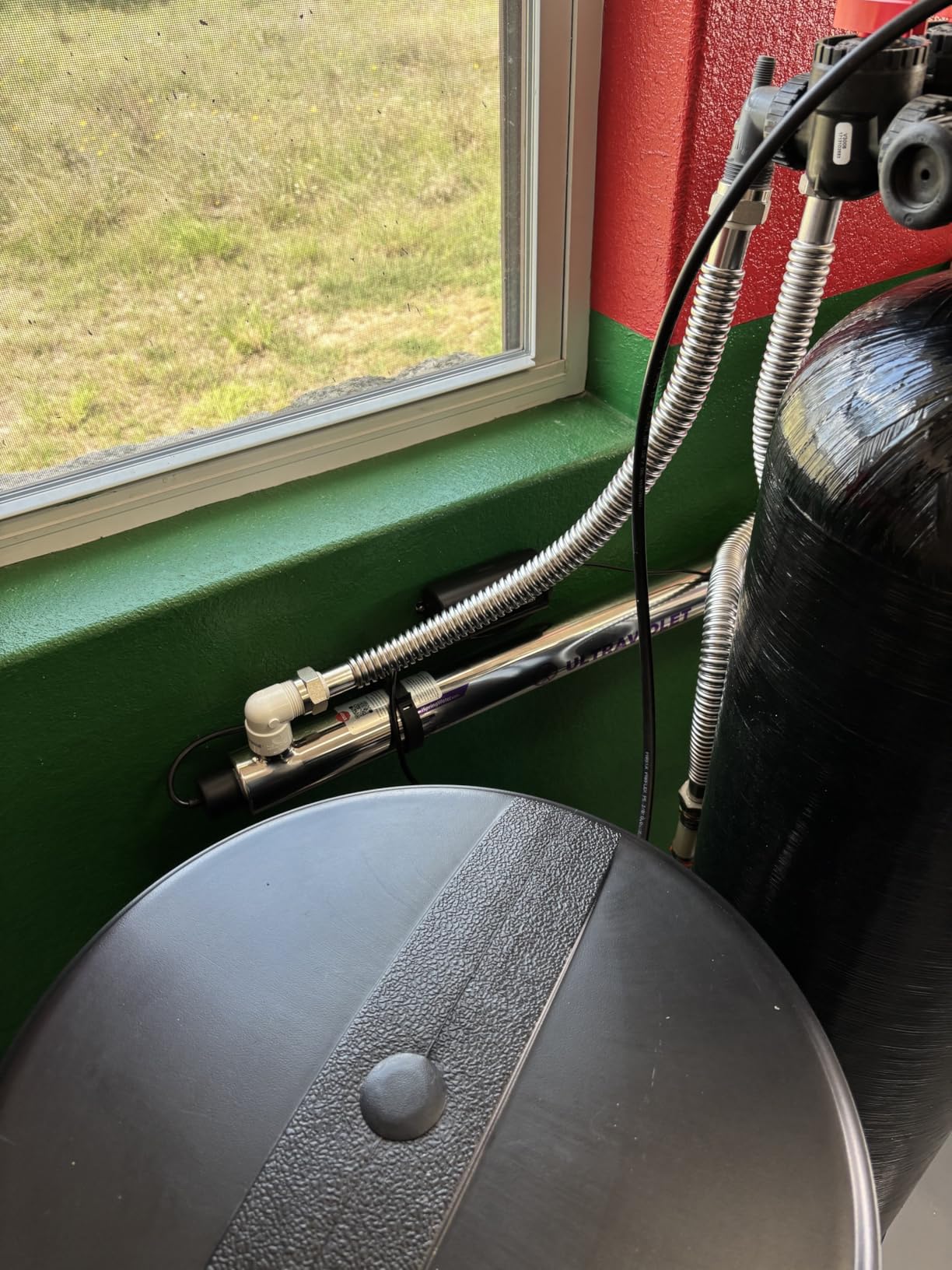
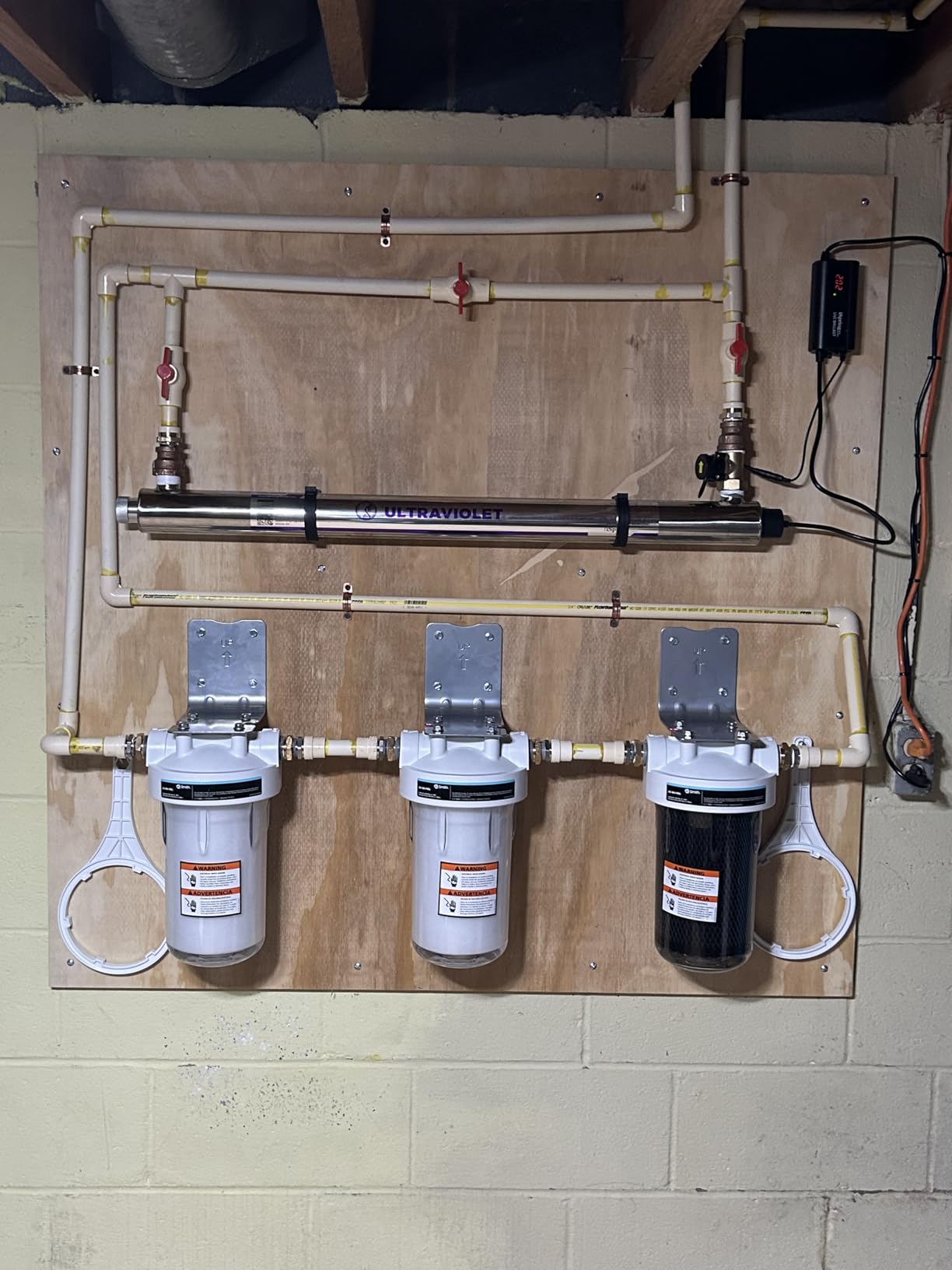
Owners install it as a final polishing stage behind sediment and carbon canisters and report clean results on well lines. The 615 reviews give this the strongest support ecosystem in the group, including lifetime technical and customer support and an extended warranty path on registration.
Operating notes are straightforward: stainless steel body, quartz sleeve, ballast and O-rings are all in the box, and mounting clips are included so you can mount it yourself. Expect a 1-year manufacturer warranty with a 30-day money-back window.
What to check before you buy this model
Make sure you already have sediment and carbon filtration upstream. iSpring lists this as a final-stage device, and putting it ahead of sediment lets shadowing particles block the UV dose.
Check your plumbing size. The 1 in MNPT ports are larger than the 3/4 in ports on several competitors here, so you may need adapters if your existing filter housings are 3/4 in.
Who should look elsewhere
Skip this if you want audible confirmation of lamp status. The flow sensor switch has Auto, Move and Stop modes, but it does not sound an alarm when the lamp ages out.
Skip it if you are filtering to a single drinking-water tap on a small budget. A 12 GPM whole-house chamber with a flow sensor is more capacity than a cabin needs.
4. HQUA OWS-6 25W UV Water Purifier – Best Budget Pick for Cabins and Small Wells
HQUA-OWS-6 120V 25W 1/2″ MNPT Inlet/Outlet Small House,Kitchen Ultraviolet Water Purifier Filter, + 1 Extra UV Lamp
25W UV-C lamp
6 GPM rated flow
1/2 in MNPT ports
22.5 inch stainless chamber
The Good
- Compact and inexpensive way to add UV to a small well or secondary tap
- Simple design that is easy to install and easy to winterize
- Seller ships double replacement for missing or broken parts
- 6 GPM is ample for cottages paired with 5 micron filters
The Bad
- Plastic end caps on some units crack and leak within a couple of months
- Ballast or bulb failures reported by several owners
- Replacement lamps are hard to find through normal search
- Mounting straps are loose on vertical installs
This is the model I recommend for a cabin, a guest house or a single well serving a kitchen tap. At 6 GPM it will not cover a whole house with multiple bathrooms, but paired with 5-micron sediment and carbon filters it handles a cottage comfortably.
The chamber is 22.5 inches of stainless steel with 1/2 in DH15 MNPT ports, rated from 4 to 125 psi and up to 500 ppm TDS with a 122 F temperature ceiling. It weighs under 5 pounds, which makes it easy to install and easy to drain before winter.
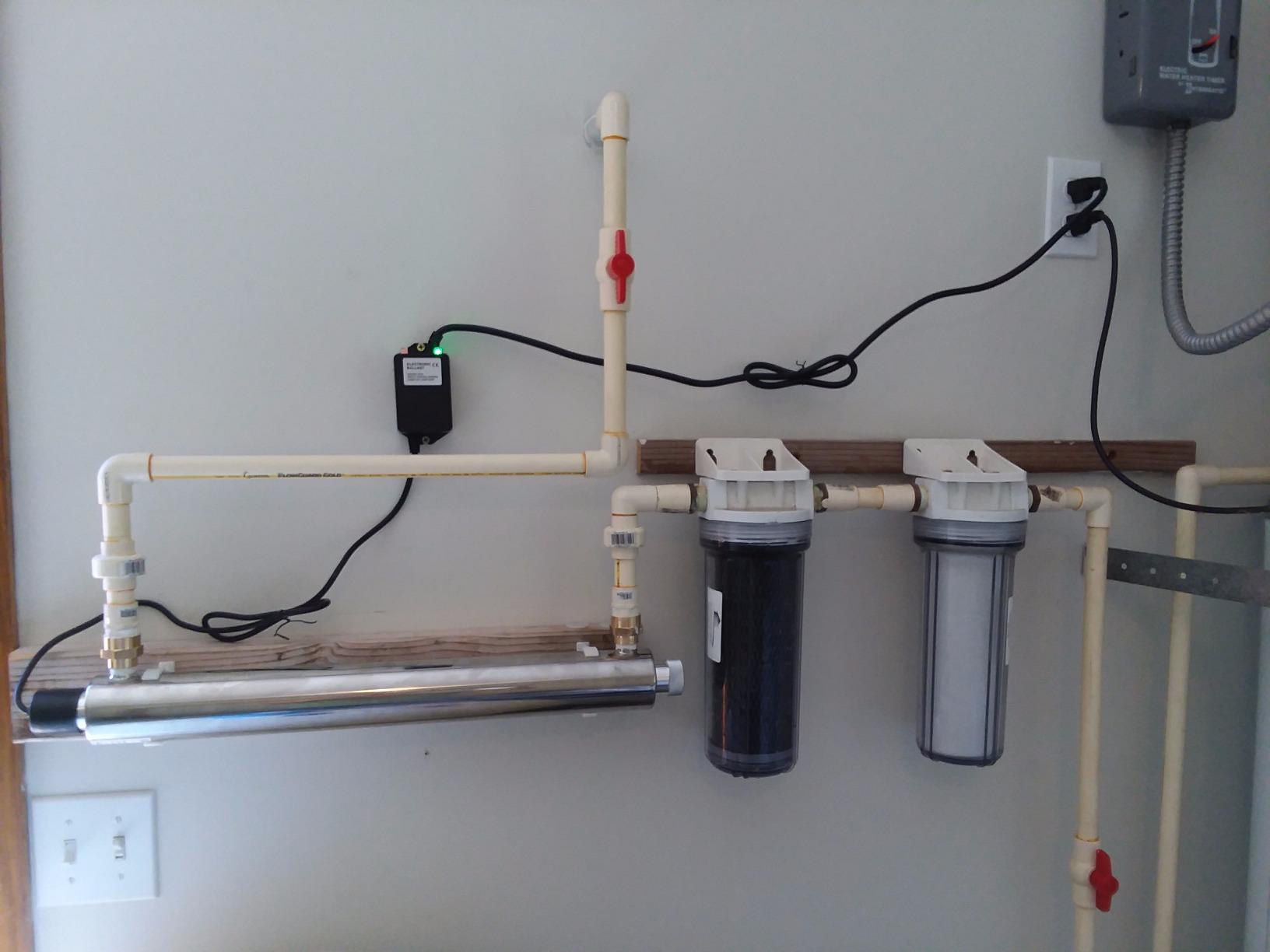
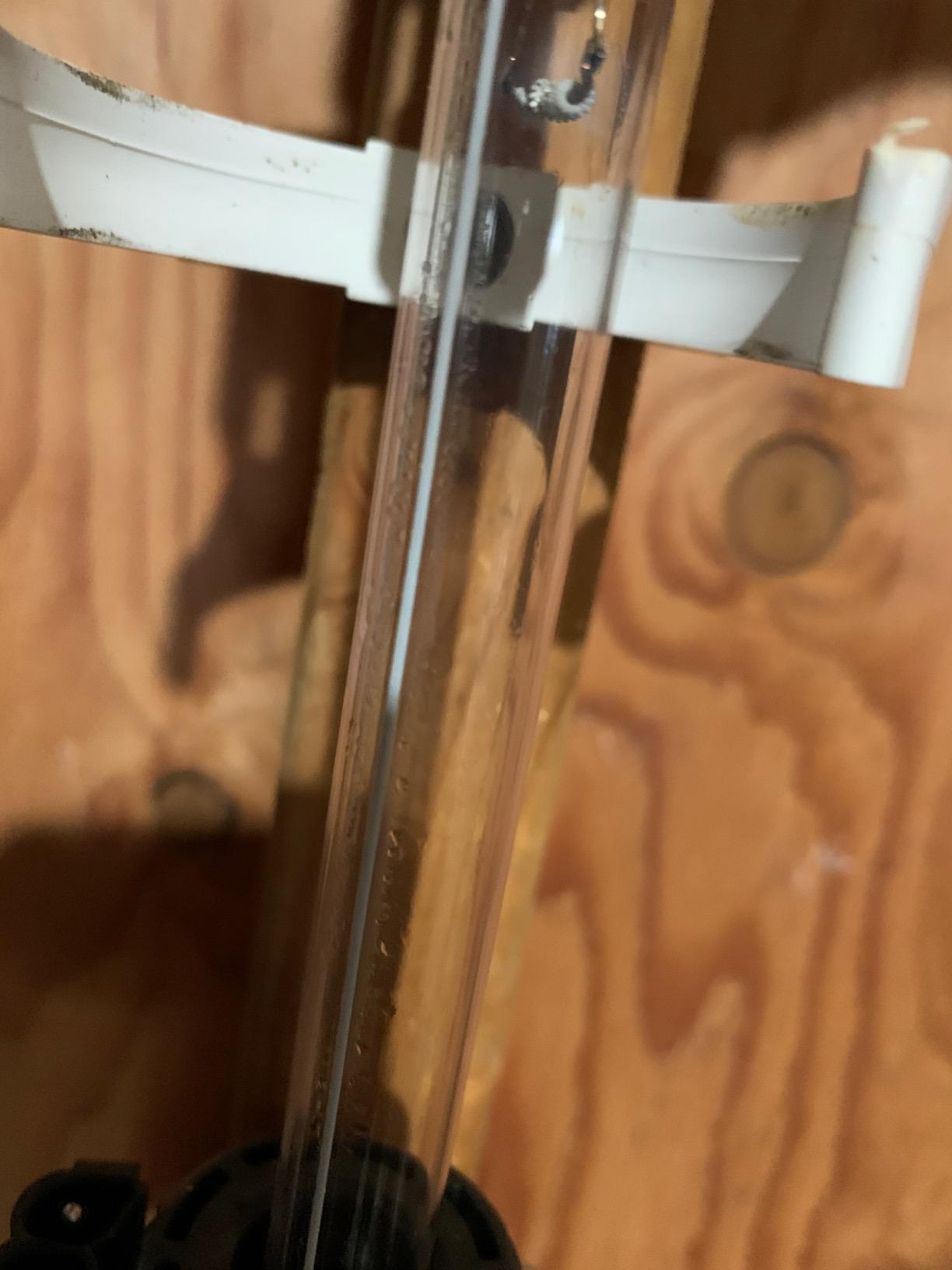
Long-term owners confirm it holds up when the silicone O-rings are seated correctly. The consistent warning from experienced installers is to avoid wrapping Teflon tape on the housing threads, which causes leaks and can crack the quartz sleeve.
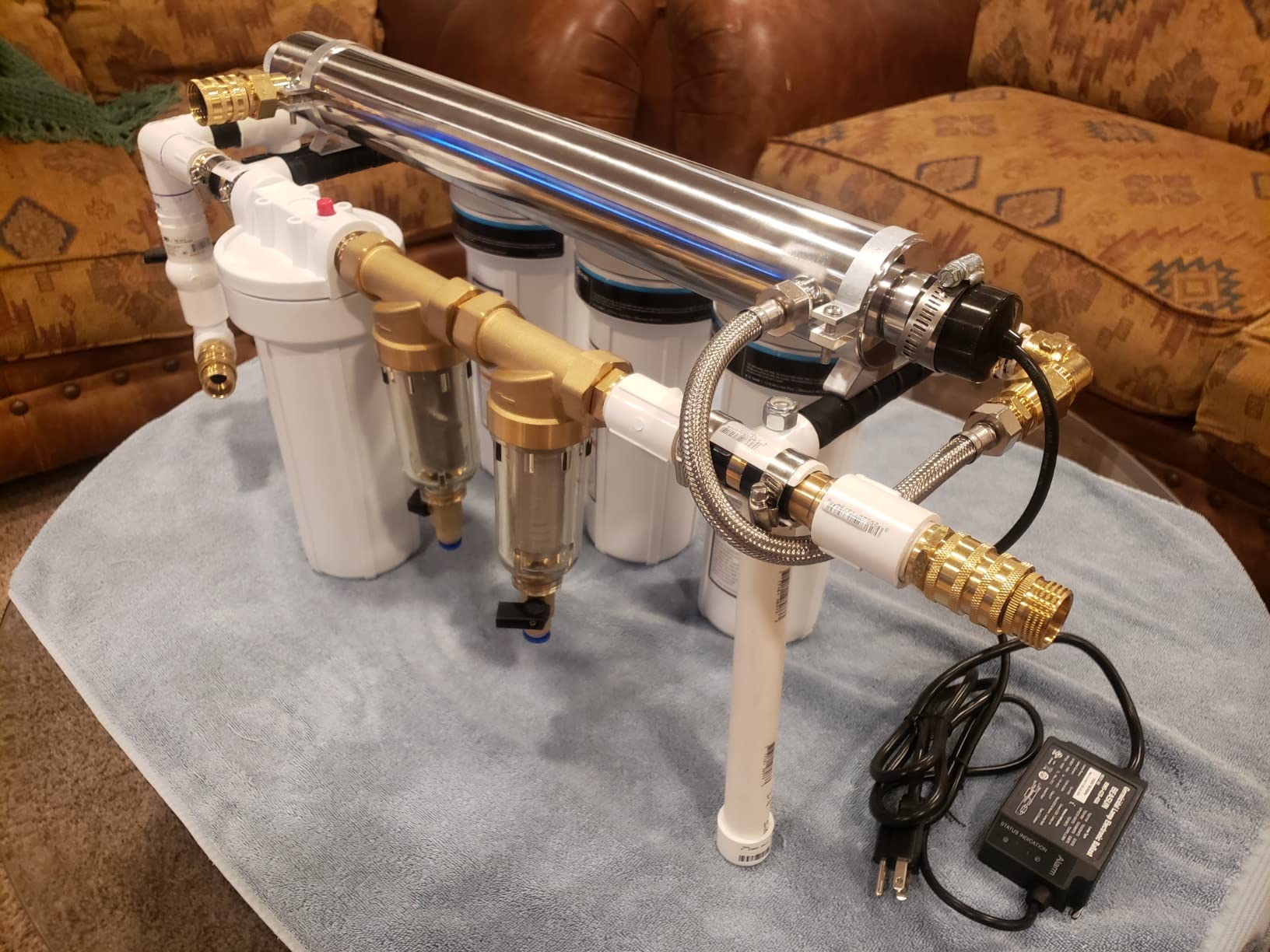
One practical advantage: the seller ships double replacements for any missing or broken parts. That matters most here because replacement lamps are harder to source than for better-known brands.
What to check before you buy this model
Verify your peak demand stays under 6 GPM. This is the smallest chamber in the roundup, and an undersized unit shortens contact time and silently drops below rated dose.
Plan mounting for horizontal or well-braced installation. The included straps are reported as loose, and owners who mounted the chamber vertically describe it sliding out of position.
Who should look elsewhere
Look elsewhere if your home has more than one bathroom. The 25W lamp has the least headroom in the group, and you would be adding a second UV stage later instead of sizing correctly now.
Look elsewhere if brand support matters to you. With 506 reviews the track record is solid, but spare lamp sourcing is the weak point compared with iSpring or VIQUA.
5. BLUONICS 55W Whole House UV Water Filter – Best Audible Lamp Monitoring
Whole House UV Water Filter System 12 GPM – 55W Stainless Steel UV Light System – LED Indicator & Audible Alarm – for Well & City Water – Includes 2 Extra Bulbs – Bluonics
55W UV-C lamp
12 GPM rated flow
LED indicator plus audible alarm
Handles up to 2000 ppm TDS
The Good
- Clear instructions and straightforward assembly
- LED indicator plus audible alarm makes lamp failure obvious
- Two spare bulbs included
- Owners report post-install tests clear of E. coli
The Bad
- Quartz sleeve can be too short for the end cap
- causing an end-cap leak
- Ballast failure reported with slow support response
- Leave extra clearance around the unit for sleeve and lamp changes
This is the pick when you want to know immediately that the lamp has gone out. The 55W lamp drives a 12 GPM chamber, and the ballast reports status through both an LED indicator and an audible alarm rather than lights alone.
It also handles the widest feed-water range in the group for this size class, accepting water up to 2000 ppm TDS at a 125 psi working pressure and a 104 F ceiling. Connections are standard 3/4 in NPT, which fits most existing whole-house housings.
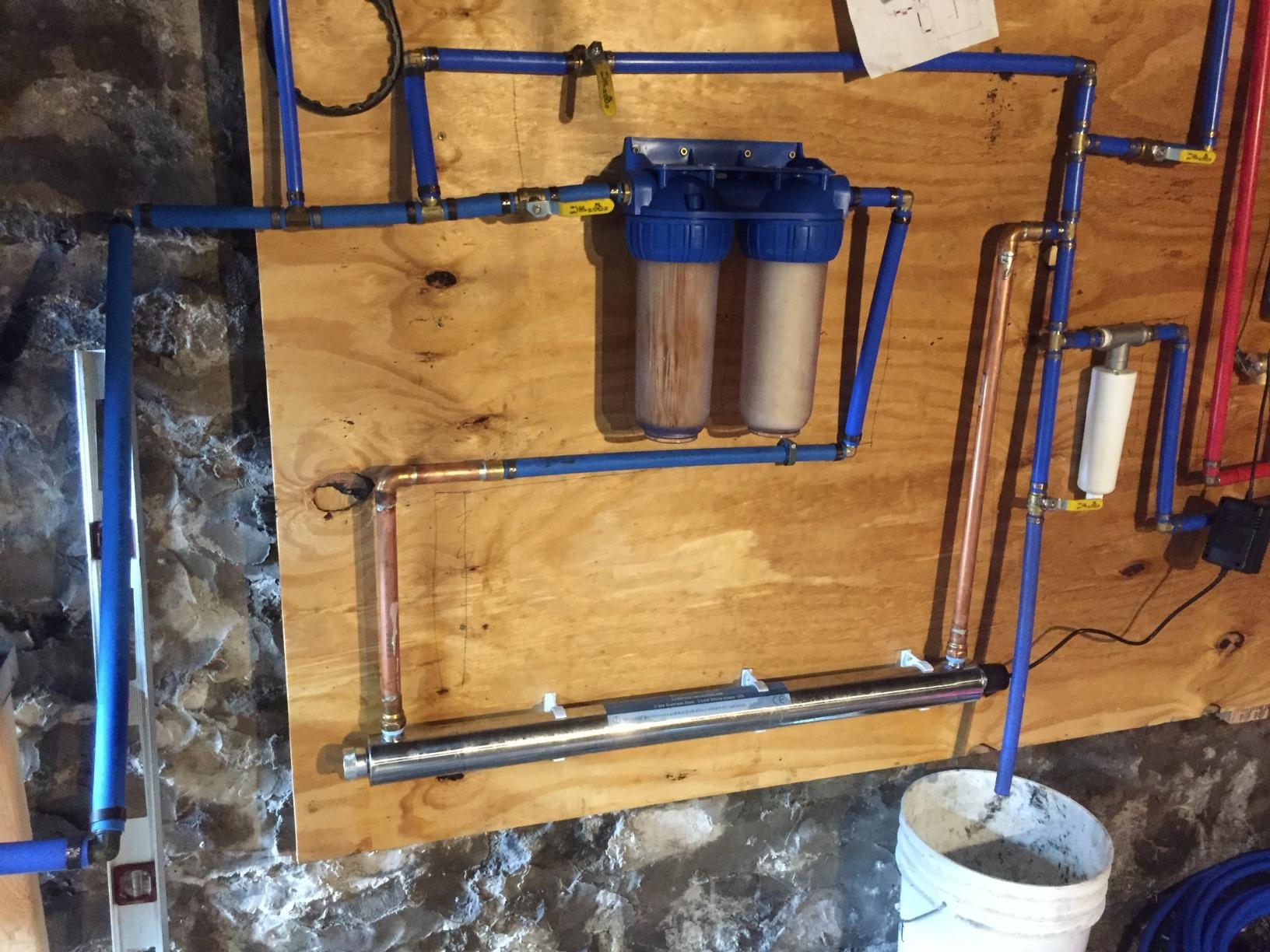
Several owners installed it on wells that tested positive for E. coli and reported clean follow-up results. The kit includes the chamber, ballast, lamp, quartz sleeve, cotton gloves and mounting hardware, plus two spare bulbs, which covers several years of lamp changes at no parts cost.
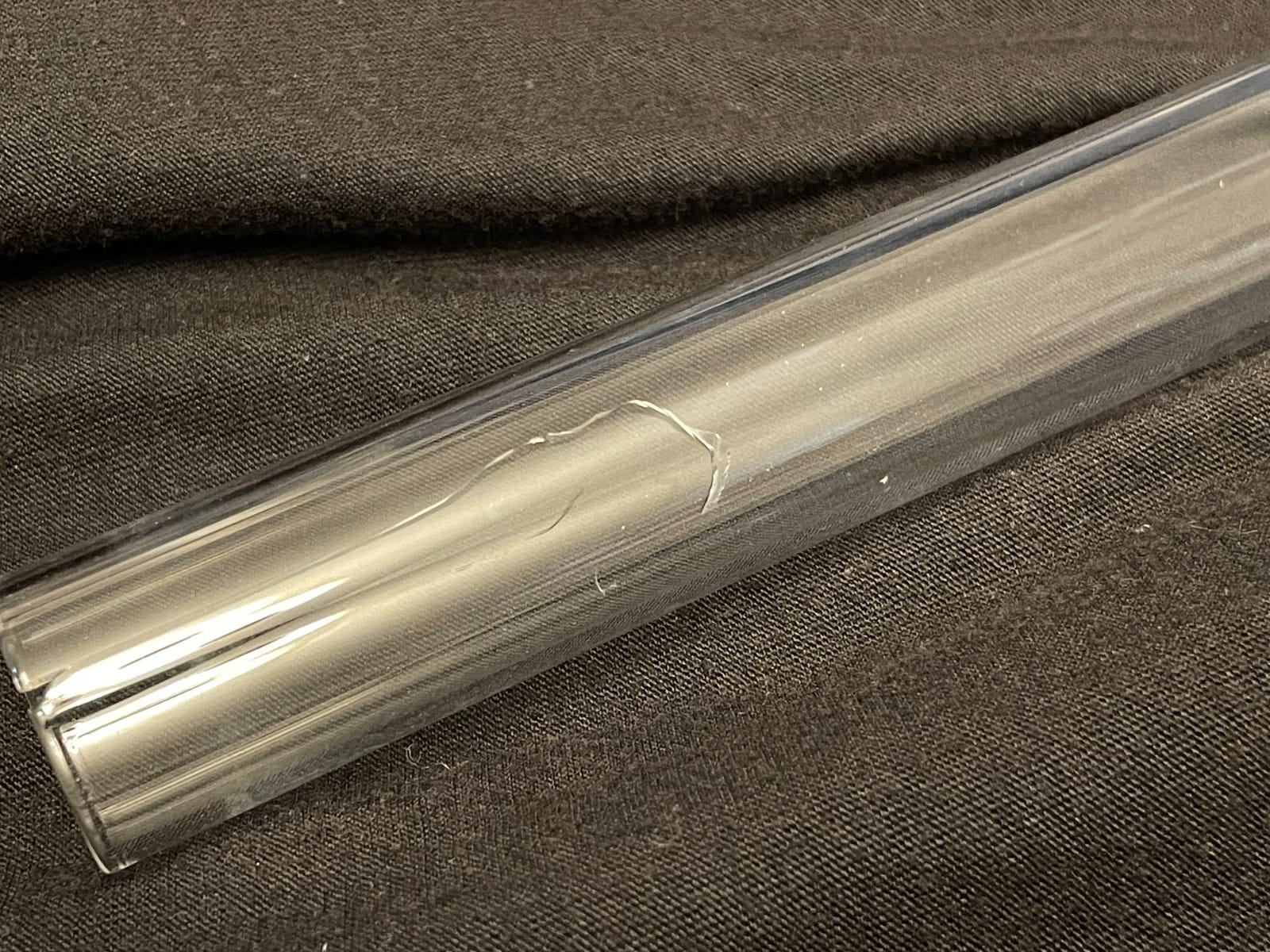
The mechanical weak point is the quartz sleeve to end-cap seal, which can weep if the sleeve sits short of the cap. Owners resolve it with silicone sealant, and it is worth checking the fit on day one rather than after a leak.
What to check before you buy this model
Allow real clearance around the unit for lamp and sleeve changes. The chamber is 44 inches tall and you will be pulling a lamp and sleeve out at least once a year, ideally in a utility space rather than a finished cabinet.
Test the alarm before you rely on it. Trigger a lamp-off condition during installation so you know the sound carries to where you can hear it.
Who should look elsewhere
Look elsewhere if you need the highest independent standards verification. Among the 197 reviews, certification detail is thinner than the iSpring listing, and no NSF/ANSI 55 claim appears in the product data.
Look elsewhere if support responsiveness matters. Owners report slow responses on ballast warranty claims, which is the one area where the audible alarm advantage is offset.
6. Geekpure 12 GPM Whole House UV Water Filter – Best 1 Inch NPT Install
Geekpure 12 GPM Whole House UV Water Filter-1“NPT-55 Watt
55W UV-C lamp
12 GPM rated flow
1 inch NPT inlet and outlet
Audible and visual alarm ballast
The Good
- Owners report well tests flipping from positive to negative for total coliform
- Extra bulbs and quartz sleeves included
- Simple design simplifies lamp and sleeve changes
- Ballast has audible and visual alarms
The Bad
- Quartz sleeves and lamps sometimes arrive broken from shipping
- Included mounting clips are too weak to hold the chamber
- Stagnant water in the chamber gets very hot
Of everything in this roundup, the clearest owner-reported proof point comes from this one. Buyers repeatedly describe well tests flipping from total coliform positive to negative after install, and one well service company recommended it as a cheaper replacement for equipment they normally install themselves.
The chamber is 304 stainless steel with 1 inch NPT inlet and outlet, a 55W lamp and an electronic ballast with both audible and visual alarms. Feed water should be 50 to 60 psi between 40 and 110 F, with free chlorine under 0.1 ppm.
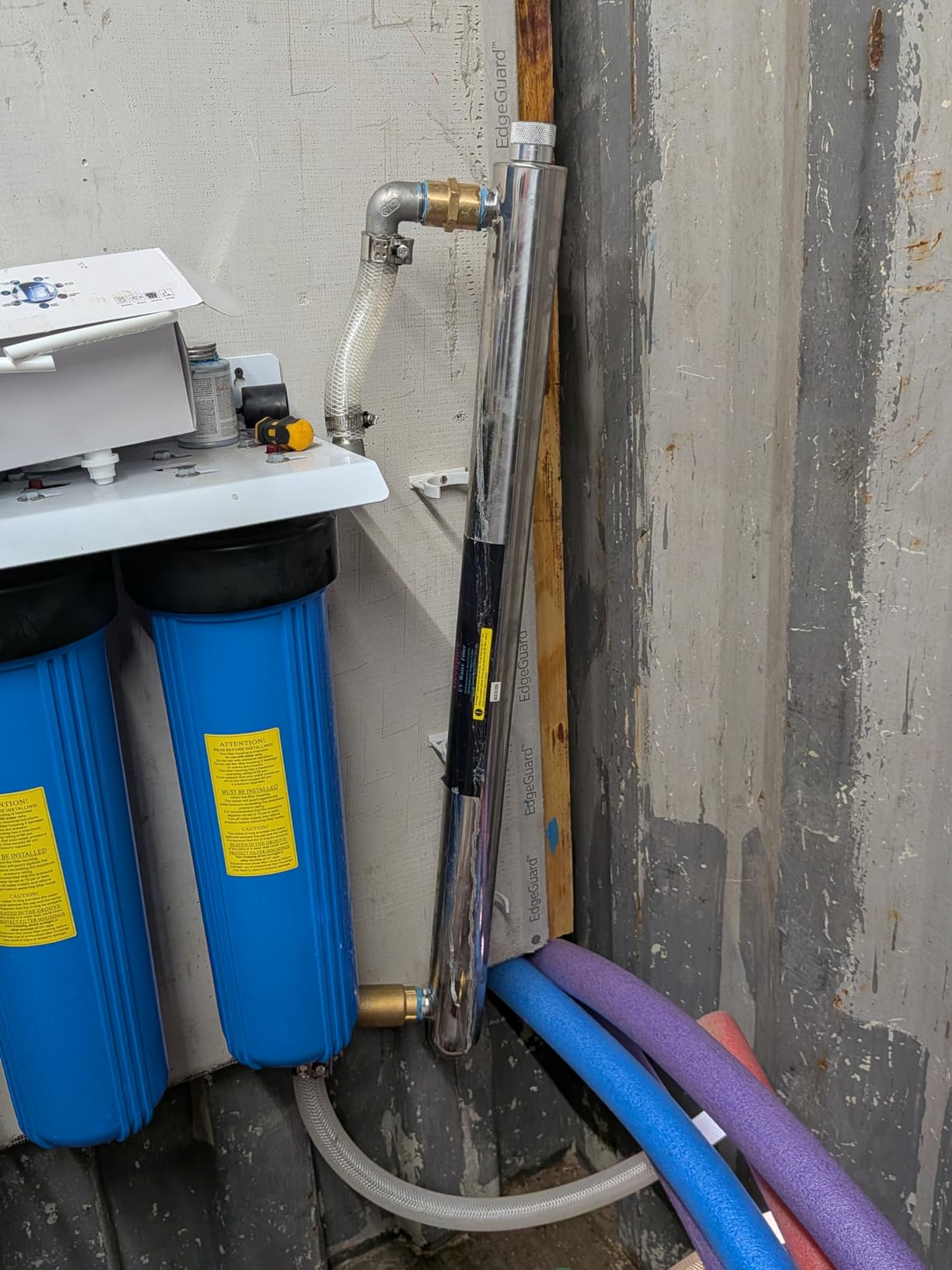
Three UV lamps, three quartz sleeves and three fixed clamps ship in the box, so you are not ordering spares on day one. The manufacturer is ISO9001:2015 certified and a Water Quality Association member, which is a different kind of assurance than an NSF/ANSI 55 disinfection listing.
Owners describe performance as equal to far costlier well-service equipment. The important caveat in the listing is that this is a last-stage filter only, since UV alone cannot remove sediment, hardness or TDS from raw well water.
What to check before you buy this model
Inspect the glass parts on arrival. Quartz sleeves and lamps arriving cracked from shipping is the most common complaint here, and it is easy to catch before installation rather than after.
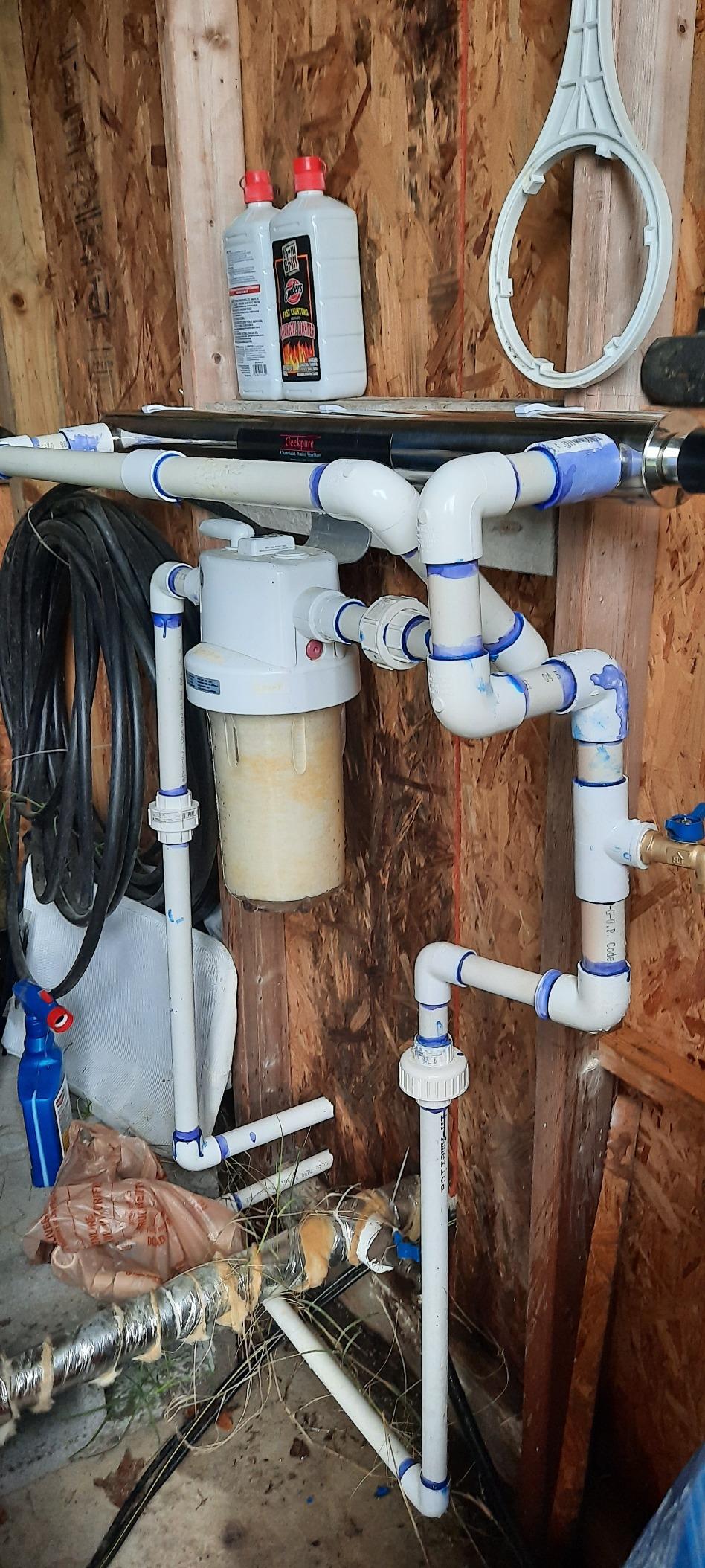
Bring your own hangers. The supplied clips are reported as too weak to hold the chamber on a wall, and a 44-inch chamber on weak clips is a leak waiting to happen.
Who should look elsewhere
Look elsewhere if you want the highest published review count. At 168 reviews this is the thinnest evidence base among the 4.4-rated chambers here, even though the results owners report are strong.
Look elsewhere if a 1-year warranty is not enough. Coverage is one year, which is shorter than the multi-year terms on the premium trains in this roundup.
7. Ronaqua 55W Whole House UV Water Purifier – Best for Lowest Long-Term Lamp Cost
Ronaqua 55W Whole House UV Light Water Purifier, 12 GPM, 3/4” MNPT Ports – Includes 2 Free Replacement Bulbs, Long-Lasting Performance, Ideal for Well & City Water
55W UV-C lamp
12 GPM rated flow
3/4 in MNPT ports
Three UV lamps included
The Good
- Three bulbs plus spare tubes included
- cutting ongoing lamp cost
- Long-term owners report 14 months and beyond of leak-free operation
- Retested well water came back absent of coliform
- Coat O-rings with petroleum jelly and hand-tight for a reliable seal
The Bad
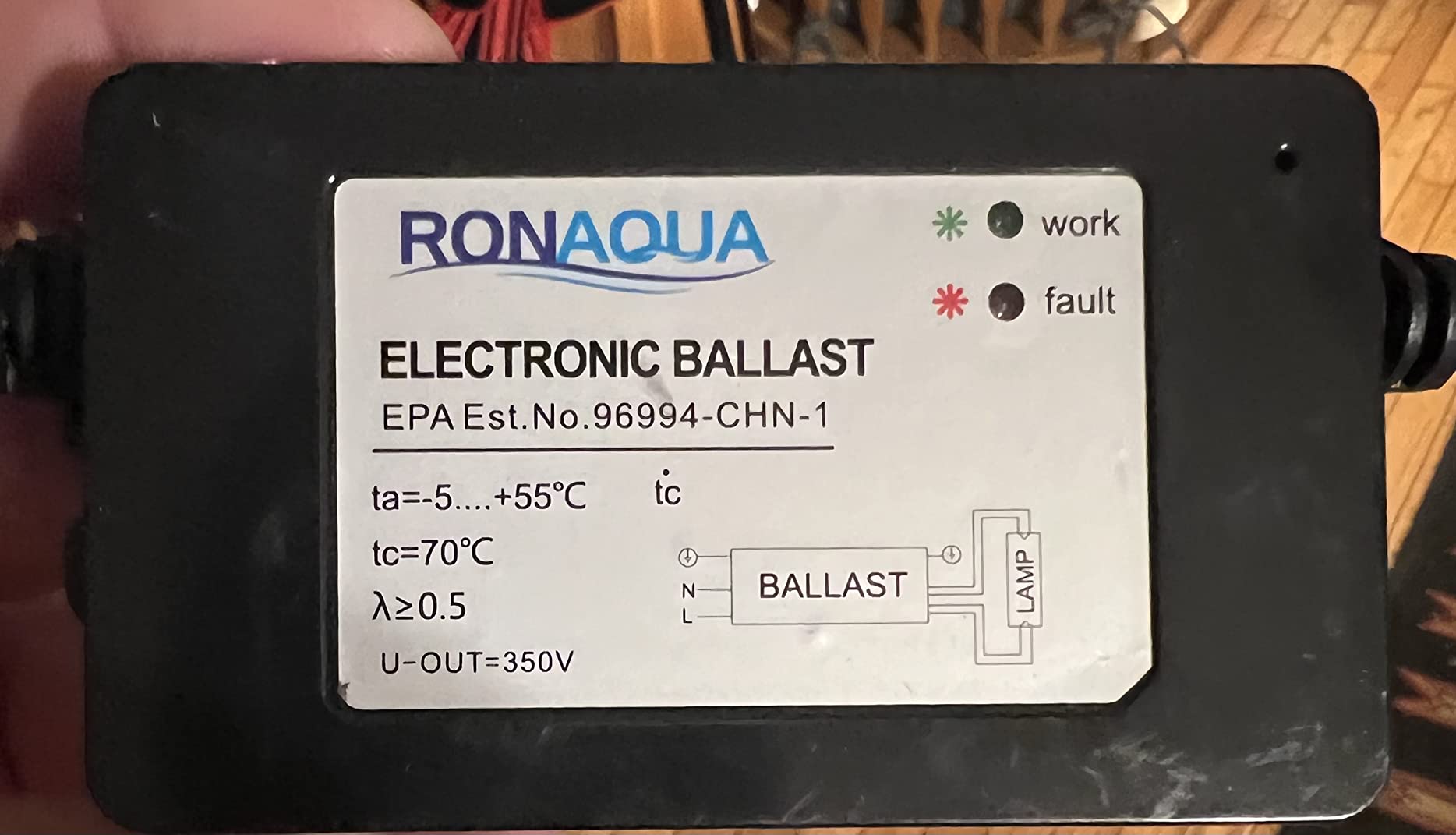
- Ballast failures reported within about a year with limited vendor support
- One lamp in the kit arrived broken
- A unit shipped with missing pieces
- Lowest 300 ppm TDS ceiling of the group
The reason to look at this unit is arithmetic. Three lamps ship in the box, so owners running it continuously swap bulbs roughly every 6 to 12 months at no parts cost for the first few years, and that is the lowest ongoing lamp expense in this roundup.
The trade-off shows up in the rating. At 4.0 across 158 reviews it sits below the rest of the field, with a 13 percent one-star share reflecting ballast failures and thin vendor warranty support rather than poor disinfection results.
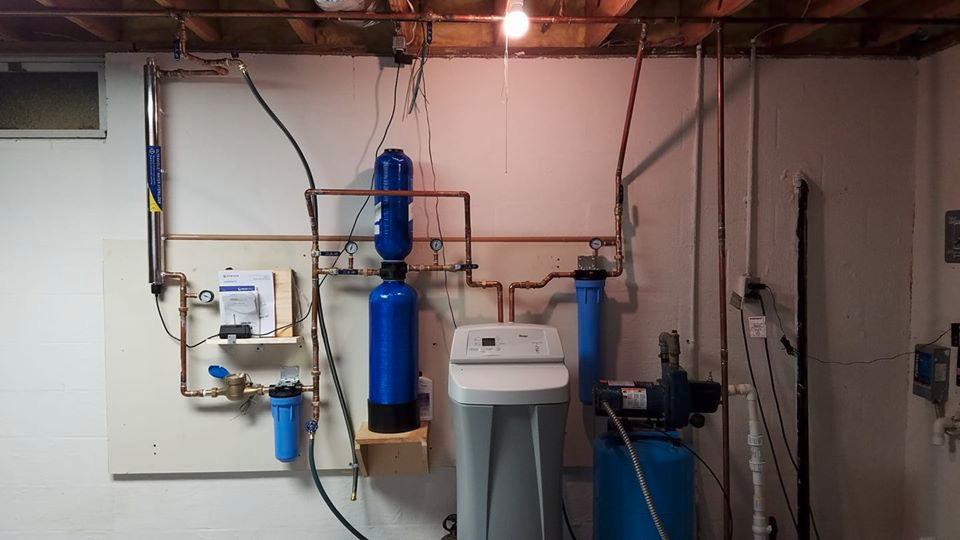
On the water side it behaves like the other 12 GPM chambers. Owners place it after a 5-micron and 1-micron sediment pair plus carbon and report coliform clearing on retest, and the UV treatment leaves taste, smell and color unchanged.
Ports are 3/4 in MNPT, which suit standard whole-house filter housings without adapters. Feed water should stay under 300 ppm TDS, the tightest ceiling of the group, so this is a unit for wells that are already relatively clean apart from bacteria.
What to check before you buy this model
Count what is actually in the box on delivery. One review reports a kit missing pieces and another a broken lamp, and both problems are much cheaper to resolve immediately than three months into a leak.
Keep spare lamps organized and dated. With three bulbs in the kit you will manage replacements yourself, and mixing lamp ages quietly reduces output.
Who should look elsewhere
Look elsewhere if your well exceeds 300 ppm TDS. That is the lowest ceiling here and it rules out the unit on many wells with any mineral load.
Look elsewhere if warranty backing is a deciding factor. Ballast failures within about a year are the top complaint, and vendor support on warranty claims is limited.
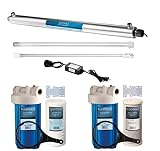
8. BLUONICS UV Plus Sediment and Carbon Well Water Filter System – Best All-in-One Bundle
55W UV Ultraviolet Light Plus Sediment and Carbon Well Water Filter Purifier System for Rust, Iron, Sand, Dirt, Sediment Bad Taste/Odor.12 GPM UV System and 2 Heavy Duty Housings Size 4.5″x10″
55W UV-C lamp with 12 GPM
20, 5 and 1 micron pre-stages
Two 4.5x10 inch housings
304 stainless UV chamber
The Good
- Bacteria control and sediment pre-filtration arrive in a single purchase
- Owners report immediate improvement in taste and odor
- Post-install samples came back clean on wells that tested positive
- Customer service replaced a cracked part and answered install questions
The Bad
- Ballast and bulb excluded from warranty
- Threaded fittings on the canister housings leak
- Physical install is not simple and plumbing help is advisable
- Smallest review base in this group at 44 reviews
If you are starting from raw well water and do not want to buy pre-filtration separately, this bundle puts it all in one order. The train runs 20-micron string wound sediment, then a 5-micron carbon block, then a 1-micron sediment stage, and finally the 55W UV chamber at 12 GPM.
That sequencing is correct, and it matters. Raw well water carrying sediment into a UV chamber causes shadowing, where particles block the light and the effective dose drops without any indicator showing it.
The housings are the heavy-duty 4.5×10 inch type with 1 in US Standard NPT brass inlet and outlet fittings, which is better than the plastic threads that cause problems on several standalone chambers here. Replacement cartridges are sold separately under ASIN B07T7L5GDH.
Owners on wells that previously tested positive report clean post-install samples and better-tasting water, with customer service replacing a cracked part. Operating range is 40 to 125 psi, up to 500 ppm TDS and a 100 F ceiling, and the whole assembly weighs 32 pounds.
What to check before you buy this model
Plan for a plumber. This is the only system in the roundup whose owners describe the physical install as genuinely not simple, with three housings plus a UV chamber and roughly 42 inches of assembly.
Read the warranty exclusions carefully. The ballast and bulb are excluded, so only the metal tube carries coverage, and you should treat lamp and ballast as consumables from day one.
Who should look elsewhere
Look elsewhere if you want strong buyer evidence. At 44 reviews this is the smallest review base in the roundup, and the 16 percent two-star share points at fit-and-finish issues with the housings.
Look elsewhere if you already own a sediment and carbon setup. Adding this means duplicating filtration you have, and buying the standalone UV chamber plus filters you need is usually cleaner.
9. VIQUA VH410 Whole-Home UV Water System – Best for Larger Homes at 18 GPM
VIQUA VH410 Whole-Home UV Water System, 18 GPM, 3/4-1 Inch NPT, 100-240V
18 GPM rated whole-home flow
100-240V universal controller
365-day lamp timer
Inactivates Cryptosporidium and Giardia
The Good
- Compact 18 GPM capacity where vertical space is tight
- Threaded inside and outside connectors accept two hose sizes
- Mounting clamps and lamp change are straightforward
- Controller includes a 365-day countdown lamp timer
- Blue glow at the bottom cap confirms the lamp is lit
The Bad
- Inlet and outlet are on opposite sides
- awkward in some cabinets
- Blue glow leaks from the bottom cap holes by design
- One owner reported the unit stopping after about 12 hours
- Standing water in the chamber comes out hot after idle periods
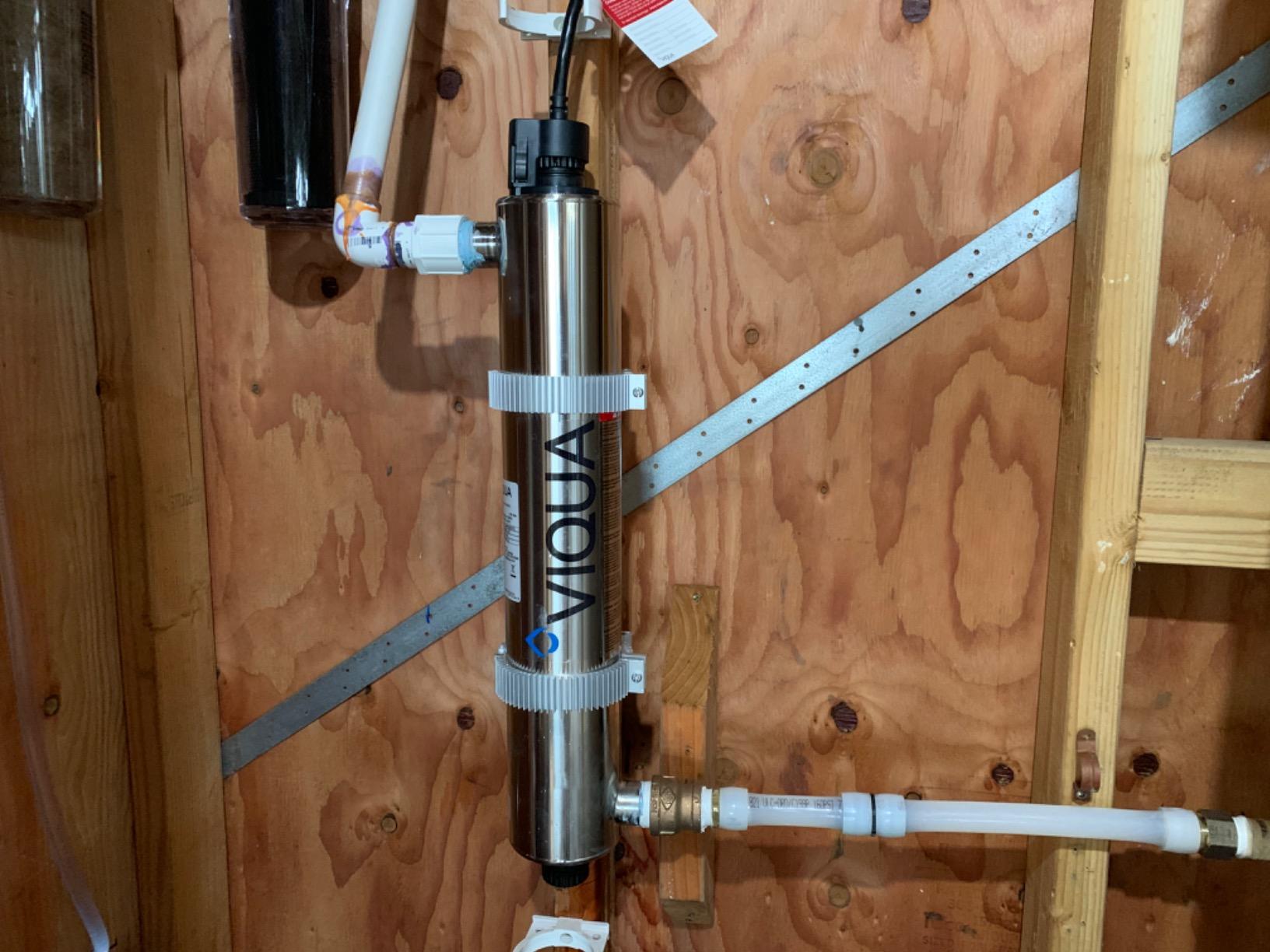
The VH410 is the recognized name in this category, and at 18 GPM it covers homes where a 12 GPM chamber leaves no headroom. VIQUA states it inactivates Cryptosporidium, Giardia, E. coli and fecal coliform, which covers the organisms a private well realistically throws at you.
The build is unusual for a larger unit. Rather than a long stainless tube, it uses a compact chamber that delivers 18 GPM in a much smaller footprint, with a 100-240V universal voltage controller, a safety cap and a lamp plug to guard against UV exposure.
The controller includes a 365-day countdown lamp change timer, which is the feature that keeps owners honest about lamp replacement. Compatible parts are named in the listing, including controller BA-ICE-CL, lamp S410RL-HO, lamp and sleeve QL-410 and sleeve QSO-410.
Most criticism is about layout rather than function. Inlet and outlet sit on opposite sides, which is awkward in narrow cabinets, and the blue glow at the bottom cap is a deliberate design feature rather than a fault.
What to check before you buy this model
Measure the cabinet before ordering. The inlet and outlet being on opposite sides is the single most common install surprise, and it can rule out tight under-sink spaces.
Plan for the glow. If the unit sits somewhere visible or between bedrooms, the visible light from the bottom cap holes is worth thinking about before install day.
Who should look elsewhere
Look elsewhere if you want a full stainless chamber. This is a polypropylene-bodied unit, and while it works well, the stainless reactors in this roundup are what most plumbers prefer for long service life.
Look elsewhere if your well serves only a small property. At 18 GPM with 81 reviews, you would be paying for capacity and brand premium that a 12 GPM chamber does not need.
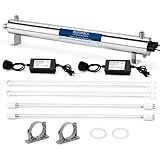
10. BLUONICS 24 GPM 110W Whole House UV Water Filter – Best for High-Flow Wells
Whole House UV Water Filter System 24 GPM – 110W Stainless Steel UV Light – 1″ NPT – LED Indicator & Audible Alarm – for Well & City Water – Includes 2 Ballasts – Bluonics
110W UV-C lamp
24 GPM rated flow
Two electronic ballasts included
1 inch NPT ports
The Good
- Highest flow rating in this group at 24 GPM for acreage or multi-building wells
- Two ballasts give an on-hand spare for long-term operation
- LED and audible monitoring of lamp status
- Stainless chamber with 1 inch NPT ports matches standard plumbing
The Bad
- Highest 1-star share in the group at 15 percent of reviews
- Dual ballasts and dual sleeves double the parts that can fail
- Bulbs are glass and vulnerable to shipping damage
Capacity is the reason to pick this one. The 110W lamp supports up to 24 GPM, and nothing else in this roundup reaches that flow, which matters for wells serving acreage, outbuildings, multiple buildings or light commercial use.
The stainless steel chamber uses 1 inch NPT inlet and outlet, matching standard plumbing, and operates from 40 to 125 psi with water up to 1000 ppm TDS at a 100 F ceiling. At 16 pounds it is a substantial install, so plan the location accordingly.
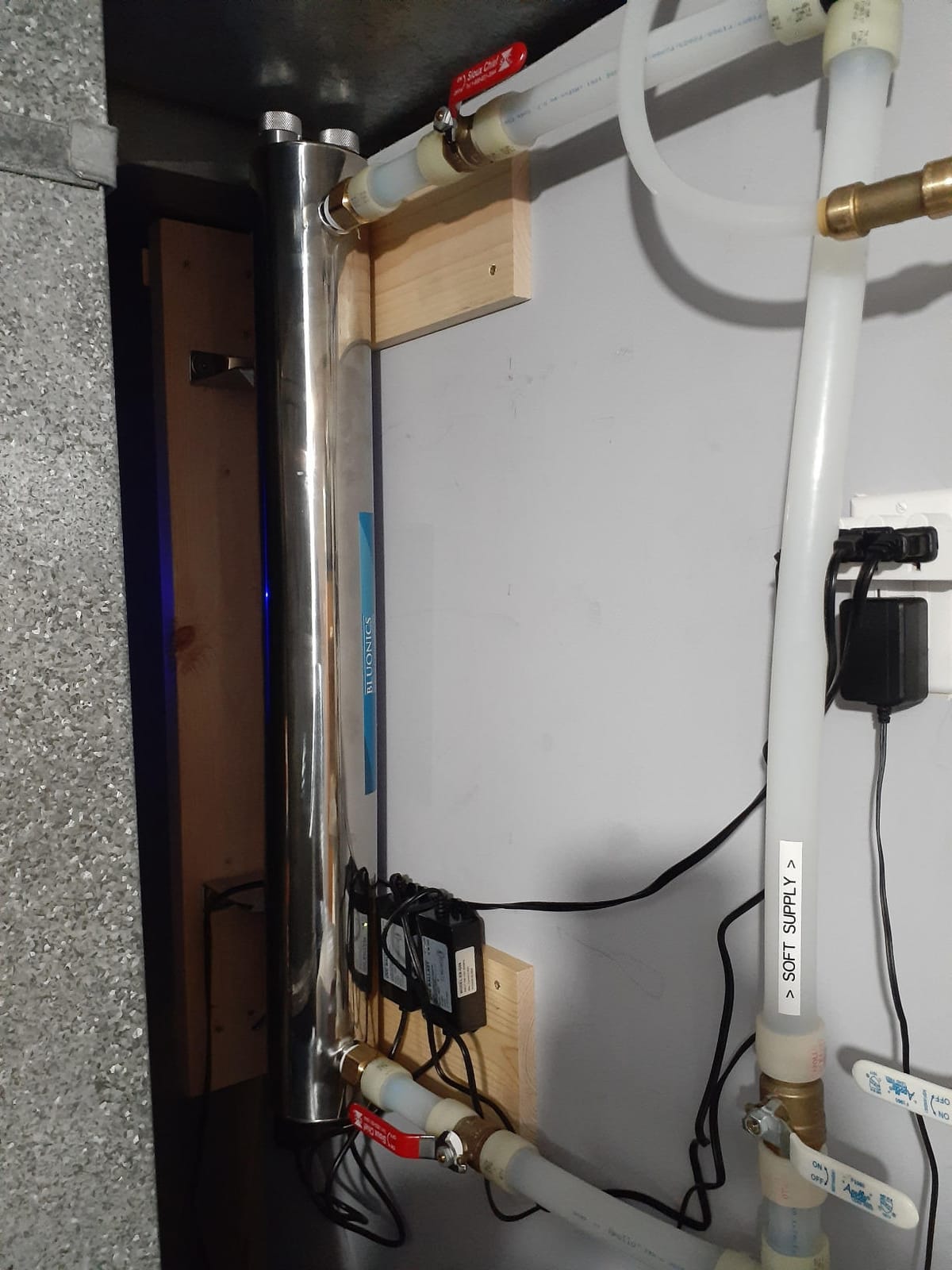
Two electronic ballasts ship in the kit, one as a genuine spare rather than an afterthought. That matters on a system expected to run for years, and it is a real long-term convenience the other 12 GPM units do not offer.
The kit is complete: UV chamber, two UV lamps, two quartz sleeves, two ballasts, four O-rings, gloves and a manual. Both ballasts provide LED status indication and an audible alarm, so you get monitoring and redundancy at the same time.
What to check before you buy this model
Confirm you genuinely need 24 GPM. If a 12 GPM chamber covers your peak demand, this is oversizing you will pay for in parts and installation effort without a treatment benefit.
Inspect bulbs and sleeves on arrival. With two lamps and two sleeves in the box and a 15 percent one-star share driven partly by glass part failures, packaging matters here more than on single-lamp kits.
Who should look elsewhere
Look elsewhere if you want a strong review profile. The 93 reviews and 15 percent one-star share make this the weakest customer feedback record among the higher-capacity options here.
Look elsewhere if failure parts are a concern. Dual ballasts and dual sleeves mean twice as many components that can fail or crack over a service life, and the extra lamp consumes more energy per hour of operation.
How We Picked: NSF/ANSI 55 Certification, Flow Rating and Honest Disclosure
NSF/ANSI 55 certification was our first filter. Only one product here, the Aquasana five-stage train, carries a stated third-party certification, and it is Class B rather than the Class A rating most sellers imply. We included it, and we named the class rather than letting the label do the work.
The other nine are manufacturer-claimed units. Their dose figures are not independently verified in the product data, and we have not written them as though they were. If a coliform-positive well is your situation, a third-party listing is worth a real premium, and we say that plainly.
Flow rating was our second criterion, checked against household size rather than marketing language. A chamber rated 12 GPM only delivers that dose at 12 GPM, so we matched each unit to realistic peak demand and flagged the low-flow options for cabins.
Third, we weighed what owners report after a year of service: ballast failures, cracked quartz sleeves, leaking plastic fittings and hot standing water. Those failure modes appear far more often in review data than spec sheets, and they are the difference between a system you forget about and one you service annually.
Finally, we weighted pre-filtration inclusion. A UV unit installed ahead of sediment is working blind, so bundles that arrive with the correct treatment train ranked higher than standalone chambers for raw well applications.
UV Water Purifier Buying Guide: Dose, Class A vs Class B, Sizing, Prefiltration and Maintenance
A UV water purifier inactivates bacteria by scrambling their DNA
Water flows through a stainless or polypropylene chamber around a UV lamp. At the rated dose, typically 40 mJ/cm² for Class A systems, ultraviolet light damages the DNA of microorganisms so they can no longer reproduce. Nothing is added to the water, and taste, odor, color and pH stay unchanged.
Inactivation is not the same as sterilization, and that distinction matters for anyone reading test results. The organism is unable to reproduce but may not be technically dead, which is the viable-but-non-culturable state well owners on r/WaterTreatment raise most often. It also means a lab test reading clean after a UV stage is a genuine positive signal rather than a false one.
NSF/ANSI 55 Class A vs Class B
NSF/ANSI Standard 55 Class A certifies systems delivering a dose of 40 mJ/cm², which covers bacteria, viruses and protozoa including Cryptosporidium and Giardia. Class B certifies a 16 mJ/cm² dose, targeting bacteria and some viruses. Class B is a genuine third-party certification and is legitimate for disinfection, but it is a lower tier.
The words sterile, purifier and sterilizer on retail listings are marketing terms rather than certifications. When a listing states a dose without a standard number, treat it as a manufacturer claim until a certification body confirms it.
Size your system: bathrooms to GPM
Oversize rather than undersize. An undersized chamber shortens contact time and drops below rated dose without any visible warning, while an oversized chamber simply treats water more slowly than it needs to.
One bathroom: 6 GPM. The HQUA OWS-6 covers this.
Two bathrooms: 9 to 12 GPM. The HQUA OWS-12 or iSpring UVF55FS both fit.
Three to four bathrooms: 12 to 15 GPM. Stay at 12 GPM or step up.
Five or more bathrooms, or acreage with outbuildings: 18 to 24 GPM. The VIQUA VH410 and BLUONICS 24 GPM fit here.
Pre-filtration thresholds to check before you buy
UV needs clear water to work. If your feed water exceeds any of these values, treatment upstream is not optional and no UV chamber will compensate for it.
Hardness under 7 gpg, above that expect quartz sleeve scaling.
Iron under 0.3 mg/L.
Manganese under 0.05 ppm.
Turbidity under 1 NTU.
Tannins under 0.1 ppm.
UV transmittance above 75 percent.
Where the UV unit goes in the treatment train
UV goes last. The order that works is chlorination injection at the source, then a self-backwashing carbon filter, then the softener, then the UV chamber. Installing UV before sediment or iron filtration lets shadowing particles block the dose with no indication that treatment has degraded.
Allow roughly double the unit’s own dimensions in free space for lamp and sleeve changes. This is the most common reason owners end up with a UV system they cannot realistically service.
Well shocking versus UV versus reverse osmosis
Shock chlorination is temporary. It clears bacteria for weeks, then regrowth starts, and it generates disinfection byproducts while degrading well casings and pump fittings over repeated shocks. UV is continuous, adds no chemicals, and does not damage the well, but leaves no residual to protect downstream plumbing.
Reverse osmosis rejects bacteria at the membrane, though forum discussion on r/WaterTreatment notes a membrane can become contaminated and let bacteria through over time. A reverse osmosis system is still the right answer for dissolved solids, lead and PFAS, and combining a UV stage with reverse osmosis covers both problem types.
Maintenance: lamps, quartz sleeves and the no-residual risk
Replace the lamp annually and clean the quartz sleeve every 6 to 12 months. A lamp can still glow at 18 months while delivering less than 40 mJ/cm², so judge replacement by the hour counter rather than by eye.
Because UV leaves no chlorine residual, storage tanks, water heaters and long pipe runs downstream can seed bacteria back into treated water. That is why a post-UV total coliform retest matters, and why distribution systems built for municipal water behave differently from a private well.
What UV does not remove
UV inactivates organisms and nothing else. It does not remove sediment, iron, manganese, hardness, lead, PFAS, nitrates, arsenic or dissolved solids. It also does not remove iron bacteria slime, which needs shock chlorination or continuous oxidant injection rather than UV treatment.
If you are building a full treatment plan, start with our whole-house well water treatment roundup or the complete well water system guide, then add a UV stage sized to your household.
Frequently Asked Questions
What are the disadvantages of UV water purification?
UV leaves no residual, so downstream pipes, storage tanks and water heaters can recontaminate treated water. It removes nothing but organisms, so sediment, iron, hardness, lead, nitrates and PFAS all require separate filtration. The lamp needs annual replacement and the quartz sleeve regular cleaning, and an undersized chamber silently drops below its rated dose.
Can E. coli survive UV light?
E. coli cannot survive a correct UV dose. At 40 mJ/cm² the light disrupts the organism’s DNA so it can no longer reproduce. The organism may not be technically dead, however, because it enters a viable-but-non-culturable state, which is why post-UV lab tests read clean.
Is a UV filter necessary for well water?
If your well tests positive for total coliform or E. coli, yes. Municipal systems add disinfectant, and carbon or sediment filters pass bacteria straight through, so a private well needs a dedicated disinfection step. UV or continuous chlorination are the two options that provide it.
Can you sanitize water with UV light?
UV disinfects water effectively, which is different from sterilizing it. It inactivates bacteria, viruses and protozoa such as Cryptosporidium and Giardia without adding chemicals, but it leaves the organisms alive in a non-reproductive state and adds no residual protection to the treated water.
What is the best UV filter for well water?
For a typical family well, the HQUA OWS-12 at 12 GPM is the strongest standalone chamber, with the most owner reviews and consistent coliform results. The Aquasana five-stage train is the complete option for raw well water with several problems, and the HQUA OWS-6 covers cabins and small homes.
Which water purifier is good, RO or UV?
They solve different problems. UV inactivates bacteria, viruses and protozoa across the whole house and needs no chemicals. Reverse osmosis removes dissolved solids, lead, PFAS, nitrates and arsenic at a single tap but can be bypassed over time as the membrane fouls. Many owners run both.
How often should a UV lamp be replaced?
Replace it annually, and track hours on the controller rather than judging by whether the lamp still glows. A lamp can appear to work at 18 months while delivering well under 40 mJ/cm². Clean the quartz sleeve at the same time, since scaling cuts UV transmittance with no visible warning.
How do I size a UV system for my house?
Count peak household demand rather than average use. One bathroom needs about 6 GPM, two need 9 to 12 GPM, three to four need 12 to 15 GPM, and five or more need 18 to 24 GPM. Oversize rather than undersize, because an undersized chamber drops below rated dose with no warning.
Final Verdict: The Best UV Water Purifier for Well Water Bacteria Fits Your Well
The HQUA OWS-12 is our choice for most households. Its 12 GPM rating covers a typical family, the 304 stainless chamber and quartz sleeve are the right build for a long service life, and 1060 reviews make it the best-evidenced standalone chamber here.
Choose the Aquasana five-stage train if your well has more than one problem, since it handles sediment, chlorine, scale and bacteria in one order. Choose the iSpring UVF55FS if brand support matters most, and the VIQUA VH410 if you need 18 GPM in a small footprint.
Whatever you pick, size it above your peak demand, put it last in the treatment train, and budget for an annual lamp and a sleeve cleaning. Those three habits matter more to your water quality than the difference between any two units on this list.