
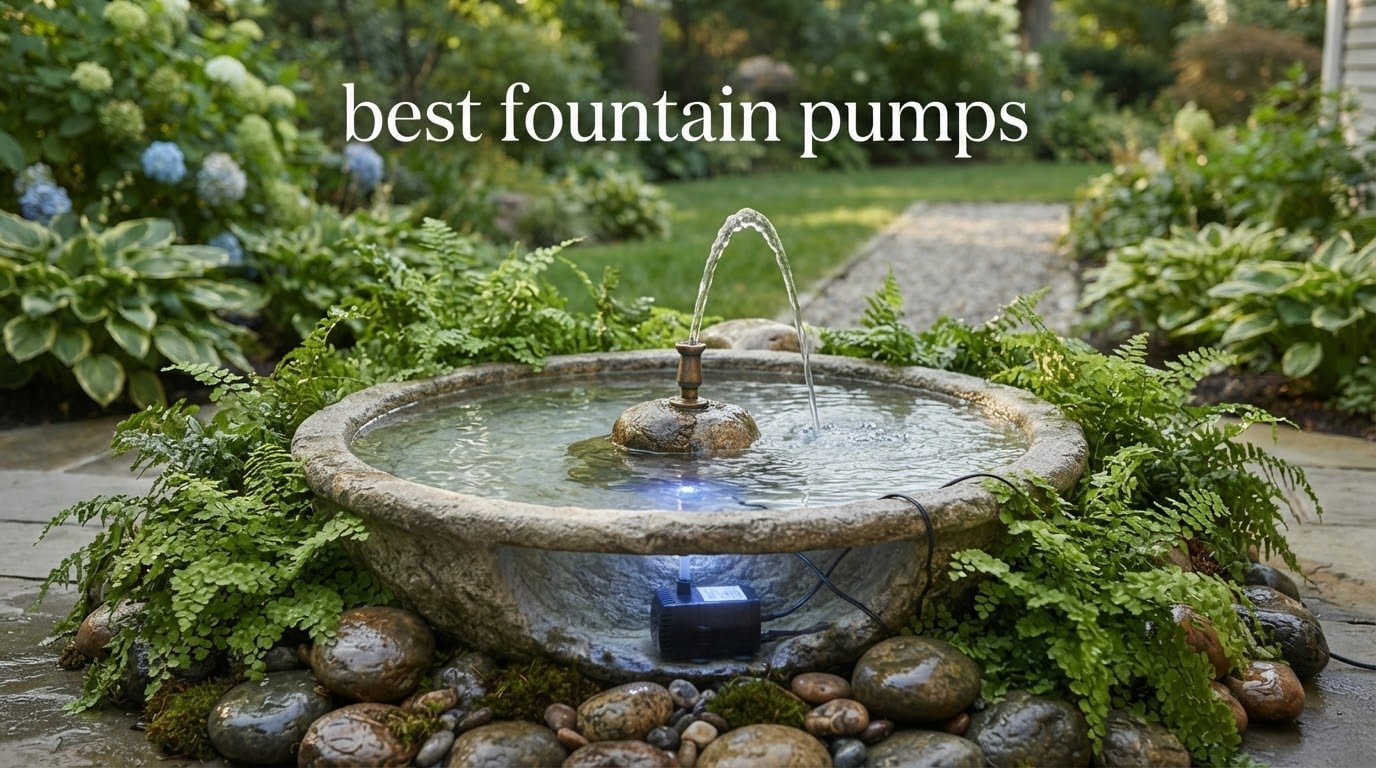
Most fountain pump buying guides tell you to pick the biggest number on the box. That is exactly how people end up with a 1000 GPH pump screaming through a birdbath, or a 90 GPH pump that gives up two thirds of the way up a 6 foot riser. The GPH on a listing is a zero-head maximum, and the moment you add any vertical lift, the real number drops off fast.
So this guide starts somewhere else: with the total dynamic head your feature actually needs, then works backward to a pump. Every pick below is a real submersible fountain pump with published flow, lift, and wattage, and every one of those numbers comes from the manufacturer’s own specification sheet rather than a marketplace category listing. That distinction matters more than it sounds, because a lot of cheap pumps advertise a headline GPH they cannot hold at any realistic fountain height.
Whether you are running a tabletop bowl, a two foot birdbath, a small patio pond, or a feature that feeds a waterfall, the decision path is the same. Measure the lift, decide your turnover, then match the target to the middle of the pump’s performance curve instead of its peak. I have used that method to work through the ten submersible fountain pumps in this roundup, and I flag the ones where the spec sheet and the real-world reports diverge.
Everything here runs on 110V AC, so every unit needs a GFCI-protected outlet and an outdoor-rated extension method. None of these ten pumps are solar, and that is worth saying plainly up front. Solar fountains are a different buying category with a different failure mode, and I would not put one in a pond with koi in it.
Top 3 Fountain Pump Picks in 2026

VIVOSUN 800GPH Submersible…
- 800 GPH max flow
- 10 ft max lift
- 50W motor
- Flow knob and 3 nozzles

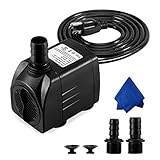
CWKJ 400GPH Submersible Pump
- 400 GPH max flow
- 6.56 ft max lift
- 25W motor
- Very quiet running
Quick Picks: Best Fountain Pumps by Use Case
- Best Overall: The VIVOSUN 800GPH hits 800 GPH at up to 10 ft of lift on 50W, carries 26k ratings, and disassembles tool-free for cleaning. It is the pump I would put in a mid-size patio pond.
- Best Value: The GROWNEER 550GPH delivers 550 GPH and a 7.2 ft lift on just 30W, and the 30W draw is the reason it works out over a long season.
- Best Budget: The CWKJ 400GPH is the one reviewers most often describe as solid, with 25W, a 6.56 ft lift, and running sound that stays under the water noise.
- Best for Birdbaths and Tabletop Bowls: The DOMICA 90 GPH moves 350 L/H on 5W with a 2.8 ft lift, which is more than a small basin needs.
- Best for Tall Vertical Riser Work: The Knifel 1056GPH reaches 13 ft of lift with an 85W copper rotor motor and an overheating cut-off.
- Best for Large Ponds and Multi-Level Waterfalls: The OYO WATER 1800GPH pairs 1800 GPH with a 14 ft lift, a 32.8 ft cord, and an amphibious housing.
- Best for Night Displays: The Yawank 15W unit has 12 auto-changing LEDs built in and four spray patterns, including a mushroom head.
All 10 Fountain Pumps at a Glance
All ten are corded 110V submersible pumps rated for continuous submerged operation. The flow and lift figures below are manufacturer maximums at zero head, so treat them as ceilings rather than expectations.
| Product | Key Specs | Buy |
|---|---|---|
|
|
Check Latest Price |
|
|
Check Latest Price |
|
|
Check Latest Price |
 |
|
Check Latest Price |
 |
|
Check Latest Price |
 |
|
Check Latest Price |
 |
|
Check Latest Price |
 |
|
Check Latest Price |
 |
|
Check Latest Price |
 |
|
Check Latest Price |
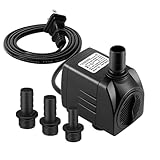
1. VIVOSUN 800GPH Submersible Pump – The All-Rounder With the Biggest Review Base
VIVOSUN 800GPH Submersible Fountain Water Pump for Pond, Aquarium, Statuary
800 GPH max flow
10 ft max lift
50W motor
Adjustable flow knob
6.5 ft cord
The Good
- 800 GPH with a 10 ft lift ceiling
- Flow knob plus three nozzles
- Tool-free disassembly for cleaning
- Compact body is easy to hide
- Flexible flat angled or vertical mounting
The Bad
- Flow drops noticeably as lift height rises
- Needs a GFCI-protected outlet for outdoor use
This is the pump I keep coming back to because the numbers hold up under scrutiny. Eight hundred gallons per hour at up to ten feet of lift, on a 50 watt motor, from a body that measures 4.33 by 3.5 by 4.1 inches and weighs two pounds. That combination of headroom and footprint is unusual for a submersible pump of this size.
More than 26,000 ratings averaging 4.4 stars is the largest review base of any pump here, and in a category where longevity is the thing buyers care about most, that volume matters. Reviewers consistently point to three things: real flow for the price, a disassembly that needs no tools, and quiet running relative to its output. Those are the three attributes that decide whether a pump is still working in year three.

Where the spec sheet and reality diverge is flow under load. The 800 GPH headline is a zero-head number, and reviewers report a noticeable falloff as lift height increases. If you are planning a six foot riser with a long horizontal run, do not expect 800 GPH at the nozzle. Treat the curve as the guide and the 800 as the ceiling.
The mounting flexibility is the quietly useful feature. The body sits flat, at an angle, or vertically, which means it works in a shallow bowl, a wall-mounted niche, or a deep pond where you want the pump low and the output line running up. Three threaded nozzles and a side flow knob cover most spray patterns without buying parts separately.
When the VIVOSUN 800GPH is the right call
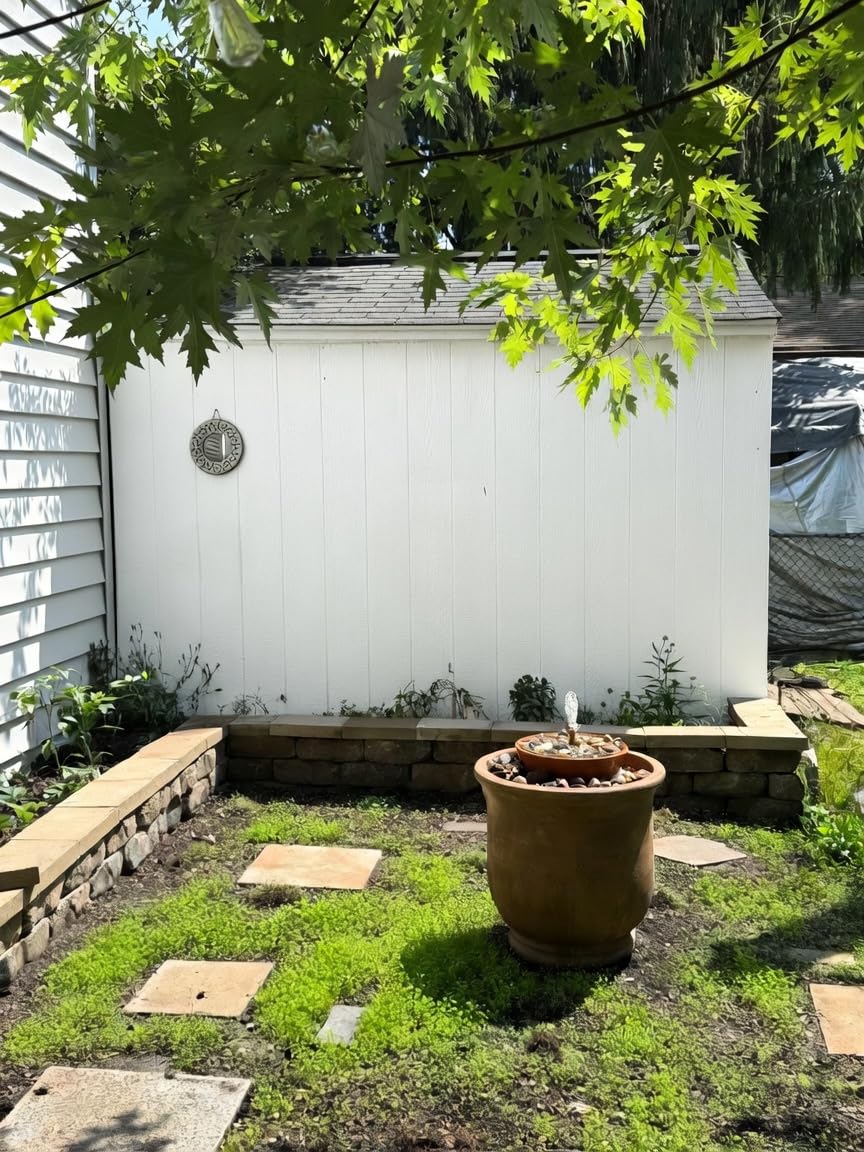
This one suits mid-size patio ponds and any garden feature that needs to move real volume rather than just make a small bowl look nice. At ten feet of rated lift it will feed a waterfall stack of two or three modest tiers without straining. If you plan to run it on a timer for most of the day, 50W is a manageable figure.
It is also the safest default for a first pond pump, largely because replacement parts and troubleshooting advice for this model are easy to find. When something rattles or the flow drops, nine times out of ten it is debris in the intake, and the tool-free shell means you can deal with that in a couple of minutes without a parts diagram.
When to pick something else
Skip it if your feature is a birdbath or tabletop bowl. Eight hundred GPH into a basin two feet across means a firehose, and while the flow knob can tame it, a purpose-built small pump runs cooler and quieter at that scale. It is also an AC unit, so it needs a GFCI outlet and weatherproof connection, and it carries no low-water shut-off, which means it should never run dry.
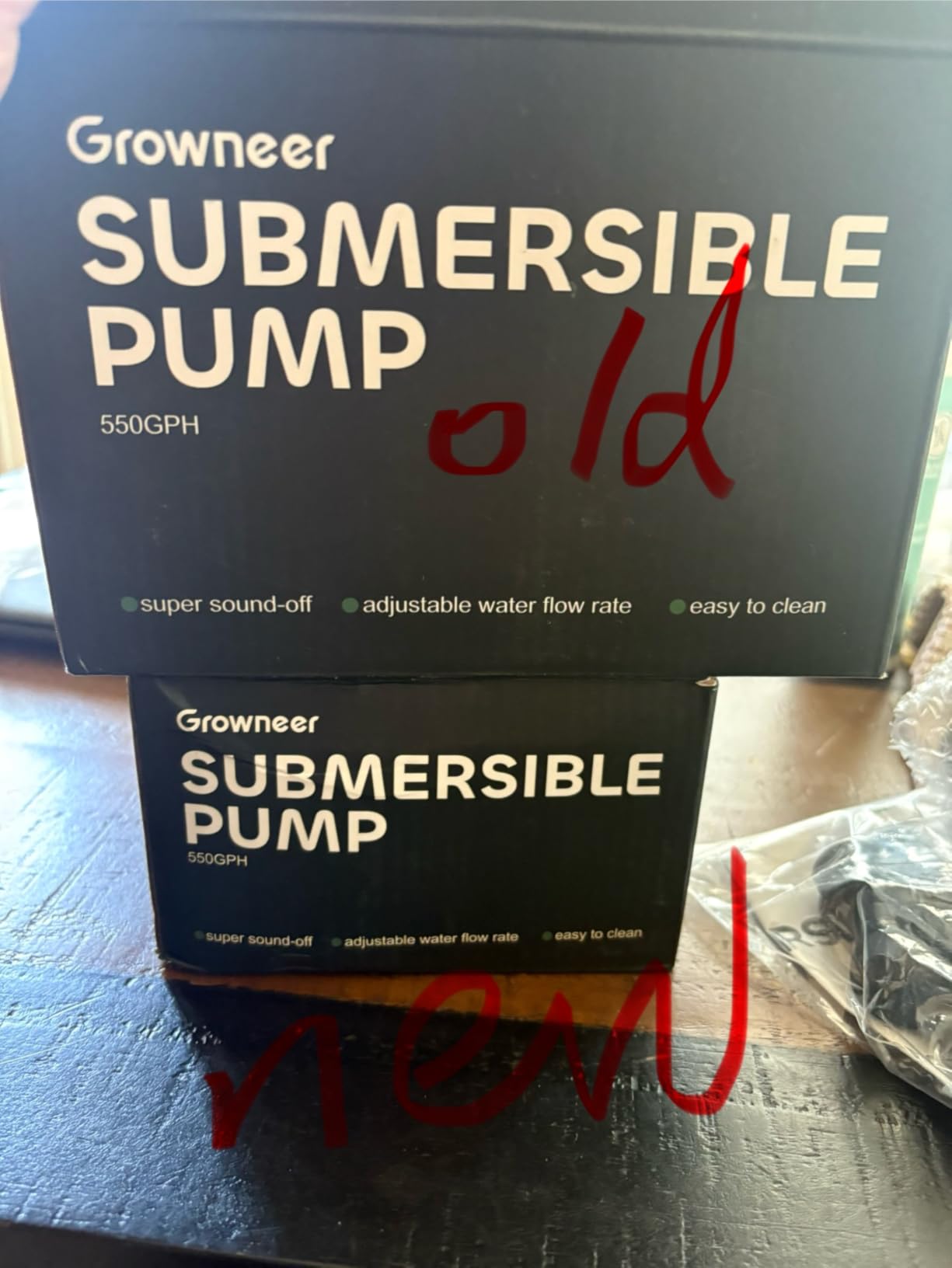
2. GROWNEER 550GPH Submersible Pump – Best Running Cost in the Group
GROWNEER 550GPH Submersible Pump 30W Fountain Aquarium Water Pump
550 GPH max flow
7.2 ft max lift
30W motor
3 nozzle sizes
4 suction cups
The Good
- 550 GPH on a low 30W draw
- Three threaded nozzle sizes
- Strong suction cups for glass or liner
- Tool-free disassembly
- Light 1.2 pound body
The Bad
- Intake clogs fast in debris-heavy water
- Some units get noisy then stop after a few months
- Needs a GFCI breaker outdoors
Thirty watts for 550 gallons per hour is the number I would build a season around. Over a season of long runtime, the gap between a 30W pump and a 50W pump of similar output is real money on the meter, and for most backyard features that runs on a timer day and night, the lower draw is the smarter long-term choice.
Roughly 11,900 ratings at 4.2 stars describe a pump that is unremarkable in the best way. It has a flow knob, three threaded nozzle sizes at 0.51, 0.62, and 0.75 inch, four independent suction cups that hold on vertical glass or a pond liner, and a detachable shell that comes apart without tools. The 5.9 foot cord is a little short, so plan your outlet location carefully.

The recurring complaint is intake clogging, and it is worth taking seriously in a pond. The fine mesh intake screen traps debris and algae matter faster than some competing housings, so a weekly skim of the surface and a monthly impeller check is part of the deal. A second, smaller theme in the reviews is early motor failure, with some owners reporting the unit getting noisy and stopping within a few months.
Against that, the manufacturer is repeatedly praised for fast replacement service, and long-term owners report pumps running daily for years in submerged ponds. That is the trade: no pump in this group is maintenance free, and this one makes its case on running cost and repairability rather than on indestructibility.
Who the GROWNEER 550GPH suits
This is the pump for a small to mid-size garden pond, an aquaponic tower, or a patio pond with a modest waterfall. Seven feet of lift is enough for a low riser and a short return line, and the suction cups make it easy to pin vertically on a pond wall where you want the intake deep. It is also the value pick if you are running a pump on a timer for sixteen hours a day.
For aquaponics, the combination of low draw, adjustable flow, and easy disassembly is the package that matters, because you will be cleaning the media and the intake more often than in a decorative basin.
Where it falls short
Do not put it in a feature with heavy leaf fall or stringy plants, because the intake will clog faster than you can clean it. It is also not a tall-head pump, so a stacked waterfall more than about six feet high will leave you short of flow. And like most in this roundup, it has no automatic dry-run cut-off, so an empty basin in summer means a burned motor.
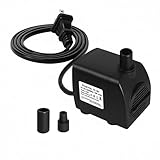
3. CWKJ 400GPH Submersible Pump – Built to Be Heard Less Than the Water
CWKJ 400GPH Submersible Fountain Water Pump for Pond Aquarium Hydroponics
400 GPH max flow
6.56 ft max lift
25W motor
Flow knob
3 nozzles
The Good
- Very quiet over the sound of flowing water
- Light 5.6 ounce body hides easily
- Flow knob plus three nozzles
- Tool-free disassembly for cleaning
- Reliable past the one year mark
The Bad
- Flow knob has a coarse adjustment range
- Can still overspray a small basin
- Debris in the impeller causes a rattle
- AC powered so an outlet is required
Quietness is the differentiator here, and for a tabletop fountain or a bedroom water feature that sits a few feet from where people talk, it is the difference between a feature you enjoy and a feature you switch off. Reviewers repeatedly describe the running sound as barely detectable underneath the water noise itself.
At 400 GPH and a 6.56 foot lift on 25 watts, the specification set is sensible and balanced. The body is tiny, at 2.3 by 2.8 by 3.2 inches and 5.6 ounces, so it disappears into a small basin, and four rubber suction cups handle both tank glass and flat surfaces. The 6.5 foot cord is a little more generous than most pumps in this class.
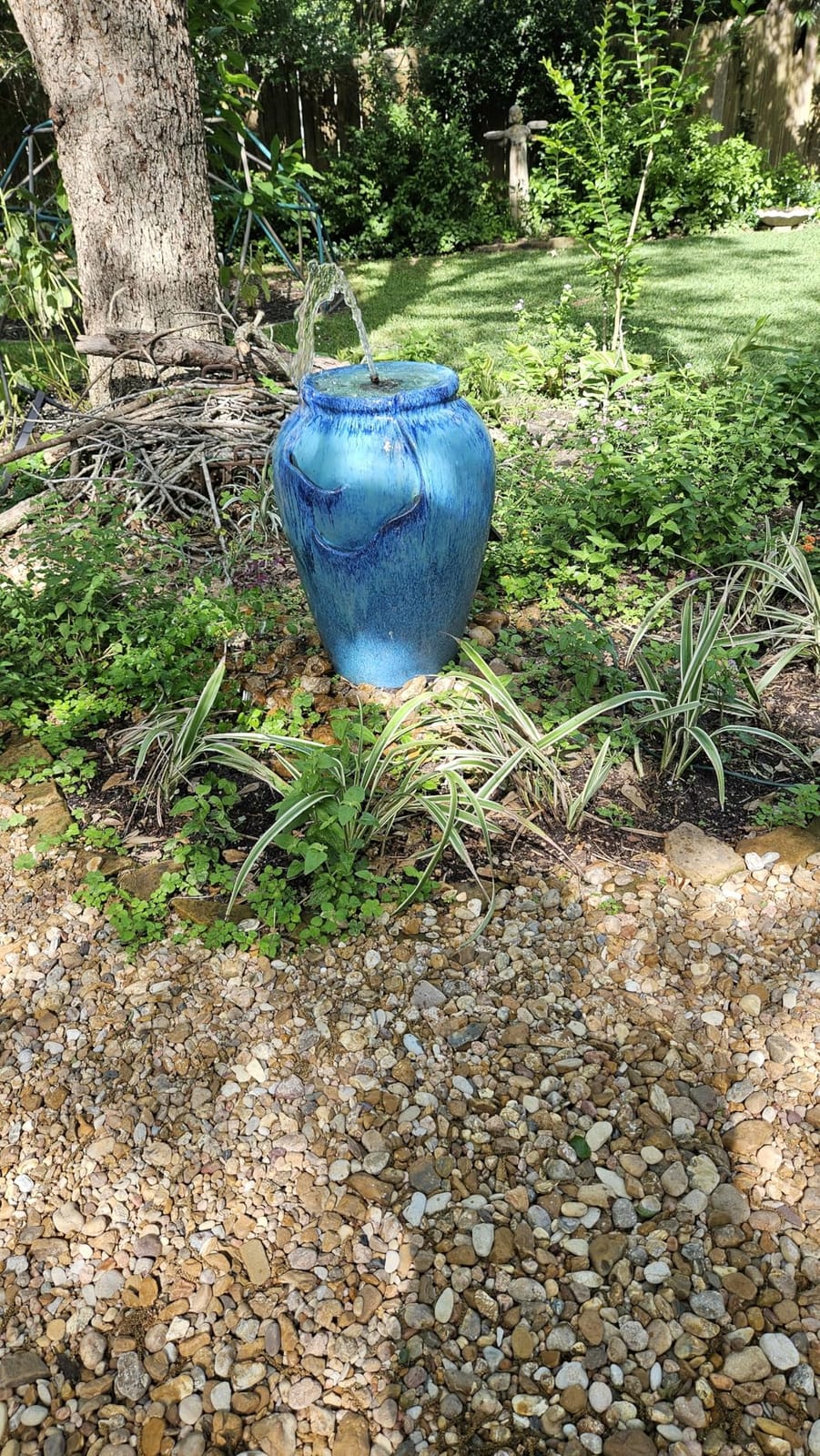
Nearly 10,000 reviews at 4.2 stars split cleanly on one issue: the flow adjustment is coarse. Several buyers had to add extra tubing or drill small holes in a fitting to tame the output down for a small basin. If your feature is on the delicate side, buy a short length of the smallest diameter tube and use it to bleed off excess flow rather than relying on the knob alone.
The other practical note is that a rattle or a weak flow almost always means debris in the impeller, not a dead motor. It must stay submerged at all times, and a pond owner who skims the surface weekly will rarely see the problem at all.
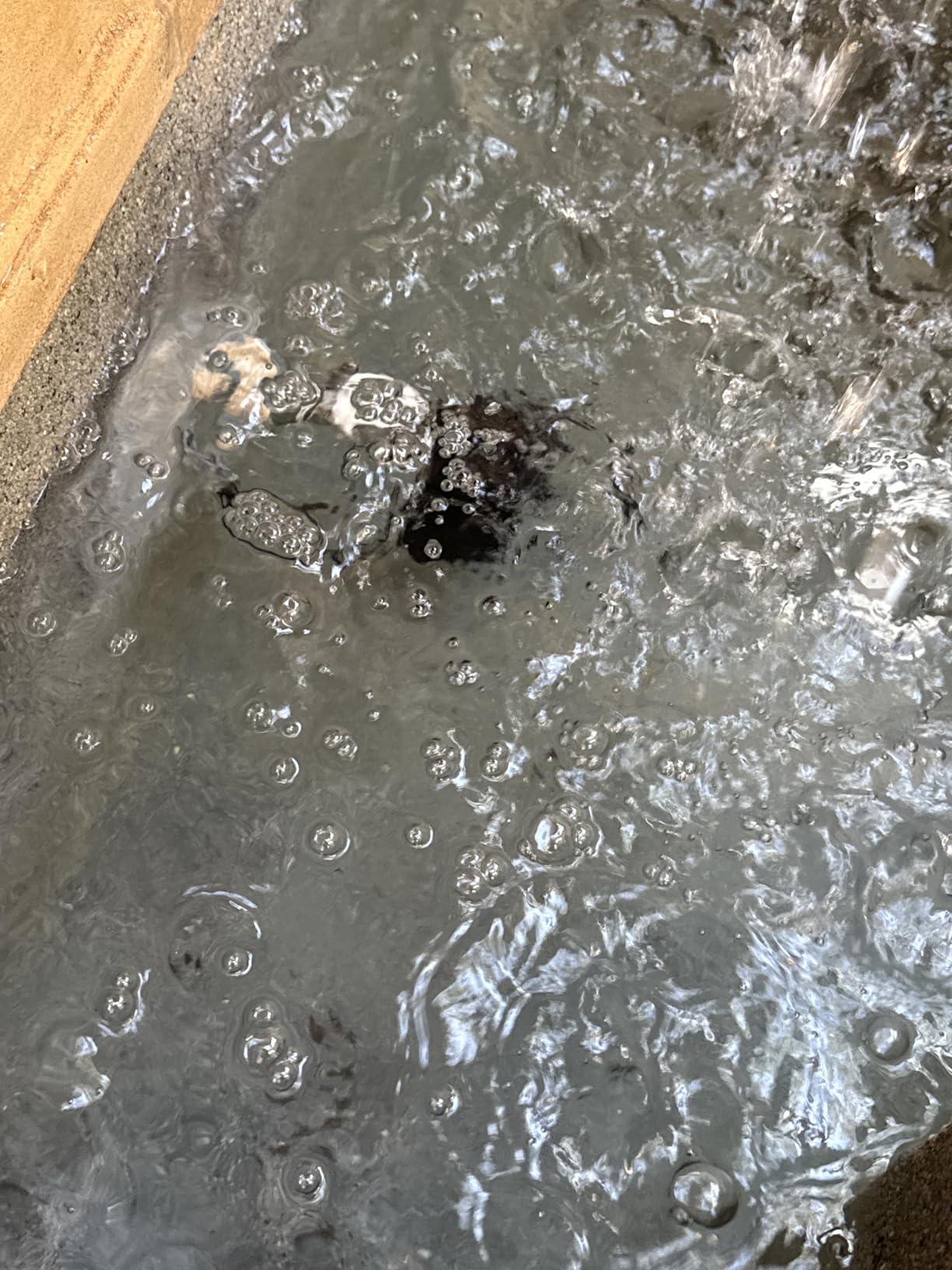
Where the CWKJ 400GPH fits best
This is the one I would choose for an indoor or sheltered fountain where noise is the thing you notice. It also handles outdoor birdbath duty comfortably, since 6.56 feet of lift clears a low stone spout or a short bamboo riser, and 400 GPH is more than enough to turn a small basin over many times an hour.
It also works well as a secondary circulation pump in a pond you already filter, moving water from one end of the basin to the other without adding much to your running cost.
Where it does not fit best
It is a poor match for a very small or very shallow basin, where even the lowest knob setting can push water over the rim. It is not built for a pond with heavy leaf litter, and it has no dry-run protection, so losing water level to evaporation in a hot week is a real risk worth watching.
4. DOMICA 90 GPH Mini Submersible Pump – Small Features and Small Bills
90 GPH Mini Submersible Pump, Small Fountain Pump (5W 350L/H) for water feature, Aquariums, Fish Tank, Tabletop Fountain, Pet Fountain, Indoor or Outdoor Pond Fountain (AC Powered)
90 GPH max flow
2.8 ft max lift
5W motor
2 nozzle sizes
4.6 ft cord
The Good
- Tiny 1.4 inch tall body hides in a tabletop bowl
- Only 5W so it can run around the clock
- Adjustable flow up to 90 GPH
- Tool-free disassembly
- Three suction cups for glass or flat surfaces
The Bad
- Lift limited to 2.8 ft so it suits small features only
- Must stay fully submerged or the impeller wears fast
- AC powered rather than solar
Five watts is the number to remember here. That is low enough to leave a small fountain running continuously without thinking about it, and it opens up the category of fountains that are decorative rather than occasional. Most of the pumps here draw three to twenty times that.
The trade is lift. At 2.8 feet of maximum water column, this pump belongs in a tabletop bowl, a small pet fountain, or a shallow birdbath where the outlet sits only a foot or so above the water. Above that, output falls away quickly. Over 6,300 ratings average 4.2 stars, and the reviews reflect an audience that bought it for a small job and are happy with it.
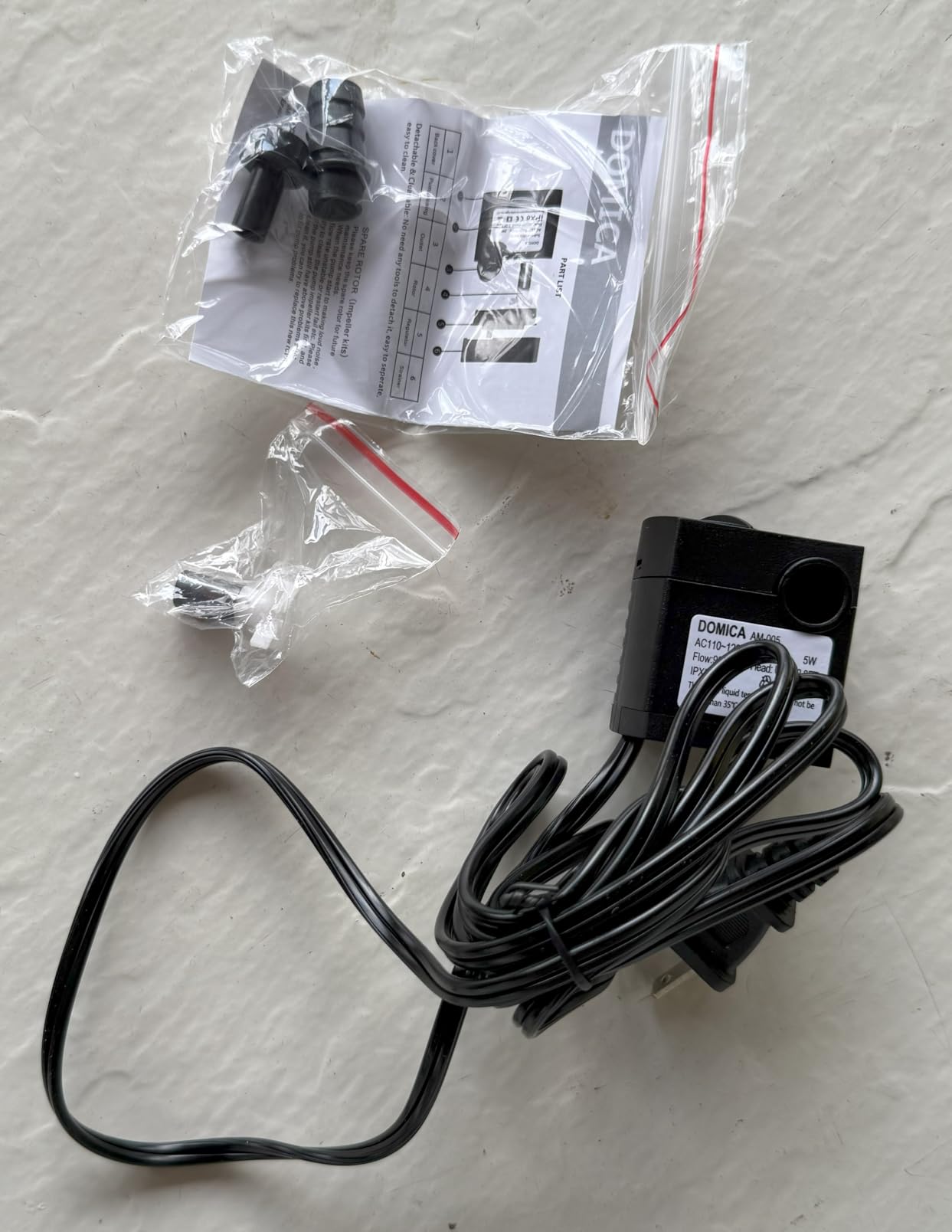
Two nozzle sizes at 0.33 and 0.5 inch come with it, which is enough variety for a small feature, and the 4.6 foot waterproof cord is proportionate to a pump with a 1.8 inch footprint. The three suction cups let you mount it on the side wall of a glass bowl or flat on the base, so the intake stays submerged even in a shallow dish.
Two rules keep this pump alive. Keep it fully submerged at all times, because running it dry makes it pump air and wear the impeller quickly. And keep the intake clear, because there is no dry-run cut-off to save you when the water level drops in August.
Best use for the DOMICA 90 GPH
This is the pump for a birdbath, a small ceramic bowl fountain, or an indoor pet fountain where the water is shallow and the outlet is low. A single small basin of water gets turned over many times an hour at 90 GPH, which is plenty to keep it clean and free of mosquitoes in warm weather.
For anyone who wants a feature running 24 hours a day without a noticeable effect on the electricity bill, a 5W pump is a genuine advantage. It is also small enough to disappear under a decorative stone or inside the ceramic body of a fountain.
Where it falls short
It cannot lift water more than about three feet, so a spout or riser above that will produce a dribble. It is also not a pond pump by any stretch, and running one in a pond where fish could reach the intake is asking for trouble. If you need more than a foot of lift, step up to one of the 400 GPH units.
5. PULACO 400GPH Submersible Pump – The Complete Kit for a Ready-to-Run Setup
PULACO 400GPH Submersible Pump with 5 ft Tubing
400 GPH max flow
6.6 ft max lift
25W motor
Flow valve
5 ft tubing included
The Good
- Includes 5 ft of silicone tubing for immediate setup
- Quiet smooth running indoors
- Flow valve for pressure adjustment
- Tool-free disassembly
- Dependable for continuous circulation
The Bad
- Included tubing can arrive kinked and needs stretching
- 6.6 ft lift is modest for tall waterfall stacks
- Flow valve does not reduce output as far as some rivals
The differentiator is simplicity. Five feet of silicone tubing is included in the box, so you can plumb a fish tank, a tabletop fountain, or a small pond basin in one trip without a separate hardware run. For a first water feature, that removes the single most common stumbling block, which is not having the right fittings on hand.
Underneath it is a conventional, well-reviewed 400 GPH unit rated to 6.6 feet of lift on 25 watts. Over 5,200 ratings at 4.2 stars, reviewers describe it as a dependable all-rounder that runs quietly enough for a room, holds up under continuous circulation, and comes apart without tools when the intake needs a rinse.

Straighten the tubing before you install it. Reviewers flag that it can arrive kinked, and a kinked line is the most common reason a new fountain pump seems to underperform on day one. Run hot water over it or stretch it gently until it holds a clean curve.
The flow valve here gives less reduction than some competing pumps, so if you are trying to run this in a small basin, pair the valve with a narrower riser tube rather than expecting the valve alone to tame the output. The 6.6 foot lift also means this is not the pump for a multi-tier waterfall, though it will drive a single modest fall or a small spout comfortably.

Who should buy the PULACO 400GPH
It suits anyone setting up an aquarium, a small indoor fountain, or a modest patio basin who wants to be running water the same afternoon the box opens. The included tubing, the quiet running, and the simple tool-free disassembly make it a good match for first-time owners who will not want to troubleshoot fittings.
It also works as a circulation pump in a small pond, moving water through a UV clarifier or a short waterfall run where the total head stays under six feet.
Where it is the wrong tool
It is the wrong choice for a tall waterfall, a pond over several hundred gallons needing serious turnover, or a basin so small that even reduced flow oversprays the rim. The kinked tubing is easy to fix, but a limited flow valve is a permanent characteristic of the design.
6. Knifel 1056GPH Submersible Pump – Built for Long Vertical Riser Runs
Knifel Submersible Water Pump 1056GPH Pond Pump for Fountains
1056 GPH max flow
13 ft max lift
85W motor
Copper rotor
Overheat protection
The Good
- Pushes water through long vertical pipe runs
- Large impeller cover resists debris
- Tool-free housing for impeller cleaning
- Owners report years of continuous service
- Overheating protection for continuous running
The Bad
- Thin threaded hose adapter can snap if lifted by the hose
- Some units deliver less than the published flow
- Noticeable hum and suction noise
- No automatic shut-off if run dry
Thirteen feet of rated lift is the highest ceiling in this roundup short of the OYO WATER, and that number exists for a specific job: a tall riser feeding a stacked waterfall. The copper rotor and copper motor components are specified for quiet running at that output, which matters because a pump working hard at high head is where hum becomes obvious.
Over 4,000 ratings at 4.2 stars come with an unusual amount of long-form, long-term feedback, and several owners describe three or more years of continuous service. The large impeller cover surface is the practical feature behind that: it resists debris for days before flow drops, which is the single biggest cause of early pump failure in a pond.
Now the hardware warnings, and they are real. The threaded hose adapter is thin, and reviewers report it snapping when the pump is lifted by the hose rather than by the housing. Always lift the body. The 9.8 foot cord is also short for larger pond installs, so plan the outlet accordingly or use an outdoor-rated connection.
There is no automatic shut-off, so a dry basin in a heatwave is a genuine risk, and some owners report actual output falling short of the published 1056 GPH in otherwise identical setups. Overheating protection is present, which helps with a genuine thermal problem, but it is not the same as a low-water cut-off.
When the Knifel 1056GPH is right
It suits a mid-size garden pond with a multi-tier waterfall, or any feature where you need more than about eight feet of vertical lift and real volume moving through a long pipe run. The 1056 GPH ceiling gives enough surplus that you can still get meaningful flow after the curve pulls back at your actual head.
It is also a reasonable choice for a mid-size koi pond where you want both circulation and some surface aeration from a propeller-style fountain head, provided you size for the lift rather than the headline flow.
When the Knifel 1056GPH is the wrong choice
It is far too much pump for a birdbath or a tabletop bowl, and too loud for a bedroom. If your feature never exceeds about six feet of lift, the 400 and 550 GPH units will run cooler, quieter, and cheaper for the same visual result.
7. SongLong 400GPH Submersible Pump – Stainless Steel Shaft for Small Waterfalls
SongLong 400GPH Submersible Water Pump 6.5ft High Lift for Fountains
400 GPH max flow
6.5 ft max lift
Stainless steel shaft
3 nozzles
Overheat protection
The Good
- Stainless steel shaft and ABS housing
- Quiet running suited to patio fountains
- Handles a 6 ft lift for small waterfalls
- Tool-free cleaning
- Backed by a one year manufacturer warranty
The Bad
- Smaller than the listing photos suggest
- Noisier than expected in some setups
- Some units fail within a few months at the outlet piece
At 4.3 stars from about 1,600 ratings, this is the second highest average rating in the group, and it earns it in a narrow lane. A stainless steel impeller shaft inside an ABS housing is a better bill of materials than an all-plastic shaft, and it shows up in the reviews as quiet running that suits a patio fountain or aquaponic tower.
Flow is 400 GPH at up to 6.5 feet of lift, with a flow control knob, three threaded nozzles, four suction cups for vertical or horizontal mounting, and a 6 foot cord. The one year manufacturer warranty is short compared with some established pond brands, which is worth factoring into a feature you hope lasts several seasons.
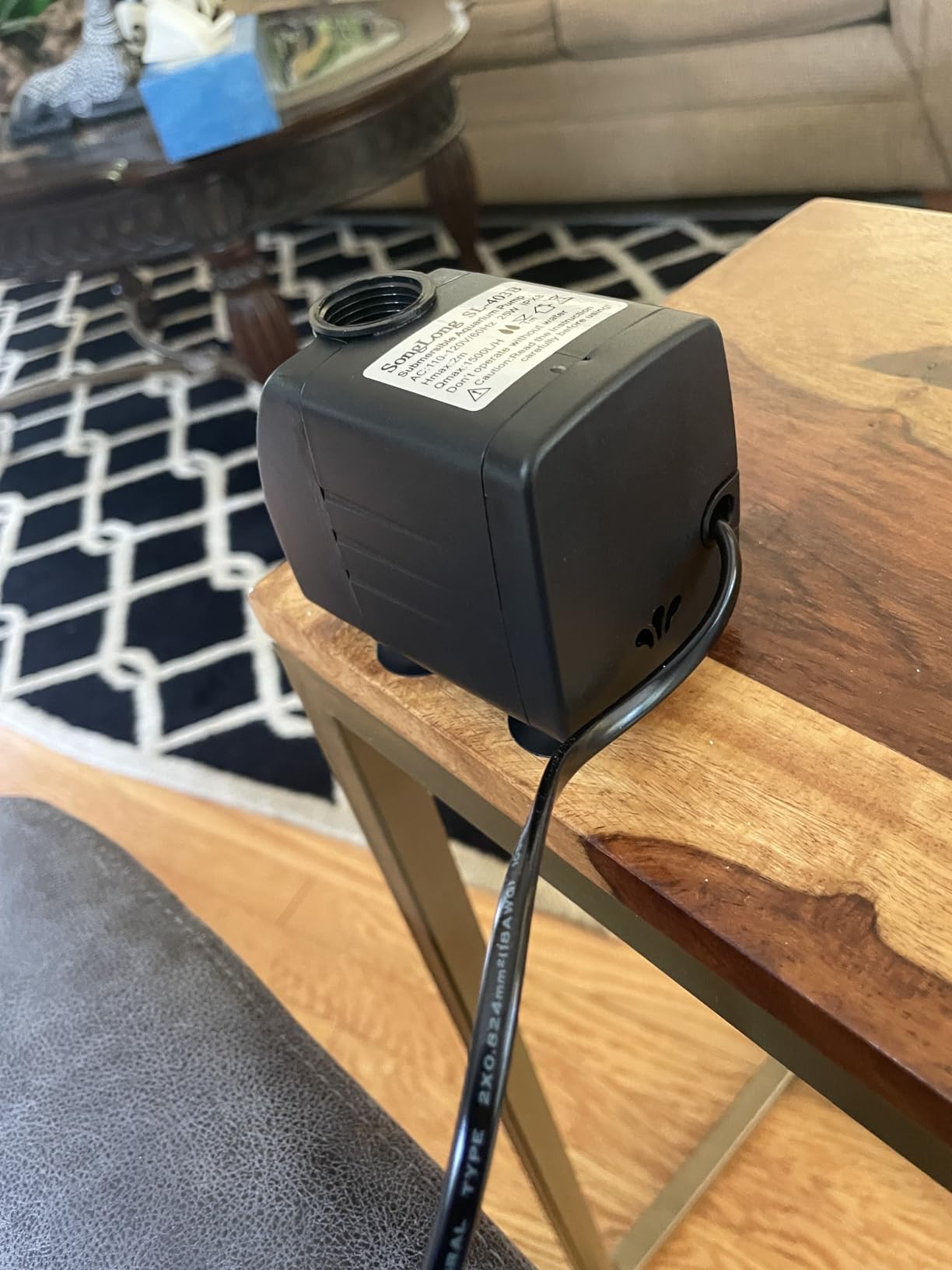
Two practical notes come up repeatedly. The unit is smaller than the product photos suggest, so measure your basin before assuming it will hide. And a minority of buyers report early failure within a few months, with the outlet piece as the common failure point, so keep the receipt and check that fitting at installation.
Noise is mixed. Some owners find it very quiet, others find it louder than expected in a still basin, and that mostly comes down to how the pump is mounted and whether water is fully covering the housing.
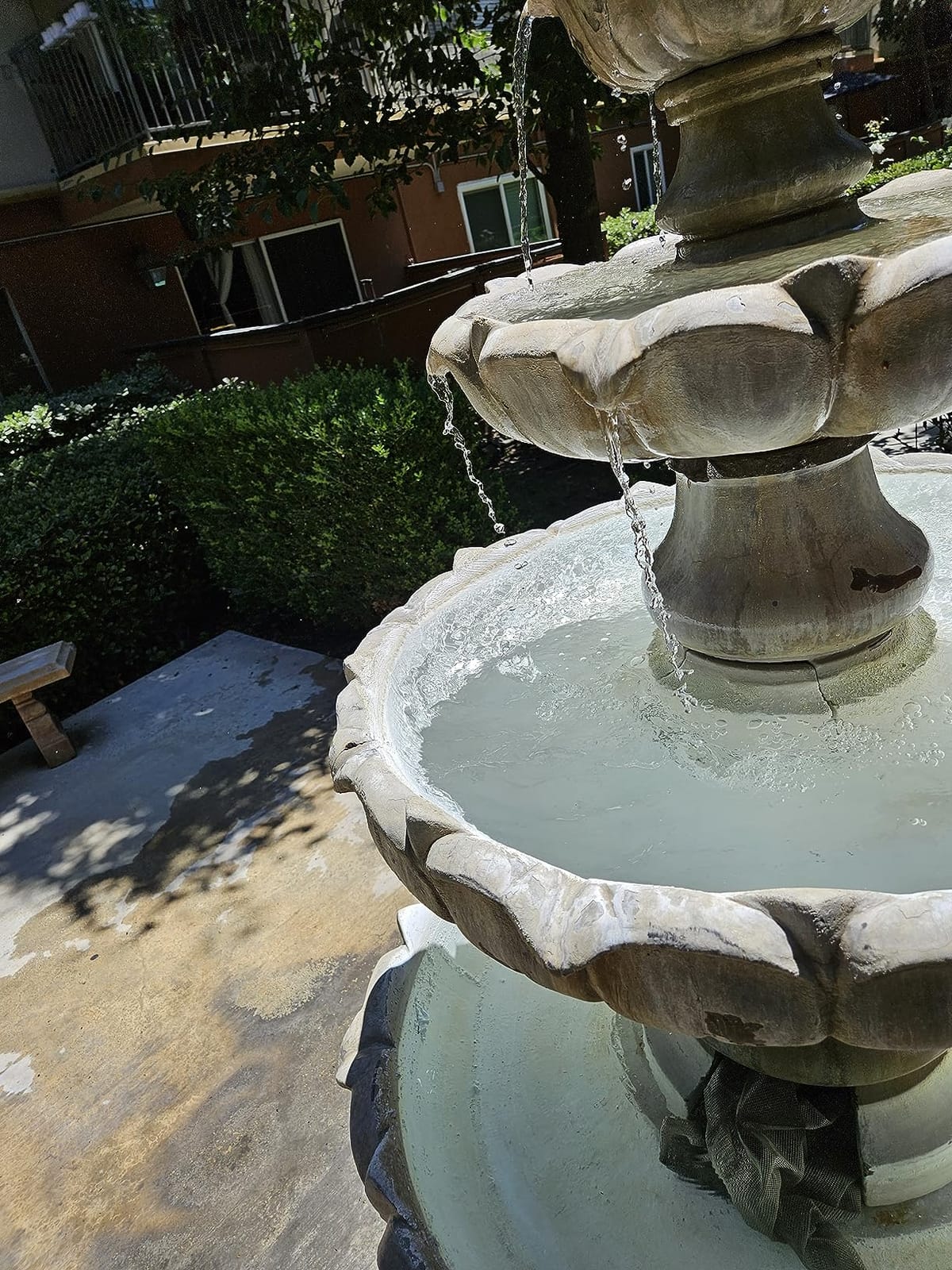
Best fit for the SongLong 400GPH
It suits a small waterfall or aquaponic tower that needs about six feet of lift, a small garden pond with a single modest fall, or a patio basin where you want a bit more robustness than an all-plastic shaft gives you. The stainless shaft makes it a reasonable pick where the pump runs hard continuously.
It is also a good second pump. Running two smaller units instead of one large one often quietens a feature and spreads the wear across two motors.
Where it falls short
It is not a tall-head pump, so a stacked waterfall above about six feet will leave you disappointed. The one year warranty is thin for continuous-duty work, and the reported early outlet failures are a reason to check it regularly in the first season rather than assuming it will run unattended indefinitely.
8. SongLong 200GPH Submersible Pump – A Middle Step Between Miniature and Full Size
SongLong Submersible Pump 200GPH 5.2ft. High Lift for Fountains
200 GPH max flow
5.2 ft high lift
15W motor
Stainless steel shaft
2 nozzles
The Good
- Compact body for small fountains and tabletop features
- Stainless steel shaft for quiet running
- Adjustable flow knob
- Four suction cups hold on aquarium glass
- Overheating protection included
The Bad
- 200 GPH and a 5.2 ft lift limit it to small features
- Only two nozzle sizes included
- Will not drive circulation in a full size pond
This is the useful middle step that often gets skipped. The 90 GPH unit cannot lift, and the 400 GPH units are more pump than a small basin needs. At 200 GPH and 5.2 feet of lift on 15 watts, this one covers the range in between, and it still has a stainless steel shaft, an adjustable flow knob, and overheating protection.
Just over 1,150 ratings at 4.2 stars show steady satisfaction inside that niche. Buyers point to the compact 3 by 2 by 3.2 inch body, the four suction cups that grip aquarium glass, and a 6 foot cord that reaches most indoor setups without an extension.
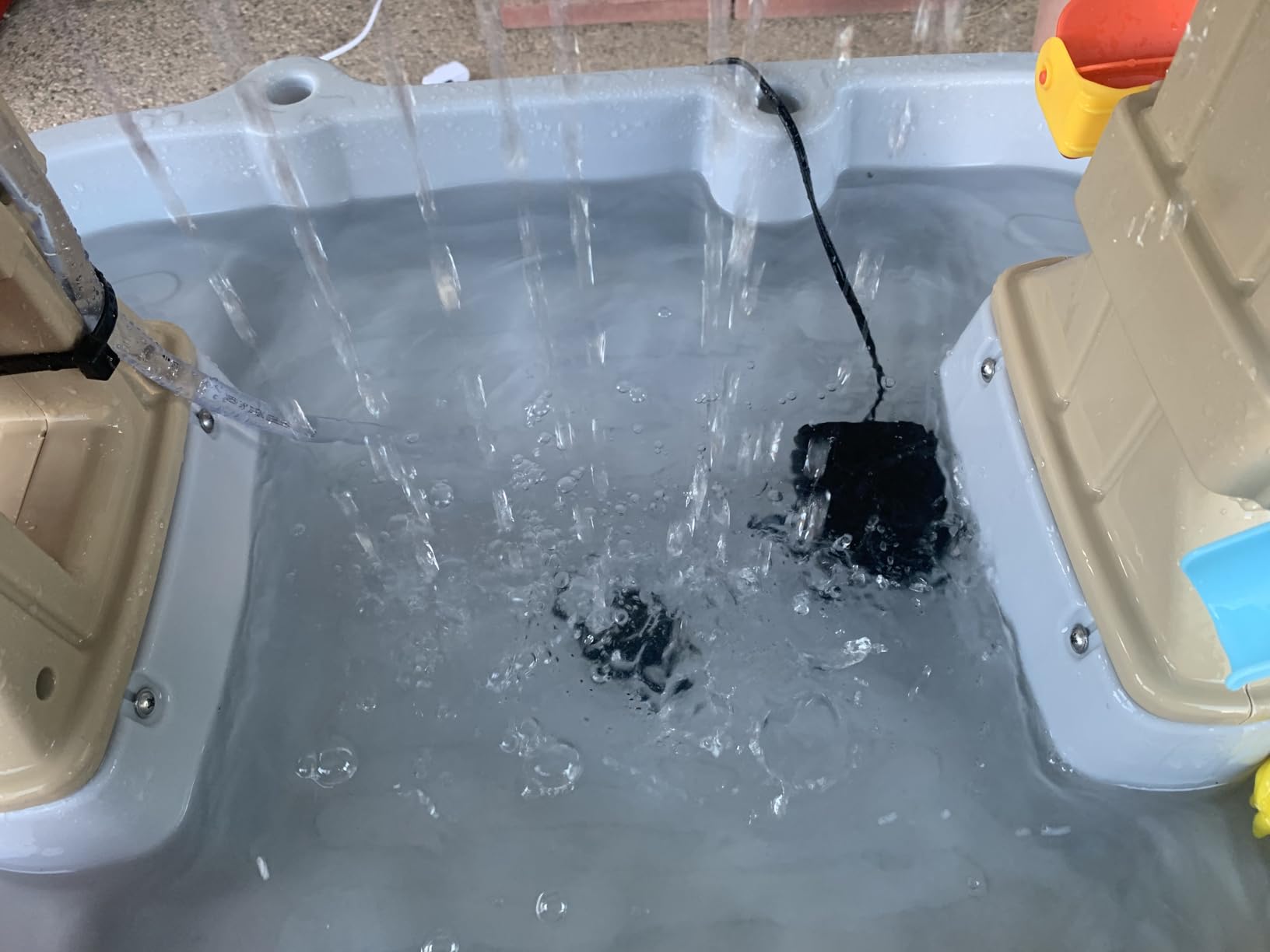
The limitation people accept rather than complain about is output. Two hundred gallons per hour is aimed at tabletop fountains, small aquariums, and modest wall features, and it will not drive a garden pond’s circulation on its own. Two nozzles at 0.31 and 0.51 inch is also fewer pattern options than most competitors ship.
The included use list spans aquaponics, small ponds, aquariums, and fish tanks, and it is fair to read that as a small pond only in the sense of a very small one. With a little over 1,100 ratings and 4.2 stars, this is a well-selling generalist rather than a specialist.
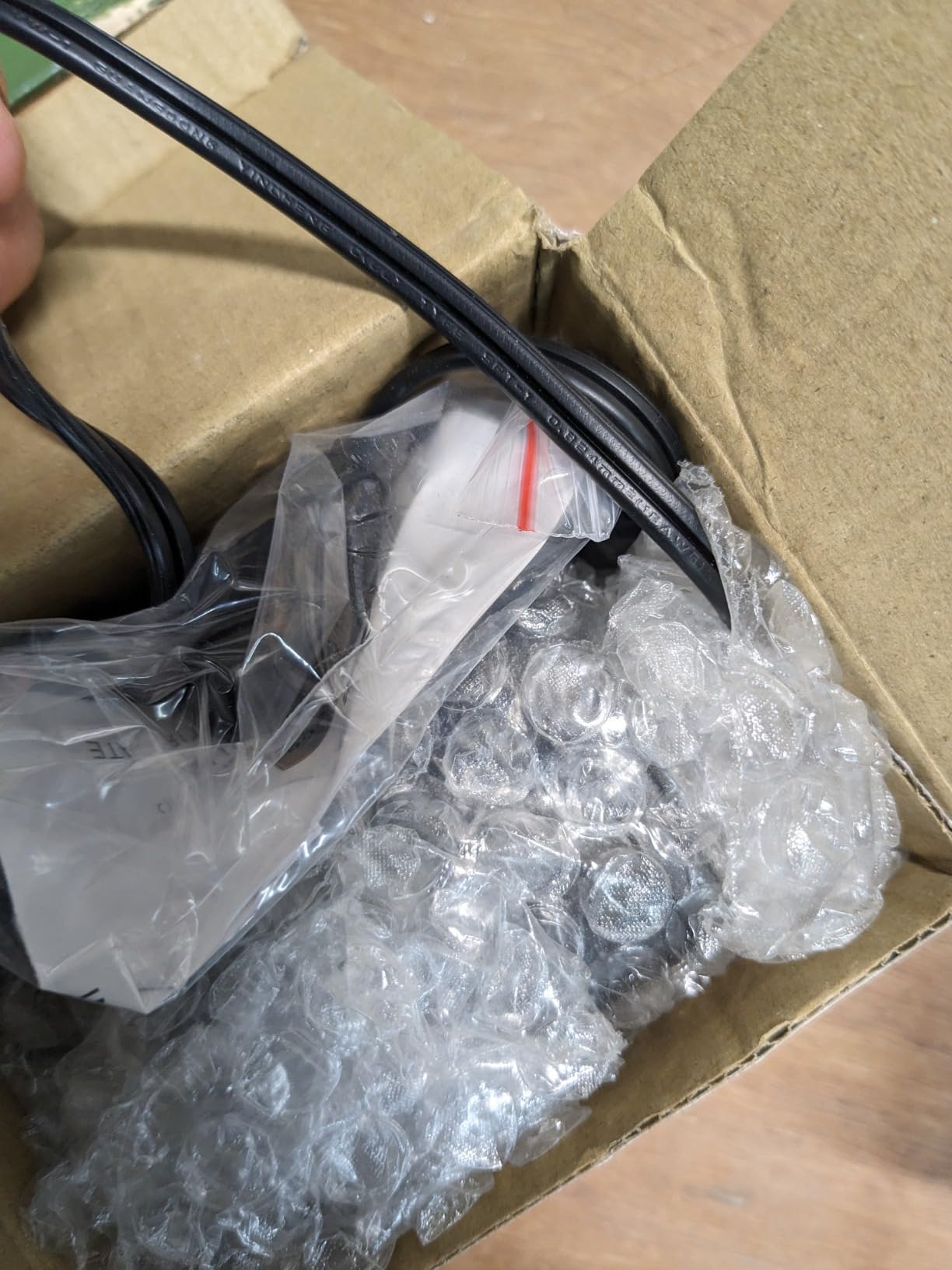
Where the SongLong 200GPH makes sense
It is the natural fit for a medium aquarium, a desktop fountain with a low spout, or a small basin that needs more lift than the 90 GPH pump can manage. Fifteen watts is still low enough to leave running continuously, which is the main reason to prefer it over a 400 GPH unit at this scale.
It also works as a second or backup pump in a larger setup, where spreading runtime across two motors reduces how hard any one of them works.
Where it is the wrong choice
It is wrong for any pond where you need real turnover, and wrong for a waterfall above about five feet. If you are planning to grow the feature over the next few years, buy the pump that fits the finished size rather than the pump that fits the current basin.
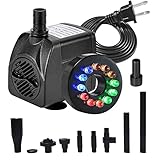
9. Yawank 15W Pump with 12 LEDs – Lighting Built Into the Pump
15W 1000L/H Submersible Fountain Water Pump with 12 Colorful LED Lights
1000 L/H flow
59 in lift
12 auto-changing LEDs
4 spray patterns
IP68 rated
The Good
- Built-in 12 LED lighting for night displays
- Four spray patterns including a mushroom head
- IP68 waterproof rating for continuous submersion
- Adjustable side valve for flow control
- Tool-free disassembly
The Bad
- LED color cycling is automatic and cannot be switched off
- 59 in lift ceiling suits small features only
- Lowest average rating in this roundup
The reason to buy this pump is the lighting. Twelve LEDs in four colors cycle automatically, which turns a plain garden basin into a night feature with no wiring, no transformer, and no separate light to install. Most people who buy it for that reason are happy with it.
It also carries four water patterns, including a mushroom head on an extendable pole plus fireworks, double shower, and single shower sprays. Flow is 1000 liters per hour, which is roughly 264 GPH, on a 15 watt motor, with lift up to 150 cm. Noise is rated at 35 to 40 dB and the working temperature range is 32F to 104F, with an IP68 waterproof rating.
At 4.0 stars from about 1,200 ratings, this is the lowest average in the group, and the split is instructive. Buyers who wanted a lit fountain rate it well. Buyers who expected pump performance at the level of the 400 GPH units tend to be disappointed, because 1000 liters per hour is a modest flow and a 59 inch lift ceiling is not a lot of headroom.
The other recurring note is the automatic color cycling. There is no switch and no setting, so if the flashing is not something you enjoy, this is the wrong pump. A one year warranty is included.
When to choose the Yawank LED pump
Choose it when the display is the point and the water feature is small. A patio bowl, a wall-mounted basin, or a small garden pool lit at night is exactly what this pump is built for, and having the LEDs in the pump housing means one cord and one unit to install instead of two devices.
It also works in cold-climate installations where summer only is fine, since the rated lower working temperature is 32F.
When to skip it
Skip it if you want strong aeration for fish, or if you need a tall riser. Also skip it if you dislike cycling lights, because you cannot turn them off, and skip it if you want the highest rating among pumps in this category, since this is the lowest rated of the ten.
10. OYO WATER 1800GPH Pond Pump – The One Built for Big Water
OYO WATER Submersible Water Pump, 1800 GPH Pond Pump for Outdoor Ponds 32.8ft Long Power Cord, Barrier Filter Bag, Ipx8 Waterproof Ultra Quiet Fountain Water Pump for Waterfall, Hydroponic
1800 GPH max flow
14 ft max lift
100W motor
32.8 ft cord
Amphibious design
The Good
- 1800 GPH with a 14 ft lift for multi-tier falls
- Very quiet once fully submerged
- 32.8 ft cord removes the need for an extension
- Amphibious so it works submerged or on dry ground
- Removable rotor and included mesh barrier bag
The Bad
- Highest power draw of the ten pumps reviewed
- Mesh bag still clogs unless framed with PVC
- One owner reported a surge protector trip and failure
- Might need the outlet open before it primes
This is the only pump here with the specification set for a real pond rather than a water feature. Eighteen hundred gallons per hour at up to 14 feet of lift, on a 100 watt motor with 100 percent copper wire and a ceramic shaft. At 4.5 stars it carries the highest average rating in the group, though from a smaller pool of about 360 ratings.
The details are where the money goes. The 32.8 foot cord means you can place the pump where the water is deep and reach an outlet without an extension cable. The amphibious design works submerged or on dry land, so you can service it outside the basin. The silicon carbide housing resists erosion, and a heat-overload sensor plus IPX8 rating support continuous 24 hour running.
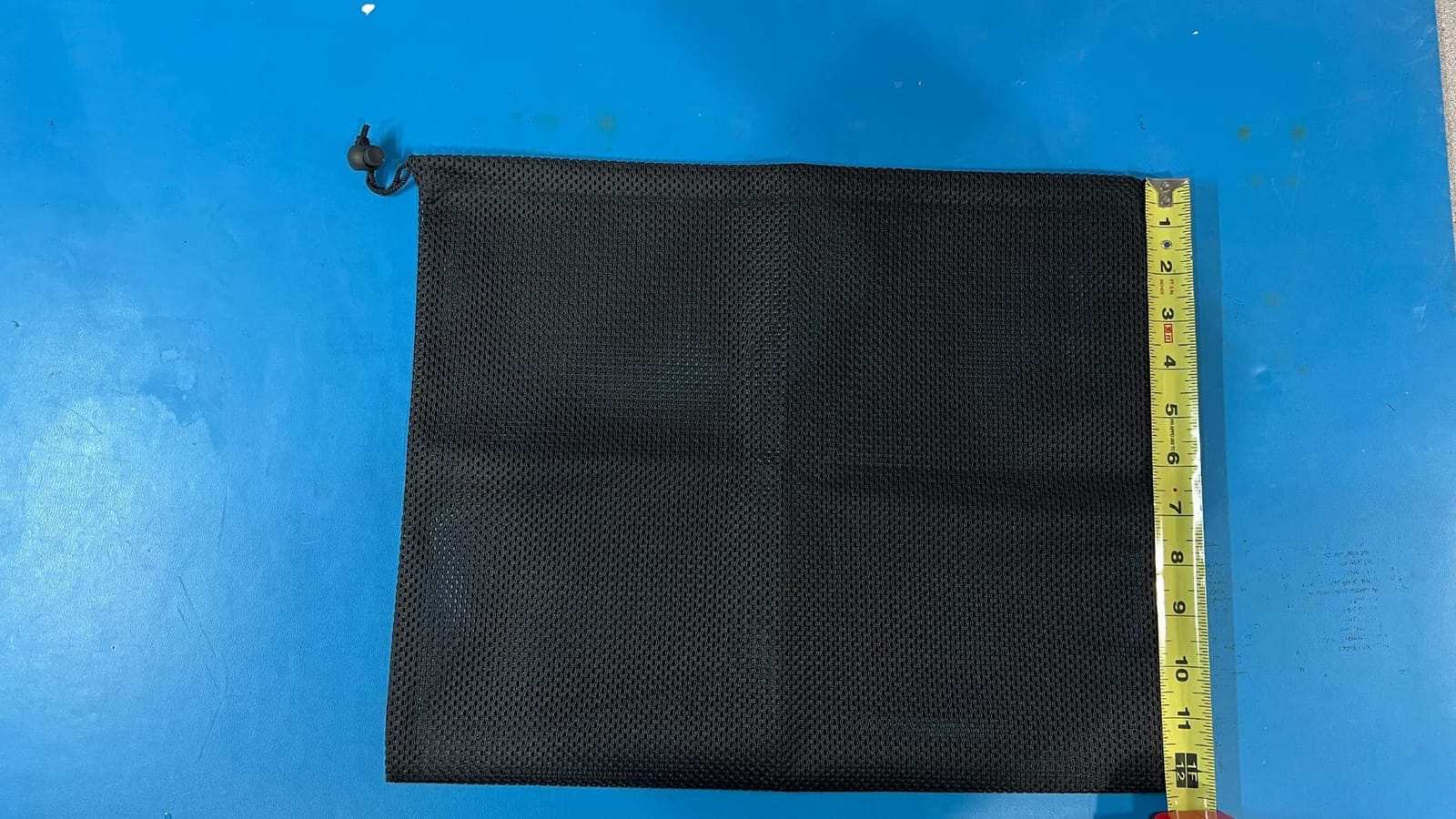
Owners of duck and koi ponds describe it as the strongest and quietest pump they have used, and the removable rotor assembly with a detachable filter cover makes cleaning straightforward. The included mesh barrier bag is a real benefit in a koi pond, where you do not want small fish pulled toward an impeller.
The criticisms are mostly practical. The mesh bag will still clog unless you frame it in a PVC ring, which is a five minute job that solves it. One owner reported a unit tripping a surge protector and then failing. And some units need the outlet open for a period before they prime and lift water, so do not judge it in the first five minutes.
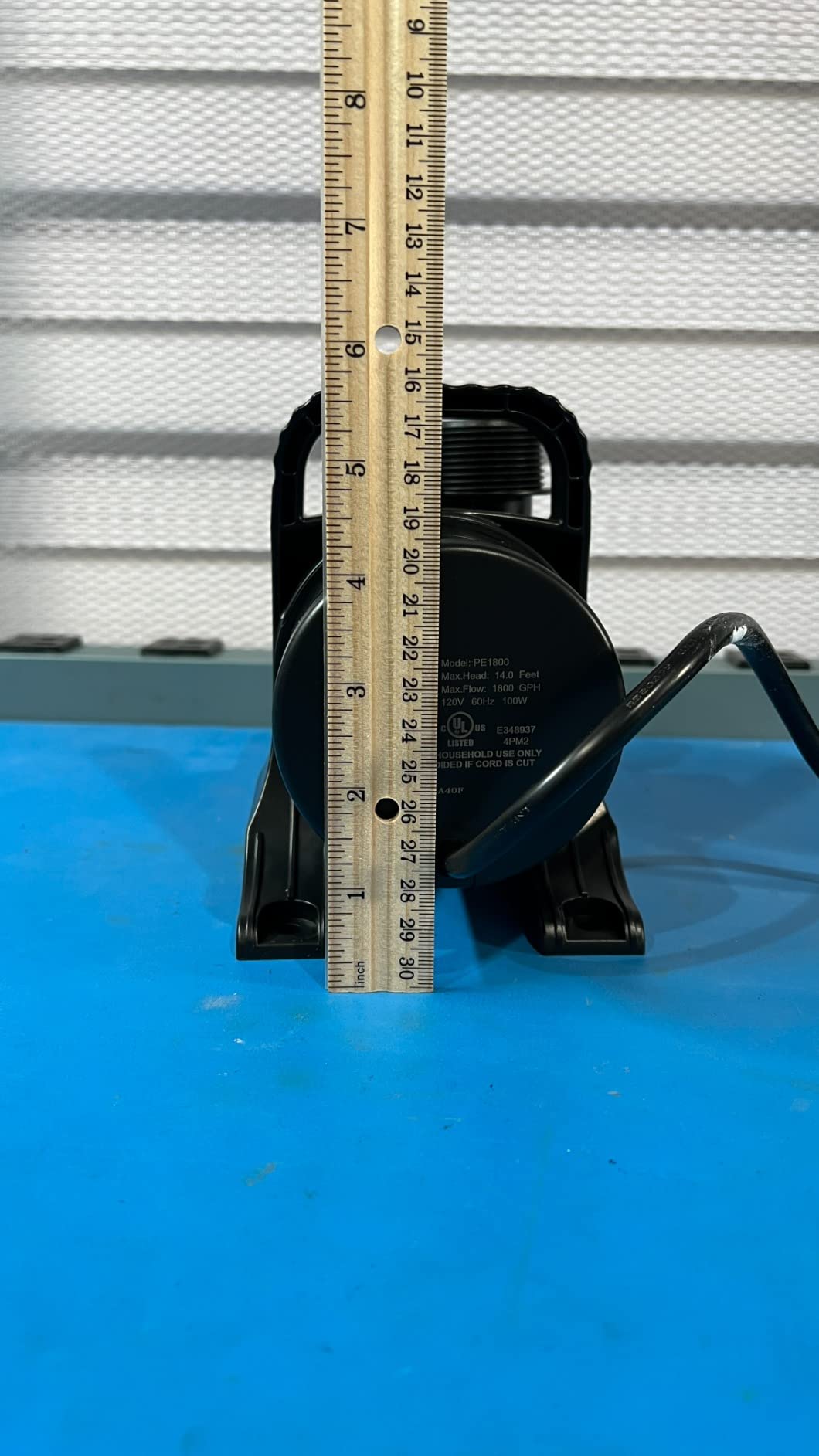
Who the OYO WATER 1800GPH is for
It suits a real garden pond, a koi pond needing strong circulation, or a multi-level waterfall where you have to feed more than one tier at once. Fourteen feet of rated lift covers a tall stone riser, and the surplus flow means you still get usable output at that head rather than a trickle.
For pond work specifically, the long cord, the amphibious housing, and the barrier bag together remove three problems that usually come up in the first month of ownership.
Where it is overkill
It is unnecessary for a birdbath, a tabletop bowl, or any basin under a few hundred gallons, and the 100W draw is a real cost on a timer. If you are choosing between this and a 550 GPH unit for a small feature, the smaller pump will do the same visual job for a fraction of the power.
How to Choose a Fountain Pump
Pick the pump after you have measured the feature, not before. The order of operations matters because every number downstream depends on the two you measure first: how high the water has to travel, and how much water you need moved.
Measure head height. Head is the vertical distance from the pump’s water line to the outlet nozzle, not the diagonal or the length of pipe. If the outlet sits 3 feet above the water, you have 3 feet of head, plus friction loss through every foot of hose, plus the loss through the nozzle and any elbows. Long horizontal runs are what quietly kill fountain performance, and pumps lose flow fast once lift rises.
Set your target GPH from volume. Pond builders across the forums converge on a turnover rule of roughly one and a half times the pond volume per hour, so a 1,000 gallon pond wants a pump targeting around 1,500 GPH at your actual head. For small features, the shorthand is 50 to 100 GPH for tabletop fountains, 200 to 400 GPH for garden fountains, and 500 GPH and up for ponds and multi-tier waterfalls.
Read the curve, not the peak. Every manufacturer publishes maximum flow at zero head, and that is the number printed on the box. What you need is the flow the pump still delivers at your total dynamic head, and that should land in the middle of its performance curve. A pump that reaches your target flow at the far right edge of its range will run hot, draw more power, and wear out sooner.
Add friction loss to vertical lift. Total dynamic head is vertical lift plus the friction loss of your pipe run. Each 10 feet of hose adds resistance, and a narrow tube adds more than a wide one. If your total dynamic head ends up above the pump’s rated lift, the pump simply cannot reach your nozzle and you will get a dribble no matter what the box says.
Decide submersible or external. A submersible pump sits in the water, which keeps the installation simple and the parts cheap, but the motor runs wet. An external, non-submersible pump sits in a dry vault beside the pond and pushes water through a pipe, which experienced ponders prefer for efficiency and serviceability. For a small decorative feature, submersible is the right answer. For a large pond you intend to run for years, external is the more considered choice.
Look for the safety features. Low water shut-off and dry-run protection matter more than almost any other feature on the list, because a pump that runs with no water burns out in minutes and a burnt motor is a dead motor. Of the ten pumps here, four include overheat protection of some kind, and that is protection against a thermal problem rather than a substitute for a low-water cut-off. None of them can be left running in a basin that has gone dry.
Then check the power. Every pump in this roundup runs on 110V AC and needs a GFCI-protected outlet and an outdoor-rated connection. Cord length is the specification people most often underrate: the 4.6 foot cord on a mini pump and the 32.8 foot cord on the largest one are both realistic, and anything in between should be planned around rather than discovered at installation.
Fountain Pump Brands and What Buyers Say About Them
The brands with the strongest long-term reputations in this category are Laguna, Aquascape, Oase, Sequence, and Pentair, and that consensus comes out of the pond forums rather than the marketplace listings. Forum regulars describe Laguna submersibles as long lasting and not hard on power consumption, and one long-term owner runs a Laguna on a 2,400 gallon pond with a prefilter fitted in place of the intake cage.
Those same forums treat Pentair variable speed pumps as a favourite because of their priming alarm, which shuts the pump off after it has run dry for a set period. That single feature answers the complaint that shows up more than any other across pond threads: pumps that will not restart after being switched off to clean.
The brands in this roundup sit below that tier. VIVOSUN, GROWNEER, CWKJ, DOMICA, PULACO, Knifel, SongLong, Yawank, and OYO WATER are the value and generalist names, and the honest framing is that they compete on specifications per watt and on the size of their review base rather than on known lifespan or the availability of replacement parts. If you are building a feature you want to last a decade, the established pond brands are the better bet.
One related guide on water pumps for other uses covers the same kind of flow and head reasoning, and if you are also comparing whole-home heating pumps the sizing logic is the same idea at a different scale.
Maintenance, Winterization, and Troubleshooting
No fountain pump is set and forget. The most common cause of early failure is debris on the intake, and the most common cause of a mysterious stop is running dry. A few minutes of attention a month covers almost every problem reported in the reviews.
Rinse the intake screen weekly during leaf season, and clean the impeller monthly. Every one of these ten pumps comes apart without tools, which means the job takes a few minutes and a bucket rather than a teardown. If flow drops or you hear a rattle, debris in the impeller chamber is the first thing to check, and it explains most of the complaints in the reviews.
Never let a pump run dry. In a shallow basin or a birdbath, evaporation between waterings is enough to expose the intake in a hot week, and none of these ten has a low-water cut-off to save it.
If a pump will not restart after cleaning, unplug it fully and leave it disconnected for several minutes so any residual charge clears, then check three things in order. First, confirm water is covering the intake and the housing is not sitting on debris. Second, confirm the power supply or GFCI has not tripped. Third, look at the impeller for a jammed shaft or a hair tie wrapped around it, which is common and easy to miss. A pump that has been genuinely damaged usually shows as a hum without water movement, and that is a replacement signal, not a cleaning one.
To winterize, pull the pump before the first hard freeze. Clean it, dry the housing and cord, and store it indoors somewhere above freezing. Leaving a pump submerged through winter is fine in a pond that does not freeze solid, but in a shallow basin or birdbath the ice is the problem, not the cold. Also remember that a pump stored for months needs its impeller checked before you return it to service, because a dried seal is the part most likely to leak.
Finally, protect the intake in any feature with fish. A prefilter or a bog filter in front of the pump is the single most effective way to extend pump life, and removing the intake cage in favour of a prefilter is a change that experienced ponders repeatedly recommend.
Frequently Asked Questions
Which pump is best for a fountain?
For most water features, the VIVOSUN 800GPH is the strongest all-rounder: 800 GPH at up to 10 feet of lift on a 50W motor, with the largest review base in the category. For a birdbath or tabletop bowl, a small 90 GPH pump running on 5W is a better match than a bigger one. Match the pump to your measured head height first, and the GPH figure second.
How many GPH does a fountain pump need?
For a tabletop fountain or birdbath, 50 to 100 GPH is plenty. For a small garden basin or single small waterfall, 200 to 400 GPH works. For ponds, pond builders target about 1.5 times the pond volume every hour, so a 1,000 gallon pond wants a pump targeting roughly 1,500 GPH at your actual head height rather than at zero head.
How do I know what size water pump I need for a water fountain?
Measure the vertical distance from the water surface to your outlet, add friction loss for the length of pipe, and that total dynamic head tells you what to match. Set a target GPH from your basin volume, then choose a pump that still delivers that flow at your total head. A pump that reaches your target only at zero head will give you a weak display.
Which brand of water pump is the most reliable?
The brands with the strongest reputation for longevity in water features are Laguna, Aquascape, Oase, Sequence, and Pentair, according to long-running pond forum discussions. Pentair variable speed models are valued for a priming alarm that shuts off after a dry run. The value brands in this roundup compete on flow per watt rather than on known service life.
How many GPH for a 1000 gallon pond?
Target roughly 1,500 GPH, which is about 1.5 times the pond volume per hour, the turnover rate pond builders generally aim for. Because flow falls as lift rises, choose a pump that still delivers around 1,500 GPH at your measured total dynamic head. Of the pumps reviewed here, only the OYO WATER 1800GPH has enough surplus to hit that target at a real head height.
The Best Fountain Pumps in 2026: Final Verdict
For most people reading this, the VIVOSUN 800GPH is the right answer. It has the headroom, the 50 watt draw, the tool-free cleaning, and the review volume to suggest it will still be running long after a unit with a thinner track record has been replaced. The GROWNEER 550GPH is the pick if your priority is running cost rather than peak output, and the CWKJ 400GPH is the one to buy when the pump sits close to where people sit.
Go smaller for a birdbath, where the DOMICA 90 GPH on 5W is more than adequate and far less wasteful. Go bigger for a real pond or a multi-tier waterfall, where the OYO WATER 1800GPH is the only pump in this group with the flow and lift to do the job properly.
Whichever you choose, measure your head first, size for turnover rather than for the number on the box, and give the pump a clean intake every few weeks. That last habit matters more to how long it lasts than any brand name on the box.